
This is the archived version of our free weekly newsletter. To start receiving it in your mailbox on the send-out day, join the newsletter list!
Hi from Novigrad!
Literally translated as ‘new town’, this is my brand-new address for the rest of the summer.
I’m back at a job in the tourism industry that first brought me to Istria during those pandemic years – waiting tables.
The place I work at now is quite relaxed and comes with some extraordinary sunsets.
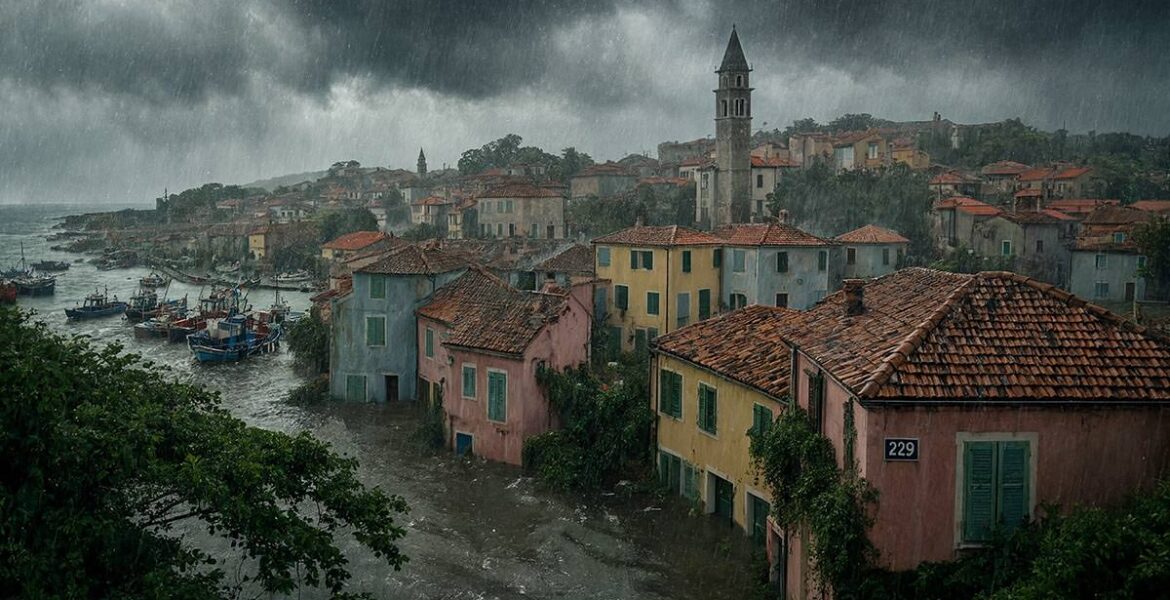
Well, not every night. Two days ago, all hell broke loose when a storm decided to visit us and stay the night. Streets became rivers, manholes turned into fountains. My light car seemed to float in some parts of the road as I drove home at turtle’s speed, trying my best not to leak off the asphalt.
My experience was, of course, nothing close to the flooding that heavy monsoon rains these days bring to places such as Thailand or the Philippines.
But extreme weather patterns are not the only thing that Europe is slowly adopting in these changing times. We’re also importing more and more workers from Asia. In Croatia, whose population is declining, flooding the market with a foreign workforce is the only way to handle high tourism demands.
Five years ago, Filipino workers were highly appreciated in housekeeping departments as diligent, hardworking individuals. But now I’m noticing that we see more and more of them doing front-office, client-facing jobs.
I sat at a beach bar the other day. A Croatian waiter took the order, and then one of his two (both Southeast Asian) assistants brought the drinks to our table. When it was time to pay, the Croatian waiter showed up again, with a wallet.
Later, I passed by another bar and saw a similar situation. A Filipina delivered drinks to the table. The customer wanted to pay. She had to call a young, clearly not-the-most-experienced Croatian colleague who could close the bill and charge the guests.
Without real data that could substantiate the conclusion, the pattern I notice in real life suggests Asian workers are here to do the heavy lifting as assistant waiters, while Croats dominate the floor as main waiters: here to greet, smile, and handle the money.
To be clear, the majority of people consuming drinks at these bars were foreigners. Asian workers seemed to speak decent English when bringing cocktails to the table. So the hierarchy of powerful local men being assisted by probably underpaid non-white women seemed quite out of balance.
I was wondering how the tips were shared in this environment where access to the waiter’s wallet is enabled only to those who tell Asians what to do.
Judging by just these couple of examples, I feel our tourism will still have to do a better job – recognizing that imported staff are perfectly capable of more and should be treated fairly, according to their abilities.
Croatian job market is deficient in a quality workforce – that means we should be looking into talent we bring from the other side of the planet, recognize the potential, give it opportunities that will raise our bars, and appreciate it accordingly. We shouldn’t just staff our cordons with cheap and useful servants, covering them with a glass ceiling.
Have a non-discriminatory week ahead,
Ivan Kralj
Pipeaway.com
This is the archived version of our free weekly newsletter. To start receiving it in your mailbox on the send-out day, join the newsletter list!
Disclosure: This post may contain affiliate links, meaning if you click on them and make a purchase, Pipeaway may make a small commission, at no additional cost to you. Thank you for supporting our work!
