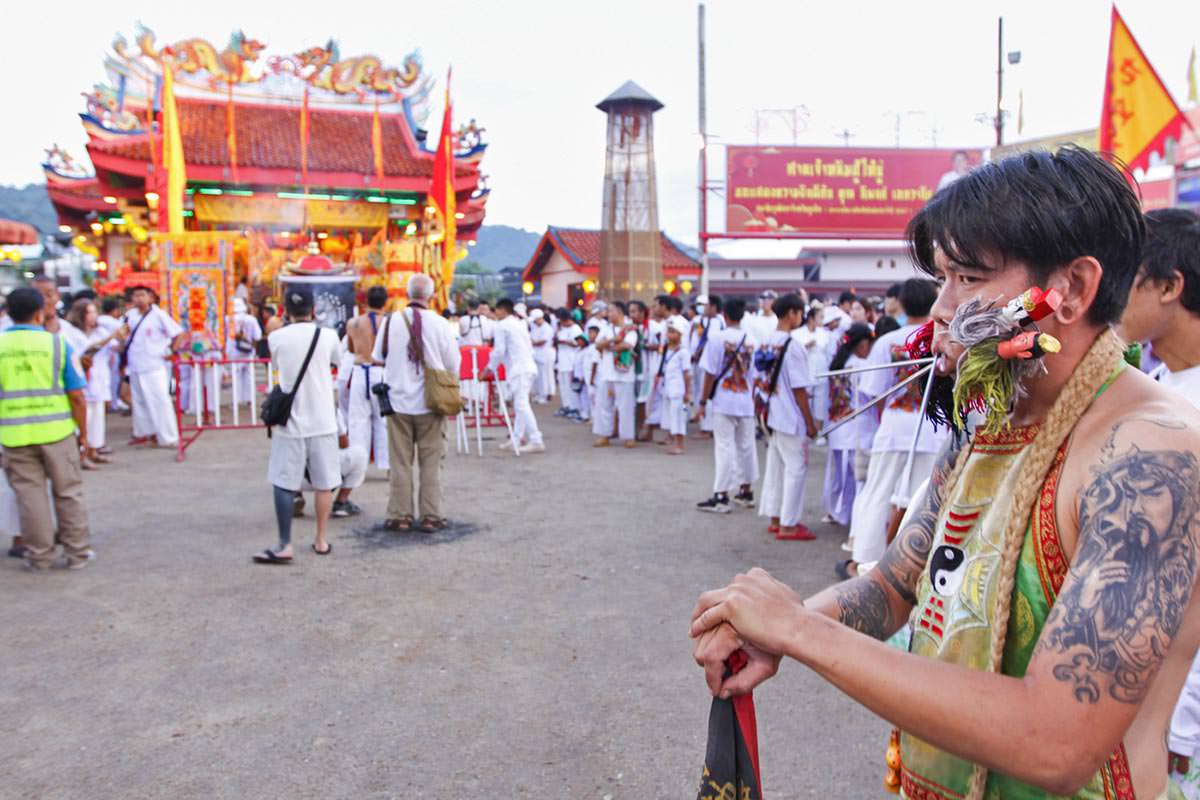
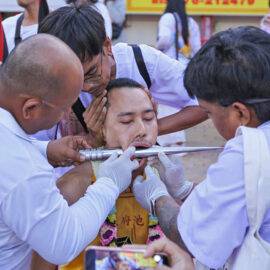
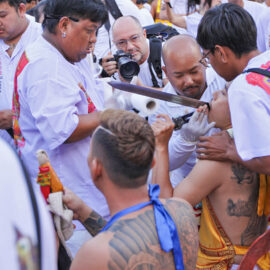
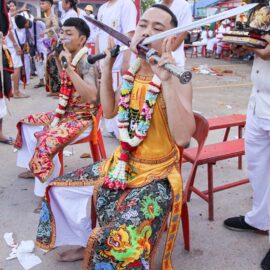
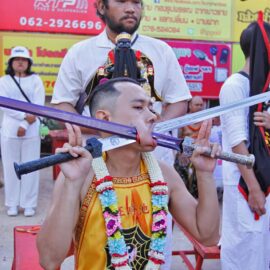
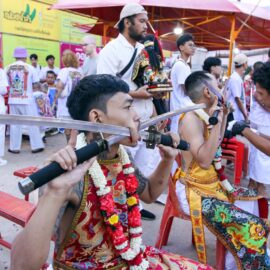
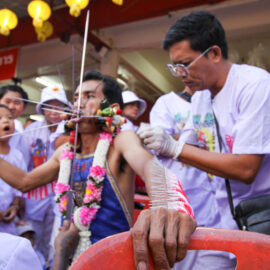
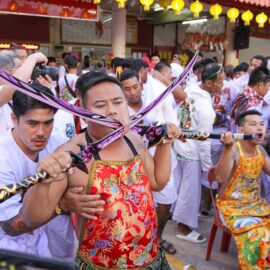
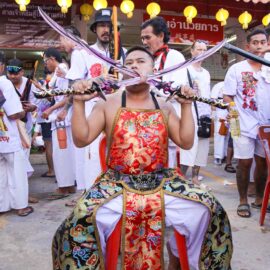
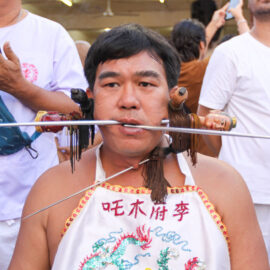
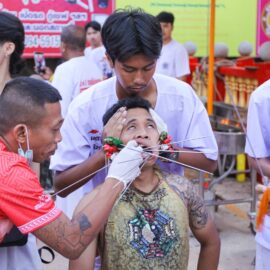
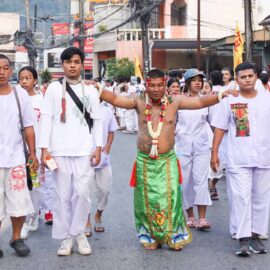
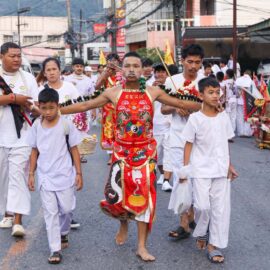
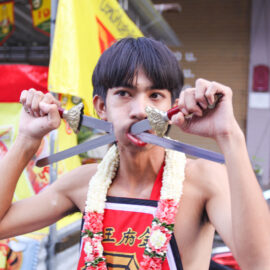
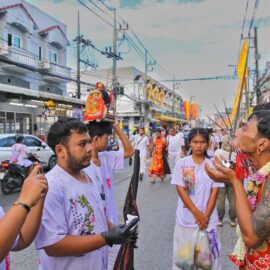
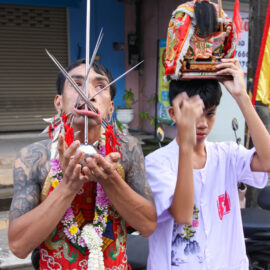
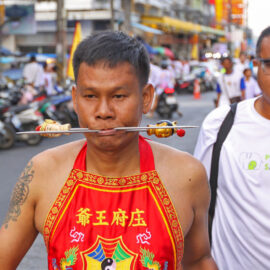
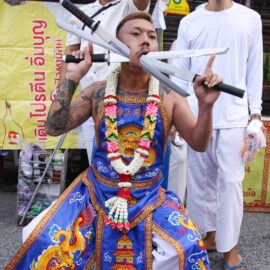
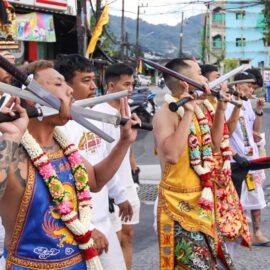
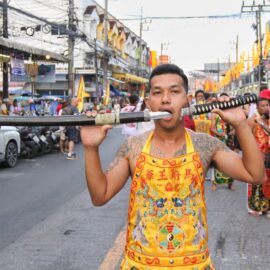
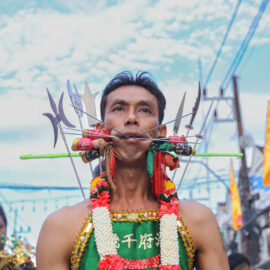
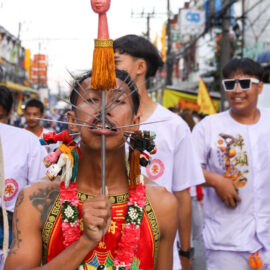
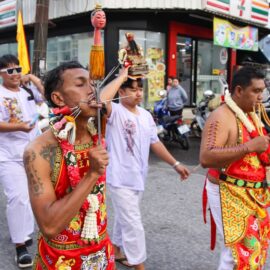
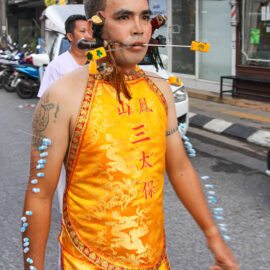
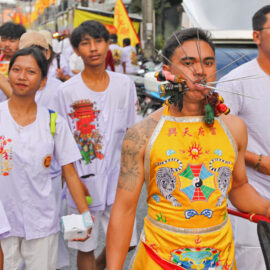
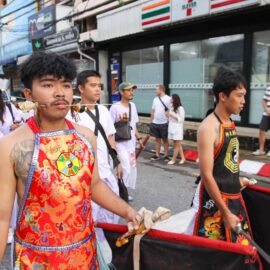
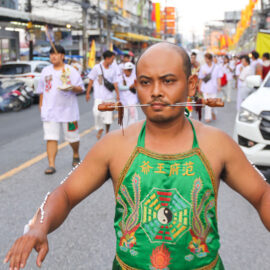
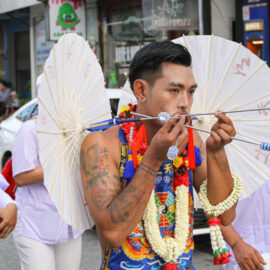
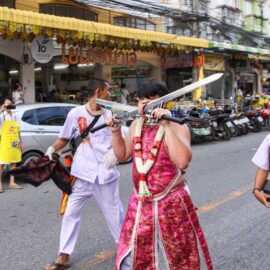
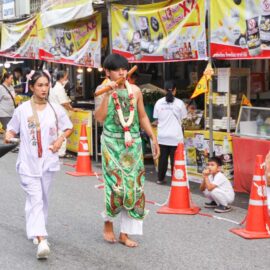
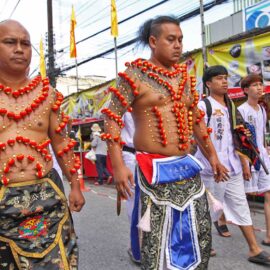
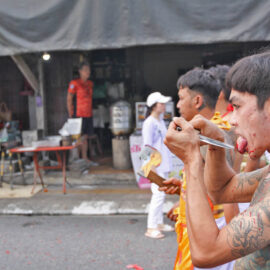
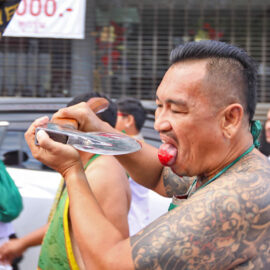
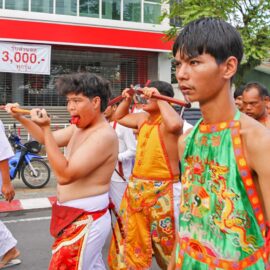
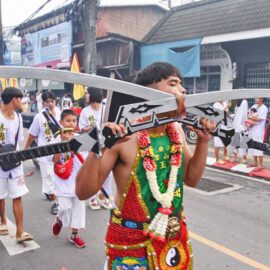
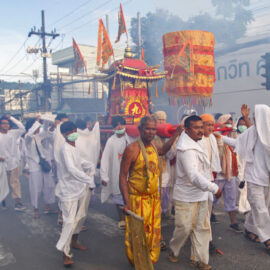
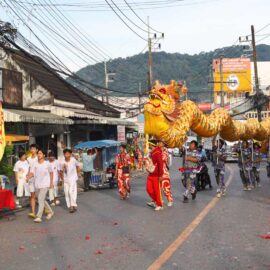
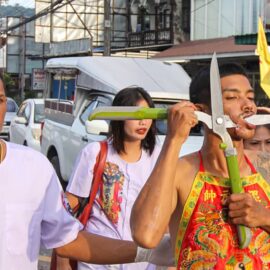
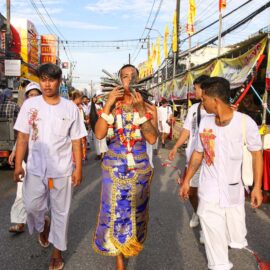
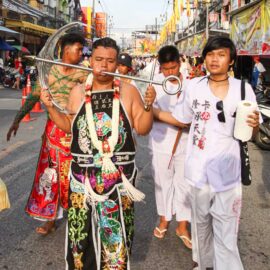
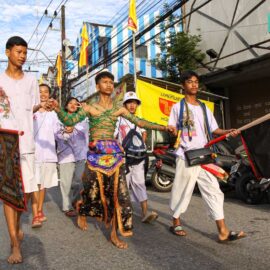
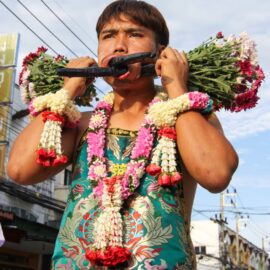
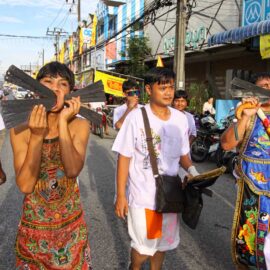
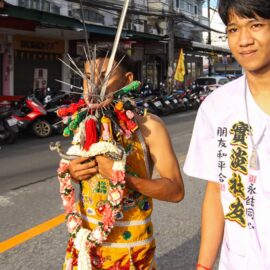
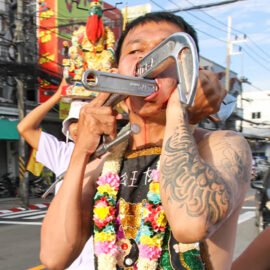
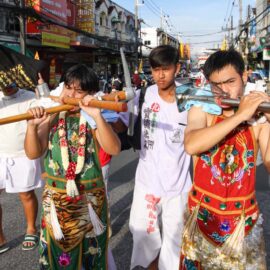
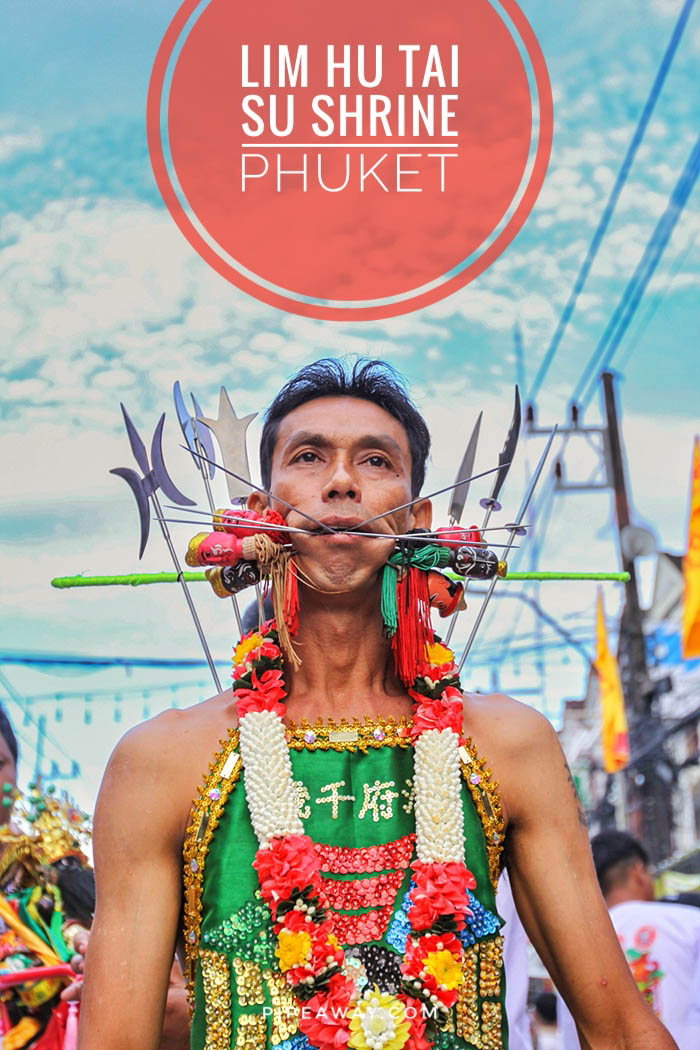
Lim Hu Tai Su Shrine street procession during the Nine Emperor Gods Festival in Phuket, Thailand; photo by Ivan Kralj.
Lim Hu Tai Su Shrine in Phuket: Faith Over Swords, Sabers, and Sledgehammers
View Gallery
48 Photos

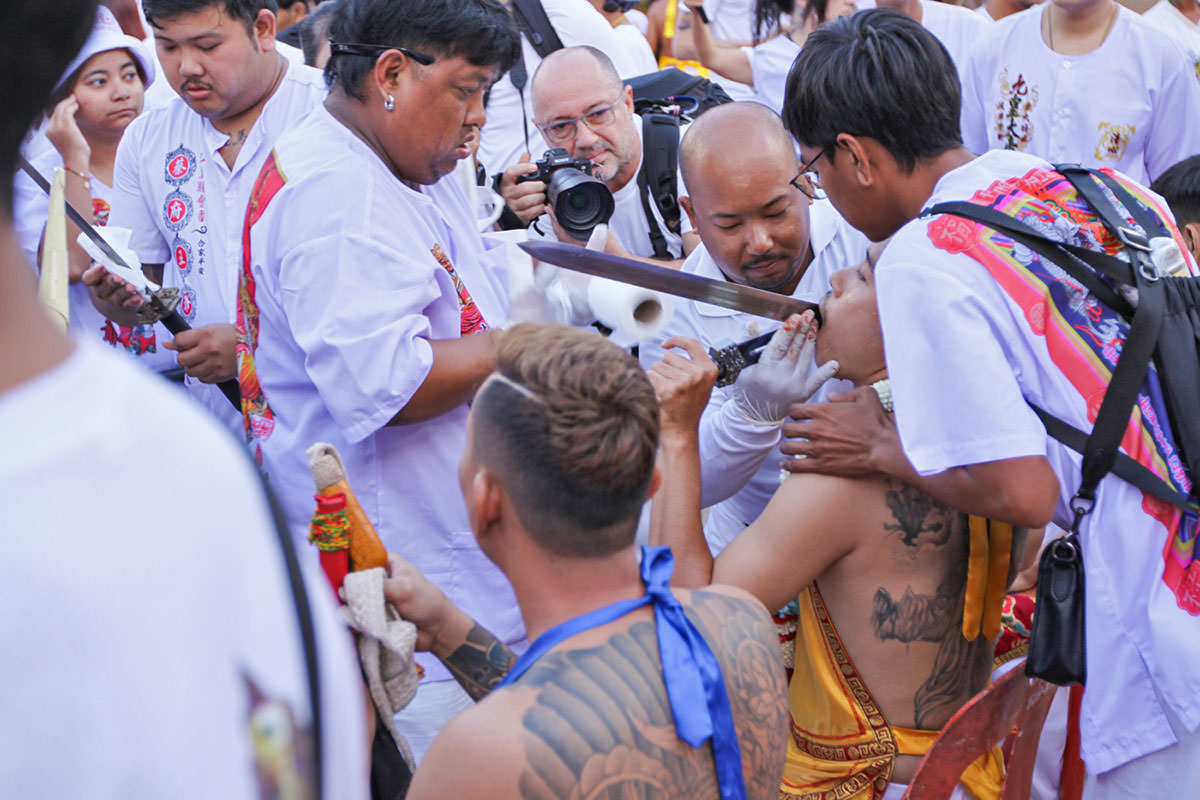
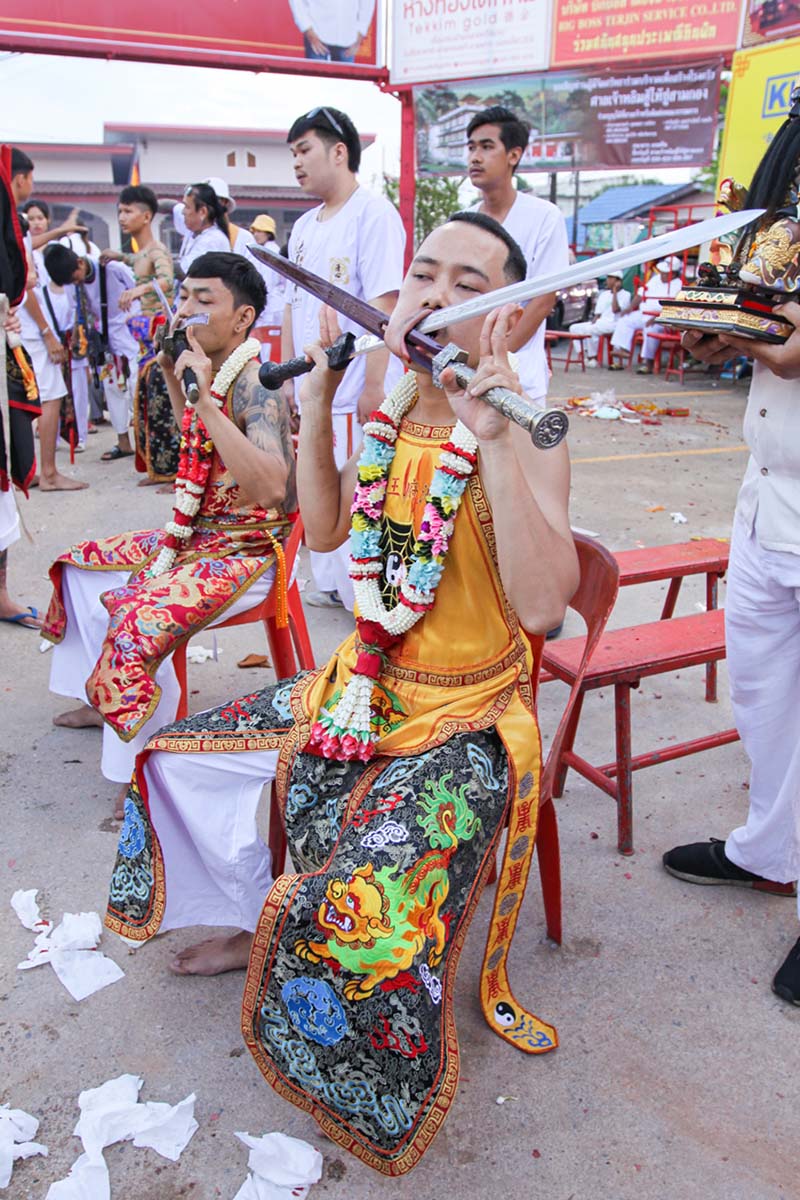
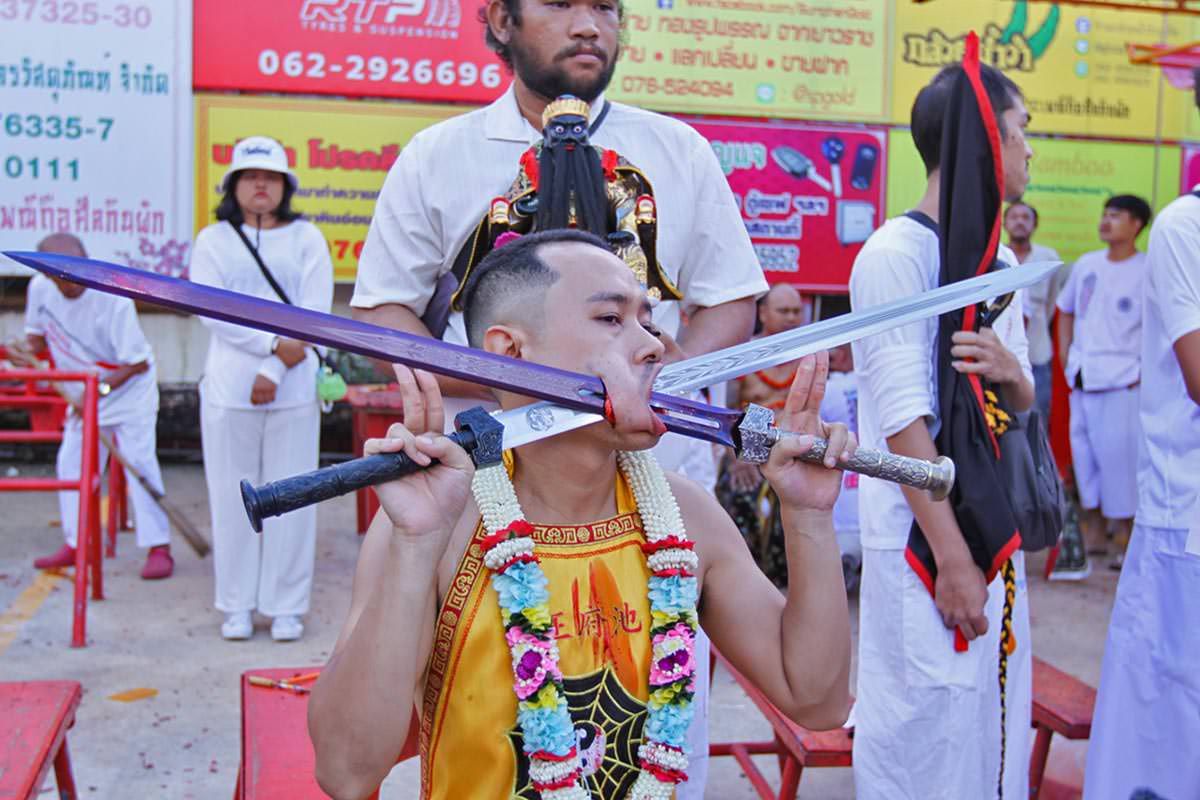
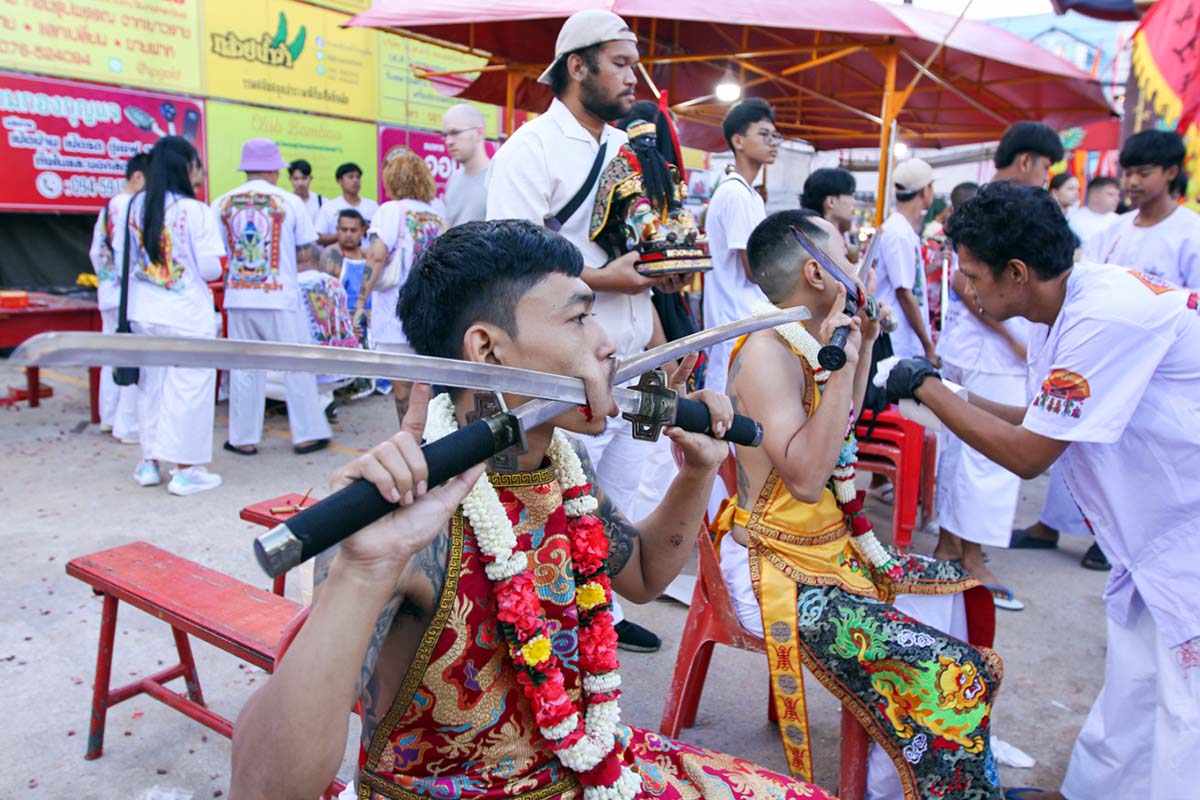
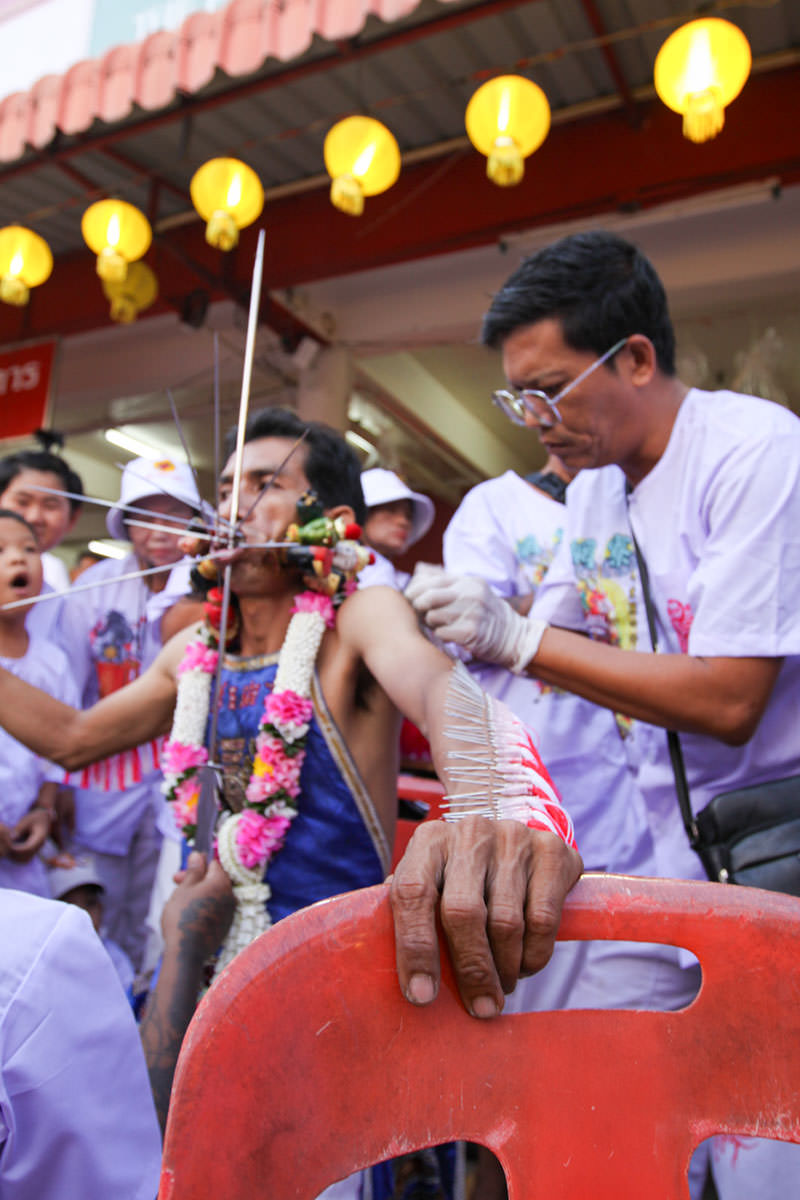
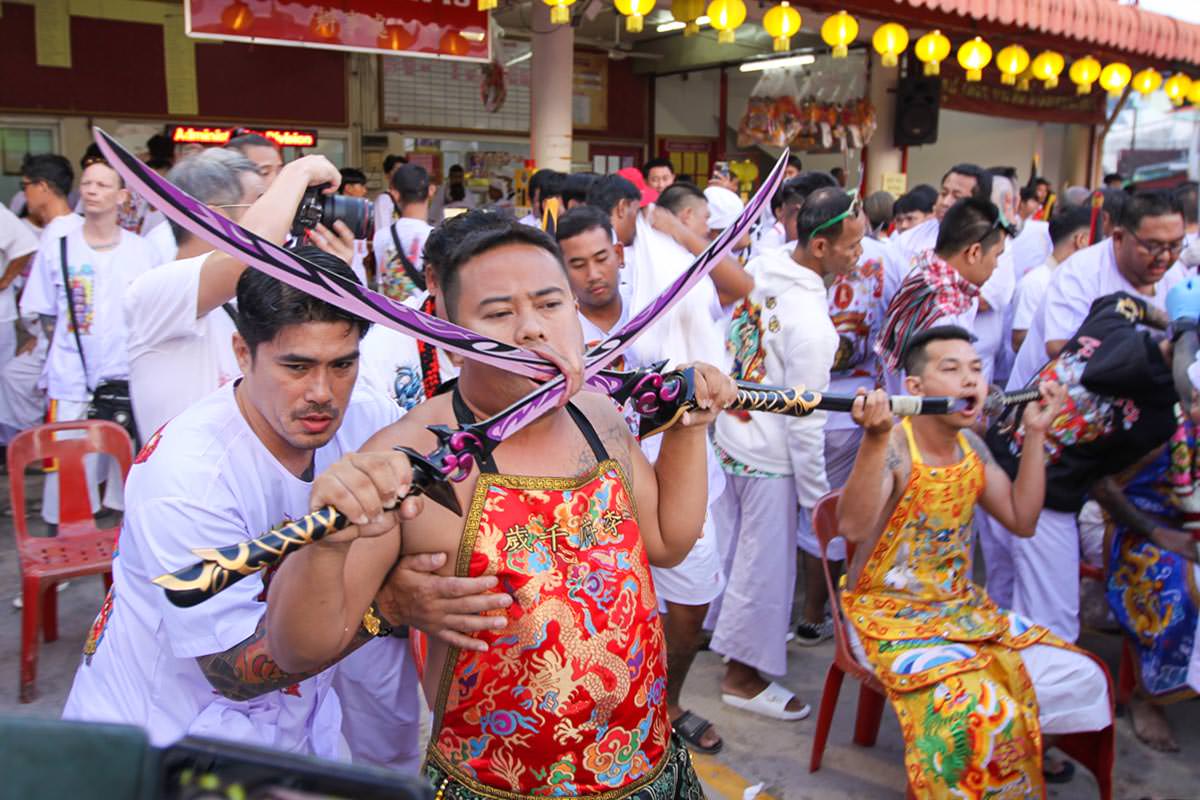
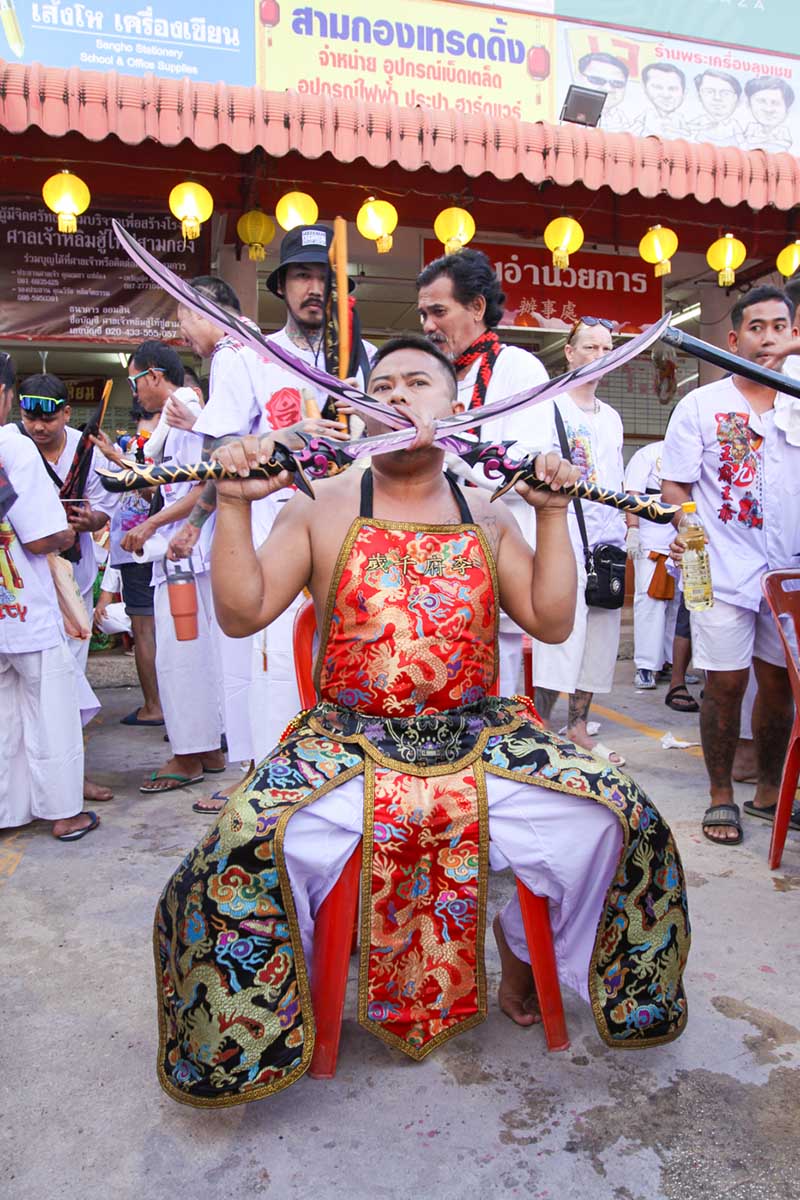
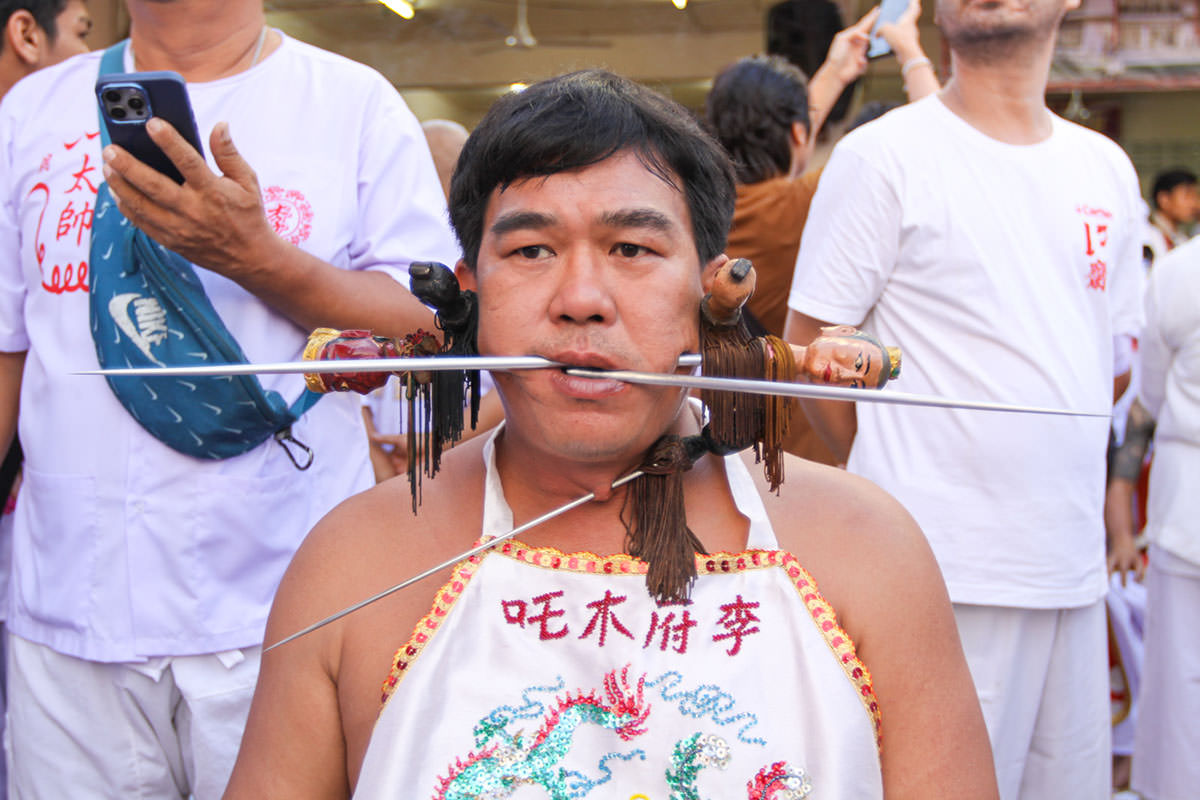
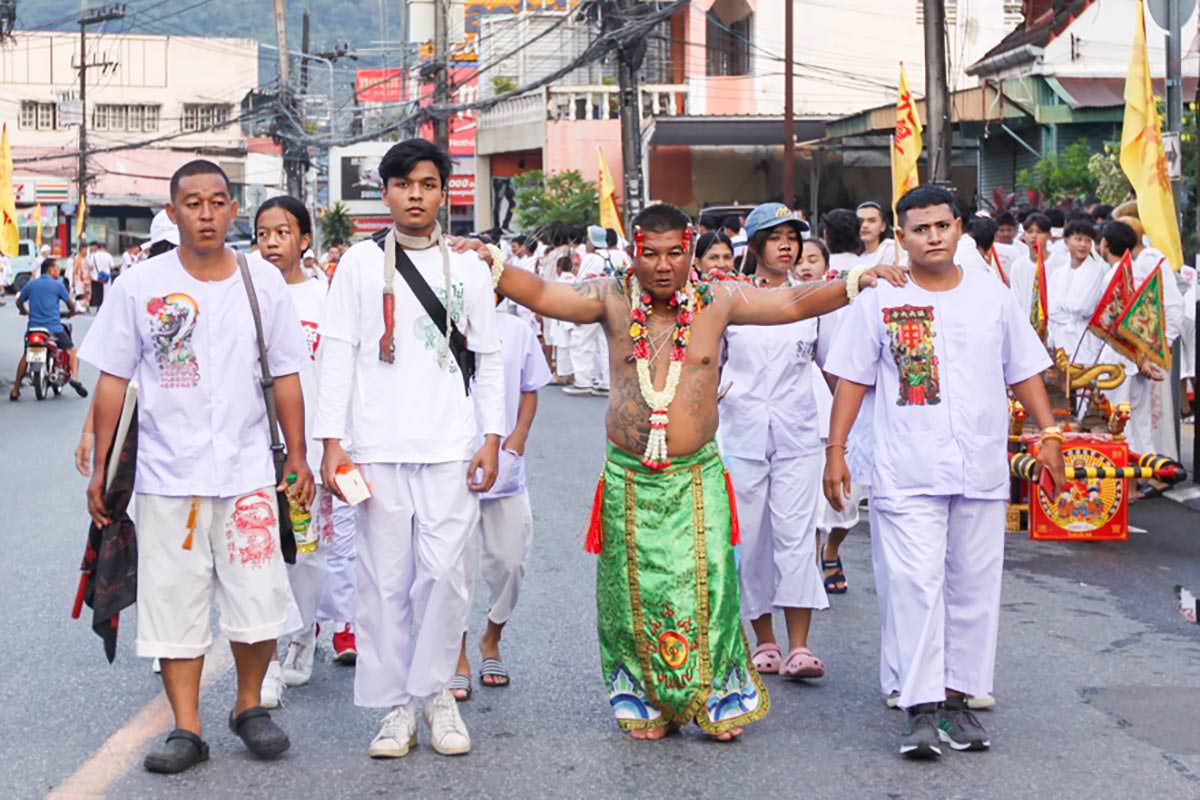
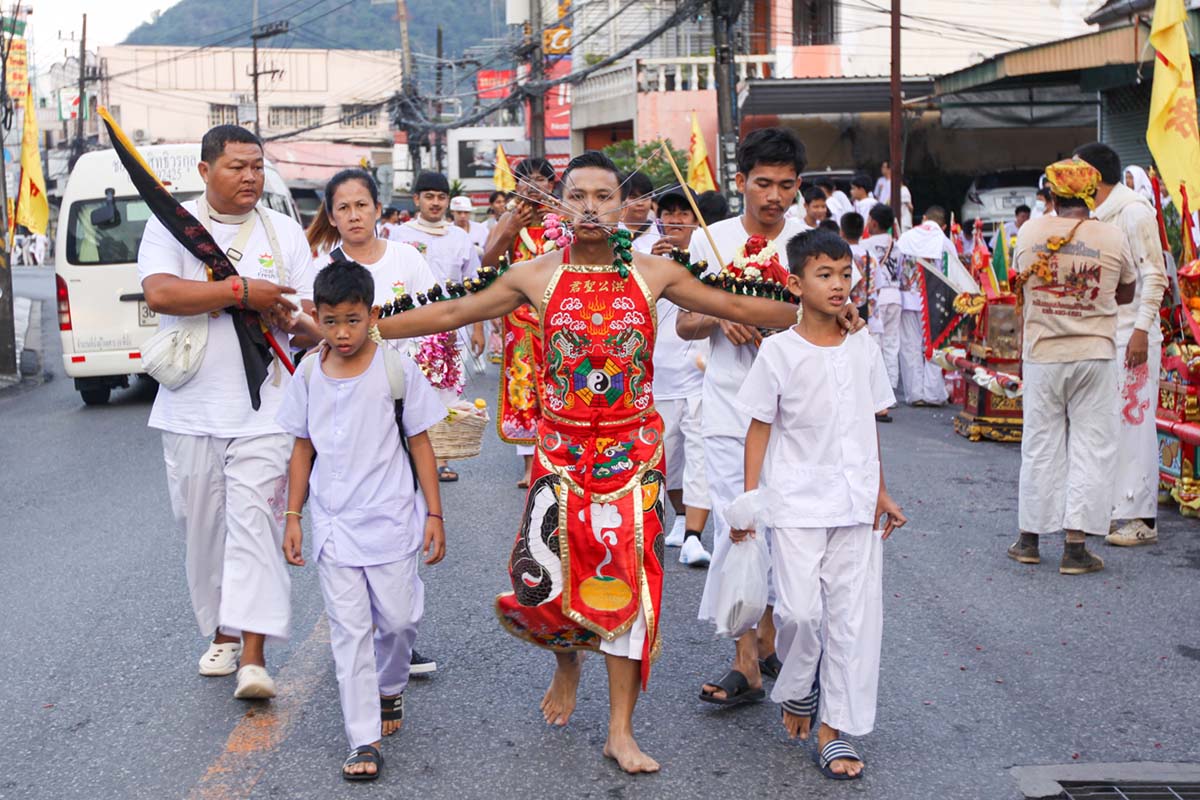
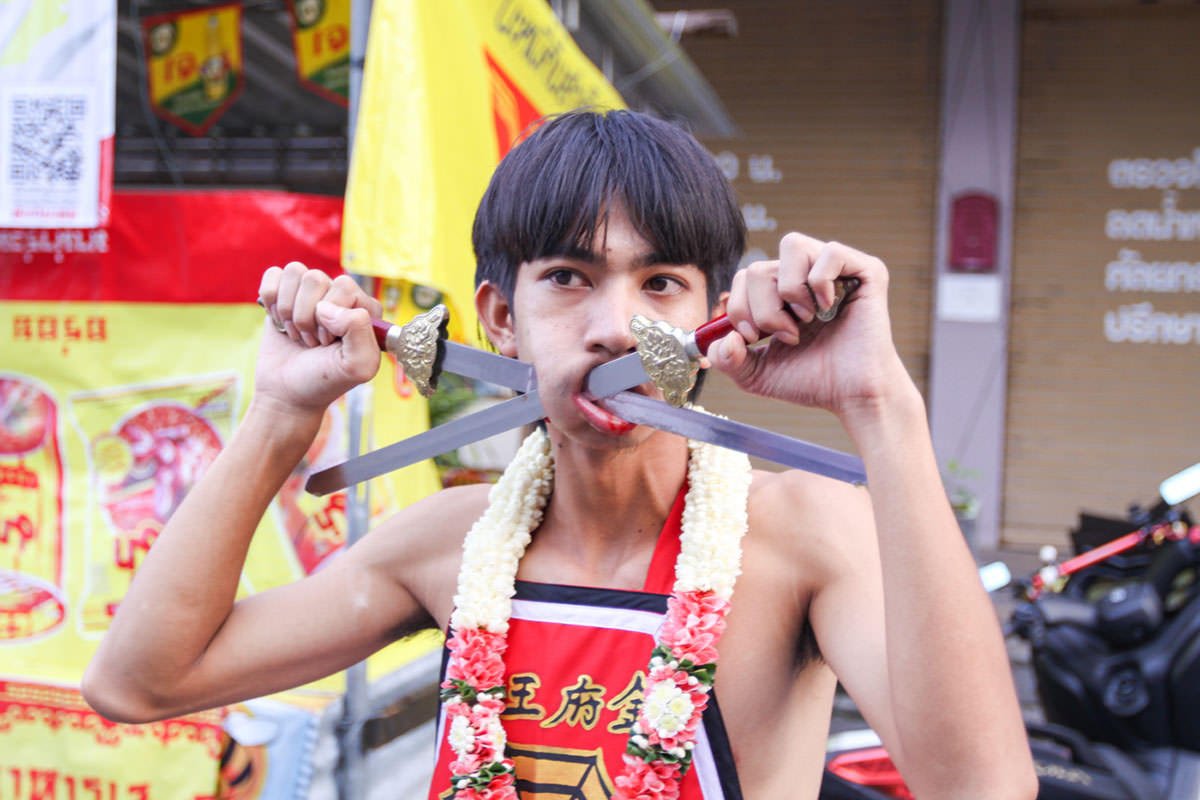
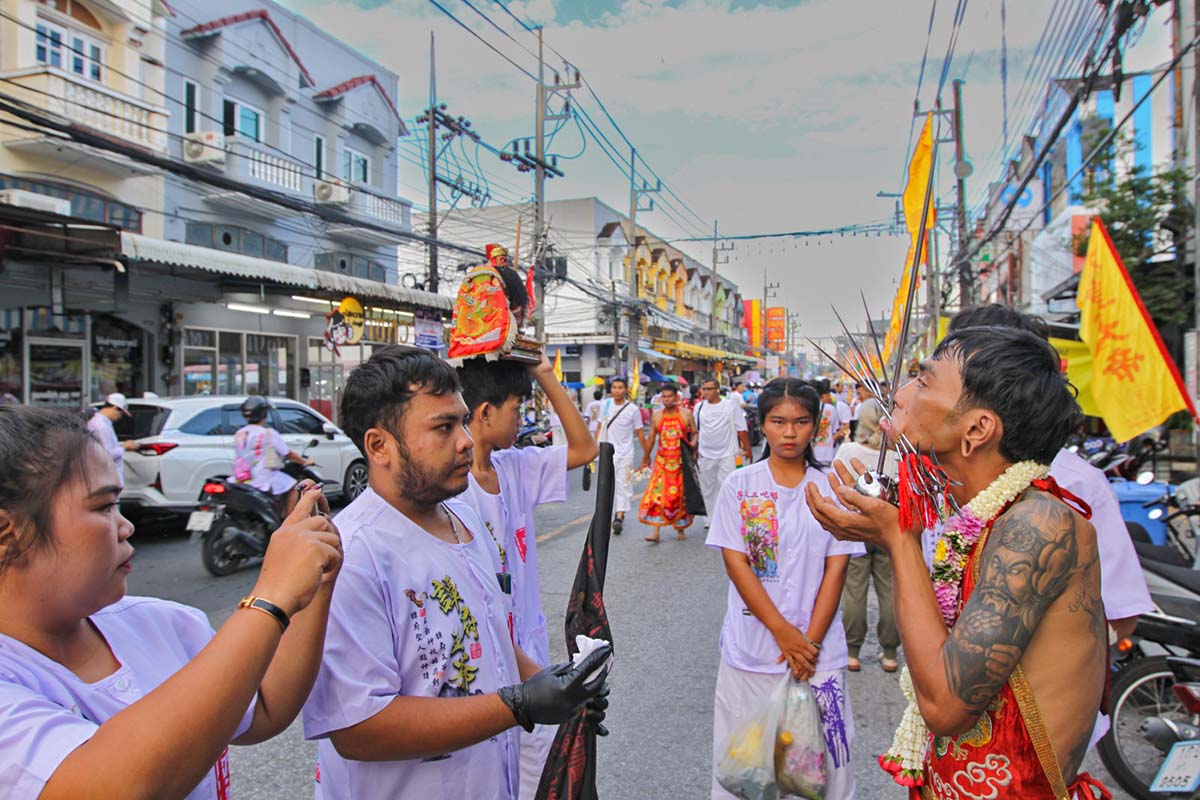
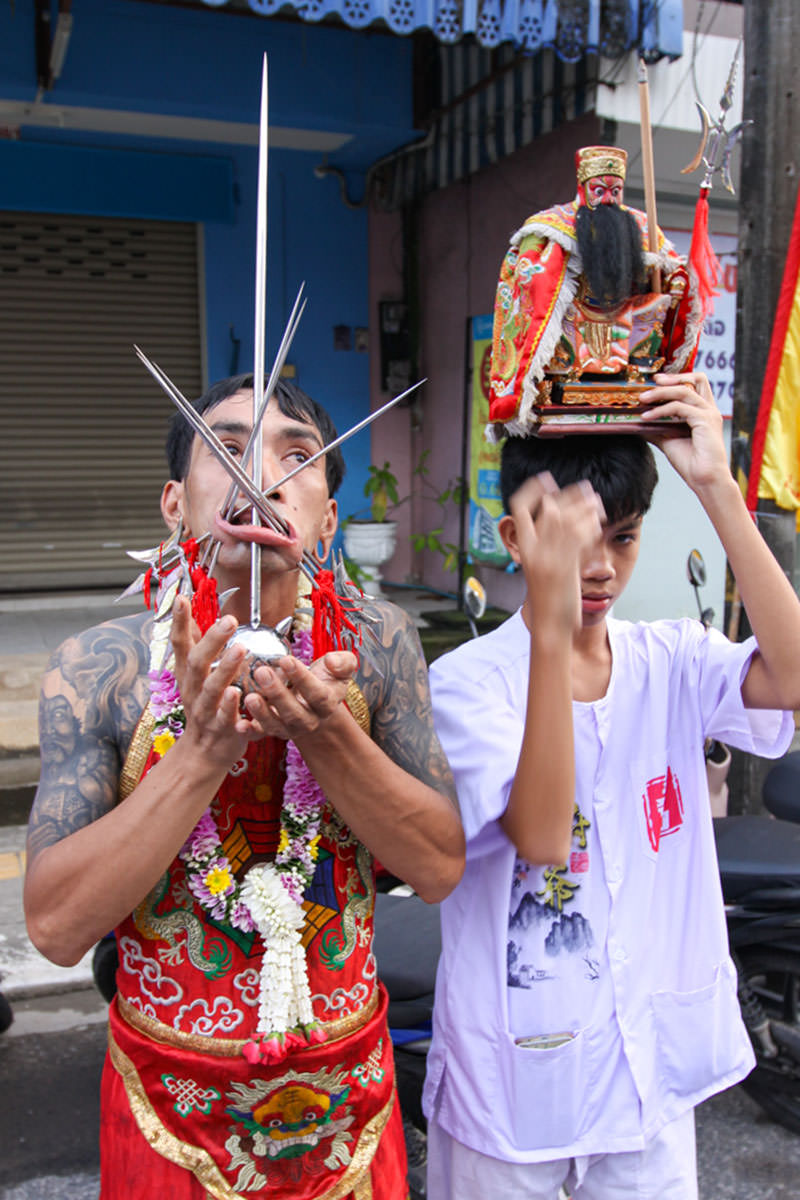
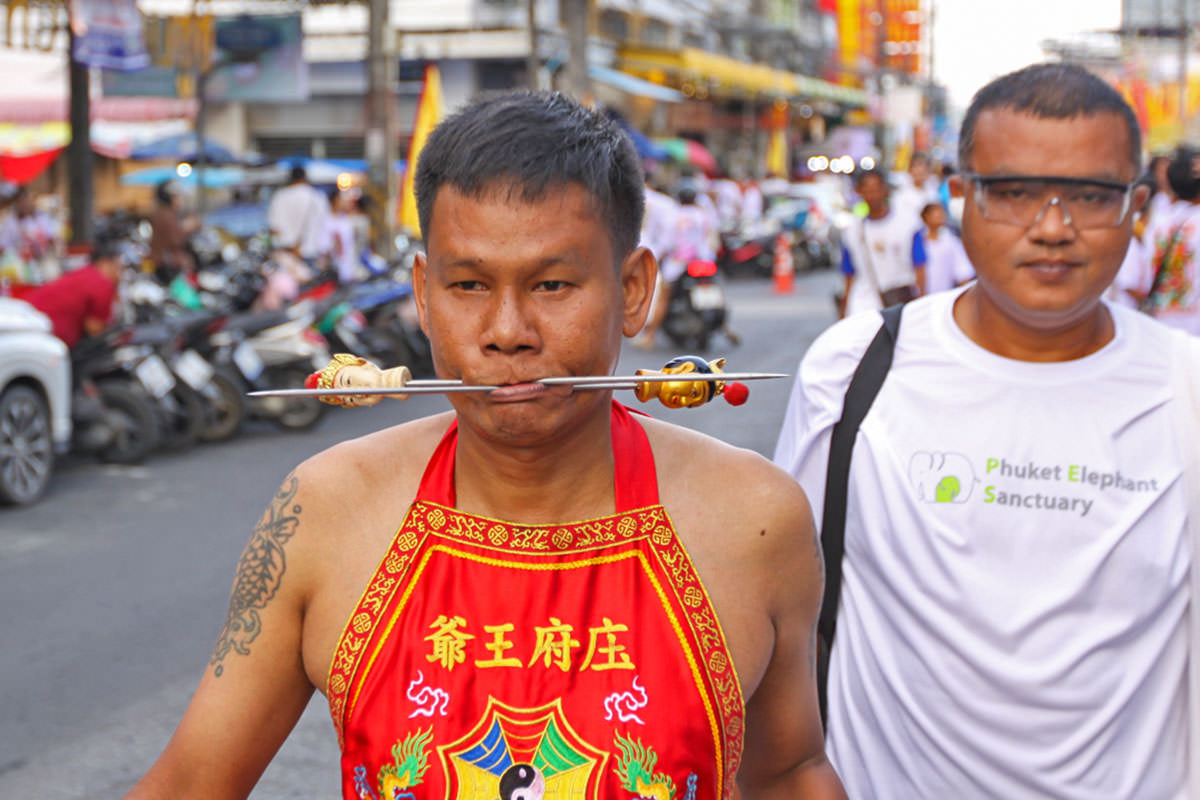
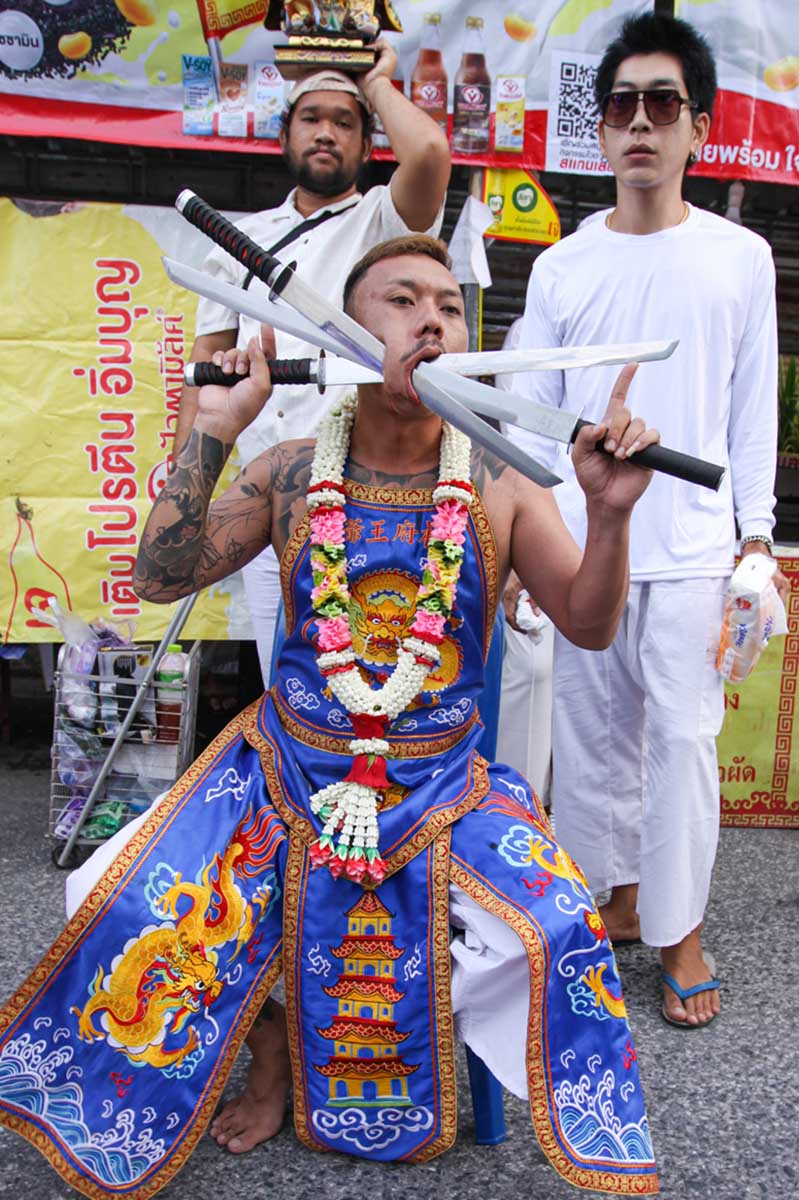
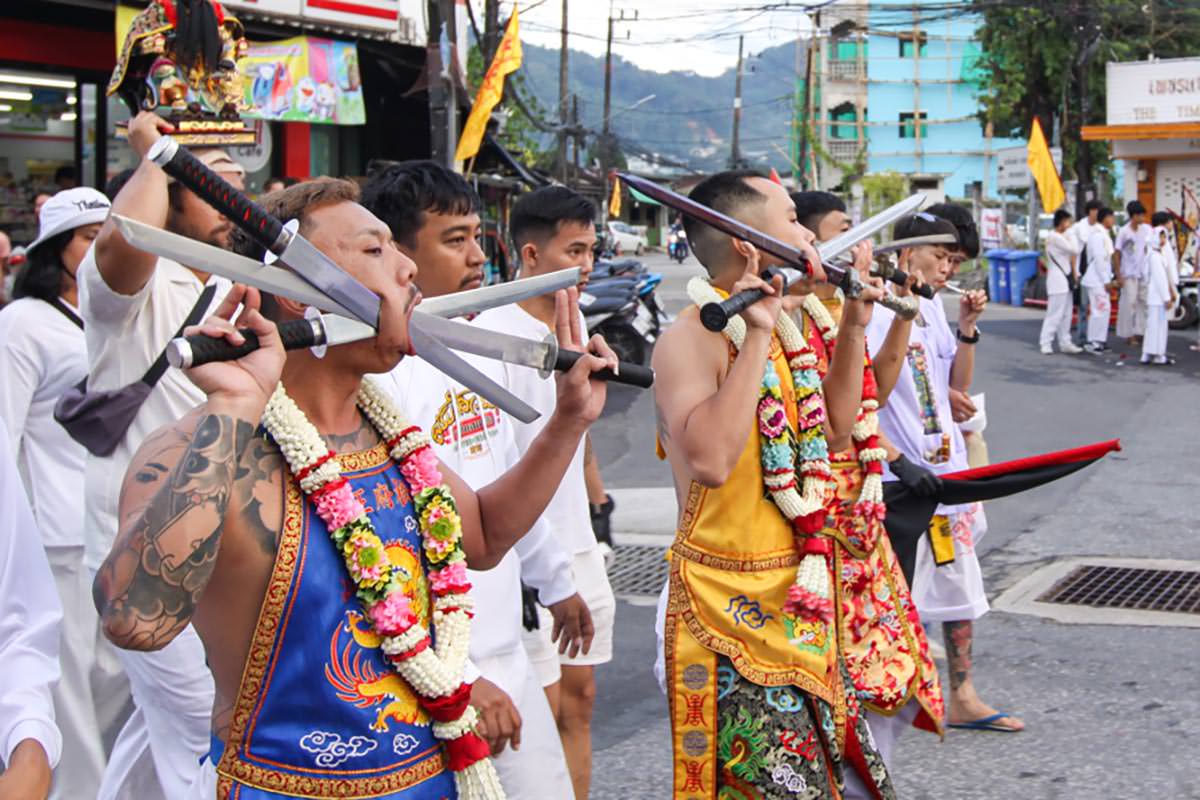
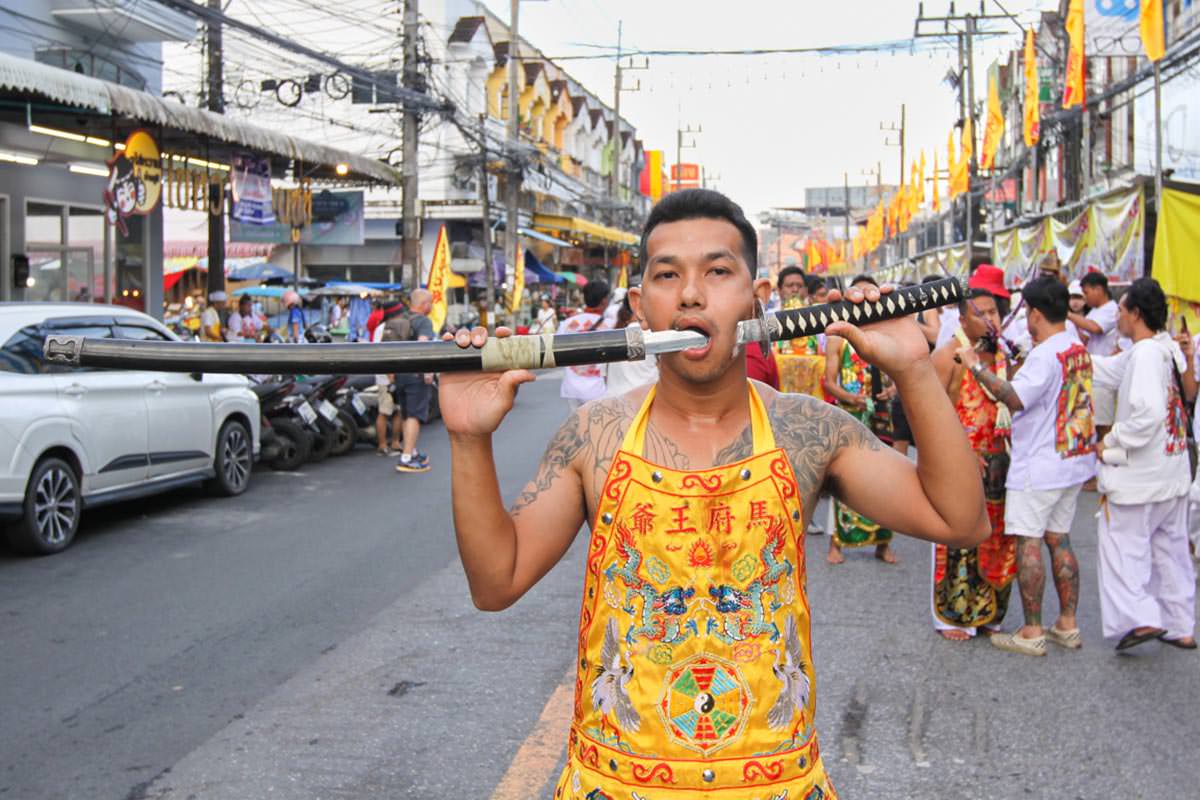
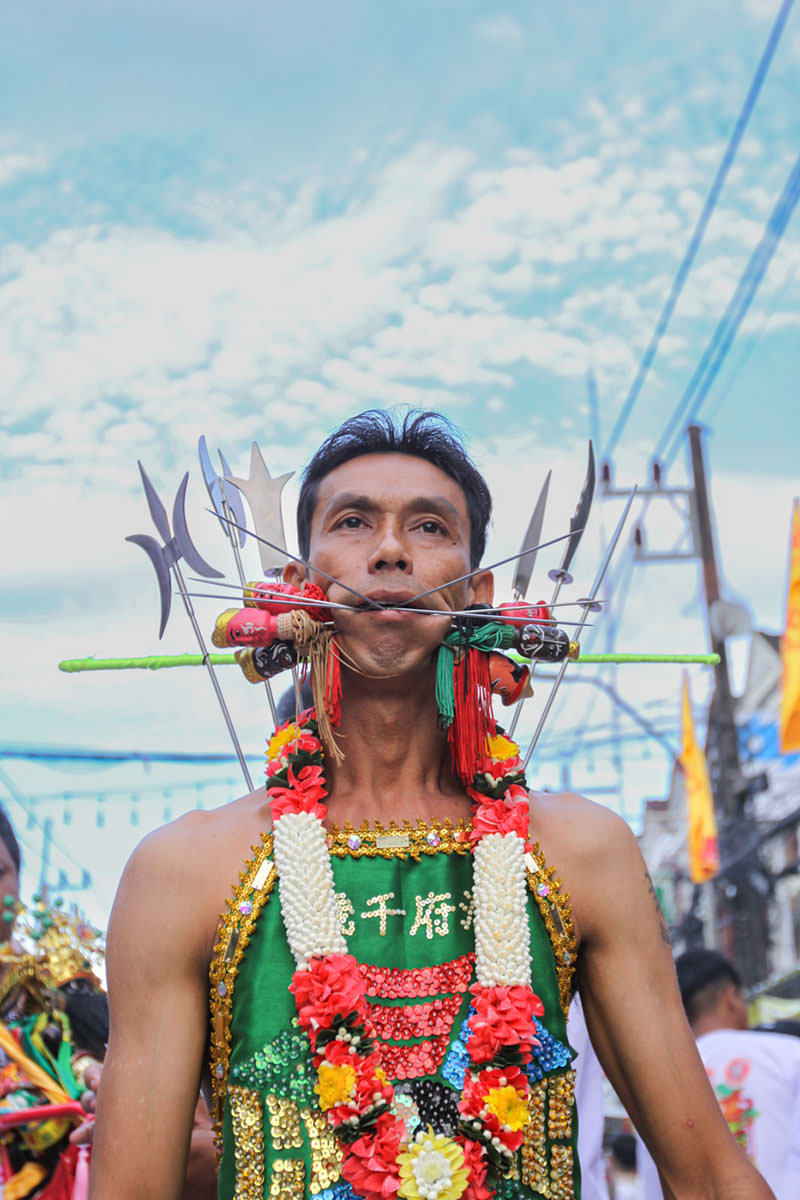
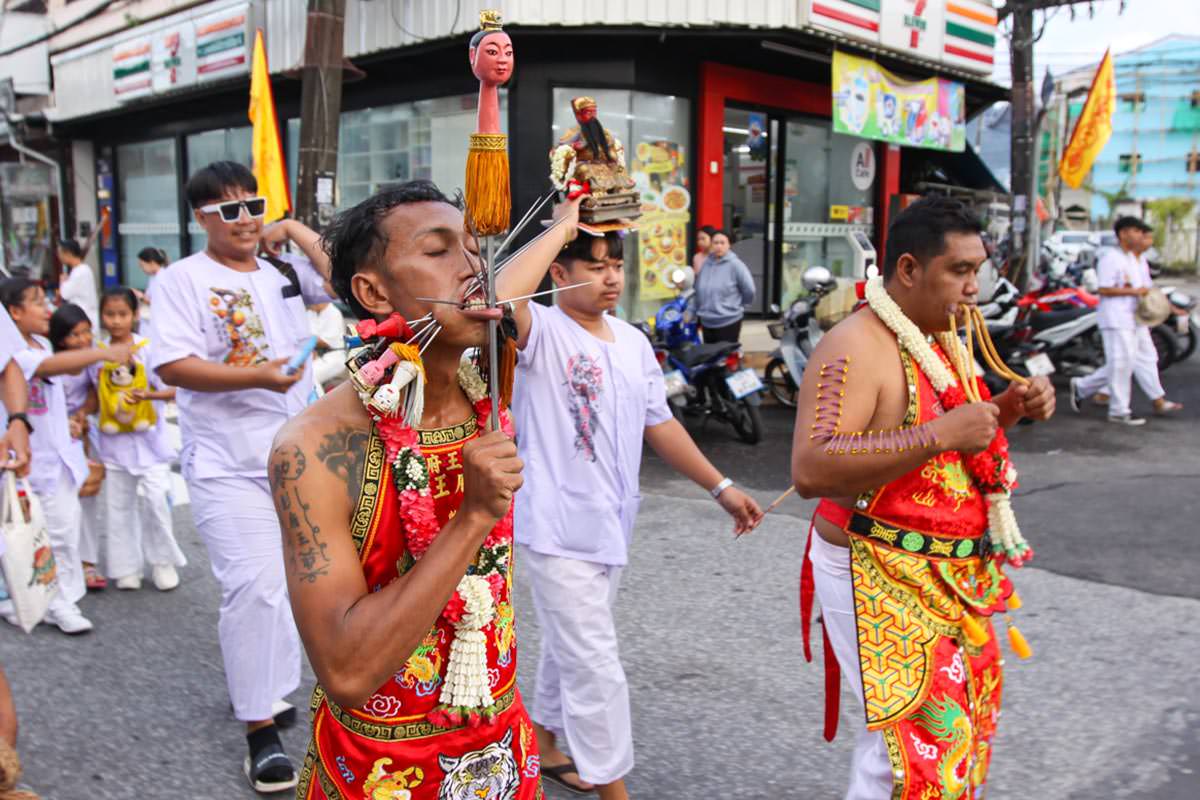
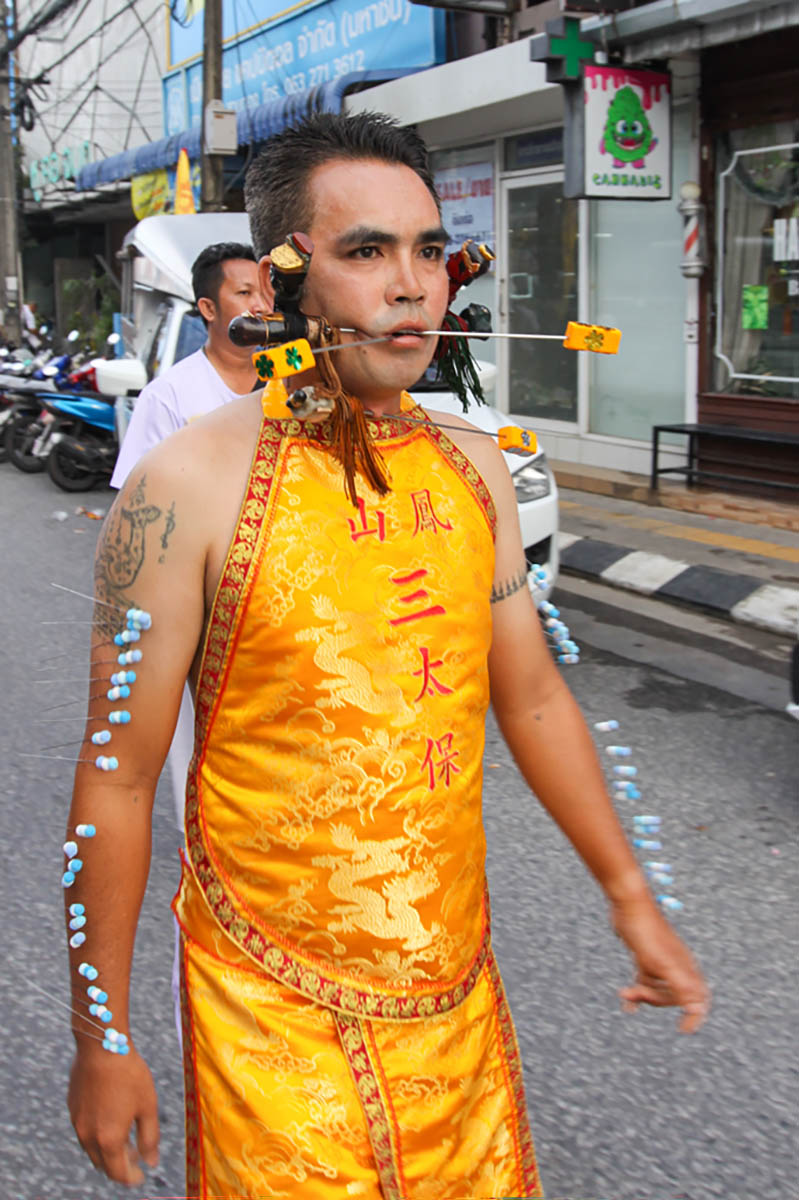
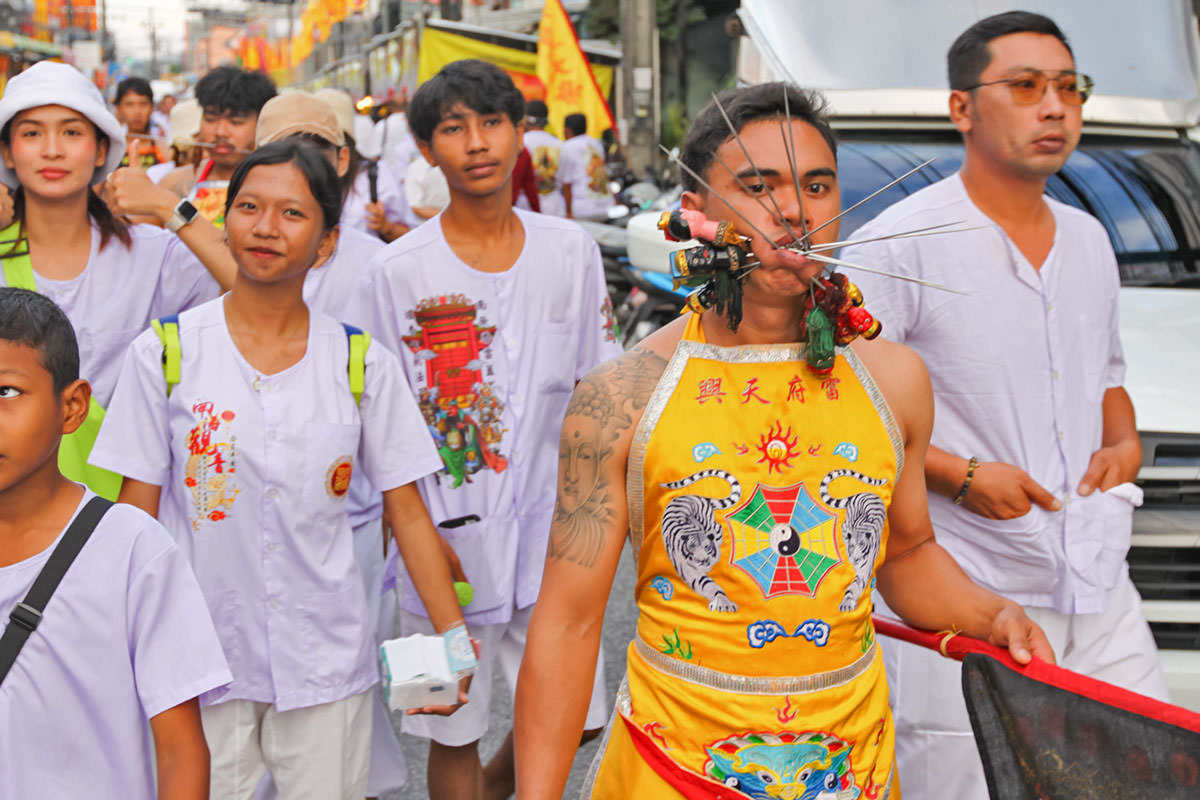
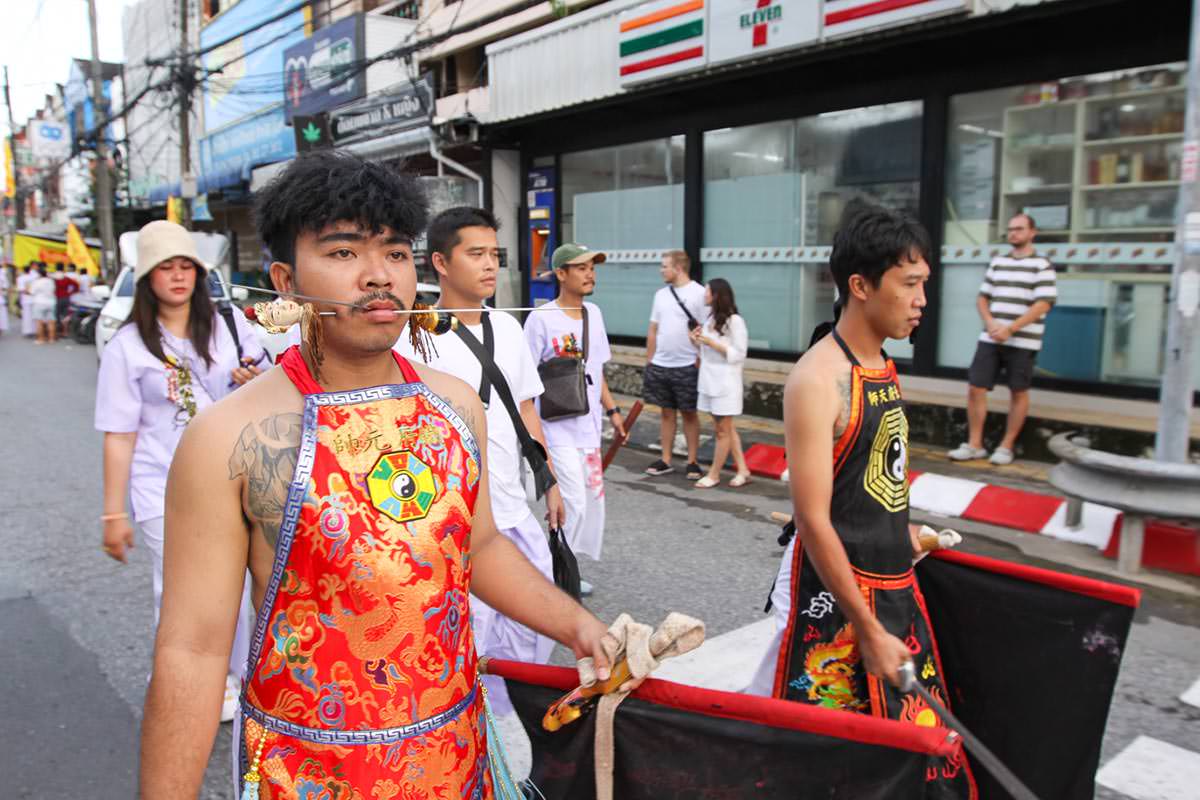
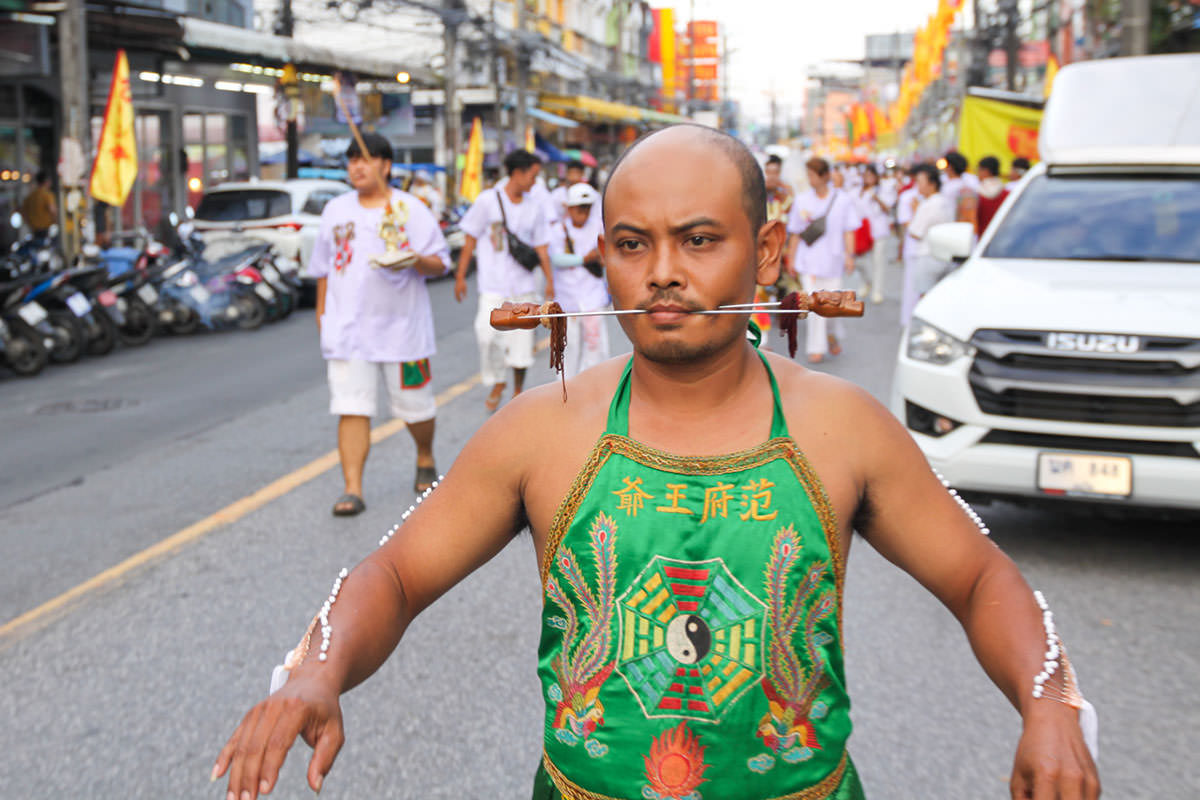
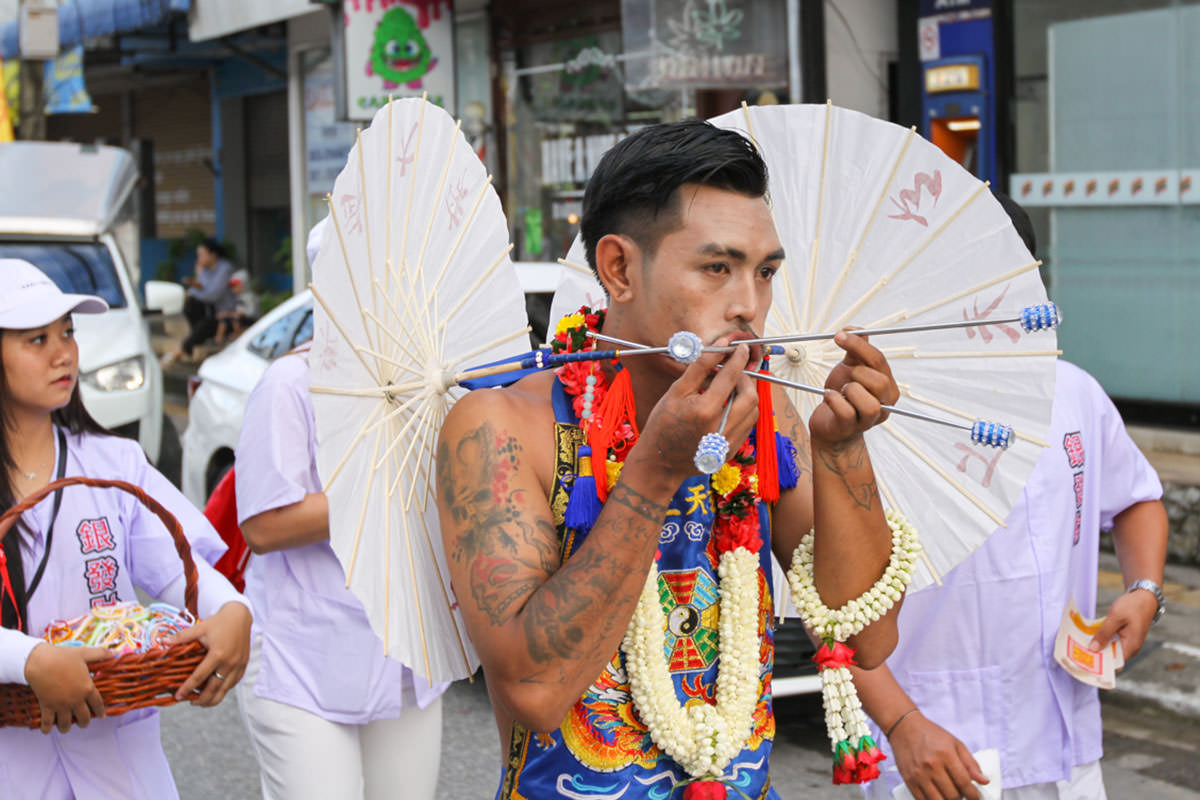
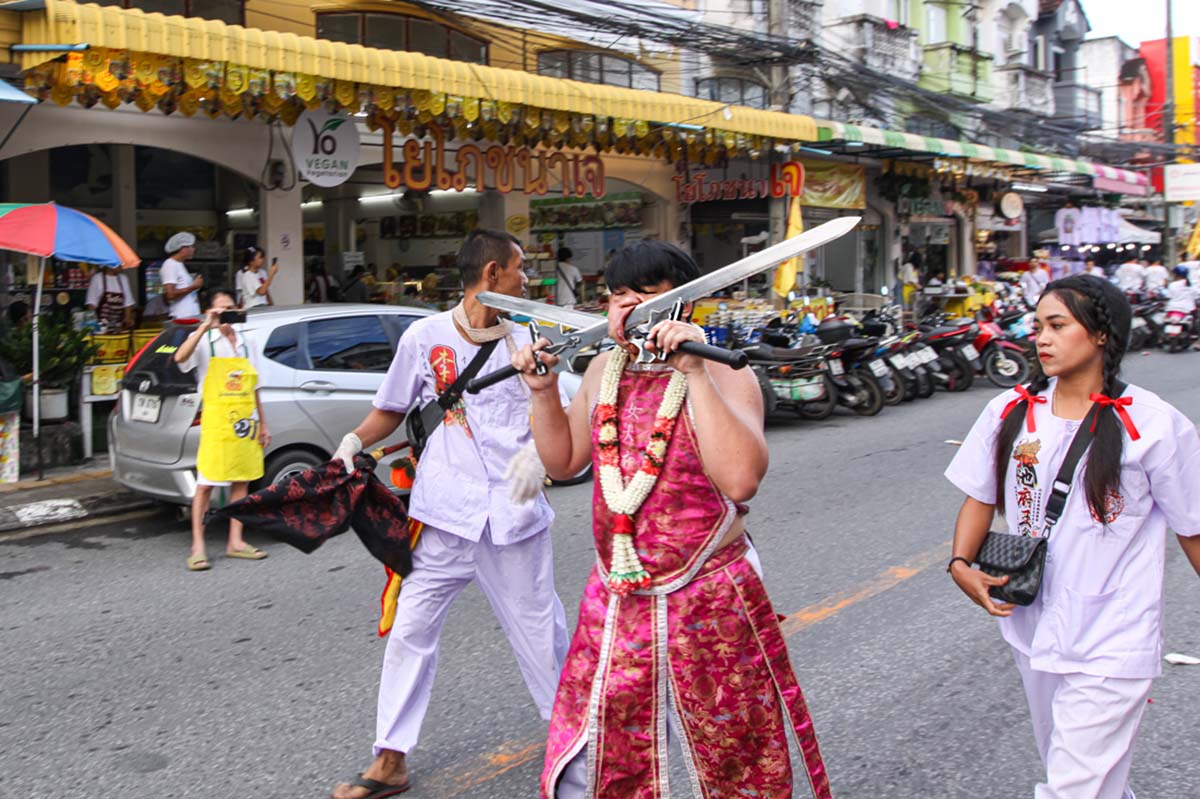
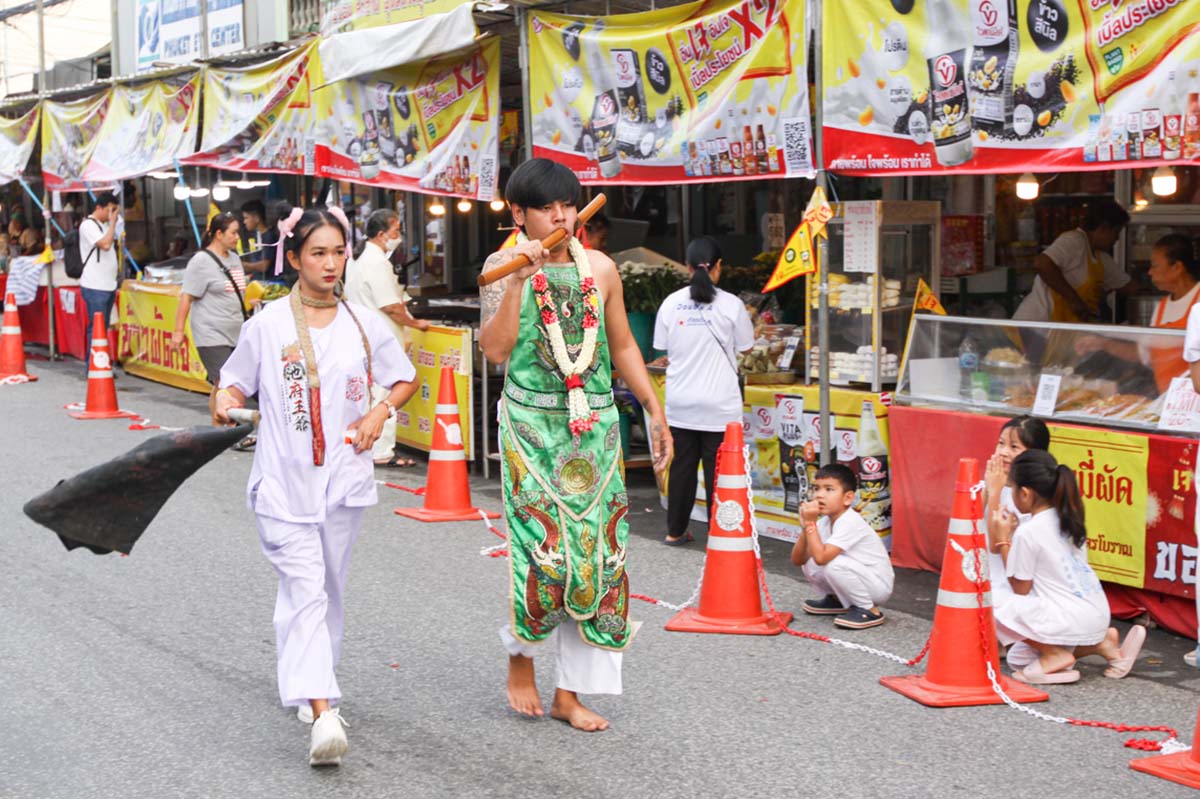
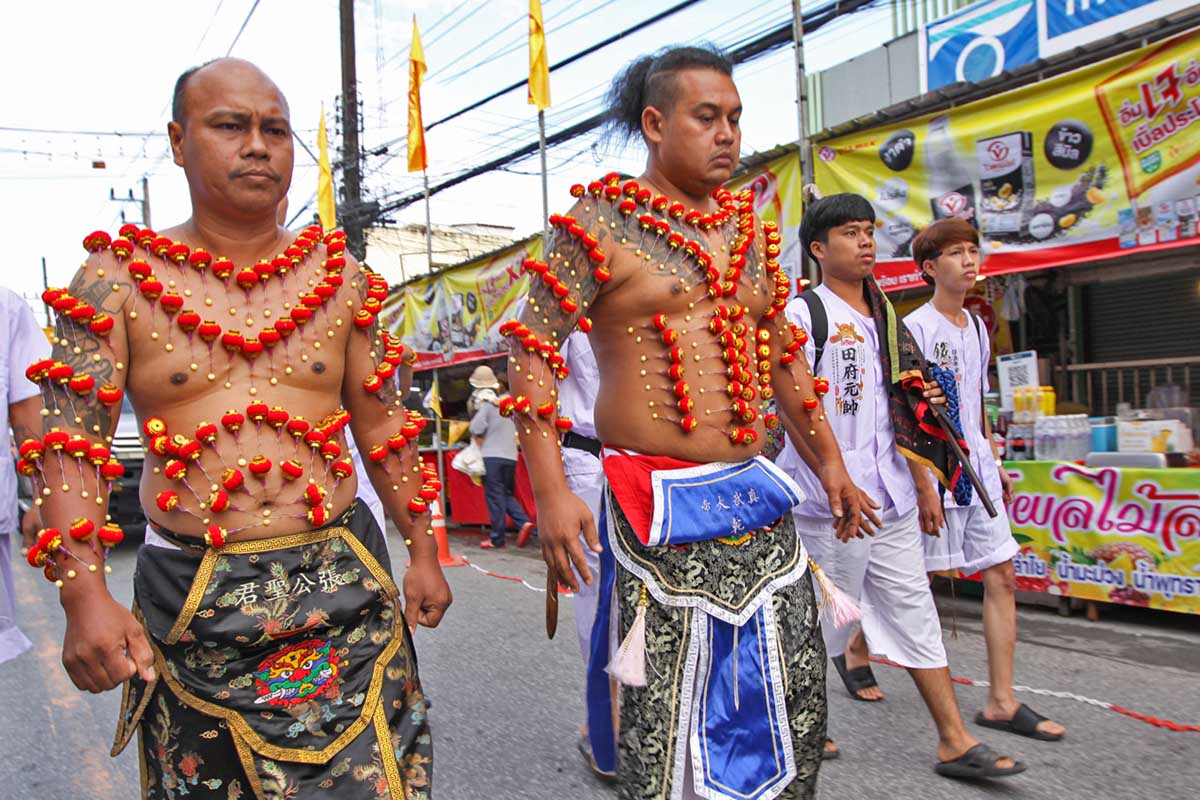
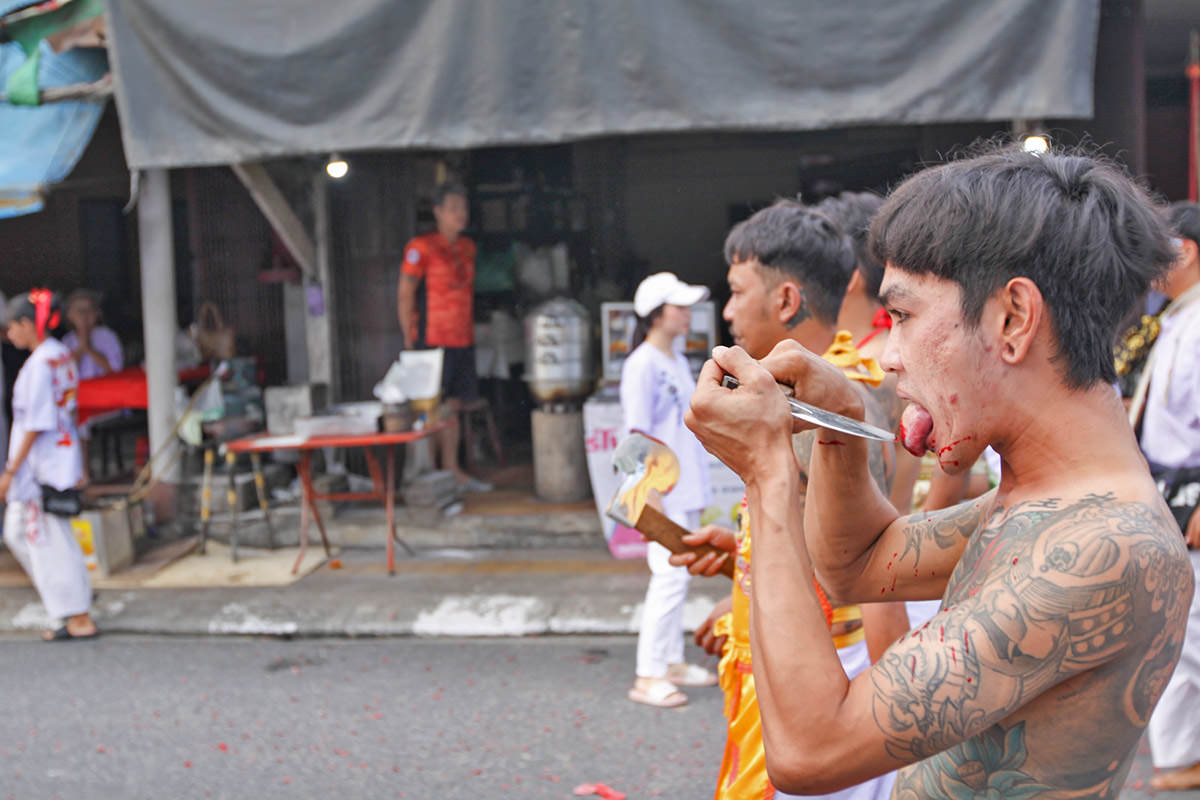
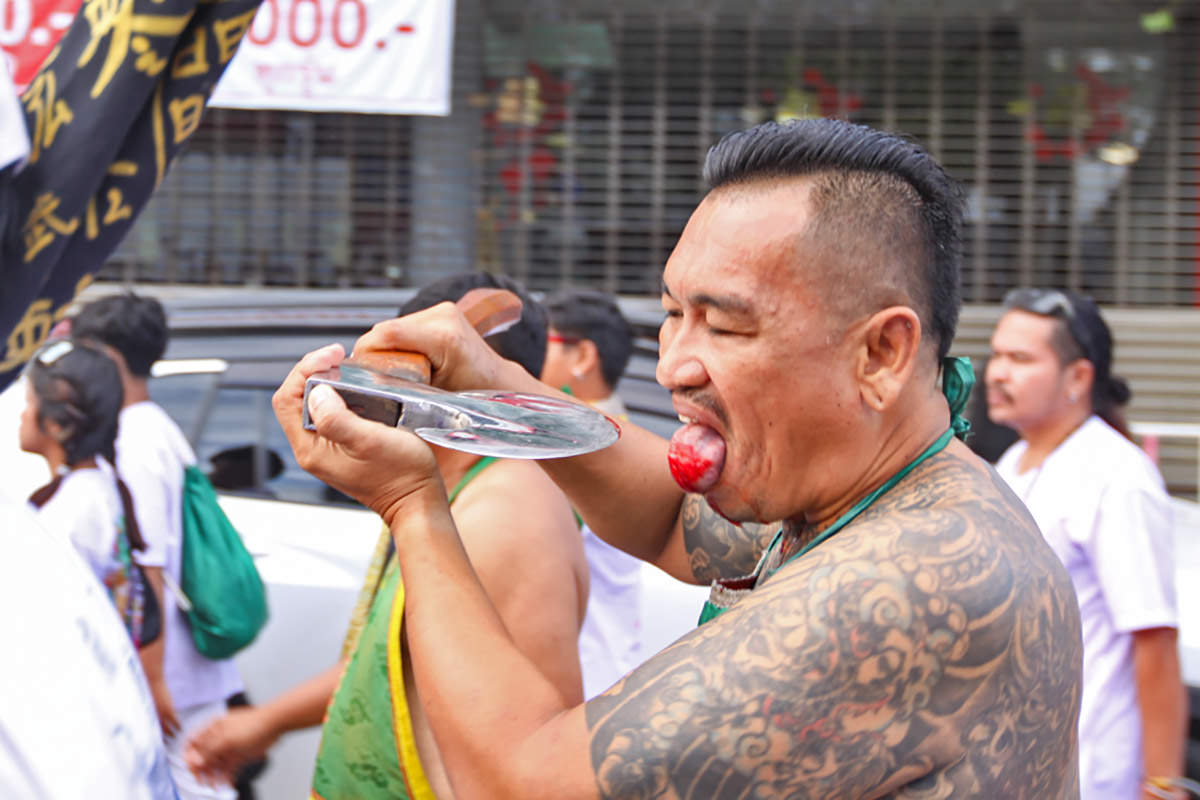
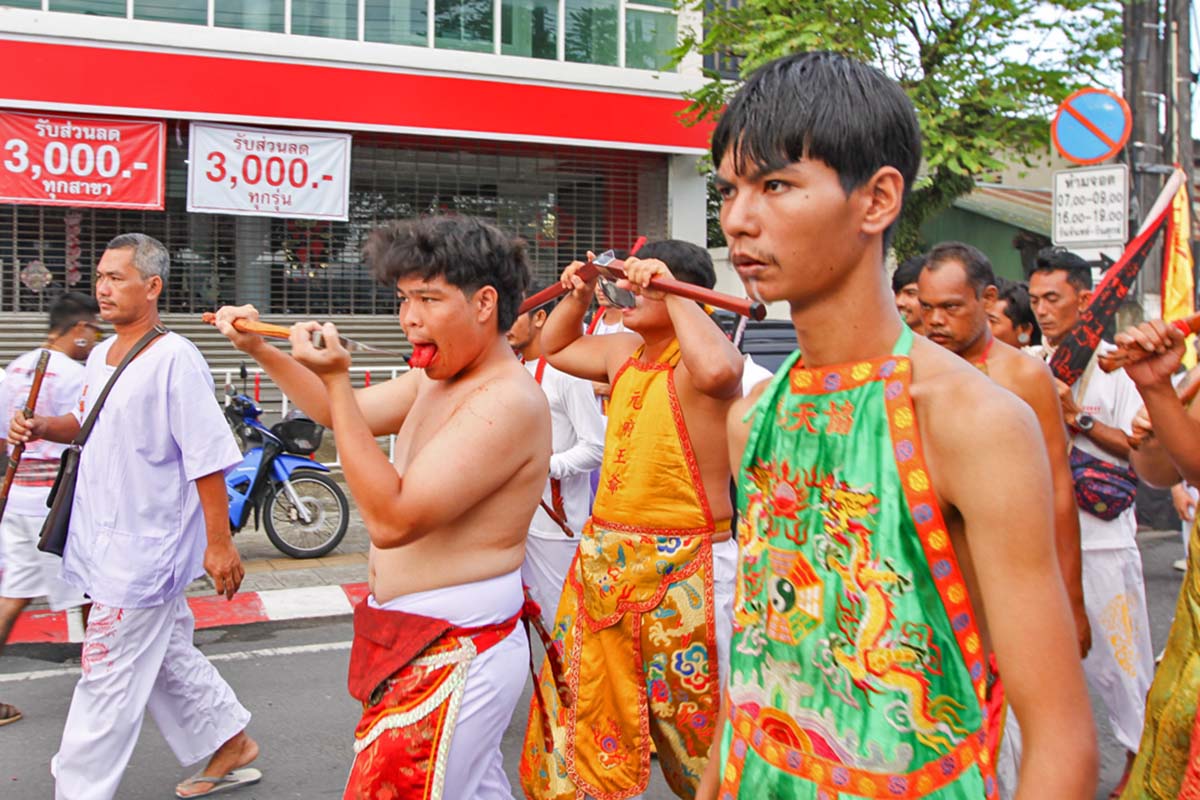
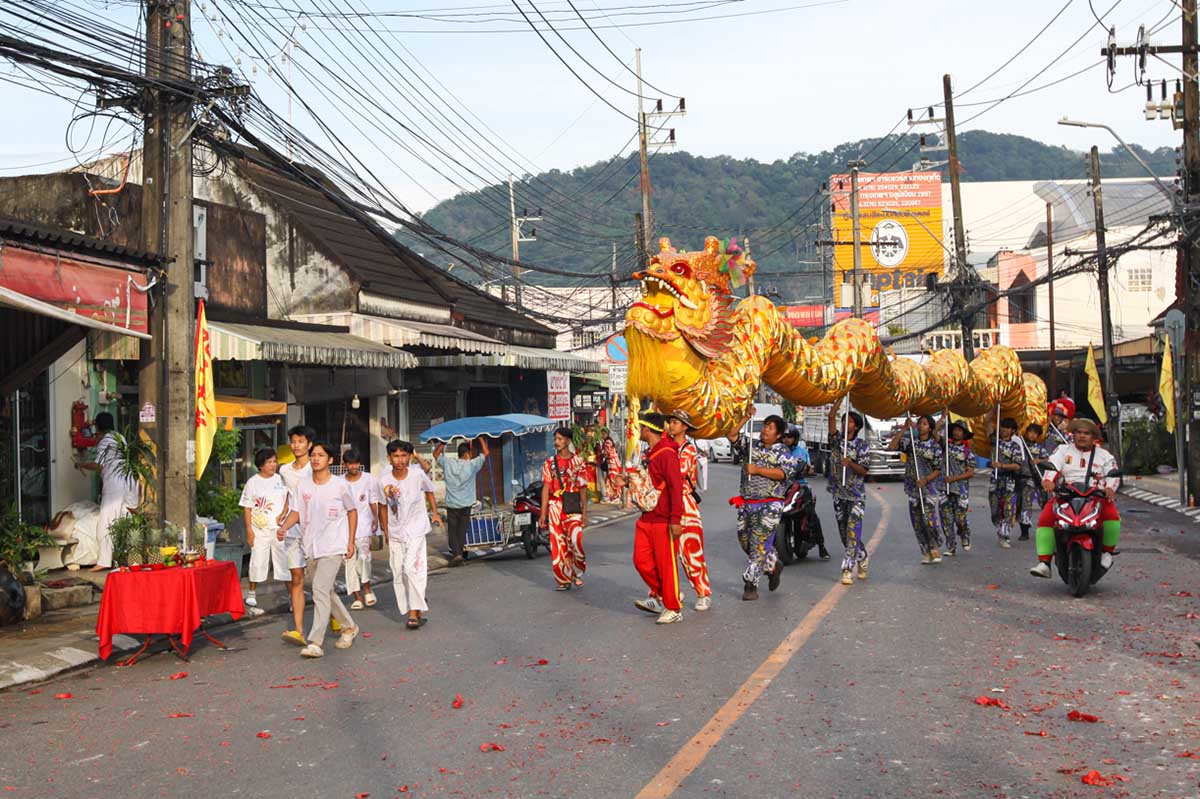
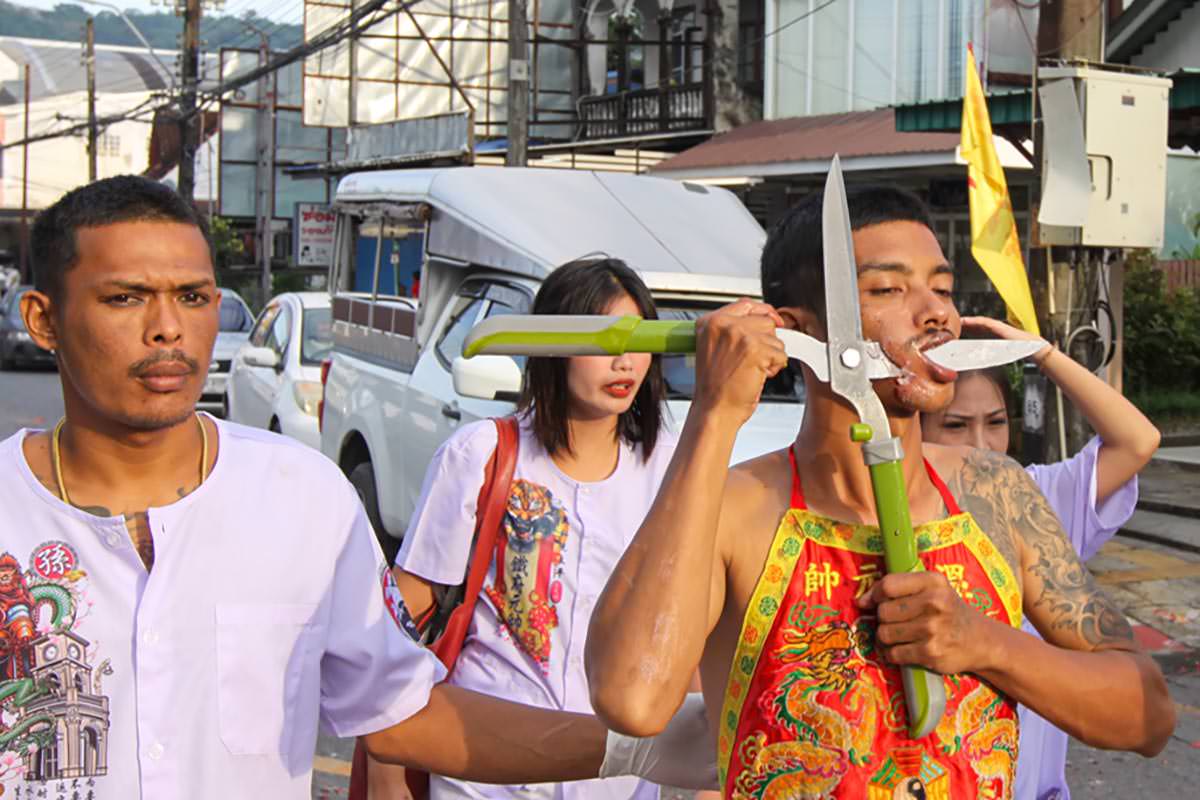
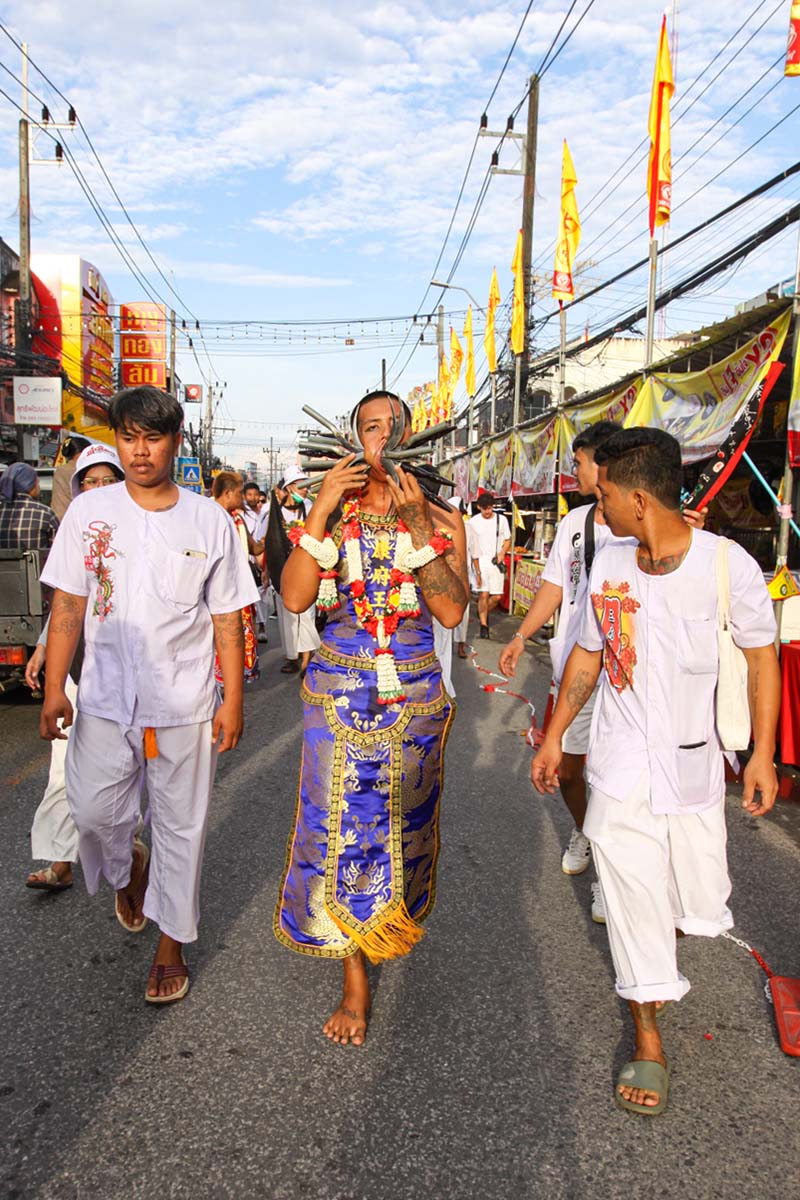
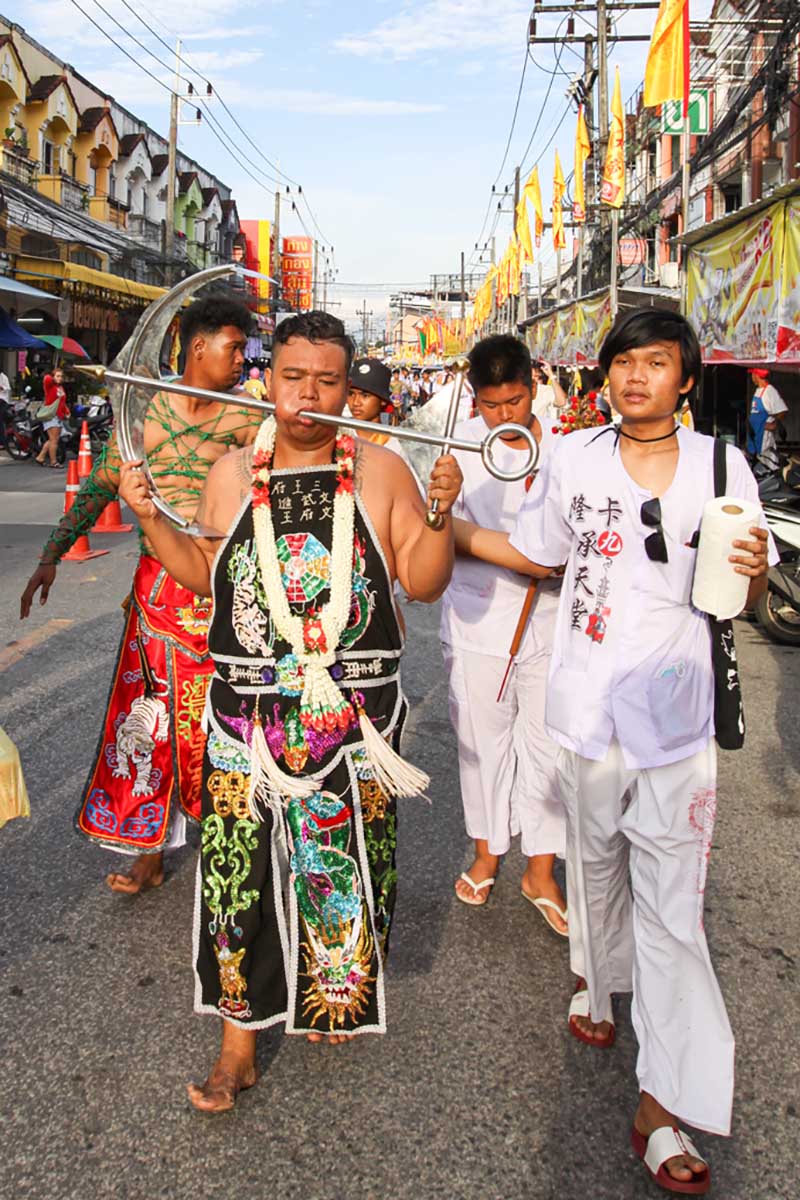
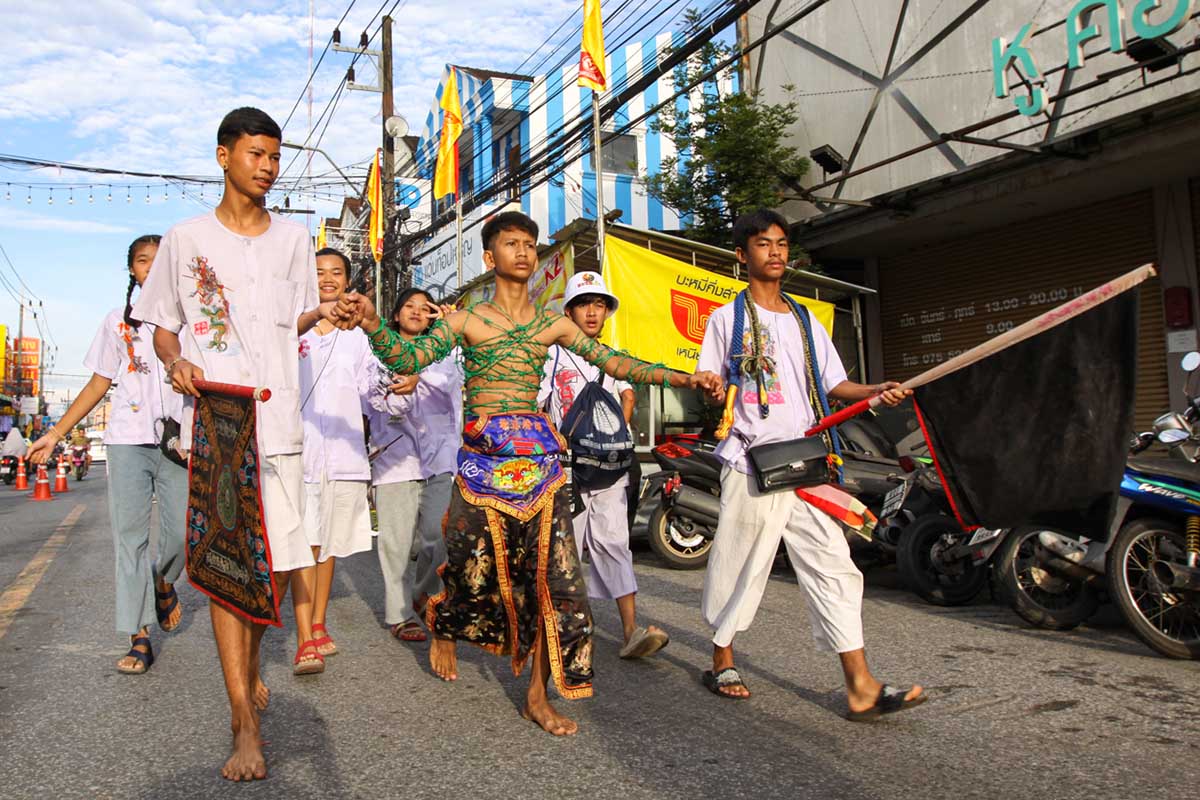
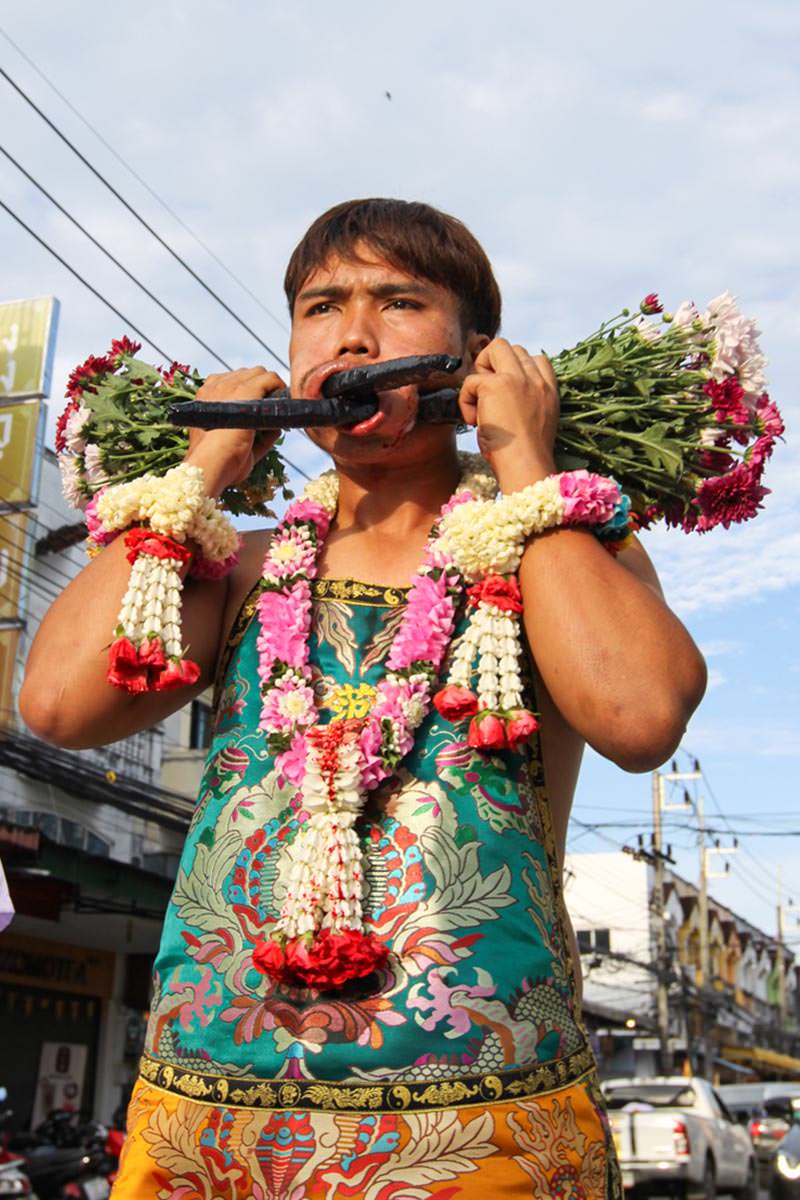
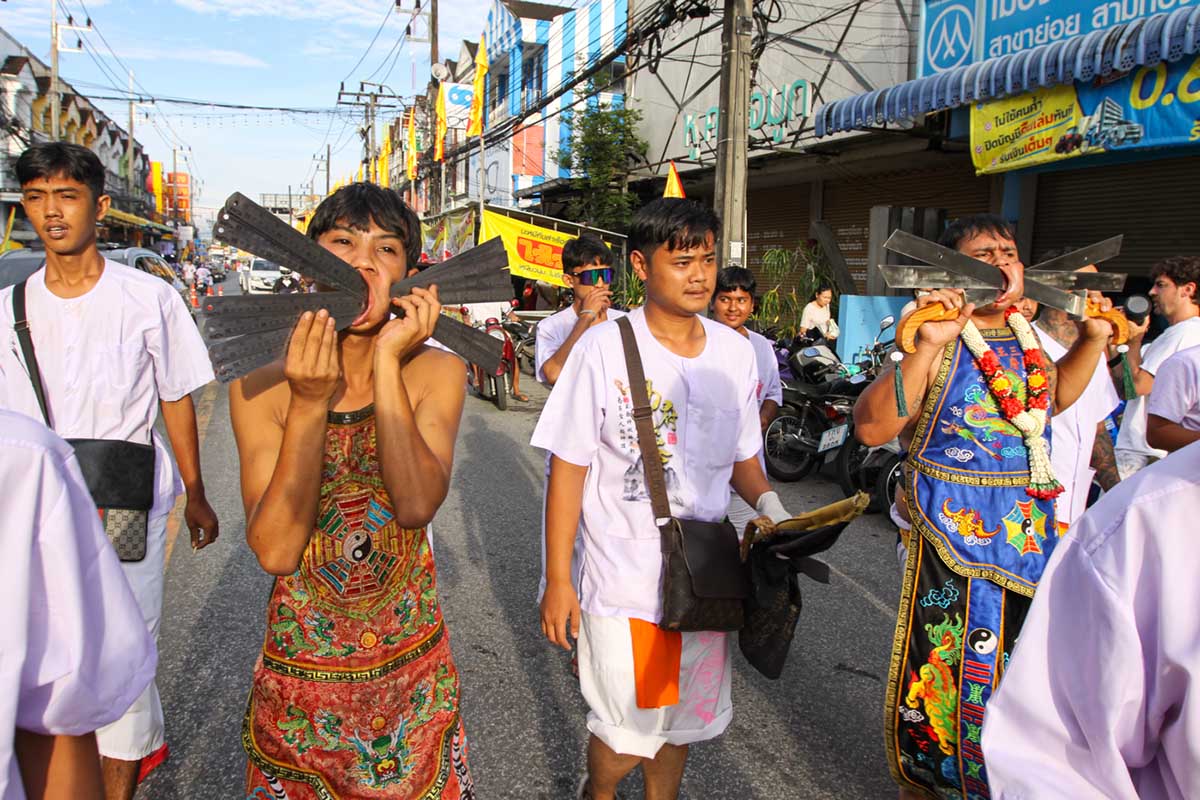
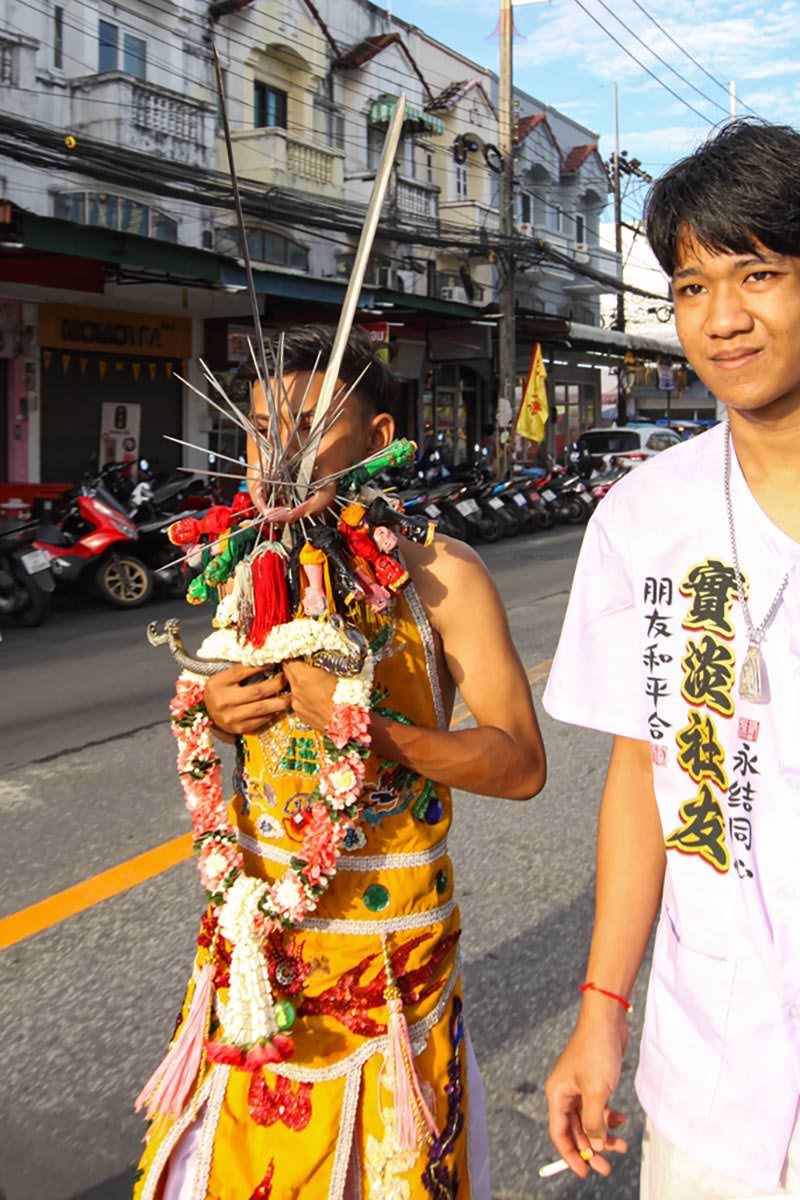
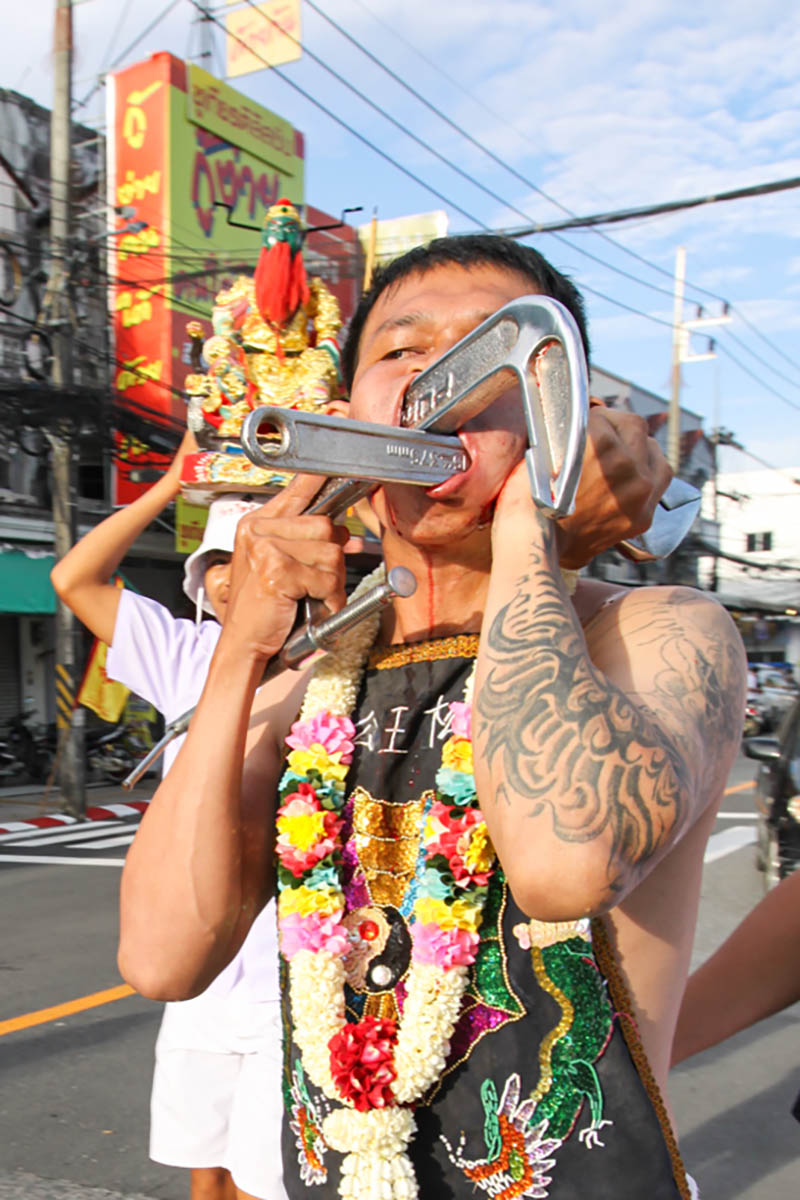
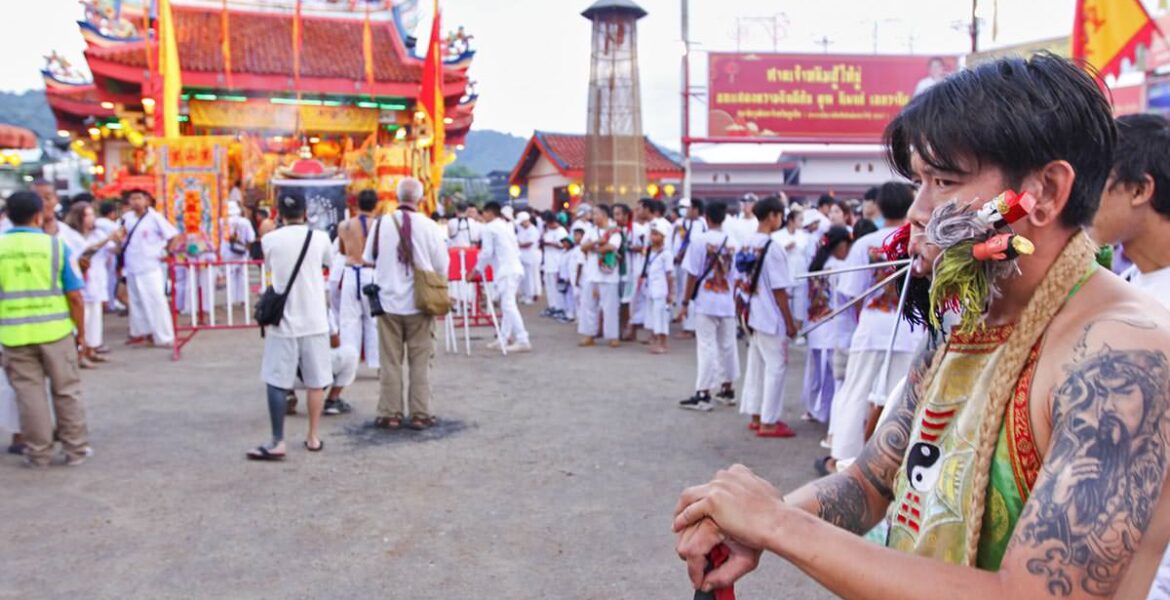
In the Sam Kong neighbourhood on the quieter north side of Phuket Town, people usually gather around Chillva Market for quirky accessories, a relaxed dinner, or a taste of local nightlife. Show up at dawn during Tesagan Gin Je, however, and the air feels entirely different: charged, almost electrically. When the Phuket Vegetarian Festival takes the Lim Hu Tai Su Shrine into its embrace, streets pulsate with devotees who display faith that conquers pain.
Some draw the blade across their tongues. Blood squirts over their arms
It begins with sound. Already at the first corner of Yaowarat Road – a street named after Thailand‘s first crown prince – a sharp metallic clang cuts through the morning stillness.
Around thirty barefoot men, dressed only in white trousers and ornately embroidered aprons, swing axes against their own exposed backs, skin already lined with cuts. Some draw the blade across their tongues. Blood squirts over their arms.
Check out the atmosphere in this YouTube short!
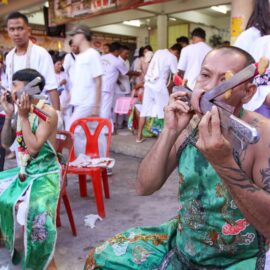
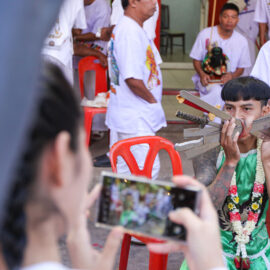
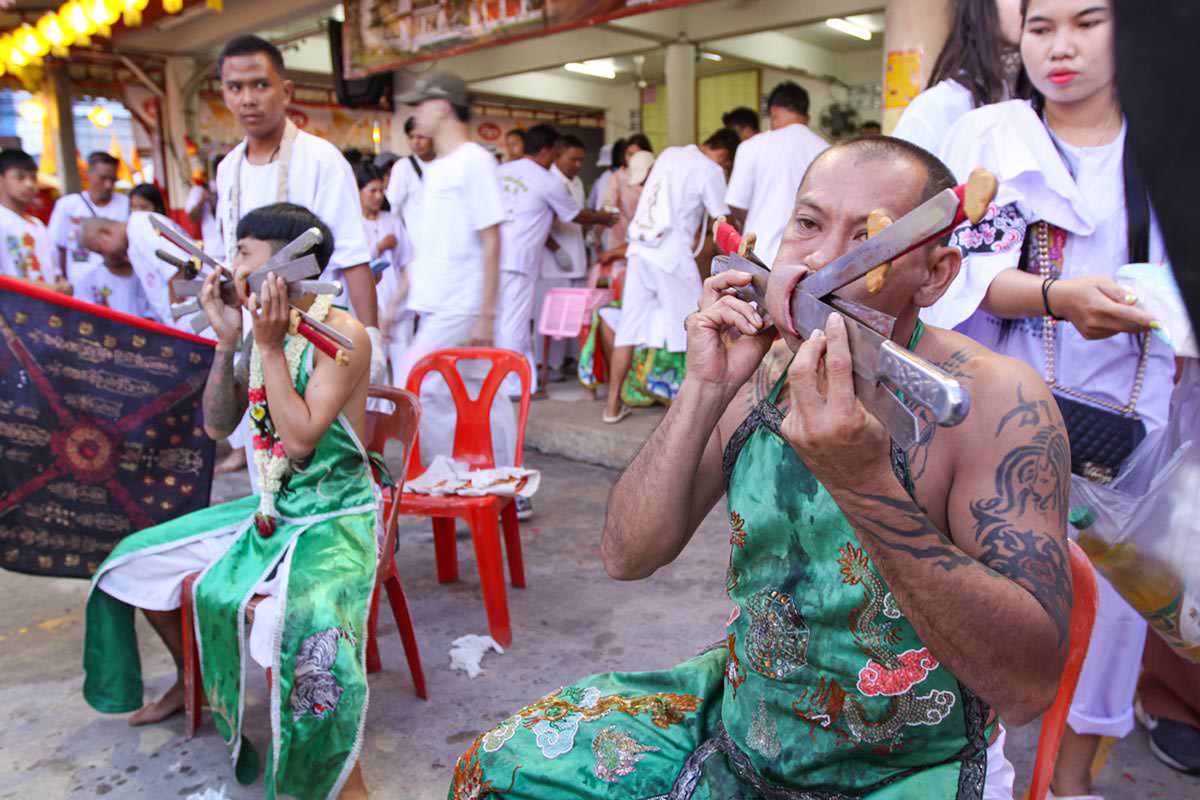
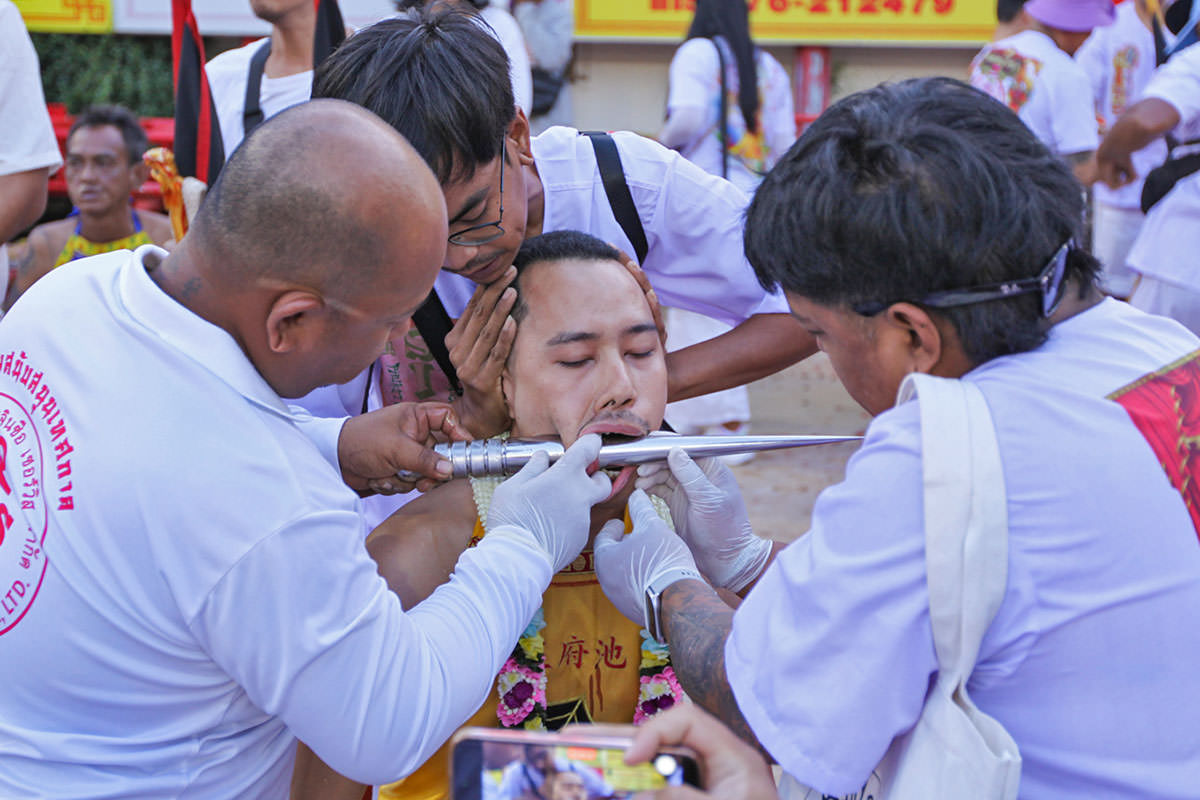
Those who descend deeper into trance don’t stop at surface wounds. Spikes, swords, sabers, sickles, sledgehammers, and secateurs adorn their faces as they walk the streets of Phuket Town. The tool needn’t begin with ‘s’ – it only has to fit through a hole pierced in the devotee’s cheek. A surprising number of things do.
The procession departs from Lim Hu Tai Su Shrine toward Saphan Hin Park at 6:45 am on the fourth day of a nine-day celebration honoring the Nine Emperor Gods. At one of the spiritually most significant Chinese shrines in Phuket, incense smoke and firecracker haze mingle in the early light, setting the rhythm for an act of disciplined devotion.
But Lim Hu Tai Su Shrine is far more than a festival backdrop. It is a living spiritual center, woven deep into the island’s Chinese-Thai heritage. This centuries-old Taoist temple rises magnificently from a thoroughly ordinary neighbourhood of food shops, schools, and flower stalls. That contrast makes the shrine feel otherworldly. Step through the dragon-wrapped columns, and the everyday will stay behind.
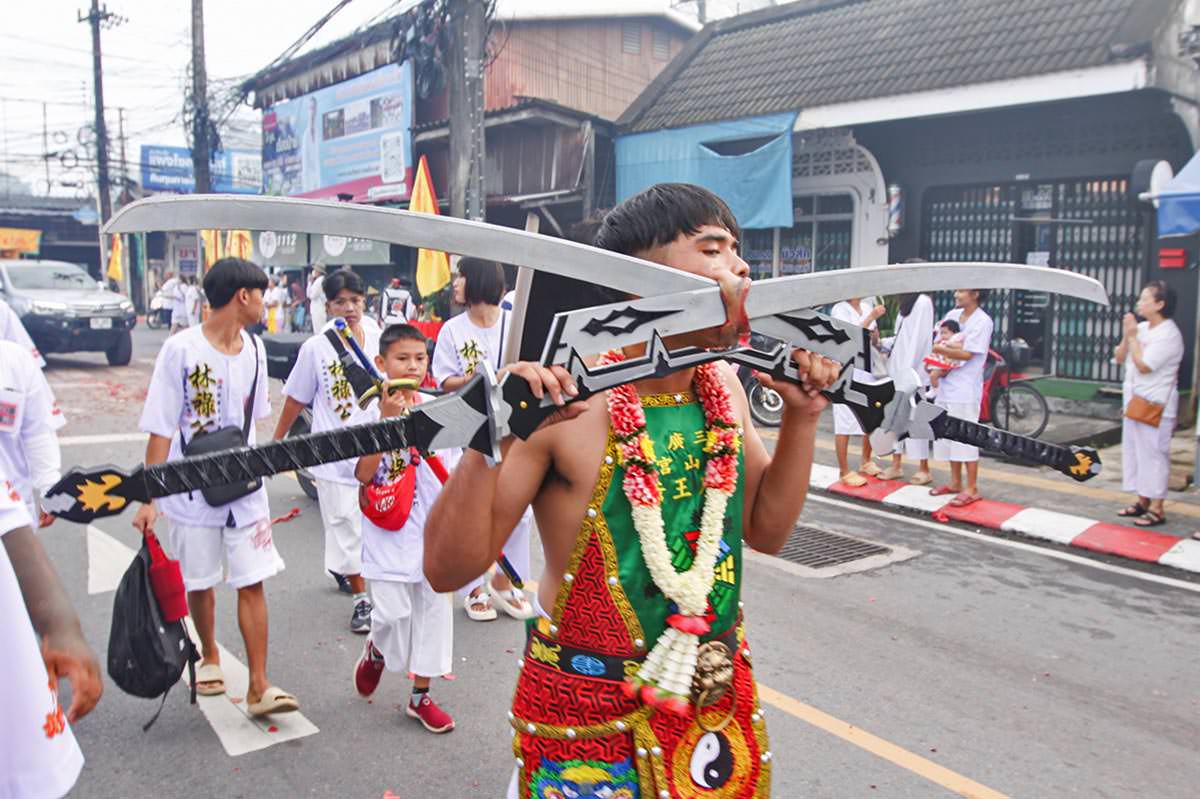
Lim Hu Tai Su Shrine History
Over a century before the axes came out at dawn, there was just a patch of land, a cement floor, some zinc walls, and a thatched roof on wooden posts.
Lim Hu Tai Su Shrine – variously spelled Lim Hoo Tai Soo or Loem Hu Thai Su, and also known as Sam Kong Shrine after its neighborhood – has served as a spiritual anchor for Phuket’s Hokkien Chinese community since its construction in 1914.
The temple’s congregation consists of descendants of migrants who left Fujian province in southern China during the 19th century, drawn to Phuket by the promise of work in the island’s booming tin-mining industry. They built businesses, planted roots, and, just as importantly, brought with them the temples, rituals, and religious traditions of home.
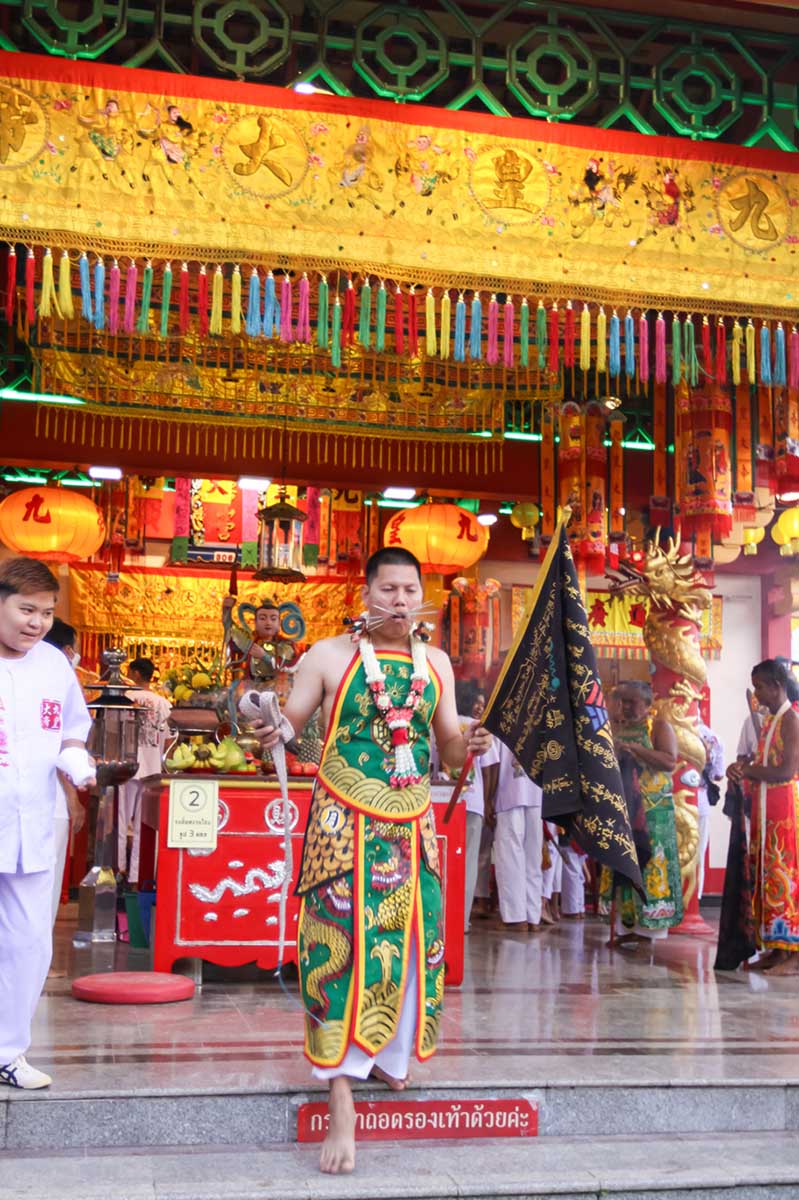
In an unfamiliar and often unforgiving environment, shrines weren’t a luxury. They were a lifeline: protective spiritual centers where communities prayed for health, prosperity, and the kind of stability that comes from feeling watched over by familiar gods. A number of these shrines took root across the island.
The land of Lim Hu Tai Su was donated in 1914 by Luang Sunthon Chinpracha, a member of a prominent Chinese-Thai family. Five years later, he formalized the gift, issuing a land title deed in the name of Muen Sam Kong, also known as Tan Boon-seng.
In the 1940s and 1950s, the original structures were expanded, renovated, and improved – first to corrugated zinc, then to tiled roofing – before being completely demolished and rebuilt from scratch in 1994.
Shortly after the renovation, the shrine’s caretaker summoned Hiew How, the sacred fire from China’s Kung Sai province, and with that ritual act, Lim Hu Tai Su Shrine formally became a full participant in the annual Nine Emperor Gods Festival, beginning in 1995.
Today’s complex reflects a blend of traditional southern Chinese temple architecture and local Thai influences: an elaborate ceremonial gate at the Lim Hu Tai Su Shrine entrance, curved tiled roofs, stone lion guardians standing watch on either side, and intricate serpentine golden dragons coiling around vivid red pillars.
Who Is Lim Hu Tai Su?
The shrine takes its name from its principal deity: Lim Hu Tai Su, a divine figure believed to hold power over illness. Its sacred statue occupies the main altar, surrounded by venerated images of other Chinese gods, including Nezha, the child-god of young rebels, and Guan Yin, the goddess of compassion.
According to local lore, Lim Hu Tai Su was once human – a former servant of the Chinese Imperial Palace, which explains an intriguing quirk recorded in the shrine’s history: when devotees first attempted to communicate with the deity through a spirit medium (ma song), nobody could understand a word of the responses. The deity, it turned out, was speaking in the formal regal dialect of the imperial court. It was only when the conversation switched to Hokkien, the mother tongue of Phuket’s Chinese-Thai community, that things began to flow.
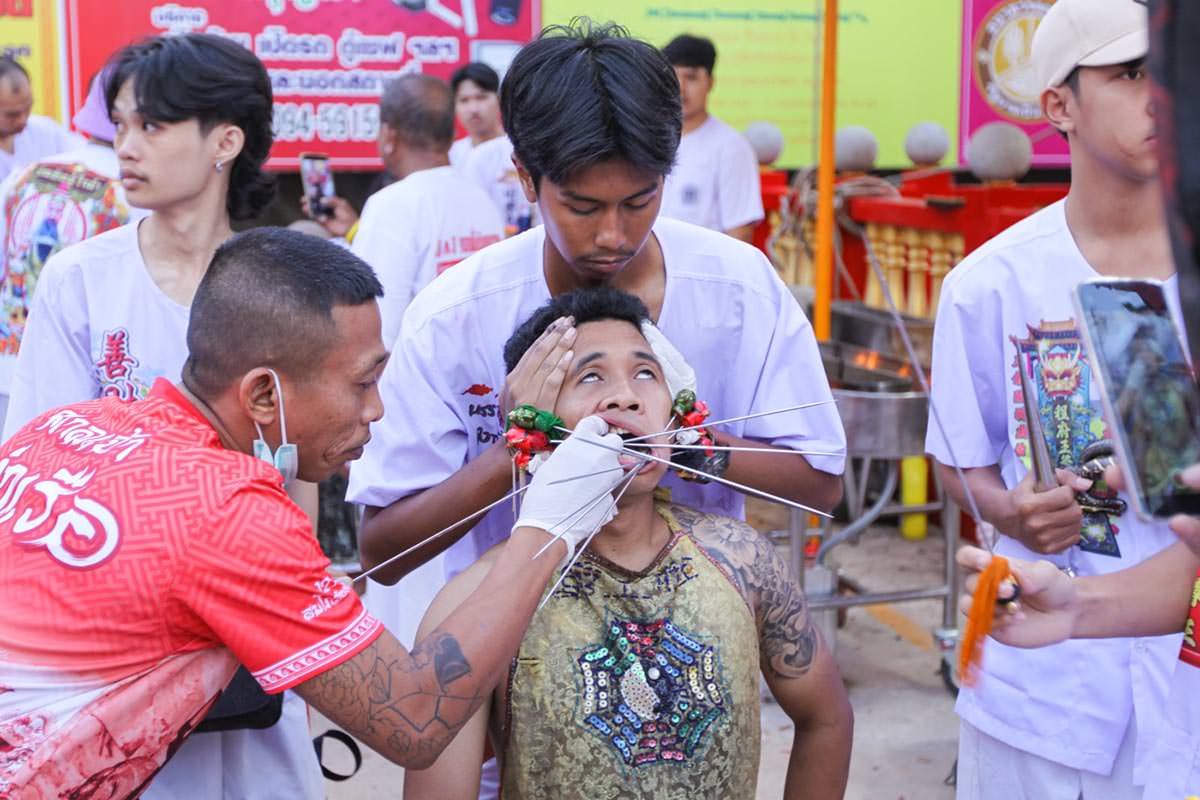
Originally, the possessed medium would write medical prescriptions on golden paper, place them in a clay pot, and wait for nine joss sticks to burn completely before adding water. The patient would then drink the infused liquid.
Sacred texts that once documented the deity’s magical techniques in detail are said to have been lost over time, adding a layer of mystery to the shrine.
Nevertheless, many people still come to Lim Hu Tai Su Shrine specifically to pray for good health. A common ritual involves bringing traditional Chinese herbal medicines purchased from local shops and presenting them at the temple altar, asking the deity to bless them with healing properties before use.
Nine Emperor Gods Festival – When Lim Hu Tai Su Shrine Comes Alive
Throughout the year, Lim Hu Tai Su Shrine hosts Taoist ceremonies, merit-making events, and communal prayers. But it is during the ninth lunar month (typically falling in October) that activity intensifies dramatically.
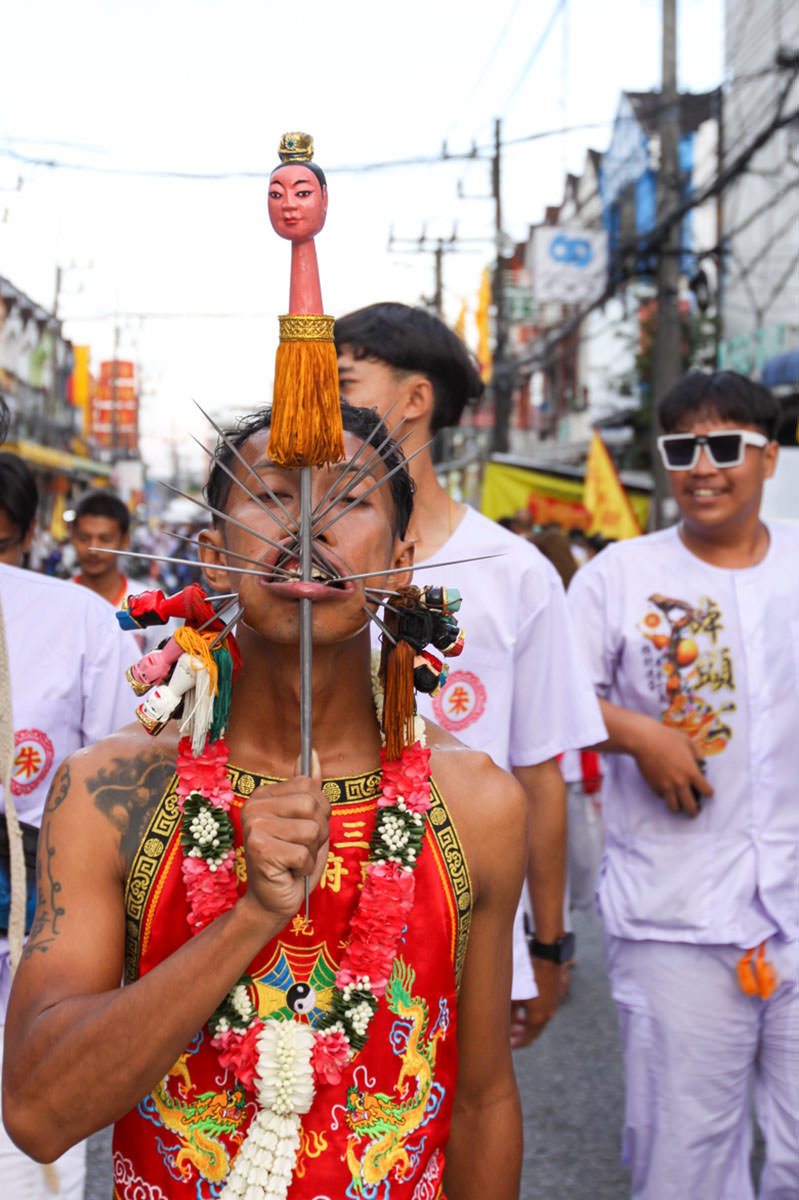
The annual Nine Emperor Gods Festival – known locally as Tesagan Gin Je – transforms Lim Hu Tai Su Shrine into one of the most compelling ritual spectacles in Southeast Asia. During those nine days, streets fill with white-clad devotees, spirit mediums walk on hot coals and pierce their flesh without apparent pain, and curious visitors from across the world stand on sidewalks with their mouths open, wondering what exactly they stumbled into.
The origins of the festival in Phuket trace back to the early 1800s. The most widely told story involves a troupe of Chinese opera performers who fell gravely ill while on the island. In a desperate bid for recovery, they adopted a strict vegetarian diet and prayed fervently to the Nine Emperor Gods for nine days and nine nights. When they recovered, they kept their vow by establishing a festival in honor of the gods, a tradition that has grown into one of Phuket’s most iconic events.
Lim Hu Tai Su Shrine’s formal integration into this festival is a more recent chapter. Before the shrine’s restoration in the mid-1990s, Lim Hu Tai Su worship during the festival was conducted from Bang Neow Shrine.
The Nine Emperor Gods Festival in Phuket was born in 1825. It all started at Kathu Shrine – learn more about it!
Festival Rituals at Lim Hu Tai Su Shrine
During the Nine Emperor Gods Festival, the atmosphere around the Lim Hu Tai Su Shrine is electric.
The temple grounds and surrounding streets fill with vendors selling vegetarian food, identified by the yellow flags bearing the red เจ symbol that mark every je stall.
The smell of incense, the pop of firecrackers, and the sight of crowds in white cotton are constant companions from dawn until well after midnight.
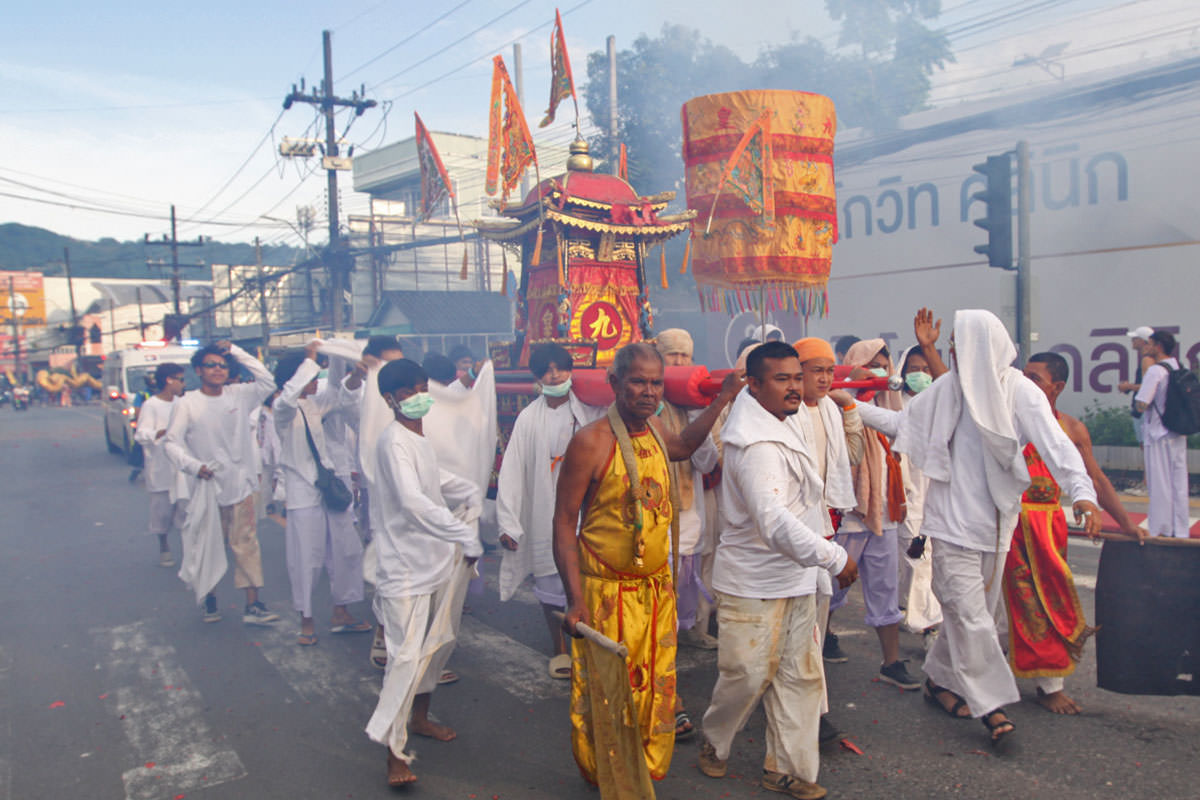
Each year, the Lim Hu Tai Su Shrine serves as the starting point for a ceremonial street procession that winds through the neighbourhoods of Phuket Town before finishing at Saphan Hin Park. Devotees line the streets to welcome the passing deity palanquins, makeshift altars appear in the doorways of homes along the route, and firecrackers shatter the air to usher in good fortune.
Among the most extraordinary aspects of the festival is the practice of spirit mediumship. Chosen devotees enter trance-like states, acting as vessels for deities, and performing feats of ritual self-mortification. They pierce cheeks and tongues with items ranging from skewers to umbrellas, as an act of faith believed to absorb pain and misfortune from the wider community.
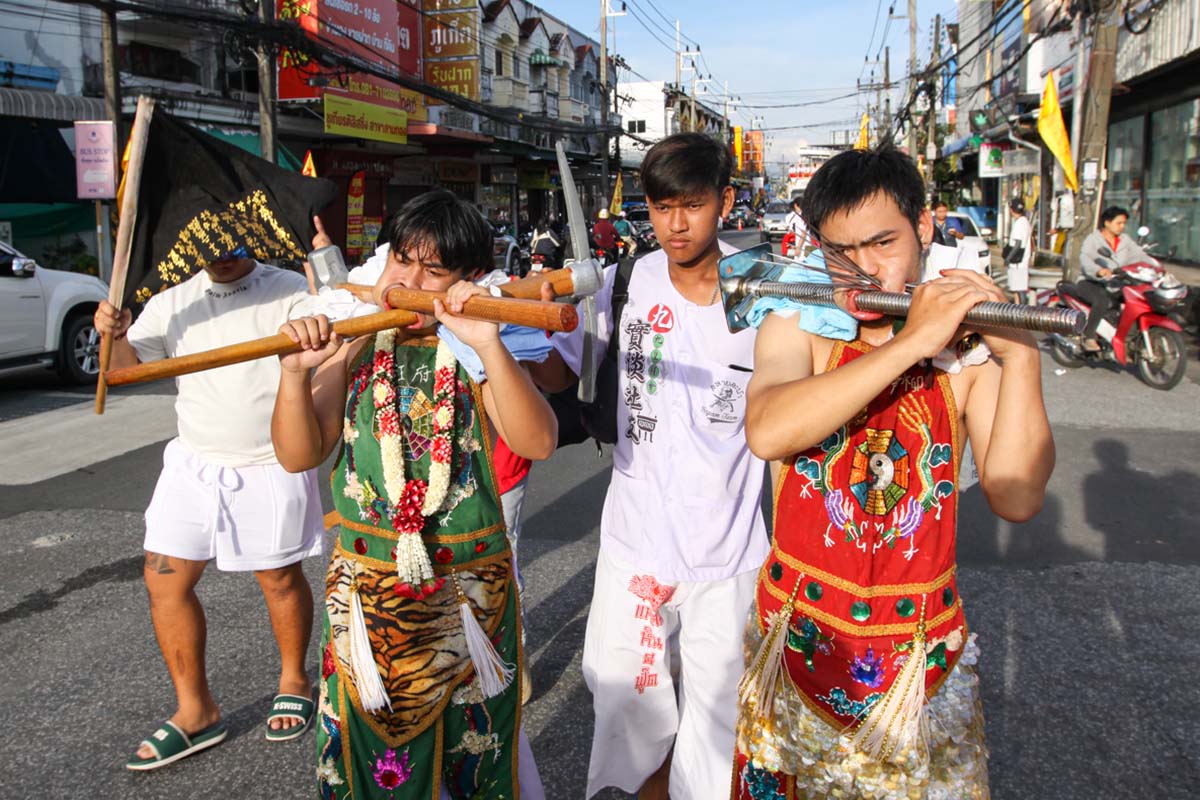
Unlike the opening piercing rituals at the smaller Jor Soo Gong Naka Shrine, where photographers elbow each other to get a better shot, the fourth-day ceremony at Lim Hu Tai Su Shrine seems much calmer, allowing ma songs to breathe.
Besides enduring body piercings with elaborate metal implements, these spirit mediums, believed to be temporary carriers of deities, will not just join the moving corridor of sound and smoke through the town. Before the festival ends, they’ll also participate in a firewalking ceremony, crossing beds of hot coals, and climb a bladed ladder as another sacred act of purification and faith.
Lim Hu Tai Su Shrine – Practical Visitor Information
Getting There
Lim Hu Tai Su Shrine is located on Yaowarat Road in Sam Kong, a neighbourhood of three hills in Phuket.
It is a ten-minute drive from central Phuket Old Town. Chillva Market is just a three-minute walk away, while reaching the shrine from the Lotus’s hypermarket (a convenient place to park a car) will take 13 minutes on foot.
Entrance Fee
The shrine is free to visit, though donations toward renovation and charitable projects are welcomed and warmly appreciated.
When to Visit
The shrine is open daily (6:30 am – 8:45 pm), and can be visited year-round.
Weekday mornings are quiet and contemplative, the kind of visit where you can actually hear the incense burn.
The experience is atmospheric after dark as well. The amber temple lighting and drifting smoke transform the space into something genuinely magical.
For the full spectacle, time your trip to coincide with the Nine Emperor Gods Festival in October. Come prepared for crowds, noise, and the very real possibility that something you witness will be difficult to explain to people back home. Book accommodation well in advance, as this period is one of Phuket’s busiest.
Dress Code
Modest clothing is essential. Shoulders and knees should be covered. During the ceremonial periods, many participants wear white as a symbol of purity, though visitors aren’t strictly required to do so.
Remove your shoes before entering any inner sanctum. Do not point your feet at any deity or sacred object. In Thai and Chinese temple culture, the feet are the lowest, least sacred part of the body, and directing them toward something holy is considered not just impolite but disrespectful.
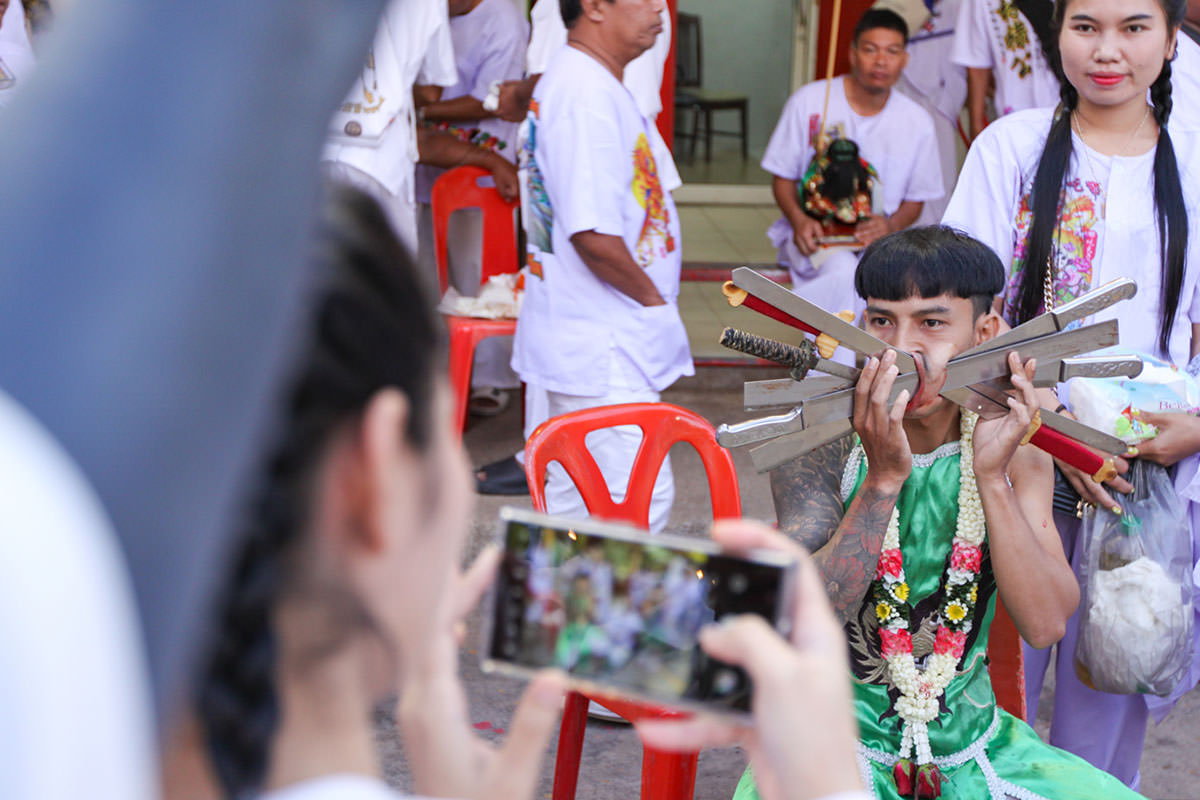
Photography and Respect
Photography is generally tolerated in public areas, but discretion is critical. Never obstruct a ceremony to get a better angle.
Never touch ritual objects. Maintain a respectful distance from spirit mediums and their assistants unless invited closer.
This is not a performance staged for visitors. Treat the shrine like a living sacred space.
Where to Stay near Lim Hu Tai Su Shrine?
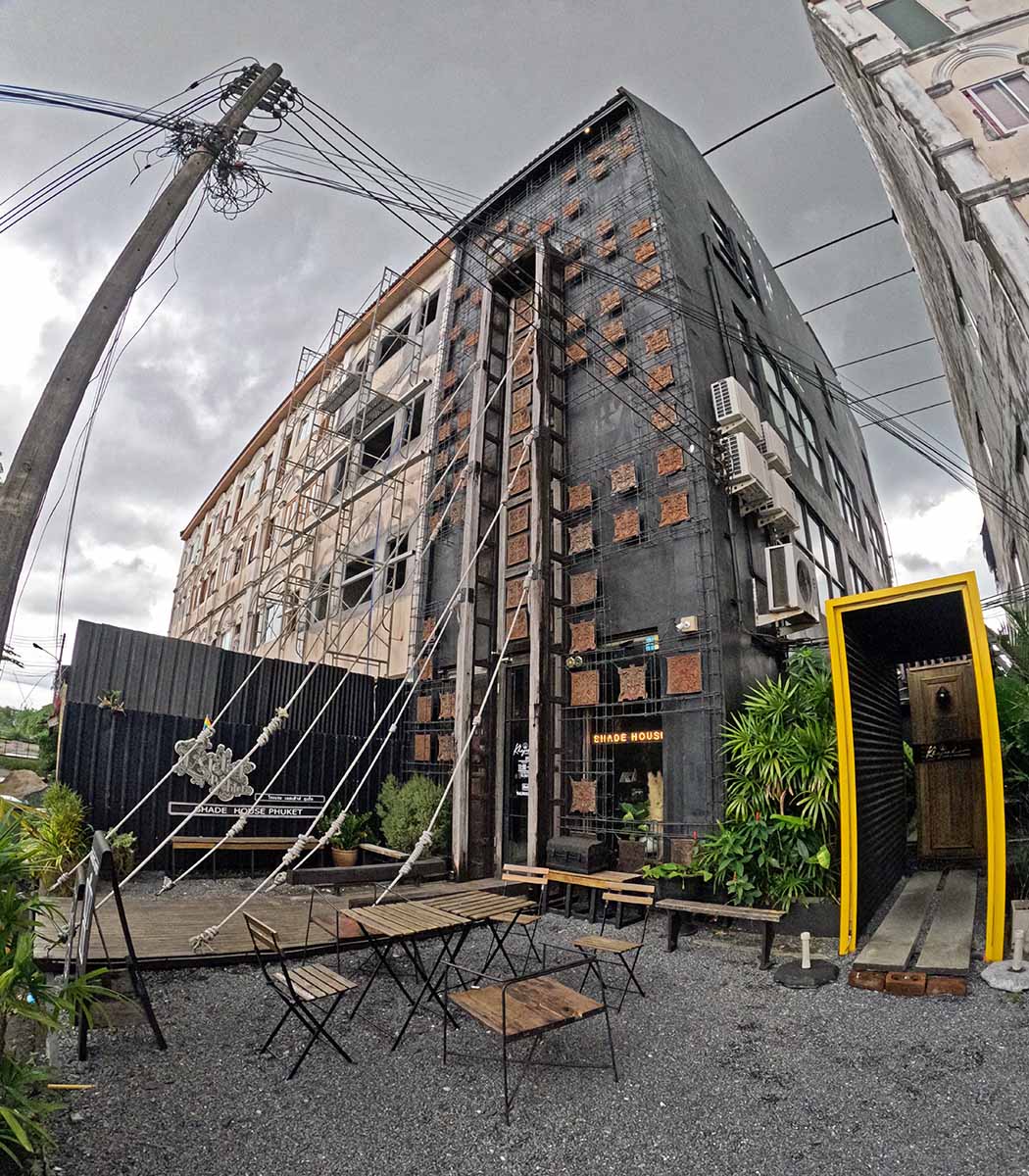
Sam Kong isn’t Phuket’s most tourist-heavy neighborhood, but if you’re looking for a convenient place to stay near Lim Hu Tai Su Shrine, you’re in luck. Formerly known as L’atelier Poshtel Phuket, Shade House – Phuket Downtown is a hostel-style property that offers a range of accommodation options – from a Grand King Room with a bathtub to bunk-bed dormitories.
Compare Shade House rates for your chosen dates on Booking, Agoda, Trip, and Expedia.
As you walk a wooden boardwalk to the hotel entrance, framed by thick nautical ropes, you might wonder whether you’ve boarded a pirate ship or stumbled into an earthly embassy of the Borg Collective. A dramatic, narrow tower, painted matte black and adorned with a grid of ornate terracotta panels, gives an industrial-gothic feel. What a stark contrast to the Sino-Portuguese buildings being renovated next door!
The edgy aesthetic doesn’t stop at the black façade and the dark gravel front yard. From walls, chandeliers, and medieval-tarot-style illustrations on arched doors, to bedding, towels, and toothbrushes, it all celebrates the color of the coal. In this striking universe, shaded in dark gray and pitch black, the somber feel is counterpointed by the meows of curious house cats and a lush green corner with a backlit 3D moon sculpture.
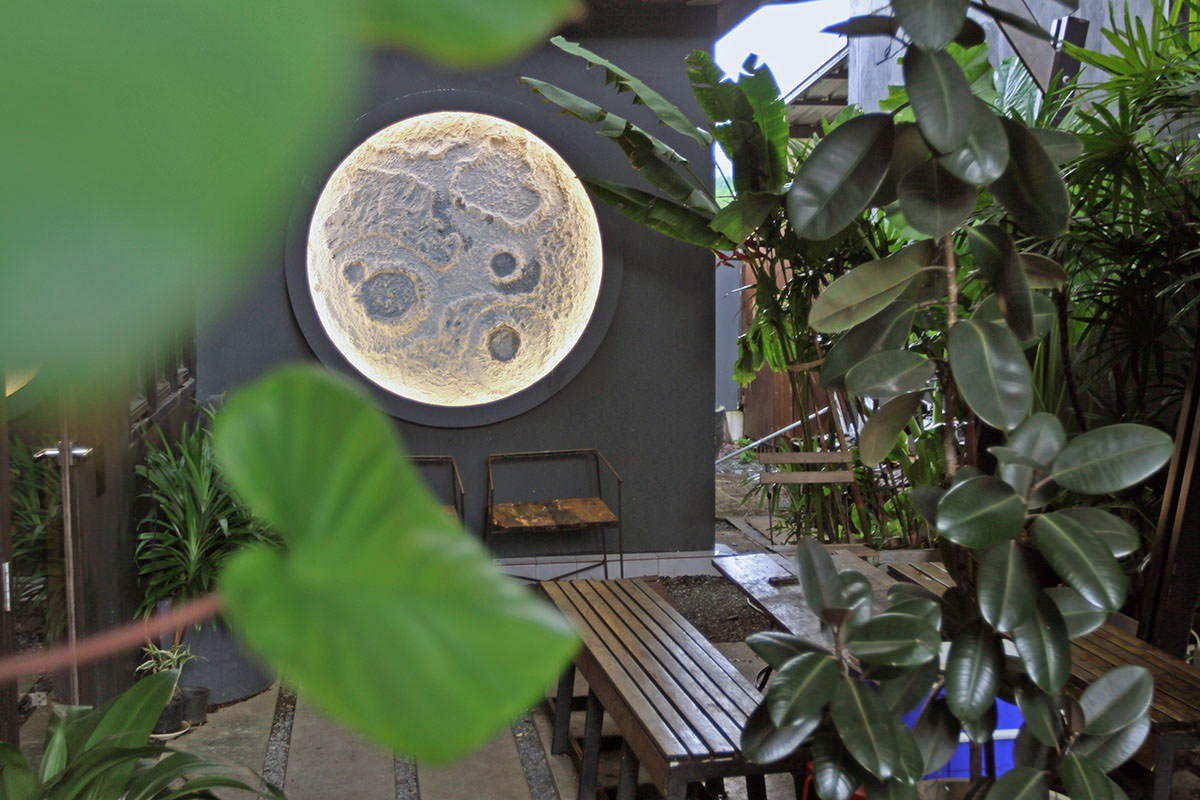
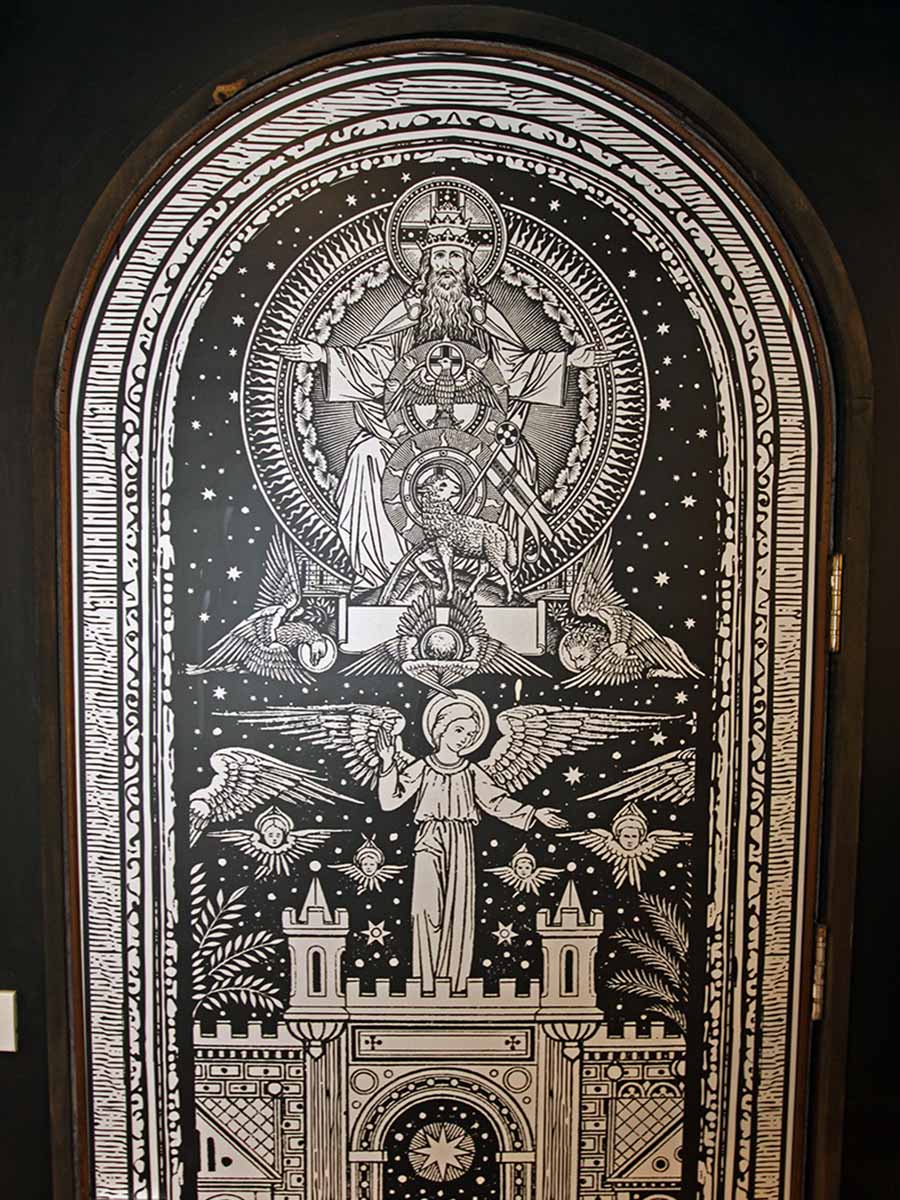
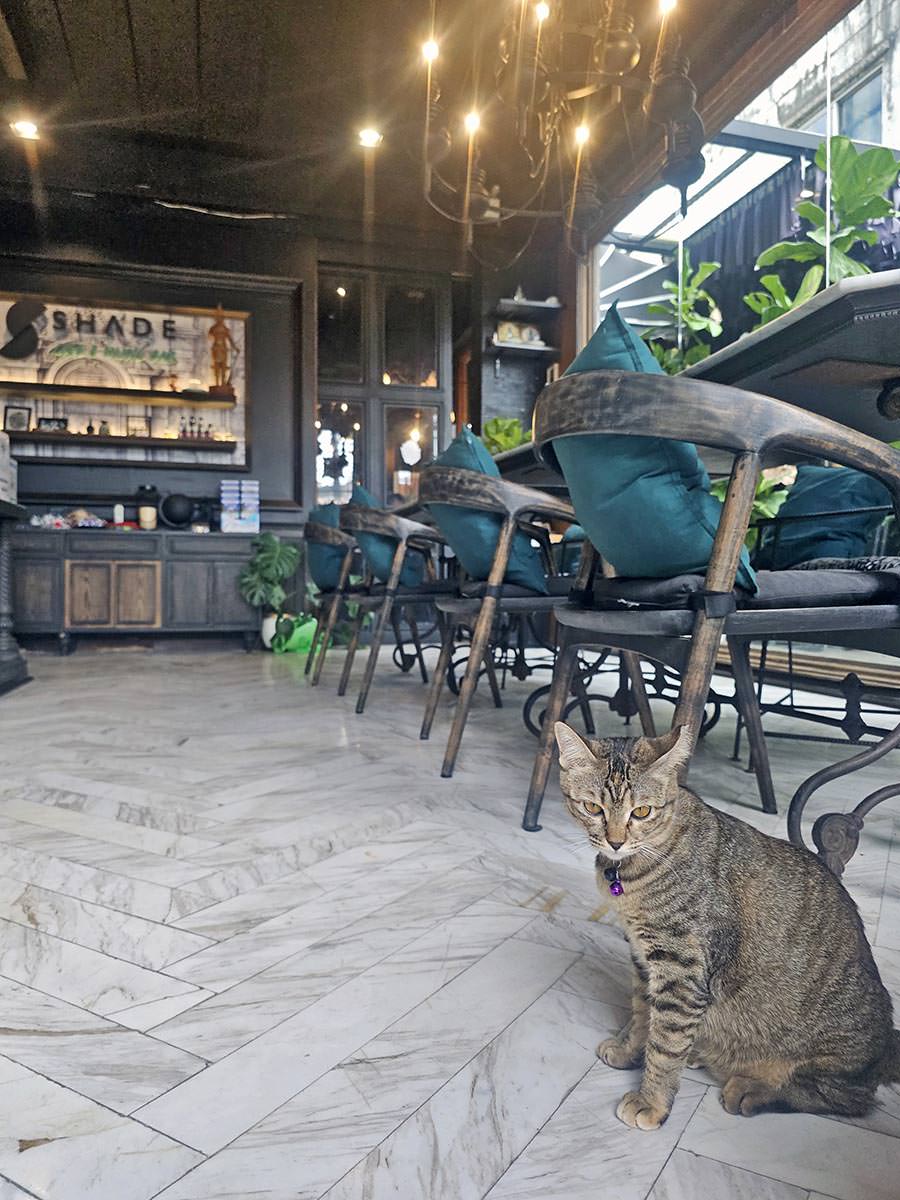
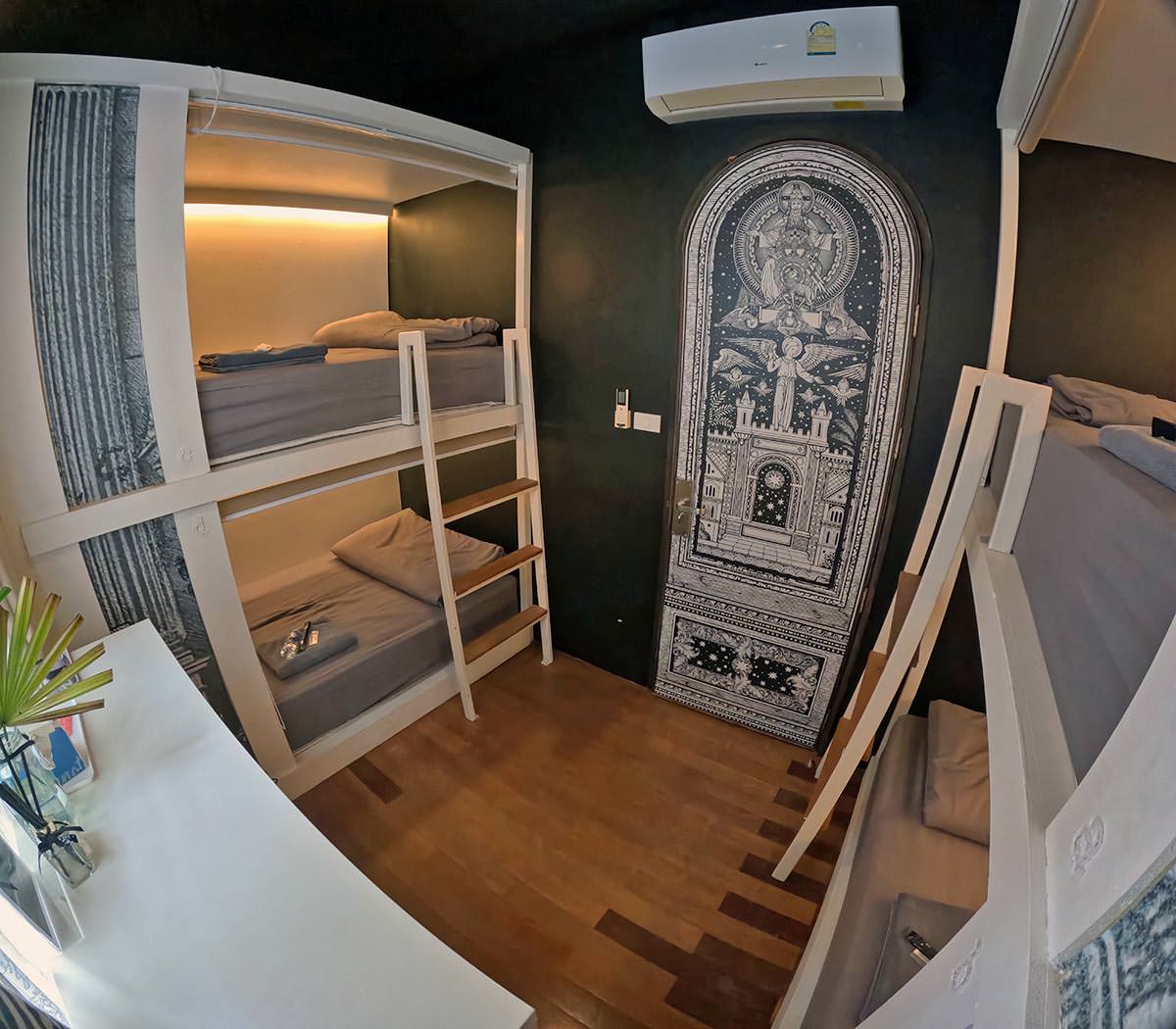
I stayed in a Double Room with Mountain View (number 404), a simple, cozy 25-square-meter top-floor chamber that offered an unexpectedly lush view I loved watching during the rain. Raw, unfinished plaster walls gave this compact but characterful space a “brutalist-meet-boutique” quality. The bedside lamp, mounted on a globe base, completed the digital nomad fantasy, especially if you’re open to productive work-from-bed sessions.
Get the impression of my room at the Shade House, Phuket’s darkest hostel gem, in this YouTube short!
From baroque excess to neon lights, Shade House uses eclectic décor to present itself as an urban, stylish environment. It is also a very friendly space, where you’ll want to order that Turkish coffee at midnight.
Looking for something luxurious in the neighborhood? Check out our review of the Hilltop Wellness Resort in Phuket!
Where to Eat near Lim Hu Tai Su Shrine?
During the Phuket Vegetarian Festival, there are plenty of food stalls offering meatless specialties around Lim Hu Tai Su Shrine.
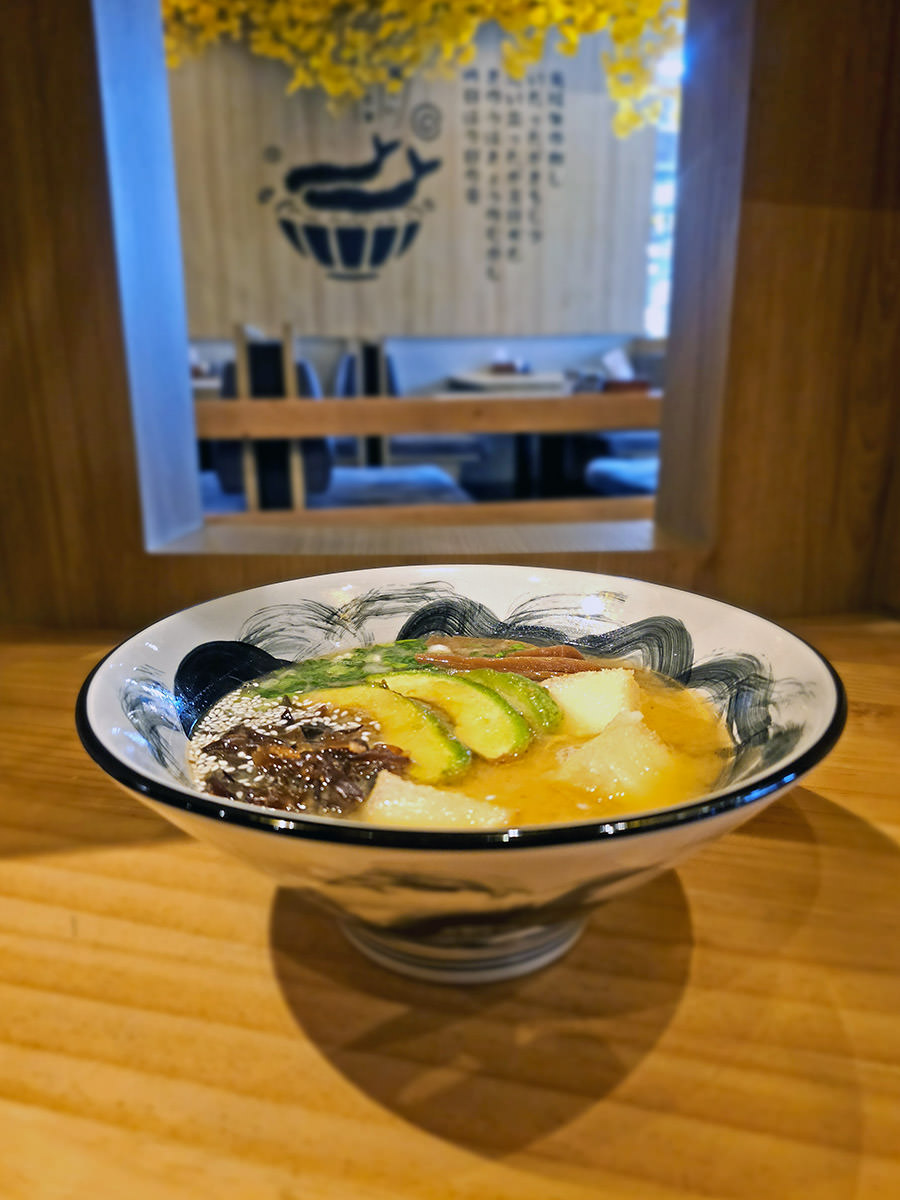
For something more sit-down, here’s a recommendation you won’t see coming: head to the Lotus’s shopping mall. Hidden inside the Tesco hypermarket is a surprisingly soulful food.
Edo Ramen, an authentic Japanese restaurant, combines rich broths, fresh noodles, and carefully considered toppings into ingredient-forward, comfort-inducing bowls.
Tonkotsu and shoyu ramen are reliably excellent, but, during festival season, give Hokkaido-style Miso Ramen a try. The vegetarian version arrives with silken tofu cubes, creamy avocado slices, aburaage, an umami-rich nori crumble, white sesame seeds, and a scatter of spring onion. Priced just 129 baht (3.5 euros or 4 dollars), the vegetarian ramen is an extraordinary value.
Lim Hu Tai Su Shrine During Phuket Vegetarian Festival – Conclusion
In a destination that can feel relentlessly touristic, Lim Hu Tai Su Shrine is refreshingly, genuinely local. The street it sits on, lined with schools, hair salons, flower shops, and food stalls, tells you immediately that you’ve stepped out of the tourist circuit and into the lived reality of Phuket Town.
Chinese spirit mediums wrapped in barbed wire expose the Lim Hu Tai Su Shrine’s mystery like a puzzle worth unlocking
The island has no shortage of beautiful temples, vibrant street festivals, and cultural landmarks. But Lim Hu Tai Su Shrine holds a quiet power that sets it apart from the more popular Phuket spots. It is a place where centuries of Chinese-Thai heritage are not displayed for tourists; they continue, undimmed, in the everyday rhythm of worship and community.
The shrine is a tangible thread connecting modern Phuket to the Hokkien Chinese immigrants whose labor and culture shaped the island’s character. It honors a healing deity who continues to draw worshippers seeking relief, comfort, and blessing.
It also anchors one of the world’s most extraordinary religious festivals – the Nine Emperor Gods Festival or, more famously, Phuket Vegetarian Festival. Chinese spirit mediums wrapped in barbed wire, or with steel mechanic’s wrenches and pruning shears protruding through their entranced faces, expose the Lim Hu Tai Su Shrine’s mystery like a puzzle worth unlocking.
Physically demanding in its rituals, but less commercial than its Old Town counterparts, the Sam Kong temple offers a window into a living spiritual tradition that has endured for over a century.
Come with curiosity. Move with respect. And this quiet neighborhood temple, transformed into a center of ritual intensity, will offer you something most Phuket travel itineraries never do: a glimpse of the island as it really is.
Do you plan to visit the Lim Hu Tai Su Shrine during the Phuket Vegetarian Festival?
Pin this guide for later!
Disclosure: My stay at the Shade House was complimentary, but all opinions are my own.

Also, this post may contain affiliate links, meaning if you click on them and make a purchase, Pipeaway may make a small commission, at no additional cost to you. Thank you for supporting our work!
