This is the archived version of our free weekly newsletter. To start receiving it in your mailbox on the send-out day, join the newsletter list!
Hi from Cebu!
This throwback to the Philippines arrives a year and a half after I experienced it. Most people go to Oslob, in the island’s south, to admire whale sharks up close and immediately share that pride on their social media feeds. For me, the feeling of pride got replaced with embarrassment. At the time, I wasn’t nearly as informed as I should have been, so I joined the crowds arriving for an Instagram boost in the thousands, daily.
Now that I have tried to offset the participation in the controversial tourism project with a sincere write-up on the ethics of the Oslob whale shark watching, it feels much less burdensome to share the video of the operation, exposing the magnitude of the attraction built on the concept of feeding wild animals that humans would normally never have easy access to.
Sixteen years ago, when two European expats dove into the waters of Oslob and found themselves nose-to-snout with the world’s largest fish, they couldn’t have anticipated that humans arriving after them would put enormous pressure on the vulnerable species, which would in 2016 be reclassified as endangered. You can see what the original dive with the whale sharks looked like before tourism’s greed suppressed its conscience – the video of this first encounter has been uploaded here.
The relationship between humans and wild animals has always been a complicated one. When we start messing with the wildlife, we mostly make mistakes.
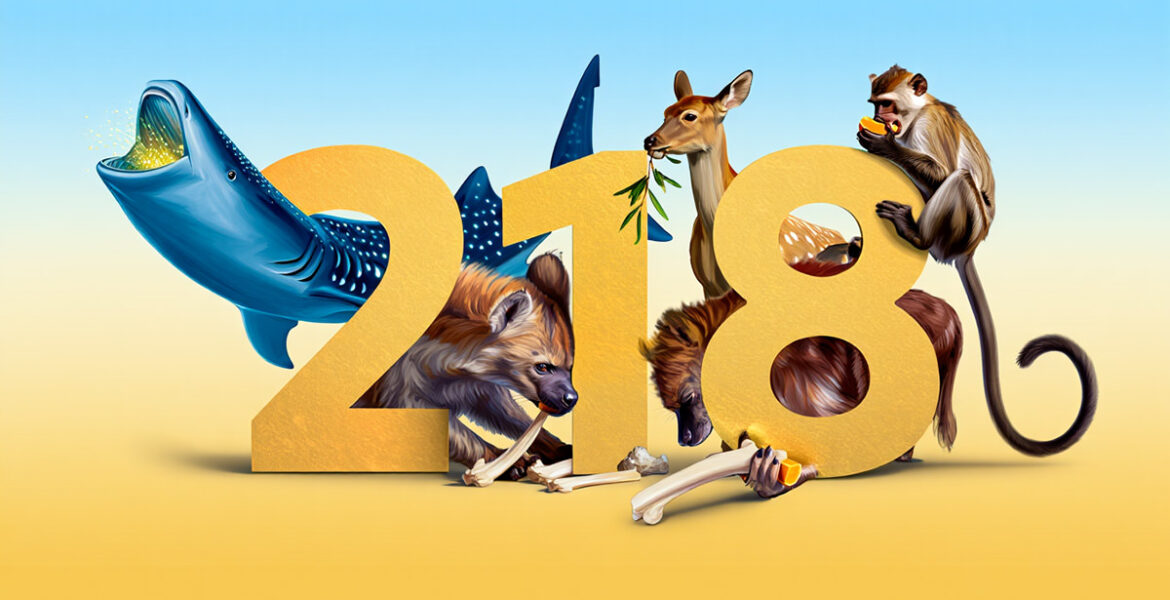
In post-war Japan, deer became food, and nearly went extinct in Nara. After the animal was proclaimed the country’s National Natural Treasure, their numbers in the city recovered because locals swapped eating them for feeding them. Today, Nara‘s Bambi adventure, where deer won’t leave you alone if you don’t give them that cracker, is a consequence of the decades-long informal training. During the pandemic, some of these deer became extremely thin as, in the absence of tourists, they didn’t look for grass. Scientists described them as “addicted” to rice crackers.
Thailand has a city where Old World monkeys became a nuisance. What started as Lopburi‘s Monkey Buffet Festival, a tourist attraction of a yearly feast for hundreds of long-tailed macaques (and, of course, the feeding done by tourists in the rest of the year), has culminated in their ever greater numbers. The situation slipped out of control so much that the town had to open an official monkey prison.
Ethiopia is the only country I can recall where feeding wild animals did not cause even more problems. Every night, Harar hyenas come to the town to feed. They don’t just go through the scraps intentionally left for them on the streets; some locals even feed them by hand. The night predator that’s known to indulge in cats, dogs, and humans in the other Ethiopian towns, here spares the citizens, in one of the most unusual social contracts.
The only difference between whale sharks, deer, and monkeys on one side, and spotted hyenas on the other, is that the first ones are not our natural enemies. Tourism in Harar was mostly a consequence of the century-old tradition, while other sites started feeding the animals with the tourist dollars in mind.
If not endangered, we shouldn’t feed wild animals. This was exactly my thought when, the other day, I finally decided to delete the Facebook post that became a boiling pot of Zionist hatred by users who just couldn’t swallow KAN‘s use of Israel‘s Eurovision audience as a choreography act. People who see antisemitism behind everything that makes them uncomfortable, even the reality of the music competition instrumentalized as an agit-pop propaganda, were not adding anything to the discussion besides spilling poison with words. In a normal world, this would self-regulate, but with Meta‘s algorithms pushing the post to every hyper-passionate Zionist out there, the post just became a toxic obsession target. Screw the virality, and someone earning money on a never-ending hostile-feeding cycle. I deleted it for good.
I’m telling you: never feed the beasts.
Have a balanced-diet week,
Ivan Kralj
Pipeaway.com
This is the archived version of our free weekly newsletter. To start receiving it in your mailbox on the send-out day, join the newsletter list!
Disclosure: This post may contain affiliate links, meaning if you click on them and make a purchase, Pipeaway may make a small commission, at no additional cost to you. Thank you for supporting our work!
