
“We’ve been waiting for you”, said a questionnaire asking for my general health assessment. Checking in at Oasis Spa felt like returning somewhere familiar, because, in a sense, I was. Back in 2019, I’d called their Lanna branch massage one of the top Chiang Mai attractions. Five years later, stepping into the strikingly red mansion near the popular One Nimman Night Market, the muscle memory of that experience pulled me right back in. A cool wet towel. A fragrant cup of tea. The smiling receptionist, asking to take a photo with me, found me confused, as I knew that, between Oasis and me, the spa was the famous one. So famous that I’d chosen exactly their school for my Thai Massage course.
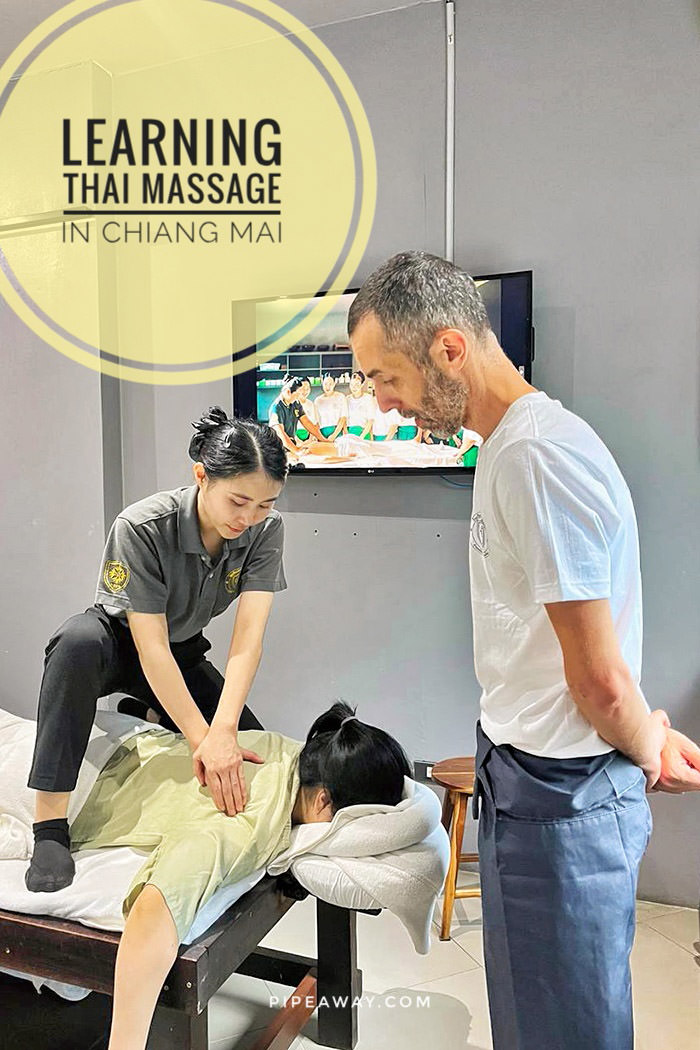
I wanted to know what Peony was doing exactly. I wished to learn the secrets of Thai massage
There’s a particular kind of quiet inside a spa that feels different from anywhere else. Not silence exactly – more like everything has agreed to lower its voice. Soft footsteps, the distant water trickling, the faint clink of ceramic cups. That immediate hit of calm put me in the zen zone, yet I had to stay fully awake. I wasn’t here just to enjoy the pleasures of relaxation, but on a research mission: to confirm that my recollection of an extraordinary royal massage five years earlier, when I famously fell asleep mid-treatment, was still grounded in reality.
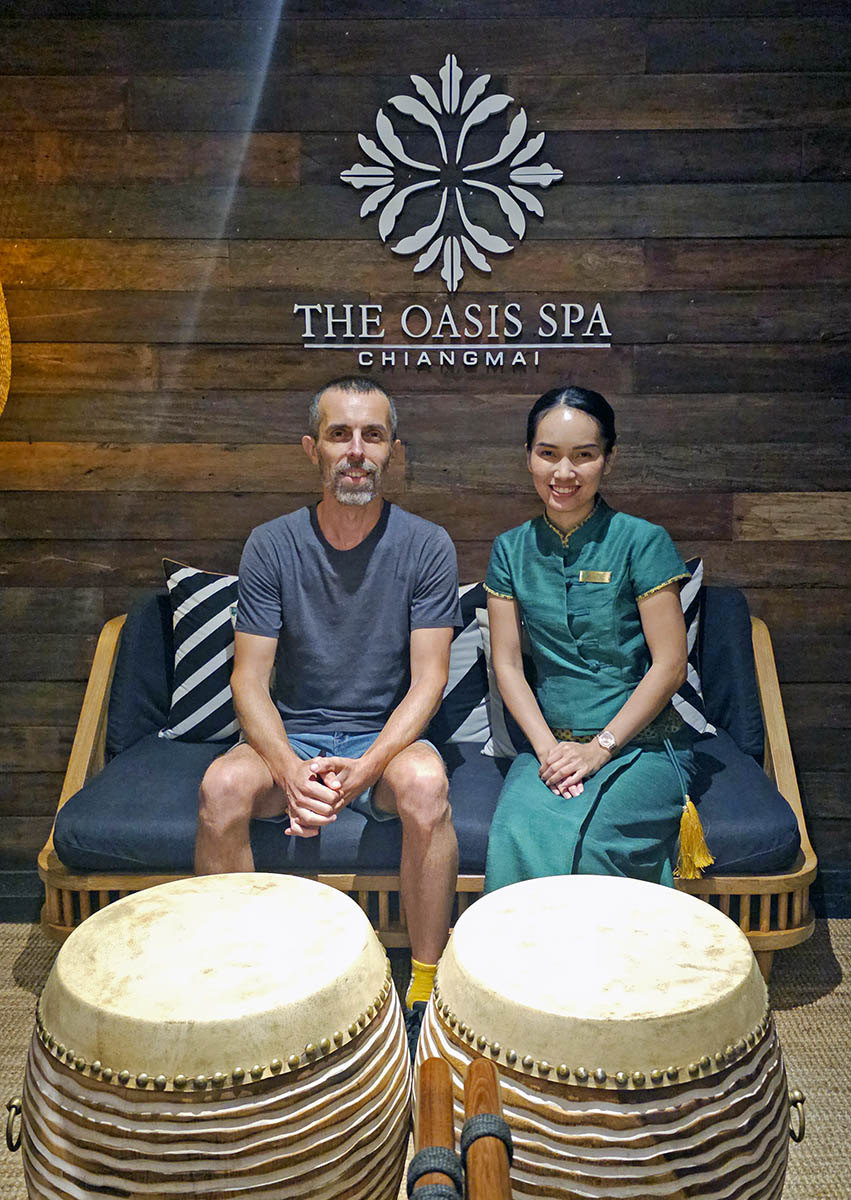
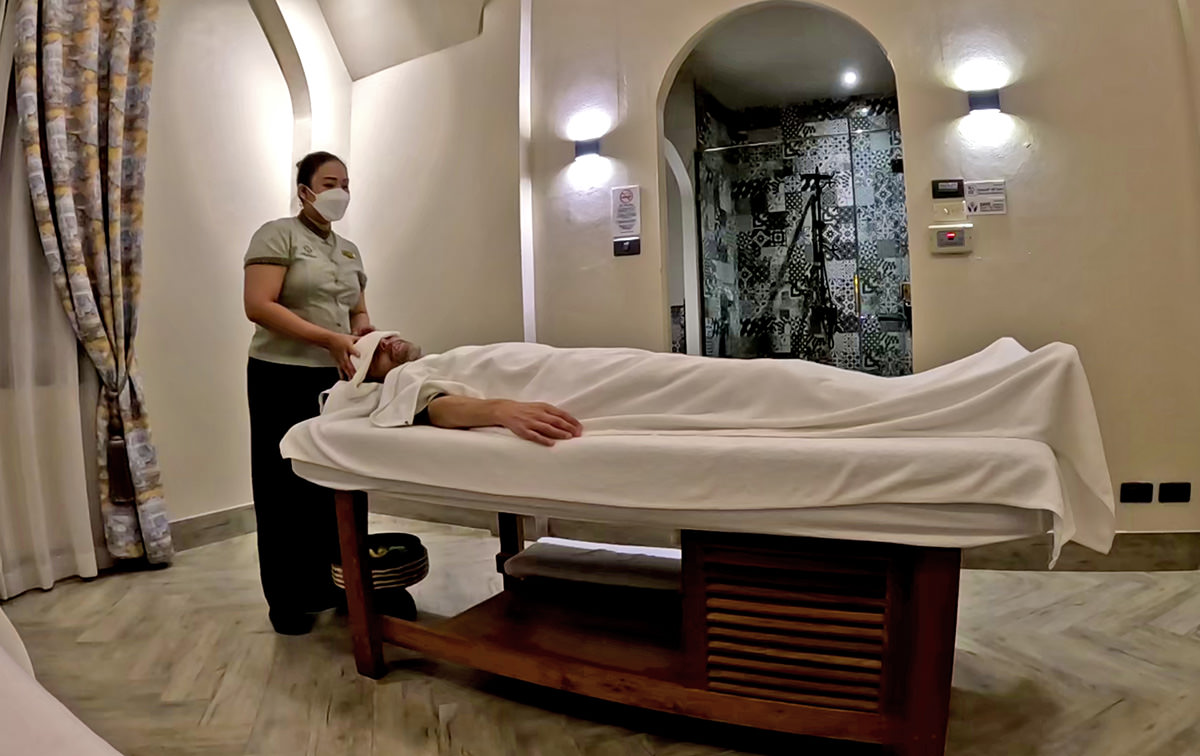
That late night at Lane 7 of Nimmana Haeminda Road (Oasis Spa closes at midnight, making massage a perfect lulling to sleep), I’d been in the good hands of Peony, a supervisor with a decade of experience. It showed.
After I changed to loose green clothing, I received a massage I could only call dedicated, precisely calibrated, and very strong (just like I requested).
But even more – I wanted to know what Peony was doing exactly. I wished to learn the secrets of Thai massage. And so began my journey to Thai Oasis Spa School. To become, at least briefly, a masseur.
Why even take a massage course in Chiang Mai?
Take an evening stroll through Chiang Mai, Thailand’s second-largest city, tucked in the northern hills, and something becomes clear quickly: you’ve come to a massage town. After a long day of temple hopping, Chiang Mai’s massage parlors fill up with tourists seeking relief for aching legs. Rows of masseuses rubbing their clients’ feet in sync look like a well-oiled massage machine.
But beyond the affordable treatments, Chiang Mai has quietly built a reputation as one of the best places in the world to actually learn Thai massage. Not in a flashy, over-marketed way. More through sheer density and institutional seriousness. Schools are everywhere. From months-long professional certification programs to casual drop-in workshops designed for travelers who just want to try it out.
I’d initially entertained grander ambitions. A long back-and-forth email exchange with Thai Oasis Spa School’s manager revealed that Thai government certificates for longer courses were reserved exclusively for Thai citizens. The full Spa Therapist course (84 days) or one of the 25-day programs in Aromatherapy, Swedish, or Thai Massage were off the table.
It was a mini-disappointment. I didn’t truly need a diploma to frame on my wall. But, for a fleeting moment, the idea of becoming a therapist had genuinely taken root. It just seemed the stars didn’t align around it yet.
It seemed already precious to understand what Thai massage actually feels like from the other side. So when a half-day course aligned with my dates in Chiang Mai, I didn’t hesitate.
Of course, massage isn’t something you can even begin to grasp in a few hours. But as a window into the profession, it felt like a decent place to start.
Why I Chose Thai Oasis Spa School
If you’ve scrolled through travel forums looking for a Thai massage training course in Chiang Mai, you’ve probably noticed the same handful of names come up again and again.
Thai Massage School Shivagakomarpaj (the Old Medicine Hospital), Sunshine Massage School, Ong’s Thai Massage School, International Training Massage School… These institutions will fight for your attention as soon as you start exploring options.
With dozens of schools scattered across the city – from the temples of the Old City to quiet residential neighborhoods – the choice of massage training in Thailand can feel overwhelming. Many of them are more traditional, some more clinical, others more bare-bones.
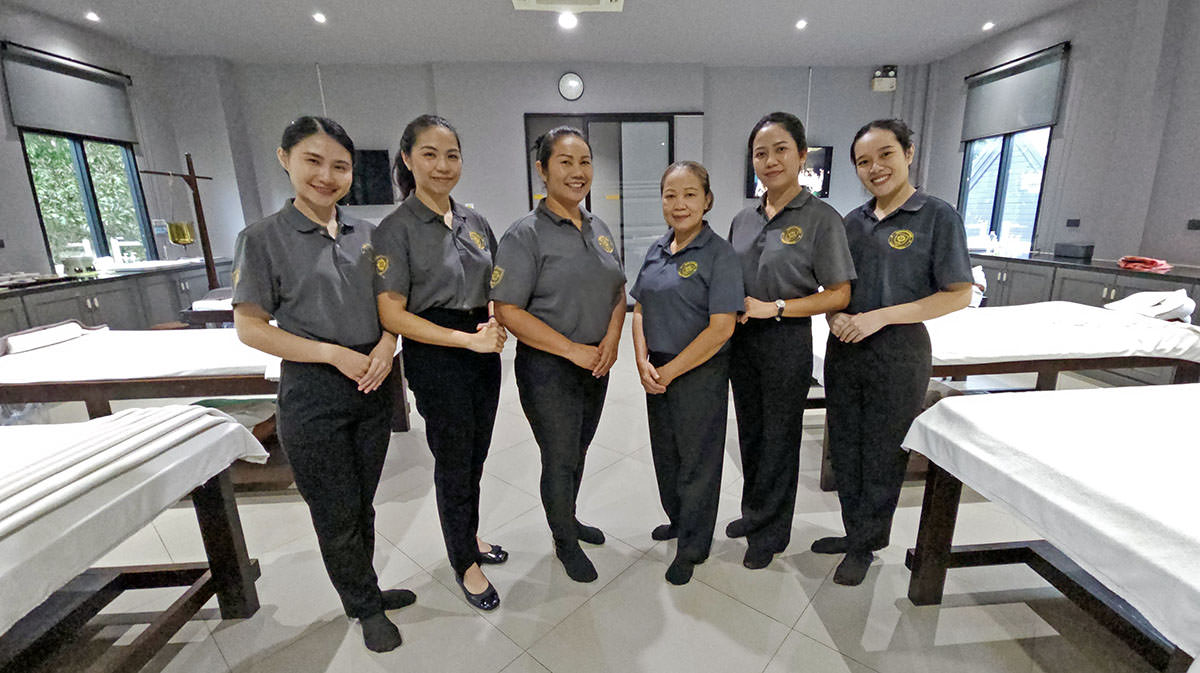
Thai Oasis Spa School sits somewhere else entirely. It’s polished, but not in a sterile way. It doesn’t feel like a classroom so much as an intentional environment curated to make you slow down, with time that works differently. That’s a great atmosphere for real learning.
Honestly, after I did my best-informed research on options that would offer simple half-day sessions for inexperienced beginners, my decision was an instinctive one. But it was also based on my own massage experiences at Oasis Spa, which were consistently at an exceptional level. I saw this spa as a professional one, an exemplary case of a wellness institution. So, if I wanted to step into this world, these felt like the right doors: something I would respect and feel respected for after completion.
What is Thai Oasis Spa School?
Founded in 2009 with the belief that education is fundamental to Oasis Spa’s high standards, the school is based at 131/44 Moo 1, Chang Puak, in the northern reaches of Chiang Mai, well away from the tourist bustle. Over 2,000 students have passed through its doors.
The curriculum blends traditional Thai massage, rooted in acupressure and Thai Lanna tradition, with western methods, and carries real institutional weight: recognized by Thailand’s Ministry of Education, Ministry of Public Health, and the Department of Skill Development. For recreational students like me, that means a certificate of attendance. For professional course completers, a certified diploma.
The catalogue runs impressively wide. A 6-hour introduction at one end; the 500-hour Qualified Spa Therapist program at the other (120 hours theory, 380 hours practice – enough to launch a career).
The half-day “Head, Back & Shoulder Massage” course I attended is a highlight for time-pressed travelers. It seemed designed as a standalone skill-builder, not just the most basic taster.
This is my first-hand account of completing this Thai massage course.
What the Half-Day Thai Massage Course Actually Includes
The course I took focused on head, back, and shoulder massage – a kind of condensed introduction to Thai techniques adapted for beginners.
Whether you’re a traveler looking to pick up a skill, a wellness enthusiast wanting a taste of authentic Thai massage techniques, or someone considering a longer program down the line, this course seemed a perfect intro.
Here’s what that looked like in practice:
- A short introduction to basic principles
- Demonstration by the instructor
- Guided, step-by-step practice
- Switching roles (giving and receiving)
There’s no heavy theory. No anatomy deep-dives. No memorizing Sanskrit terms or energy line maps.
Instead, it’s very physical. Very immediate. You watch a movement. You try it. You get corrected. You try again.
Where to stay near Thai Oasis Spa School?

I booked the nearest solid hostel I could find and relied on Grab transfer from there on. My Way Hostel was honestly not the best choice, but you can’t be too critical for a nightly rate of 250 baht (6.60 euros or 7.70 dollars).

For a single room closer to the course, the school can recommend a few places that provide special rates to its students, and are all within 550-750 meters. Those are the We Valley Hotel, the B2 Black Hotel, or Maan Fah Place (offering discounted monthly rates for longer stays).
My first impressions
On the day of the course, I woke up early enough to walk to the school, where my arrival was expected at 9 am. It was still an hour-long stroll in tropical morning humidity, so I’d probably rethink that choice next time.
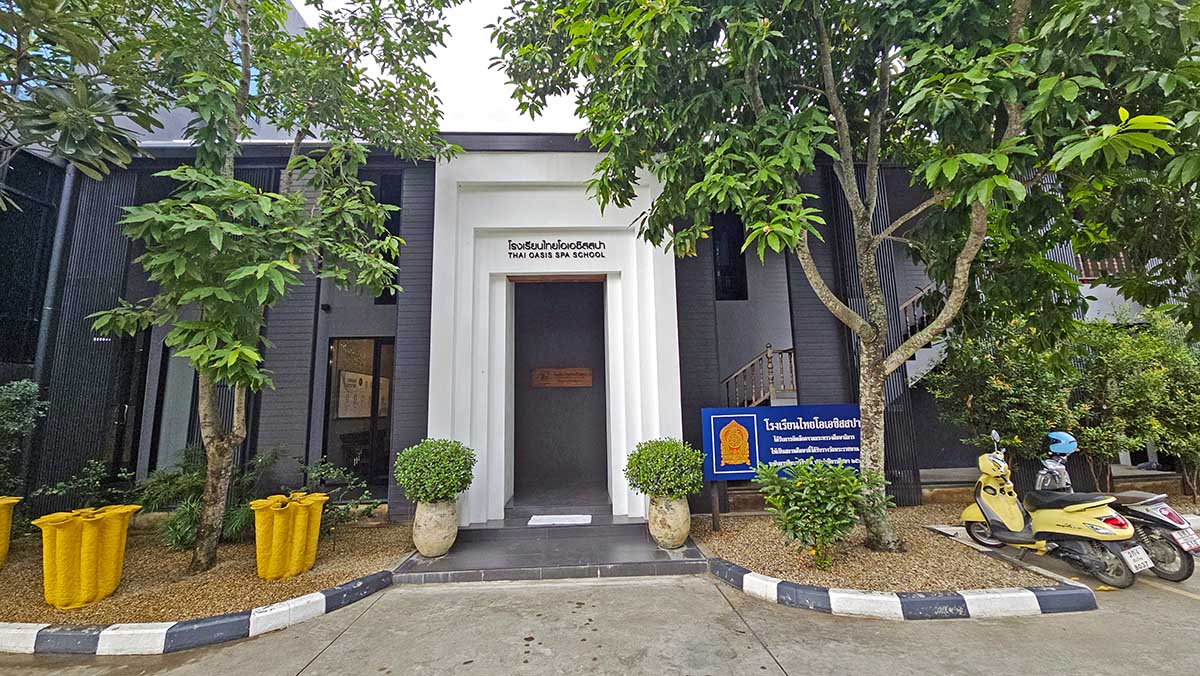
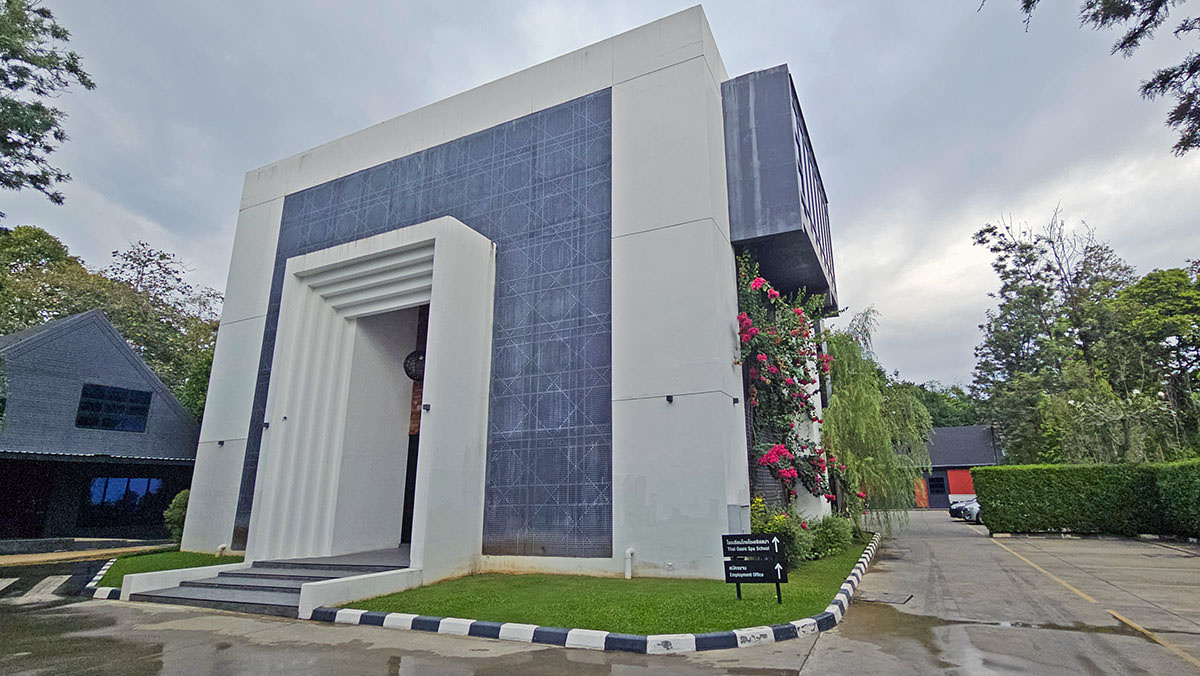
The building itself was a surprise – modern architecture, a dark minimalist facade, and a white-framed entrance. This effective contrast (visible even in the black-and-white roadside curb) is common in Thai spa design, and here it contributed to a clean, organized look, creating a calm, professional aesthetic one would expect from a space of renewal. Of course, we’re in Thailand, so even the most polished geometry gets softer edges with trees and greenery bringing nature to the picture. Something that could feel corporate feels serene instead.
Despite being part of a well-established institution linked to the wider Oasis Spa group – which also has branches in Bangkok, Pattaya, and Phuket – the Chiang Mai school has the atmosphere of a boutique training center rather than a factory churning out certificates.
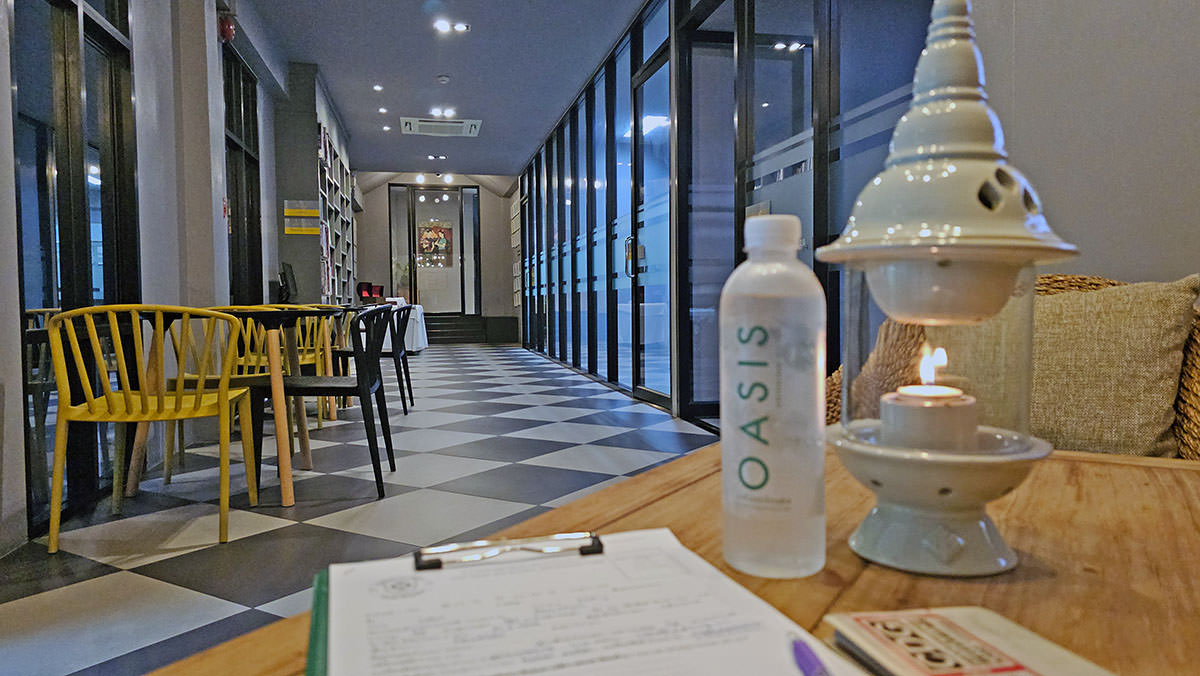
As I waited in the lobby with a checkered gray‑and‑white tile floor, I filled in a registration form and sipped from an Oasis-branded water bottle. Everything felt unhurried. The first impression was very professional; even the lit candle in a ceramic holder suggested I was at a place where rituals are treated with mindfulness.
I paid 300 baht (7.90 euros or 9.30 dollars) for the obligatory uniform and changed while storing my personal belongings in a locker. My outfit for the day consisted of a white branded t-shirt and black kang-keng sa-dor, simple wrap-style fisherman pants that I still love wearing at home today.
Inside the Head, Back & Shoulder Massage course
My Thai massage course began in a classroom. Among the two dozen empty tablet arm chairs, I was the only student that morning, warmly greeted by my teacher, massage instructor Andaman Wongkajorn.
“Like the sea”, her words splashed me like waves.
“I know, I just stayed on your shores!”, I replied, memories still fresh from visiting The Anda Mani Khaolak Beachfront Villas.
Miss Andaman, recipient of the Outstanding Teacher of the Year 2026 Award from the Chiang Mai Private Education Association, also introduced Khao-ot (khao: rice; oht: oat), a pretend assistant half her size. The muscular doll served as a model for demonstrating which areas of the body to massage and which ones to avoid.
Massage is a delicate profession, after all. As incidents in Udon Thani and Phuket tragically showed in 2024, the wrong technique applied to the neck can cause paralysis, or worse.
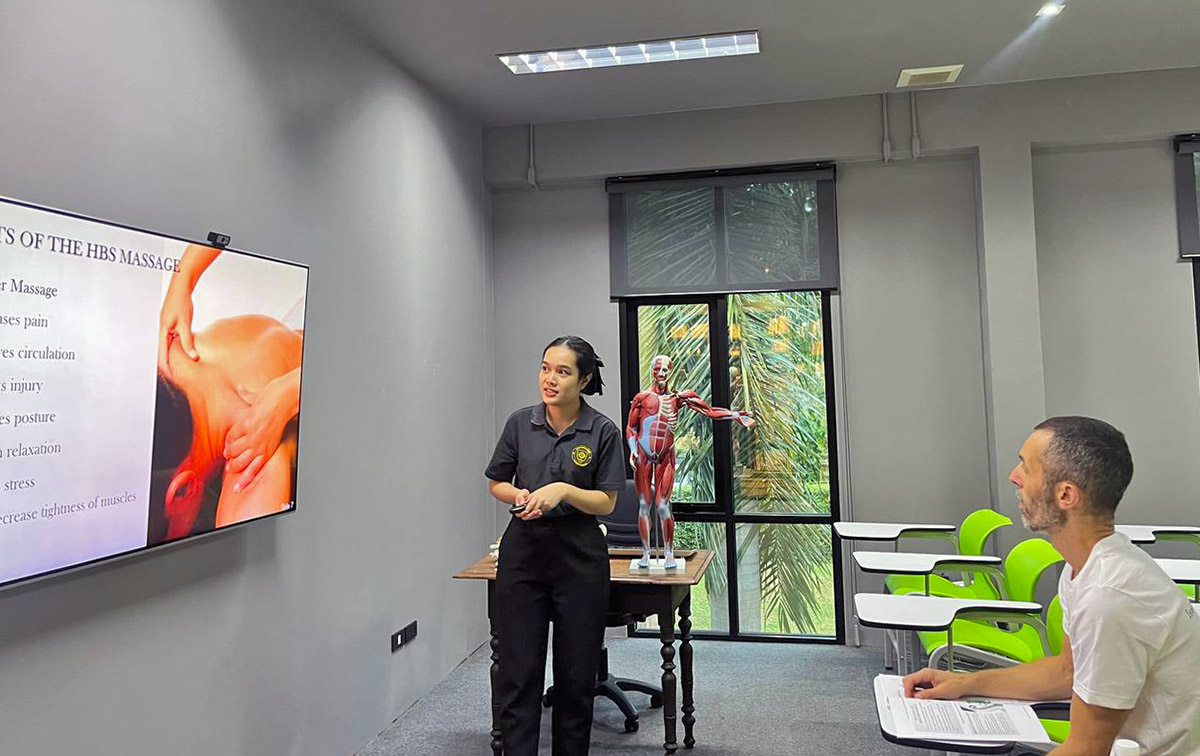
The theory section exists for a reason. It took us only ten minutes to explore the overview of the head, back, and shoulder technique, and its benefits. Once your ear adjusts to the specific English pronunciation of your teacher (something I got used to at yoga classes back at the Hilltop Wellness Resort in Phuket), the theory is easy to follow. Whenever I had a question, the teacher readily answered or even demonstrated specific areas on my own body.
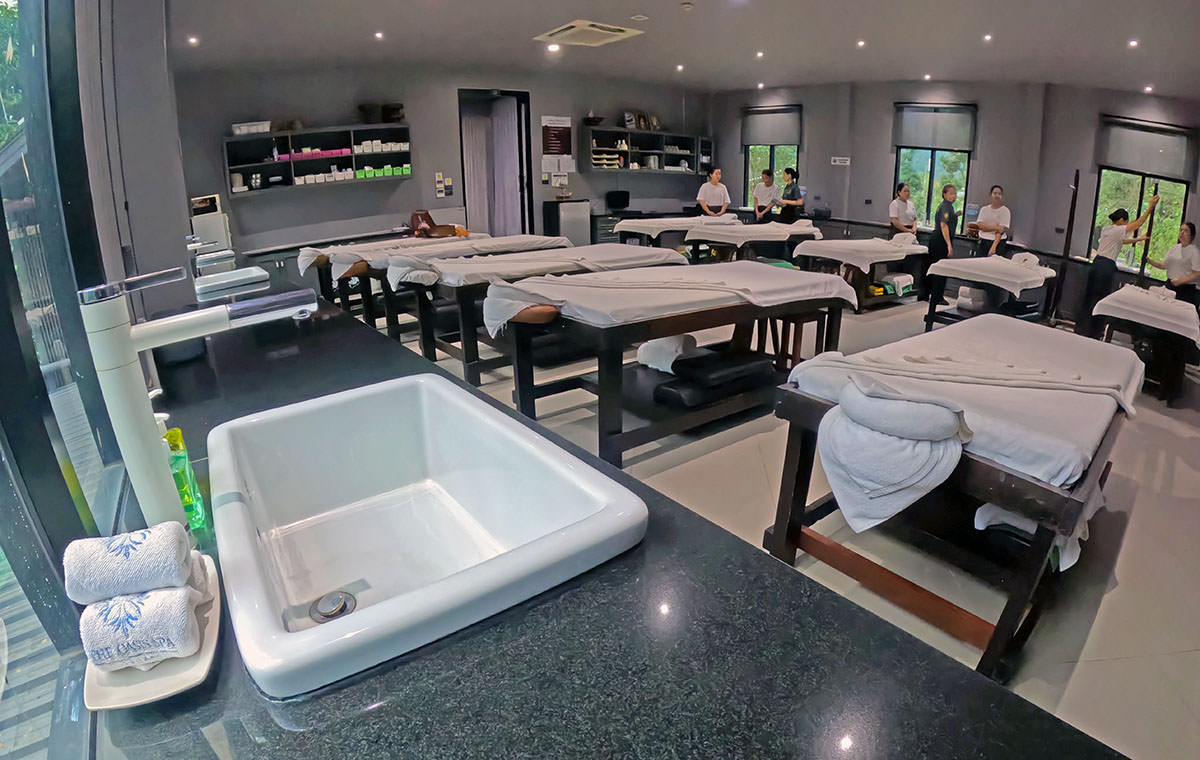
Then we moved to the next room, with ten prepared massage beds. Here, assistant trainer Miss Amonrat Paojae took over, while Miss Andaman left for a dressing room to change clothes so she could become a ‘test dummy’ of my very first massage under professional supervision.
Learning by Feeling
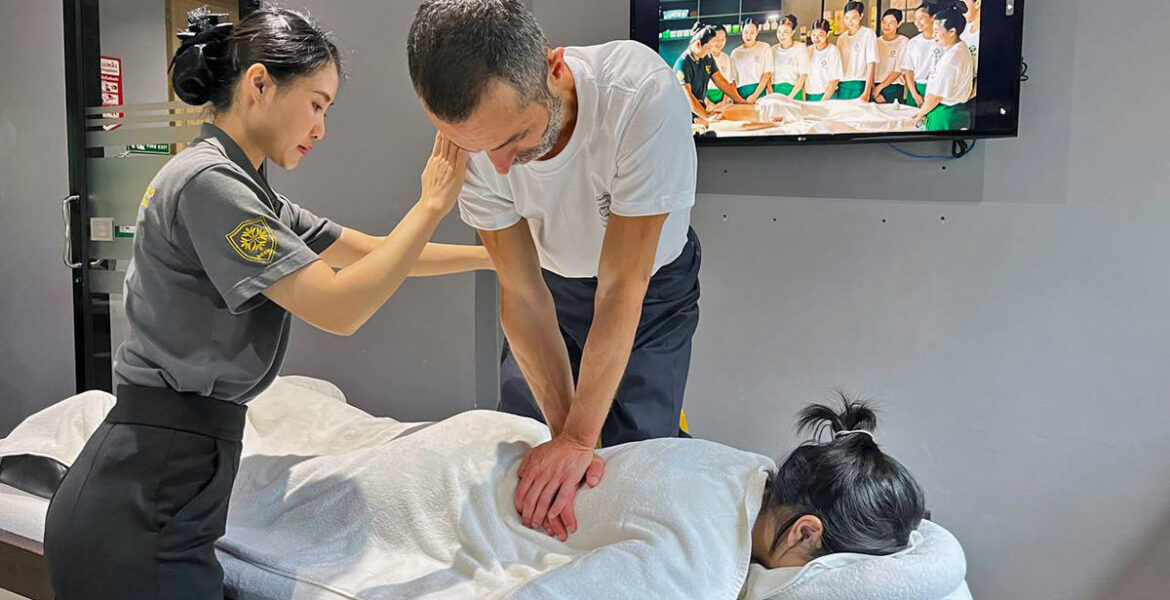
Amonrat demonstrated the full sequence slowly, building methodically from the foot-cleaning procedure up toward the back, shoulders, and head – our main massage targets of the day. Fifty minutes of patient, question-welcoming ‘look and learn’.
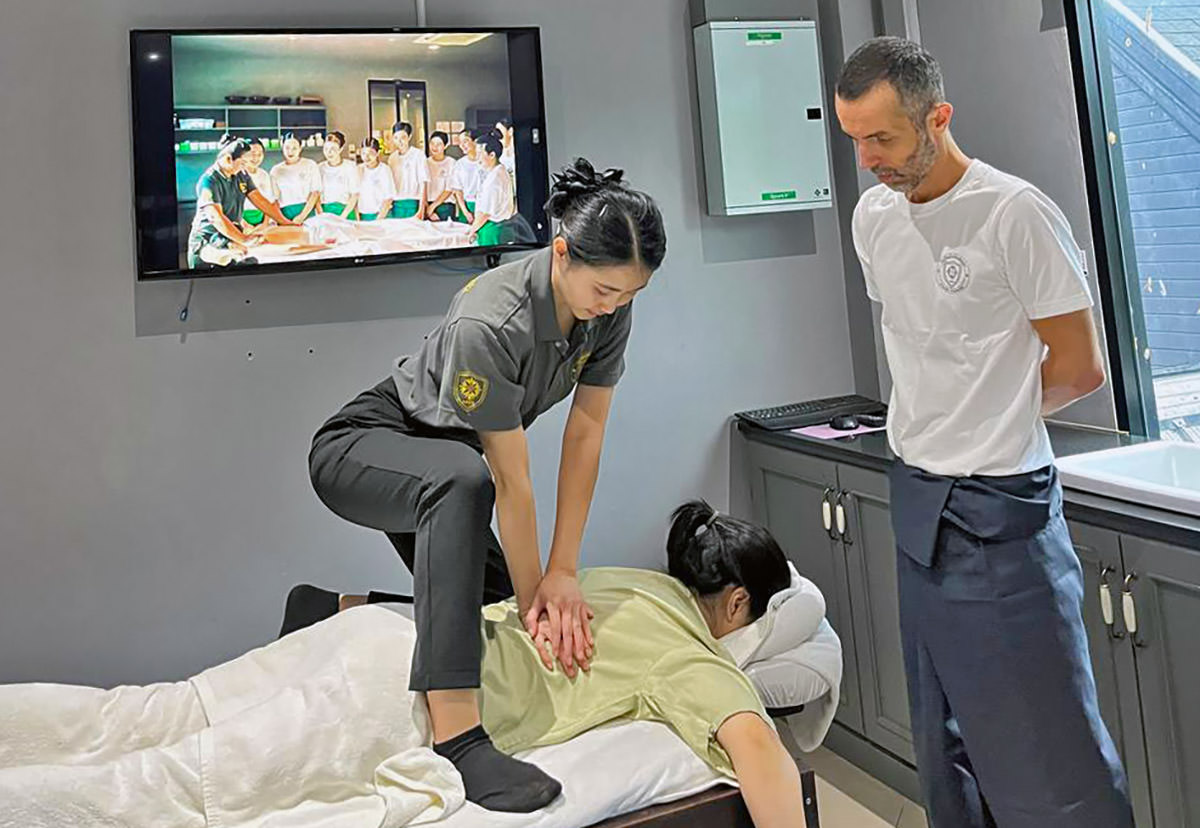
Then it was my turn to replicate the techniques. The trainer was always on my side, ready to correct my posture and hand placement without the learning feel pressured.
The first few minutes of manipulating another body feel unsure and awkward. Climbing the massage table might not look very graceful. Where do my hands go? Is this the right order? Is it… good?
The instructor doesn’t overwhelm you. Corrections are small, precise: adjust your angle, use your body weight rather than your hands, slow down…
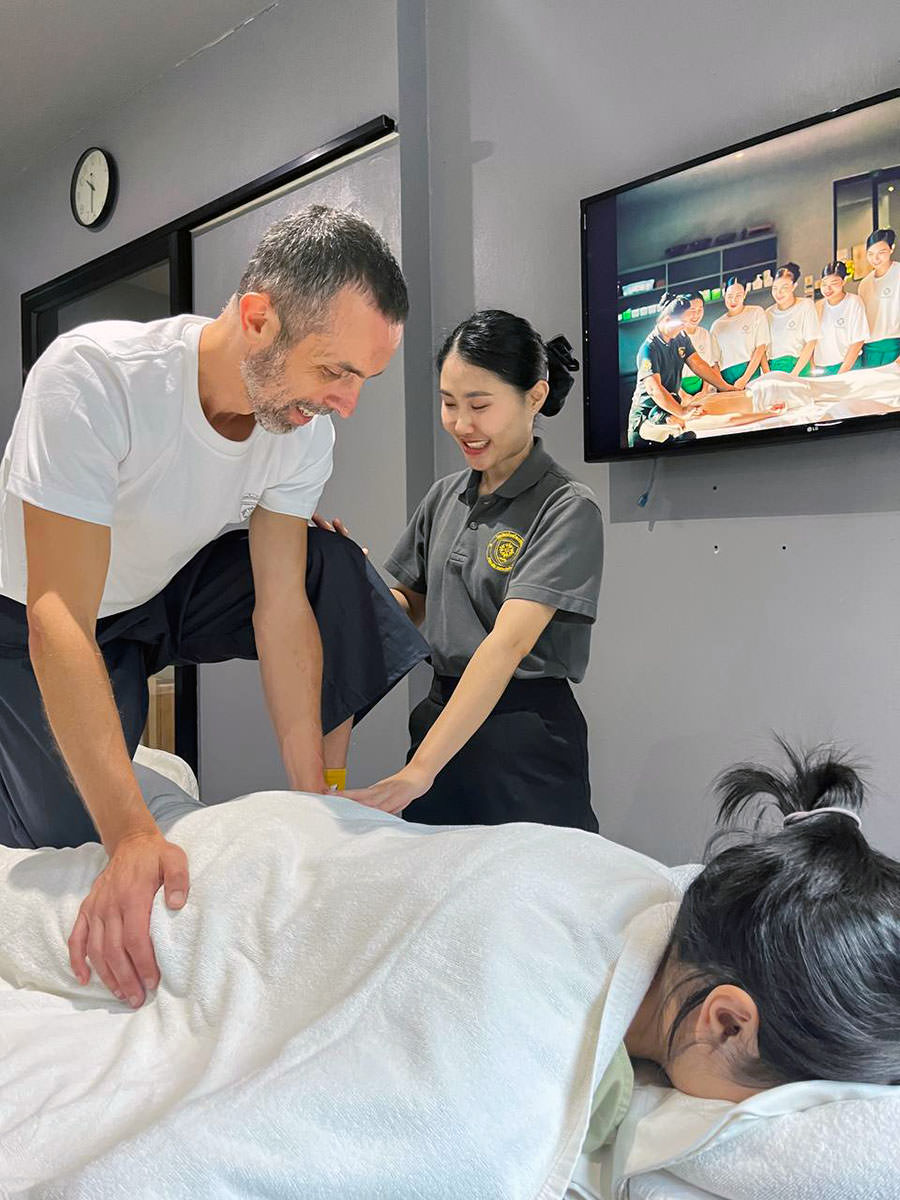
Thai Lanna massage, rooted in the traditions of northern Thailand, differs subtly from the more commonly known central Thai or Bangkok style. It tends to be slightly softer in its pressure application, with more emphasis on rhythmic, flowing sequences. For a beginner, this makes it more accessible.
Here’s the thing, though. My personal preference is a strong massage (remember what I complimented Miss Peony for?). As I surrendered to the massage flow, my pressure started climbing. And I completely forgot that under the towel was Miss Andaman, a real, live, fully sentient human being. My massage instructor was extremely patient while handling my style.
But I guess learning to massage is oddly similar to learning a dance step. Our bodies don’t always listen, we hesitate between transitions, and we bump a few toes in the process.
Only time and practice remove the mechanical and disconnected feel. And one embraces the rhythm that both ‘dancing’ sides approve.
Besides the certificate, I received compliments for my performance. I was left to believe that I could truly start a new career: massaging people.
Can You Really Learn Massage in Half a Day?
Short answer: yes. And also: not even close.
By the end of the session, you can absolutely perform a basic head, back, and shoulder sequence. You remember the general flow. You understand how to apply pressure more effectively, without brute hand force. You’re no longer guessing blindly.
But this isn’t mastery. Nowhere near it.
Think of it like learning a few chords on a guitar. You can play something recognizable. Maybe even enjoyable. But you might miss a few steps, muddle the order of the notes, and occasionally fall completely out of the tune. You’re not ready to perform on stage yet.
What you do gain is confidence to try, awareness of technique, and a structured sequence you can repeat. But there is still so much to learn – from deep technical precision to adaptability for different body types. Professional-level consistency comes with time as well.
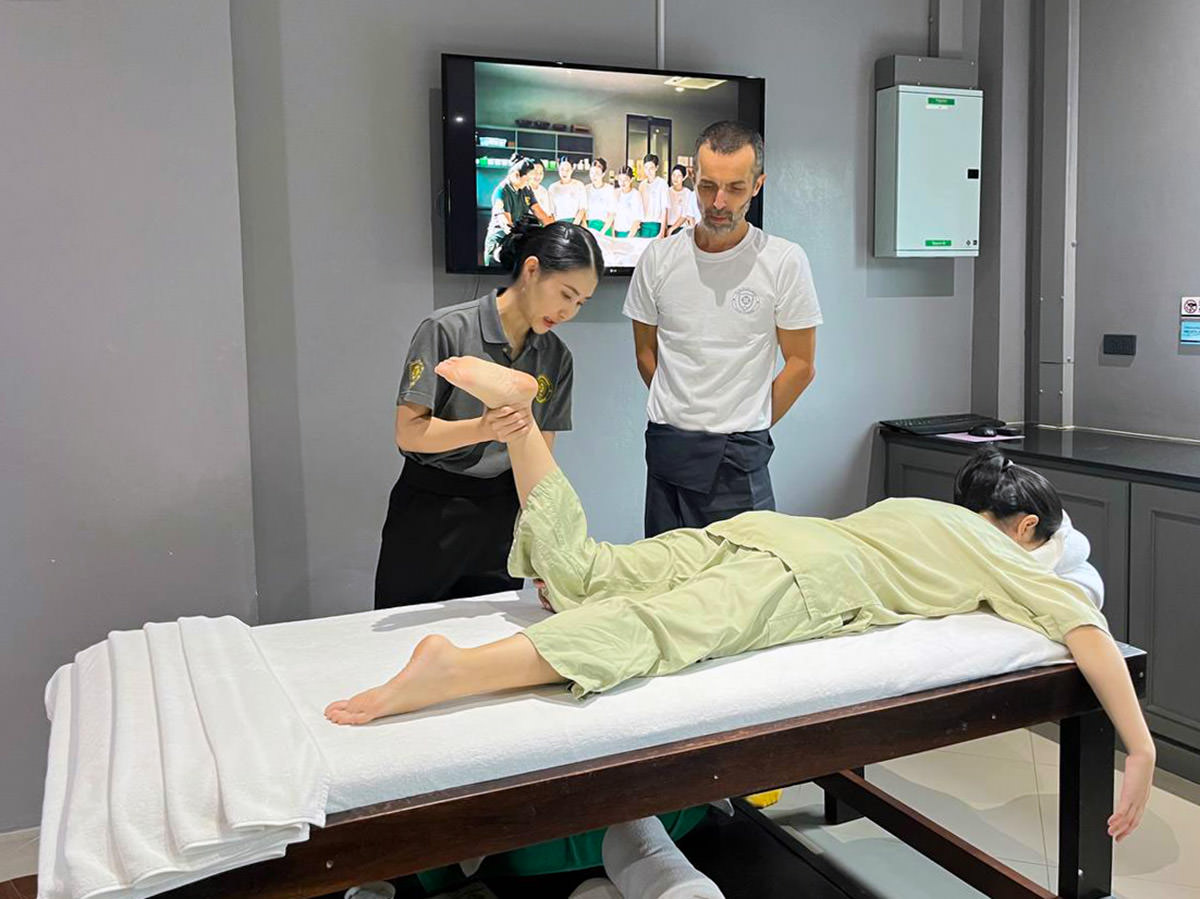
One thing that caught me off guard was how physically demanding giving a massage can be. By the end, I was sweating as if I’d spent the morning in road construction – because I still have so much to learn and adopt (for instance, how shifting weight and adjusting body position can replace the tiresome investment of hands).
Something that looks effortless from the outside is, in reality, a quiet choreography of pressure, timing, and awareness. And for a few hours, you get to step into that role. Not as an expert, but not entirely as a beginner anymore, either.
And if time allows at the end of the course, you’ll even receive a free massage from your instructor, as I did. In the Western Hemisphere, that alone would cost what you paid for the whole course. Here, besides the immediate benefits of the treatment, you also get the inside knowledge and an interactive travel experience with a skill that you can actually take away.
Who This Course Is (and Isn’t) For
This kind of half-day experience is a great fit if you are curious about the art of Thai massage but not ready for a full course, if you want a hands-on travel memory instead of another temple visit, or if you’d like to learn to give better massages to your partner.
For anyone who has no prior experience, the half-day Thai massage class with no prerequisite knowledge required is a perfect start.
But if you’re looking for deep technical training or prefer theory-heavy learning on your way to a professional certificate, you should probably look for another class on the Thai Oasis Spa School list (for instance, Thai 10 Meridian Line Massage – 180 hours, or the Qualified Spa Therapist – 500 hours).
The half-day course is not a cheap way to replace serious massage education. It is just an introduction, that white-framed doorway into a much larger house of massage knowledge.
THAI MASSAGE COURSE - PRACTICAL INFO

Location: 131/44 Moo 1, Chang Puak, Muang, Chiang Mai

Phone: +66 53 920 188

Website: oasisschool.biz

Hours: Monday–Friday, 9 am – 5 pm

Course duration: Normally 6 hours (Head, Back & Shoulder)

Course price: 3,500 baht (approx. €92 / $108)

Uniform: School-provided, 300 baht (€7.90 / $9.30)

Level: Beginner-friendly, no experience needed

Language: English instruction available
Is a half-day Thai massage course in Chiang Mai worth it? – Conclusion
Taking a short massage course in Chiang Mai is one of those activities that sound like a tourist cliché until you actually do them. And then you wonder why you waited so long.
A half-day Thai massage course is an affordable, genuine window into a wellness tradition that stretches back centuries
Thai Oasis Spa School is a legitimate, professionally run institution that takes its reputation seriously.
The Head, Back & Shoulder course won’t make you a therapist. But it will give you a real, transferable skill, one backed by authentic Thai Lanna technique, that you can practice on willing friends and family members long after you’ve left Thailand.
It’s an affordable, genuine window into a wellness tradition that stretches back centuries.
And somewhere in the middle of sweating through your first real massage, correcting your hand placement for the fourth time, and accidentally manhandling your very patient instructor – something shifts. You’re no longer just a recipient of this craft. You’re beginning, however haltingly, to understand it from within.
For anyone considering a massage course in Chiang Mai, Thai Oasis Spa School is a strong, welcoming, and genuinely memorable place to start.
Are you considering taking a Thai massage course in Chiang Mai?
Pin our Thai Oasis Spa School review for later!
Disclosure: My participation in the Thai Oasis Spa School massage course was complimentary, but all opinions are my own.

Also, this post may contain affiliate links, meaning if you click on them and make a purchase, Pipeaway may make a small commission, at no additional cost to you. Thank you for supporting our work!
