
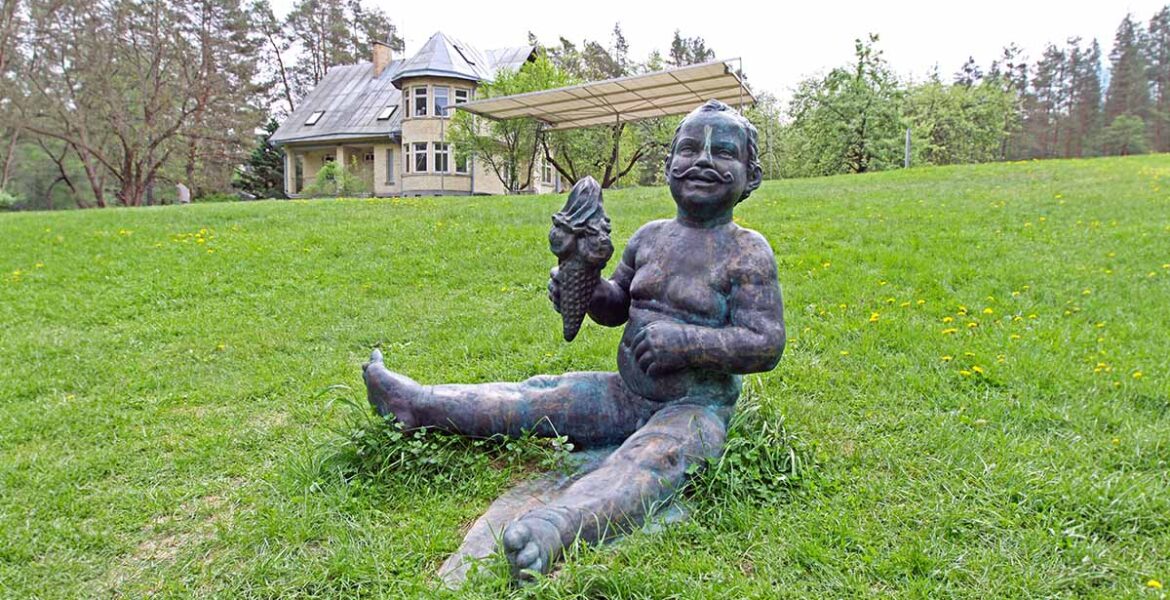
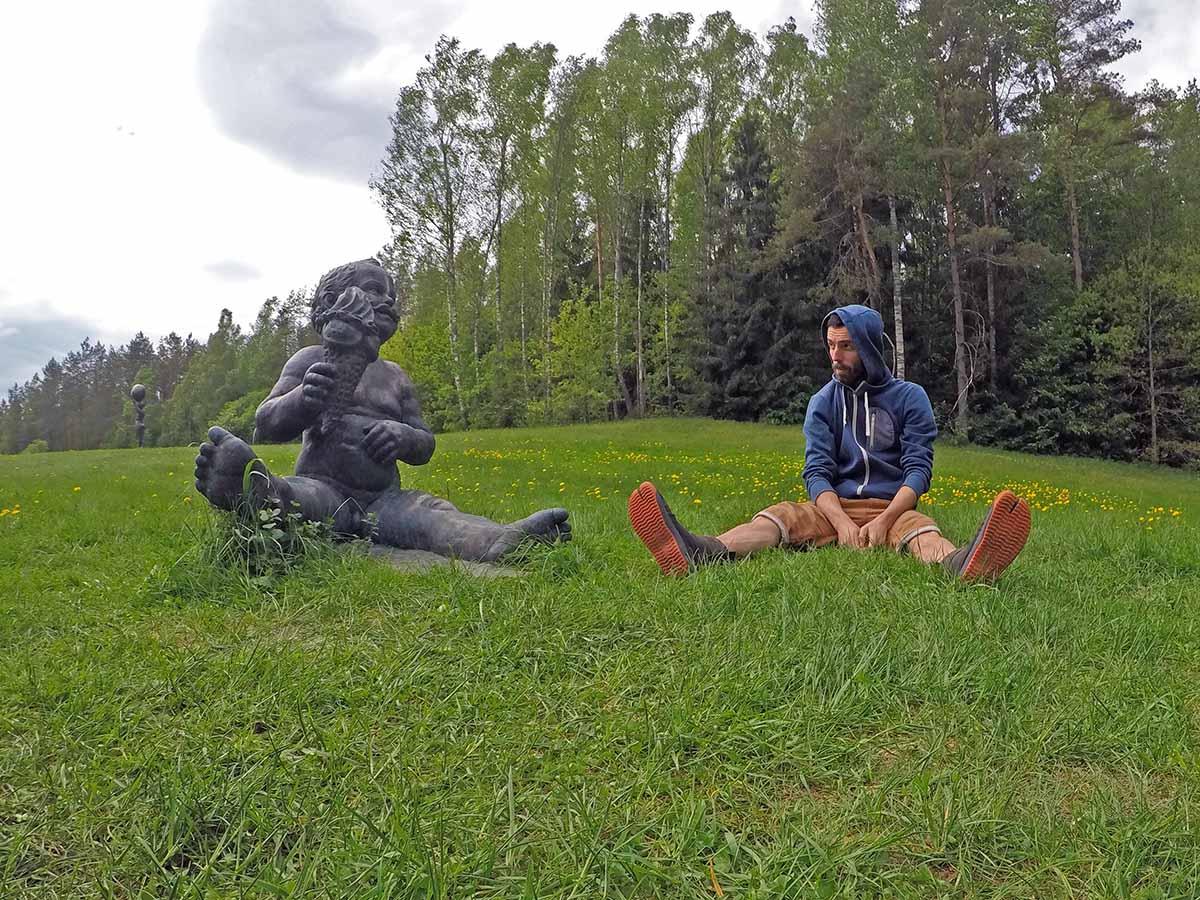
A naked boy holding an ice-cream cone sits in a meadow just outside Vilnius. The child has a mustache. Not the kind you get from slurping on a rapidly melting scoop on a warm spring afternoon – a proper, solid, curly mustache, as if he’d thrown a top hat, a cane, and a monocle somewhere in the grass and decided to take just an ordinary child-menu picnic break. Sitting next to this unorthodox toddler sculpture at Europos Parkas, the geographical center of Europe and Lithuania‘s first NGO museum, triggers my curiosity. As I’m invited to wonder and play, can my adulthood costume melt away, like gelato?
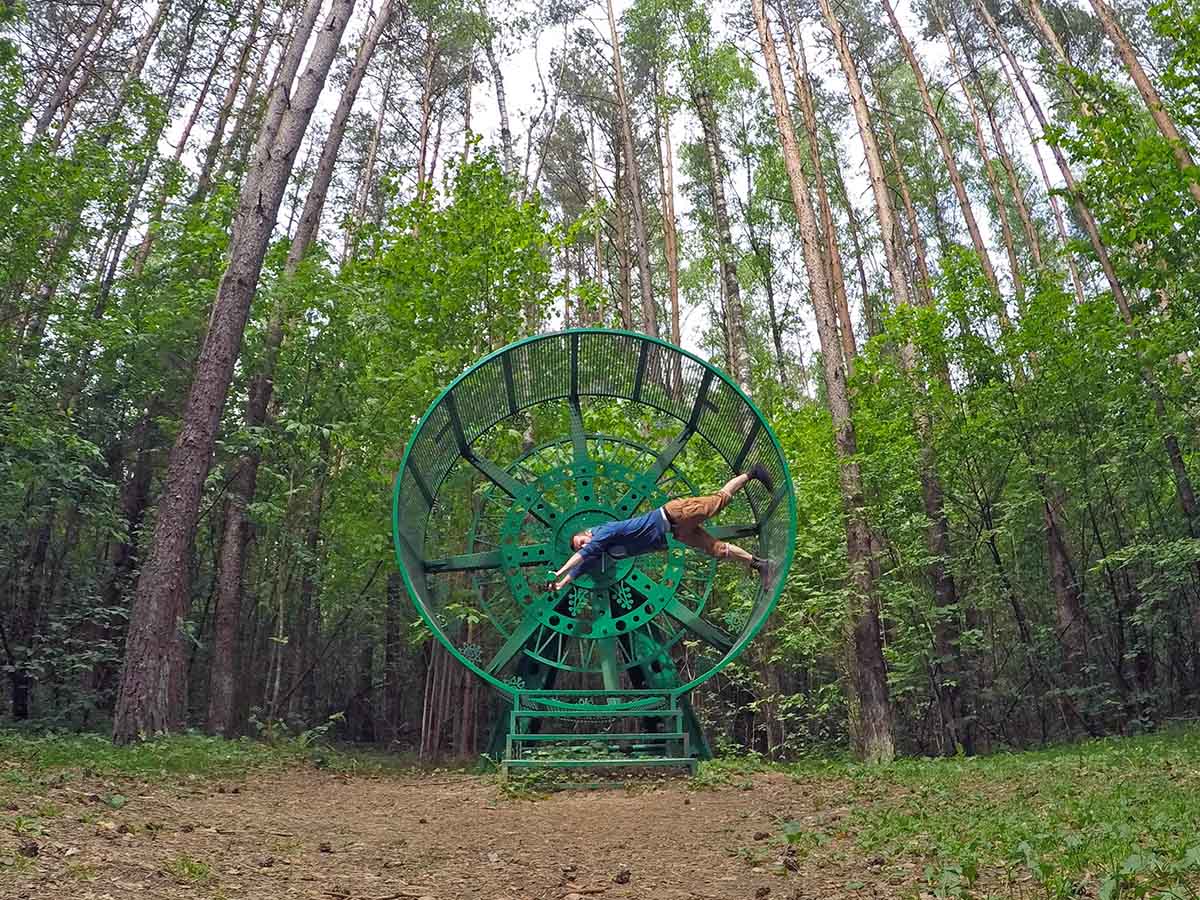
It can, I’ll find out later, when I’ll confidently step into Marius Zavadskis‘ forest carousel (a steel sculpture misspelled, whether accidentally or brilliantly, as Carousal – a drinking bout), and spin in it, like a hamster. An art that doesn’t take itself too seriously quickly peels you down to your infant layers, where remaining solemn would simply be absurd.
The joyful kid with a stylized mustache (Su Ūsais or With Moustaches) is a work by Evaldas Pauza, a Lithuanian sculptor known for his surreal style and comic twists, also visible in other whimsy bronzes scattered among dandelions on this grassy hill. There is a calm Sitting Policeman, a theatrical Pinocchio whose pointy nose couldn’t escape statue rubbing, and Gintarė or Electricity, a girl experimenting with an electrified balloon and her own braid.
Clustered in this outdoor museum, the artworks stand around the Monument of the Center of Europe, a geographic clock created by the little scientist’s namesake and founder of Europos Parkas – Gintaras Karosas. Placing the plaques indicating distances of European capitals to the central pyramid, this visionary artist created the Park of Europe, uniting the continent in art, as one of its most quietly extraordinary cultural destinations.
If you decide to extend your Europos Parkas visit in Kaunas, make sure to visit another unique institution – the Devils' Museum.
What Is Europos Parkas?
Not to be confused with Europa-Park, Germany‘s largest theme park, Europos Parkas is a permanent open-air museum of modern and contemporary art established in 1991, some 17 kilometers north of Vilnius, the capital city of Lithuania.
The total weight of the Europos Parkas collection amounts to 1,000 tons of stone, wood, concrete, and other materials
Its founding concept is both simple and wonderfully strange: in 1989, the French National Geographic Institute calculated the geographic center of the European continent. The result landed in Lithuania, in a quiet forested area near the village of Girija.
Two years later, some 10 kilometers away, the Lithuanian sculptor Gintaras Karosas conceived a gallery-style park. Spreading over 55 hectares, Europos Parkas exhibits large-scale sculptures, landscape installations, and conceptual works woven into a natural setting of hills, woodland, and springs. It was imagined as a museum built into nature, a space where art could freely breathe, weather, age, and interact with the environment.
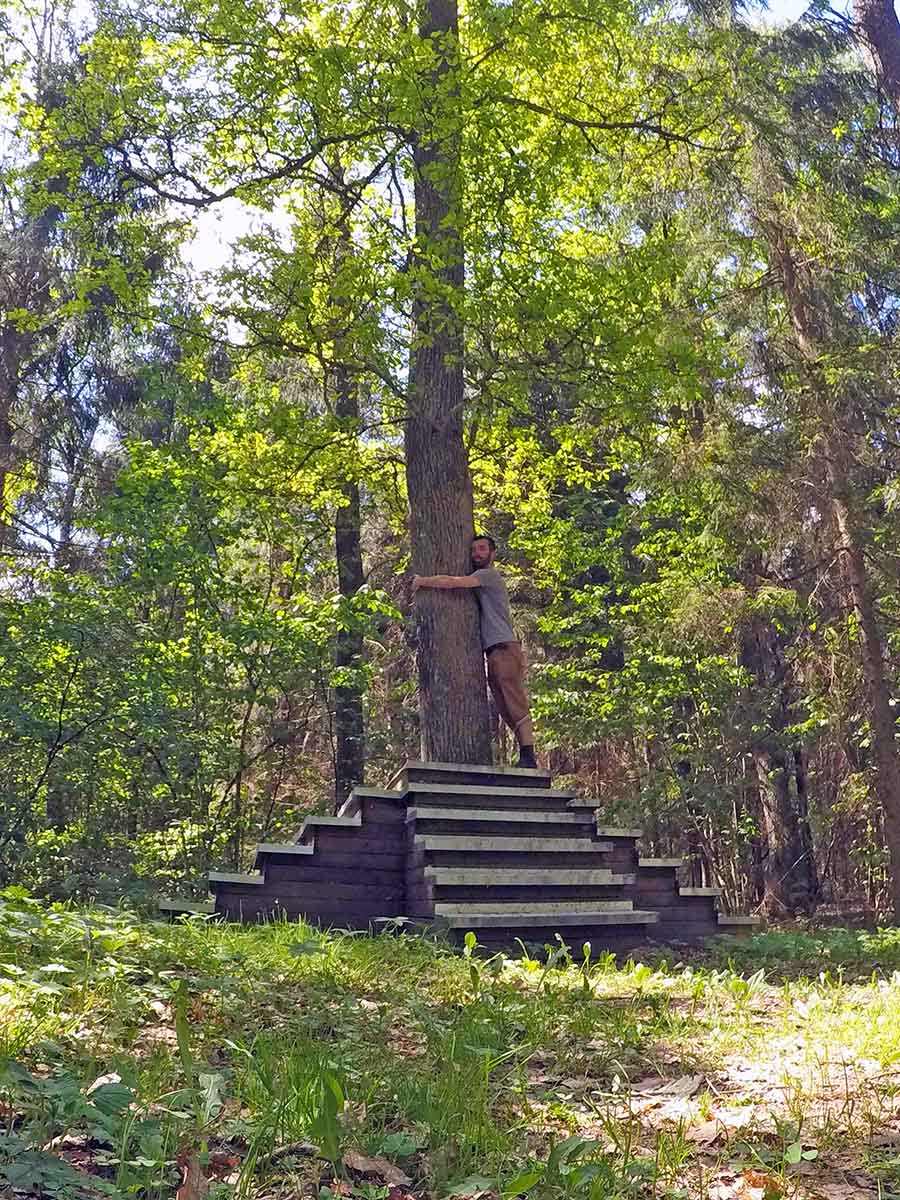
The displayed artworks range from intimate pieces that occupy just a square meter to sprawling giants covering thousands of square meters. Someone calculated the total weight of the collection, and it amounts to approximately 1,000 tons of stone, wood, concrete, and other materials.
One of the defining features of the art at Europos Parkas is its interactive nature. Many of the installations encourage visitors to engage with them in a tactile and experiential way. For example, some sculptures invite visitors to touch, climb, or even sit on them, creating a more intimate connection between the viewer and the artwork. This hands-on approach not only makes the art more accessible but also enhances the overall experience of visiting the park.
Every year, more than 60 thousand people come to explore this extraordinary Lithuanian museum.

The Founder’s Story – Ambition in the Face of Empire
The backstory of the sculpture park near Vilnius is inseparable from the story of its founder, and it is worth telling properly.
Gintaras Karosas was born on 25 June 1968 in one of the largest collective garden districts of Vilnius – Kryžiokai. As a teenager, he was already exhibiting his own graphic work. By 19, while studying sculpture at the Vilnius Academy of Arts, he had found a wooded site outside the city and become convinced it was the right place for something extraordinary. He began landscaping it by hand – cutting trees, clearing undergrowth – on territory that technically wasn’t his.
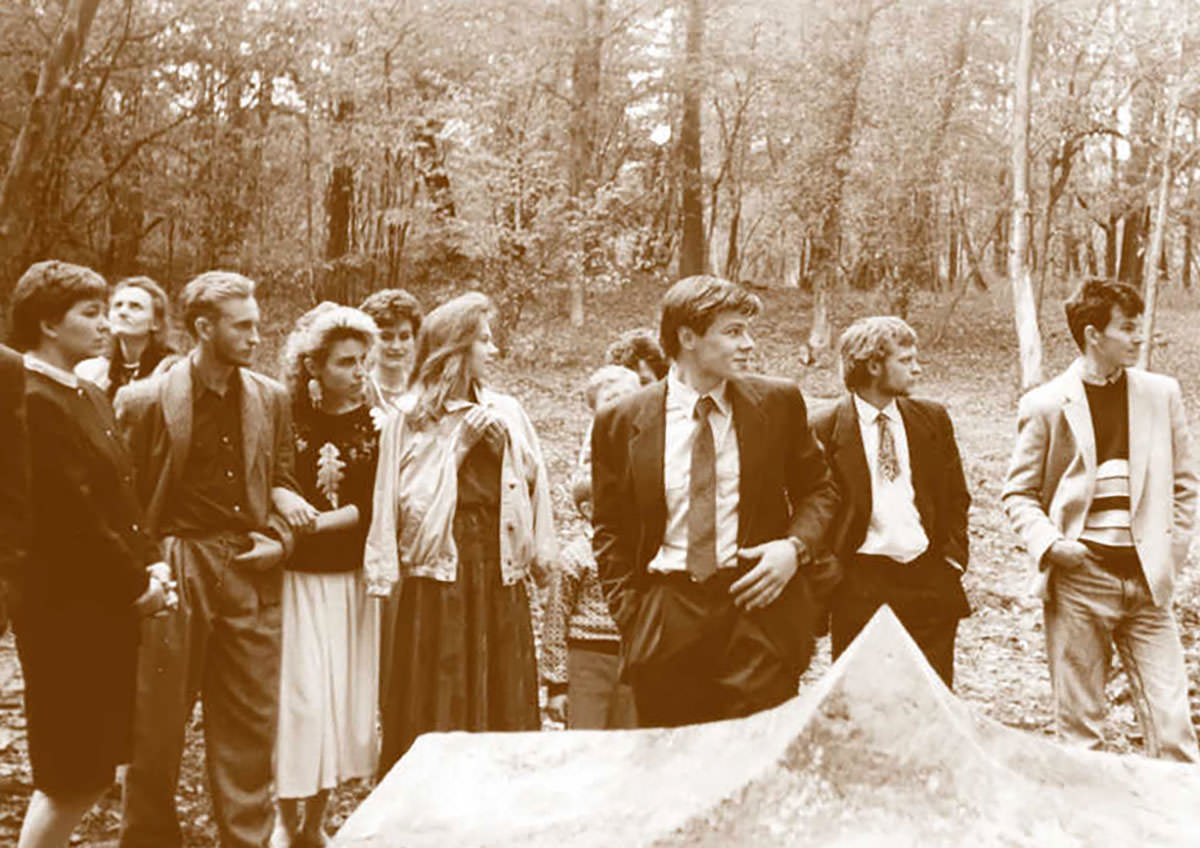
Starting such a project during the Soviet era, when the state owned the land and was discouraging international connections through art, was a bureaucratic nightmare. Karosas petitioned for years, only to get expelled from the Academy. After the new director reinstated his student status, the ambitious young man was eventually granted a small plot of undeveloped land. He worked on it alone for the first few years.
Then history intervened in his favor. In 1990, Lithuania became the first Soviet republic to reclaim independence. In 1991, the year the USSR formally collapsed, the first sculpture, Symbol of Europos Parkas, was placed in a clearing ringed by oak trees. The museum grew alongside a free nation.
By 1996, American conceptual artist Dennis Oppenheim had contributed his work Chair/Pool, and the international art world began to pay attention.
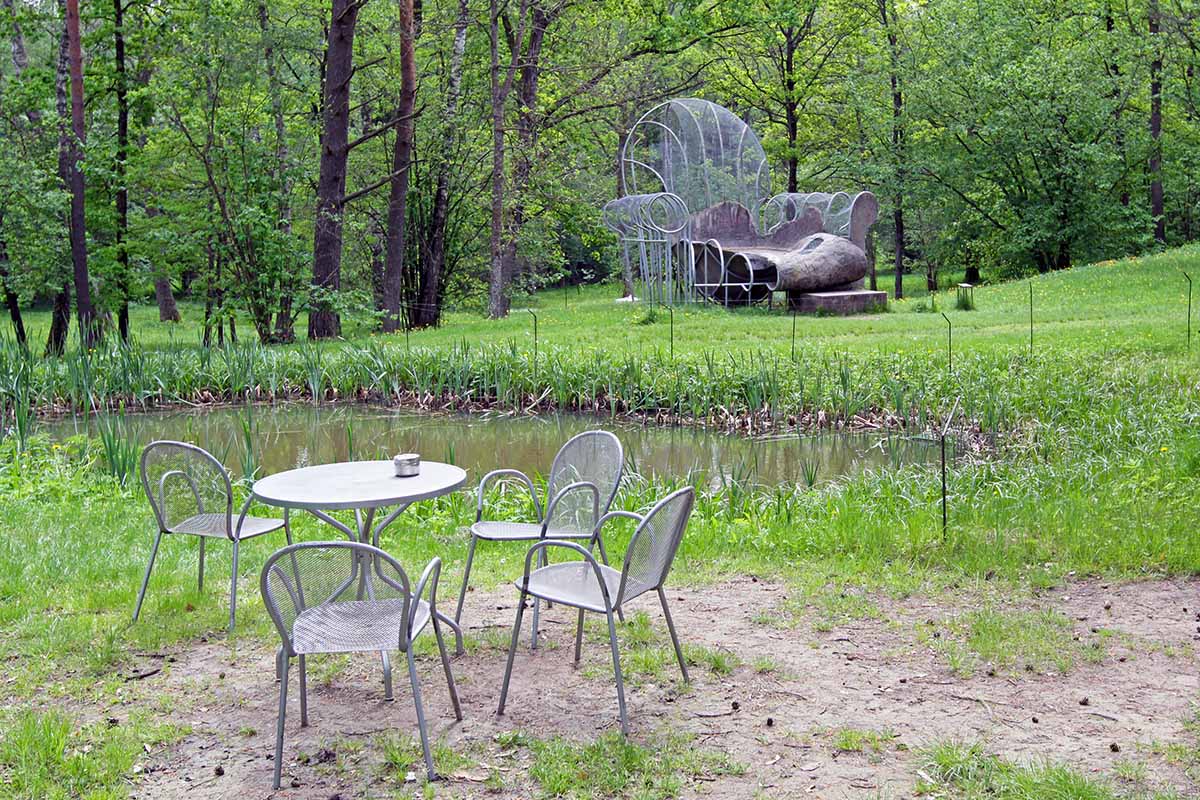
In 2001, Karosas’s own sculpture was recognized in the Guinness Book of World Records. In 2024, the park was inscribed on Lithuania’s Register of Immovable Cultural Properties.
What began as one young man’s stubborn dream is now a permanent part of the nation’s cultural heritage.
The Collection – A Forest Full of Phantoms
As you walk through the site in silence, broken only by birds and the occasional crunch of gravel underfoot, you realize you are not alone. The forest phantoms hiding behind every corner don’t quite belong there, yet feel strangely at home. The breadth of the Europos Parkas collection is remarkable.
Still, it is not a manicured sculpture garden with clear sightlines to the next work. It is, first and most insistently, a forest. The paths turn to dirt almost immediately after the entrance. The 120-odd works by artists from 35 countries don’t announce themselves; they appear when they appear, sometimes with grand drama, sometimes so quietly that you’ve walked past before registering what you’ve seen.
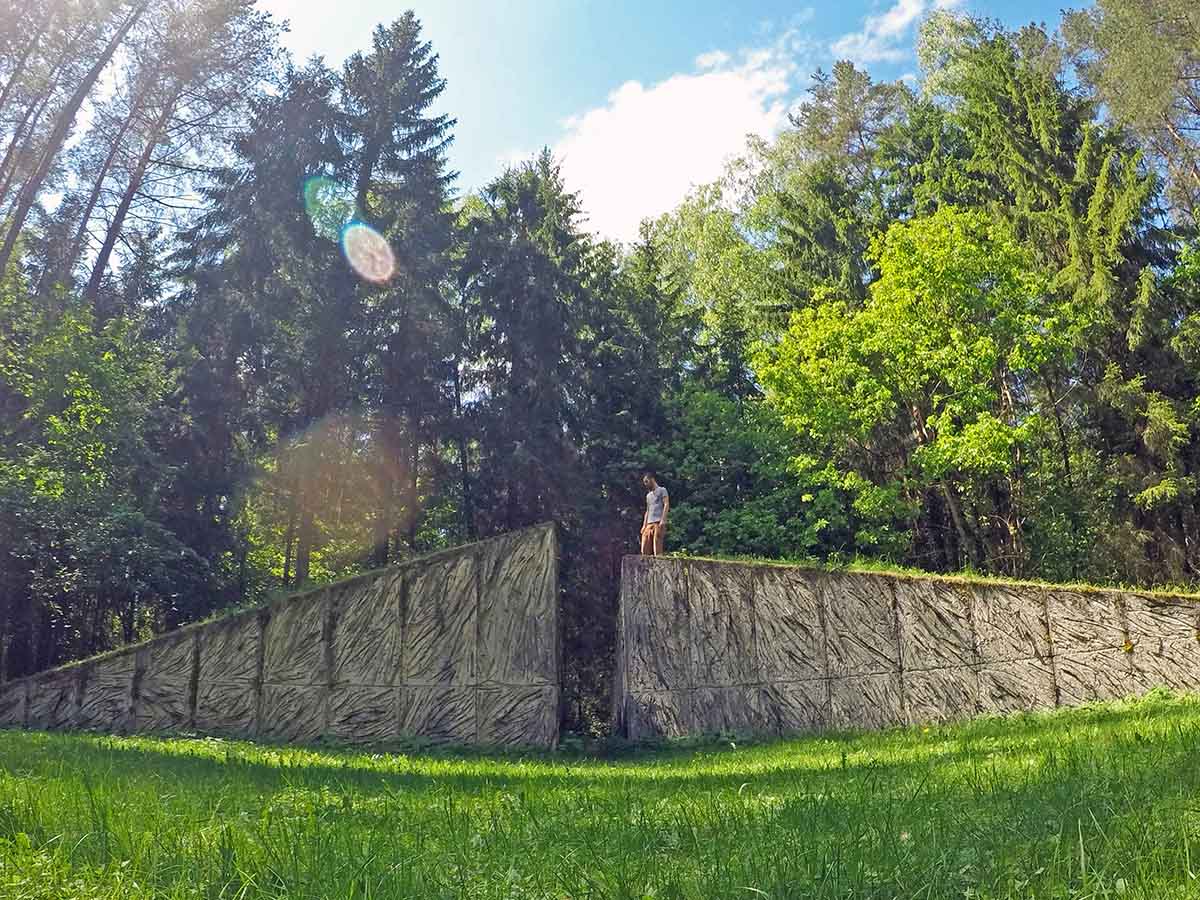
Each work was sited by Karosas to interact with its specific surroundings: the light through the canopy, the proximity of a spring, the slope of the land. As seasons shift, so do the sculptures. Leaves fall, moss claims its territory, shadows migrate. The park never looks exactly the same twice, which means there is no wrong time to visit and no single definitive version of it to have seen.
The artists are not minor figures. Magdalena Abakanowicz. Sol LeWitt. Dennis Oppenheim. Beverly Pepper. Sasson Soffer. Ales Vesely. The list runs across five continents and several decades of art history.
Since the early 1990s, the park has hosted international sculpture symposiums, bringing artists on-site to create works specifically for this environment. These artworks weren’t just placed here; they were conceived with this landscape and existing pieces in mind.
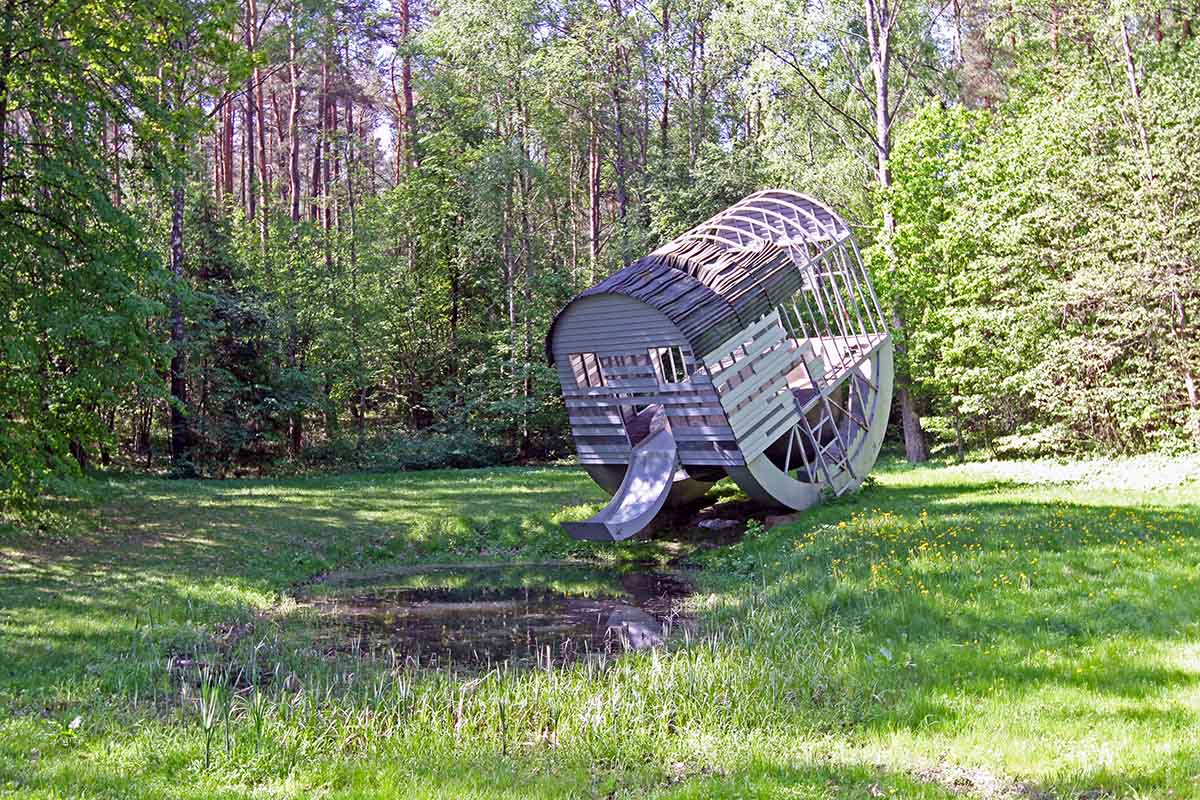
5 TIPS FOR MAKING THE MOST OF YOUR VISIT

1. Wear proper shoes. Paths are natural and unpaved beyond the entrance. Wear trainers or walking shoes that accept mud without complaint. Don't wear anything you'd be upset to find decorated with forest.

2. Download the map beforehand. Or download the Europos Parkas app. Without following a suggested route, it's easy to double back or miss works entirely – the grounds are large and not always intuitively signposted. Then again, at a place like this, sometimes the best moments happen when you let yourself get a little lost.

3. Choose your season deliberately. Spring brings wildflowers, fresh greenery, and soft light. Autumn transforms the park into something more melancholic and atmospheric, which suits many of the more reflective works. Summer sees the most visitors; arriving early guarantees a quieter experience. Winters are more minimal, sometimes stark, covering the sculptures with a blanket of snow.

4. Don't rush. The best encounters happen when you stop following the route and sit with a piece for a few minutes.

5. Combine your visit. Nearby Lake Balsys is accessible by the same bus line and offers a peaceful complement to the art. The 18th-century Verkiai Palace, a former residence of the Grand Dukes of Lithuania, is also on the road back to Vilnius. If you have a car, the official Geographic Center of Europe monument in Purnuškes is a free and worthwhile addition. Visiting these places is one of the best things to do near Vilnius.
Must-See Works at Europos Parkas
What to see at Europos Parkas? It’s a lot, of course. But in the center of Europe, some works are especially worth stopping for. These are the park highlights that will haunt your camera roll.
LNK Infotree – Gintaras Karosas
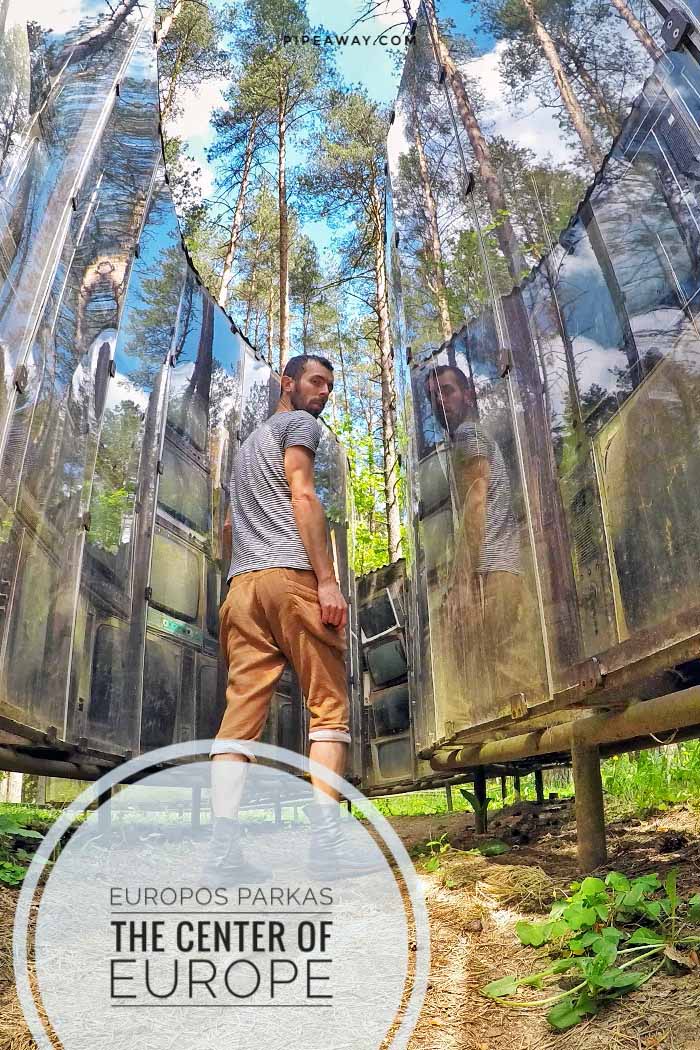
The park’s most famous work is a 2001 Guinness World Record holder, officially the largest art installation made from television sets. A 700-meter labyrinth with the outline of a tree originally incorporated 2,903 TVs. Later, Lithuanians donated 600 more small screens, which were also included in the walls of the TV graveyard spreading over 3,135 square meters.
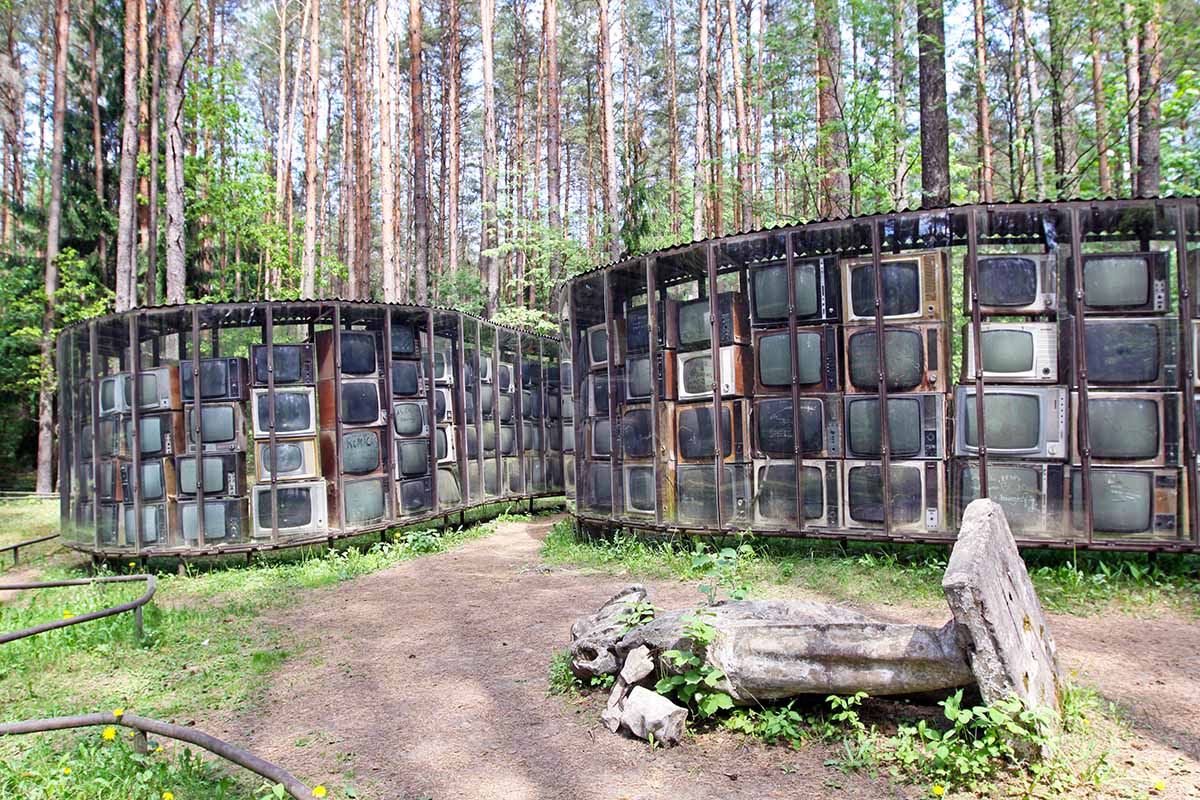
Among these electronic boxes, instrumentalized to colonize people’s minds, household by household, lay a toppled statue of Vladimir Lenin, a symbol of Soviet ideology. Walking through the maze of stacked, mute screens, their propaganda power disabled, must’ve been a genuinely thought-provoking experience.
Over the years, due to weather and human intervention, the LNK Infotree has mostly deteriorated, the majority of TV sets were recycled, and only a restored fragment is currently on display. Some visitors find this anticlimactic. I found it oddly appropriate: there is something fitting about a monument to Soviet decay that is being decomposed itself.
Double Negative Pyramid – Sol LeWitt
Sol LeWitt‘s geometric minimalist structure from 1997 sits in the landscape with quiet authority. The central figure of the minimal and conceptual art movements in the 1960s, who believed the idea behind a work was the work itself, delivered a work made from concrete blocks, reaching almost six meters in height and twelve meters in width.
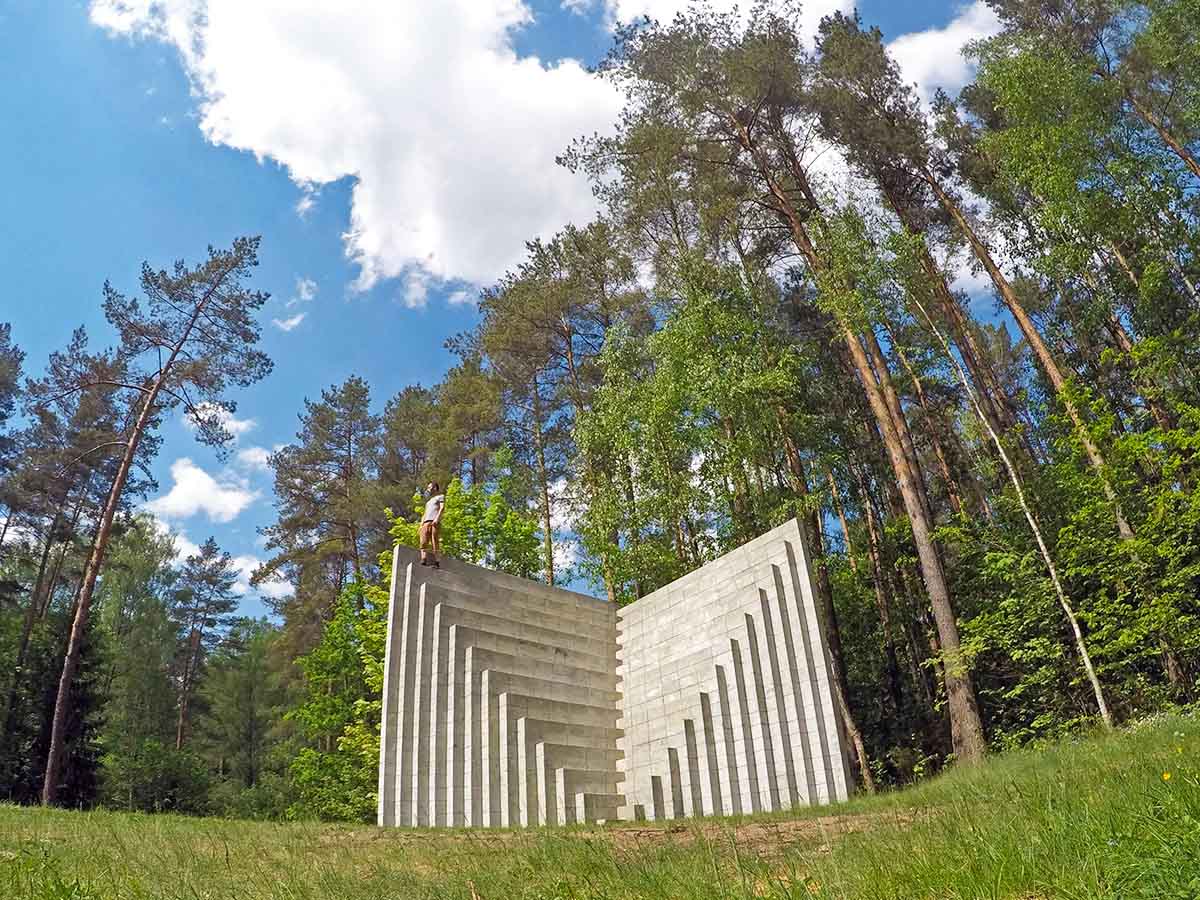
The iconic American artist asks the viewer to move around the Double Negative Pyramid, to see it change, not just because of the perspective. The falling shadows and the play of light, even in the pyramid’s image mirrored in the pond, contribute to a constant shift in perception.
Space of Unknown Growth – Magdalena Abakanowicz
Despite crossing the Iron Curtain for numerous exhibitions that built her international reputation, the artist Magdalena Abakanowicz never managed to establish a sculpture park in her native Poland, another place controlled by the USSR. The godmother of the installation art, instead, became one of Europos Parkas’s most committed ambassadors.
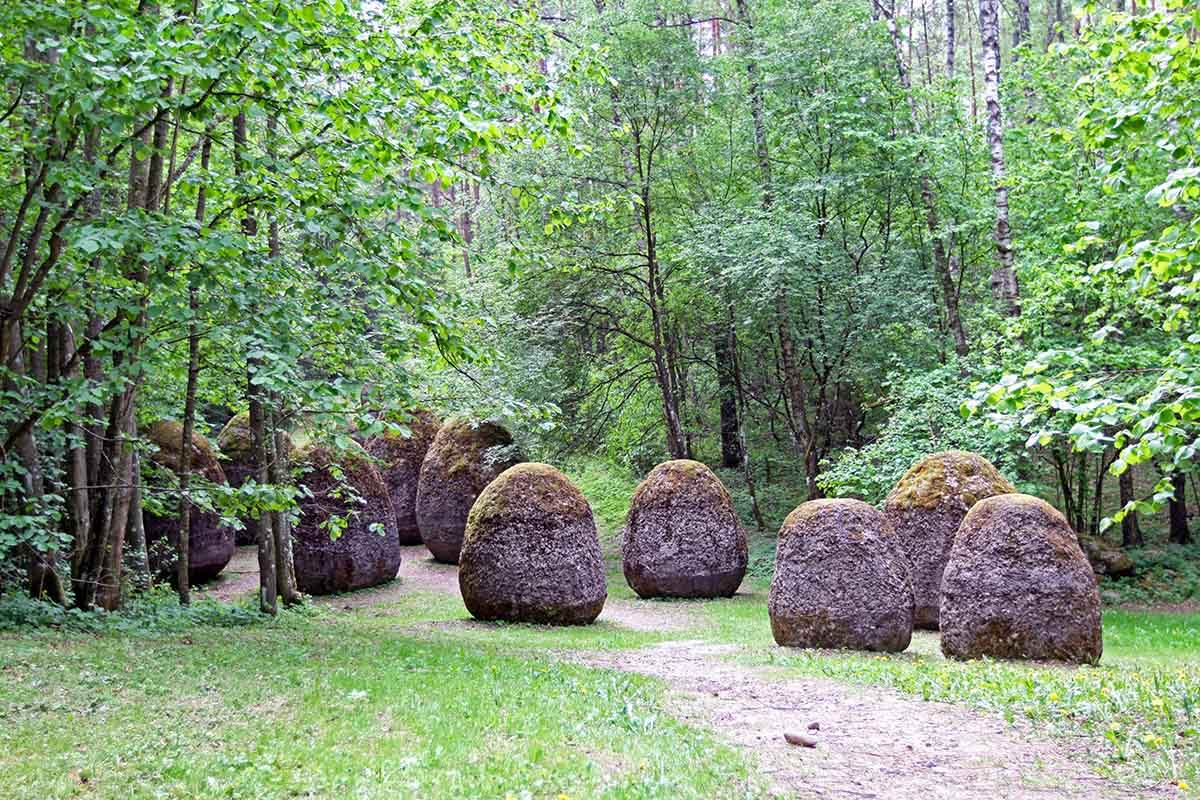
In 1998, what was planned to be just four of her ‘abakan’ eggs became a nest of 22 concrete ovoid forms, the largest one weighing over a dozen tons. These massive brooding boulders are a testament to the park’s ambition to host artists of genuine international stature.
PRACTICAL VISITOR INFORMATION

Address: Europos Parko g. 300, Joneikiškės, Vilniaus r., LT-15143

Working hours: Open daily from 10 am to sunset. Last entry in summer at 7 pm; in winter at 4 pm.

Admission: You can book Europos Parkas tickets on Klook or Tiqets. An adult ticket costs €12. Student, senior, disabled, child, and family discounts available. Free admission for pre-schoolers accompanied by parents. Dogs are welcome, too. If you want to combine your Europos Parkas visit with Liubavas Manor, another museum founded by Gintaras Karosas, you can do it all for €17.

On-site facilities: Restoranas restaurant and café in an old apple orchard is open 11 am – 10 pm. Booking ahead is recommended for meals. The museum gift shop offers a variety of art-related merchandise and publications, souvenirs, and postcards. You can send them via their very own post office.

How long to allow: The park offers different mapped routes; the shortest can be completed in 60 minutes, though a full visit takes 2-3 hours or more, especially if you'll be taking a lot of photos of Europos Parkas attractions.

Where to stay: For lodging options close to Europos Parkas, consider booking this villa with a sauna or this garden suite near the lakes. For those who prefer the luxury of staying in Vilnius Old Town, you can't go wrong with the historic Stikliai Hotel or the design-focused Hotel Pacai. Those who want a well-rated bed without a mortgage can check out Corner Hotel and Somnia Apartments.

Getting there from Vilnius

By public bus: Take bus no. 6 from the city center, then transfer to bus no. 66 at Giedraičių st. Walk from Skirgiškės station. The journey takes approximately 90 minutes.

By bike: Even if you can rent a bicycle directly at the park, you can also do it in the center of Vilnius (this option costs €19 for a day) and cycle to Europos Parkas. The ride is approximately 20 kilometers, often taking a scenic route near the Neris River. If you're too tired to bike back for another hour, the bus no. 66 allows passengers to bring bikes on board.

By car: Around 30 minutes. Parking is available at the entrance; a €2 fee applies. An EV charging station is also available.

By taxi or rideshare: Practical if traveling in a group.
Europos Parkas – Conclusion
Art historian Amy Dempsey included Europos Parkas in her book “Destination Art“ as one of the world’s most important art places worth traveling to. She is right. But this park is much more than an art locus on someone’s bucket list.
What stays with me is not any single sculpture, though several are remarkable. It’s the original act of will – a teenager in a Soviet forest, clearing trees by hand, certain against all reasonable evidence that a patch of overgrown, marshy, desolate woodland was going to matter.
One stubborn nineteen-year-old outlasted the empire that told him no
There is something instructive in that. Not inspirational in the poster-quote sense, but genuinely instructive: about what gets built when someone refuses to accept the limits of what is supposedly possible. About what a country can become when it stops being told what it is.
Empires rise and fall. It is the lesson our modern kings keep failing to learn.
It’s visible in the dismembered Lenin rotting among long-forgotten analogue TV boxes.
A Berlin Wall fragment rising beside the trees whispers it again.
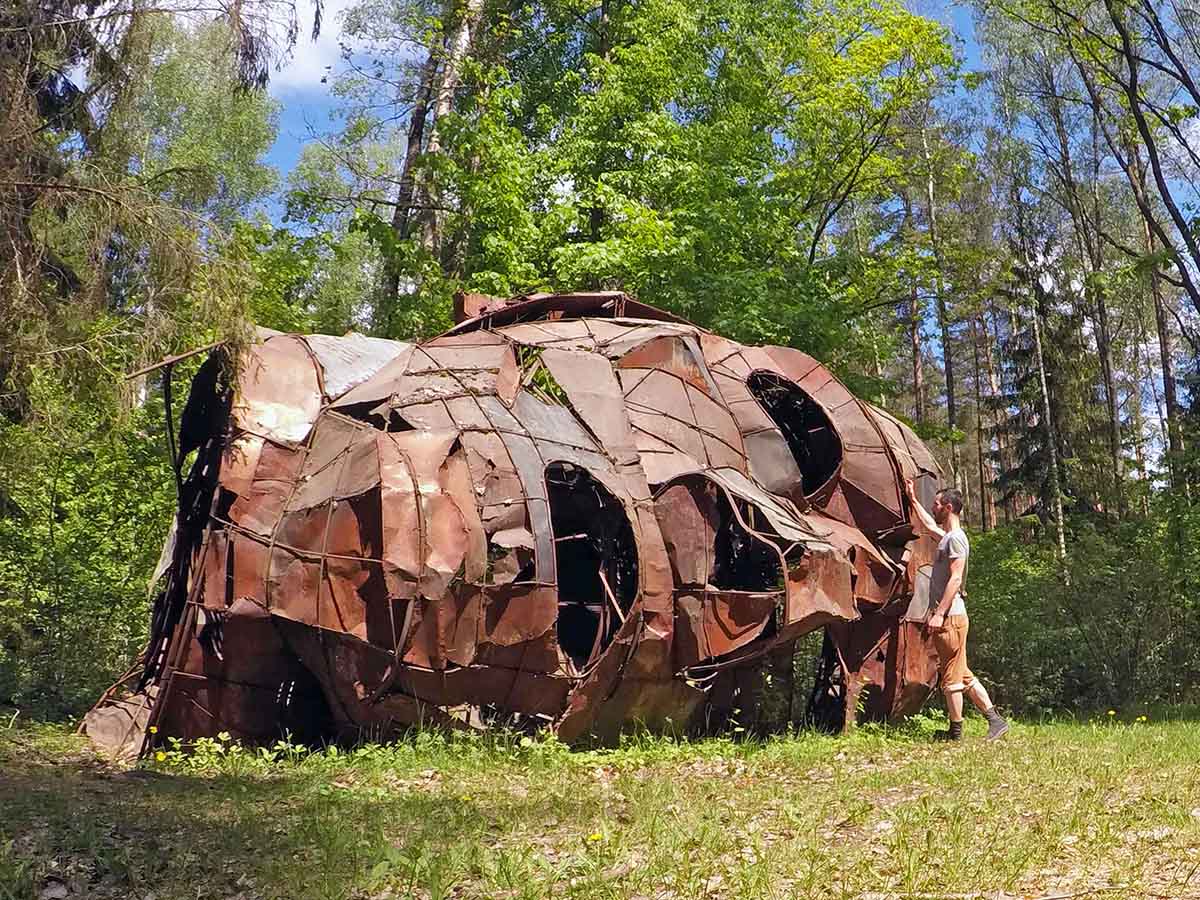
As I walk through the Lying Head, an enormous head the stage designer Adomas Jacovskis once constructed for the opera “Macbeth”, I can sense only emptiness. Rusting in grass, like a reminder that ambition and madness have a lifespan, this artwork echoes the same: power that rests on moral collapse will eventually be beheaded.
In Vilnius, one stubborn nineteen-year-old – a mustachioed baby, really, with a vision nobody else could see – outlasted the empire that told him no.
Lithuania is not a peripheral country. It is a place at the center of the idea of Europe, where art and nature can outpower the most violent human ideas.
All roads, if you follow them long enough, lead here.
Did you like this guide through Europos Parkas, the geographical center of Europe?
Pin it for later!
Disclosure: This post may contain affiliate links, meaning if you click on them and make a purchase, Pipeaway may make a small commission, at no additional cost to you. Thank you for supporting our work!
