
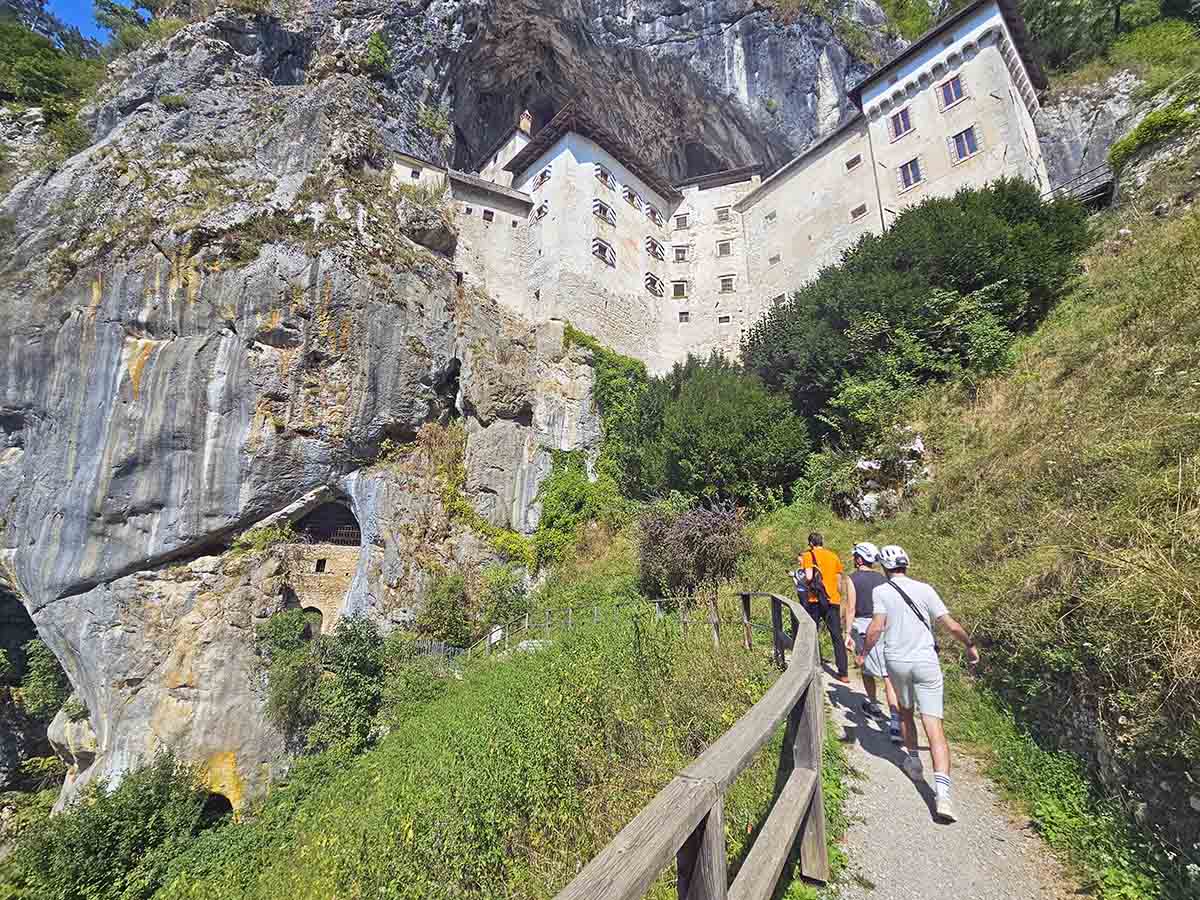
Even if you might’ve heard of Predjama Castle – the jaw-dropping medieval fortress wedged into a dramatic 123-meter cliff face in southwestern Slovenia – you probably don’t know what lies directly beneath it. The karst world carved out the Cave under Predjama Castle, which spans four floors and ranks as the second-longest cave in the country. It is darker, wilder, and more raw than the famous Postojna Cave nearby, and for anyone who craves an underground experience with real edge, it may well be the more rewarding of the two.
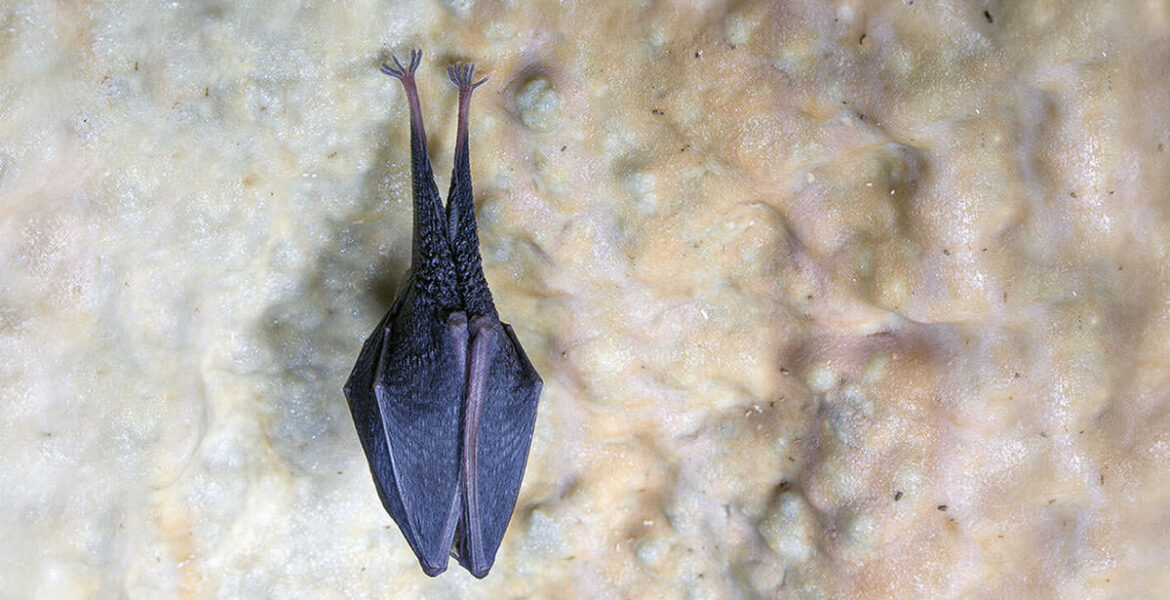
In winter, no human is allowed inside Predjama Castle Cave, as it becomes a refuge for bats
Let’s first clear up its name: Cave under Predjama Castle (Jama pod Predjamskim gradom), also known as Predjama Castle Cave. If you speak Slovenian, this might already be making your brain itch. The literal translation of Predjama is “in front of the cave”. So the true meaning of the cave’s name is the “cave under the castle in front of the cave”. To be even clearer: Predjama Castle is the castle above the “cave under the castle in front of the cave”.
The exit of the Cave under Predjama Castle is, in fact, above the entrance to the fortress. So, it turns out the cave is simultaneously beneath, behind, and above the surreal-looking castle that gave it its name, at the same time the cave gave the name to the castle.
If that made you dizzy, imagine losing your sense of orientation once your cave guide suggests: “Let’s turn off our lights for a minute and stand here in the dark.”
In that pitch blackness, you start hearing your own breath, and then your heartbeat. You count the beats and wonder: will it really take a minute?
Check out the Cave under Predjama Castle tour video on YouTube!
Deep inside this hidden cave system, blind as a bat but lacking the echolocation to match, you feel both safe and fragile. The cave seems like a long-forgotten home, but even more – like someone else’s home. In winter, no human is allowed inside Predjama Castle Cave, as it becomes a refuge for bats.
Welcome to the Cave under Predjama Castle: a living, shifting world of stone, silence, and wings.
What Is the Cave Under Predjama Castle?
The Cave under Predjama Castle is the second-longest Slovenian show cave, spreading over four floors that are all interconnected, except for Erazem’s Hole and Erazem’s Passage on the top level. The total length of all discovered sections reaches 14 kilometers, though tourists can access only a 700-meter stretch.
The cave system under Predjama is part of the vast karst landscape that defines this corner of Slovenia: terrain sculpted over millions of years by water dissolving limestone into tunnels, chambers, and hidden passages.
Some of these were used to spectacular effect by Erasmus of Lueg (Erazem Predjamski). According to legend, Erasmus came into conflict with the Habsburgs after killing the commander of the imperial army. Fleeing the vengeance of Emperor Frederick III, he retreated to Predjama Castle, allied himself with King Matthias Corvinus, and proceeded to raid Habsburg estates across Carniola.
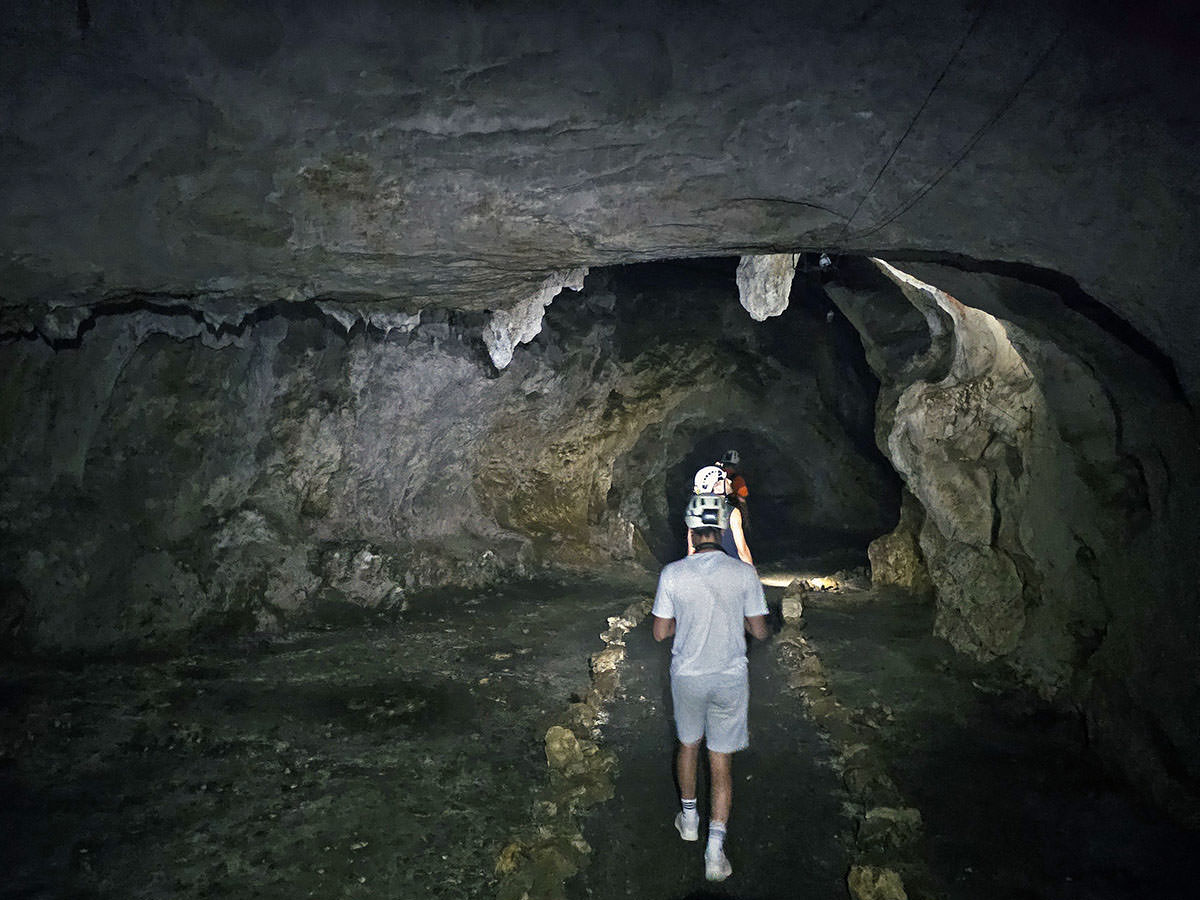
The cave was his lifeline. Behind the castle, a network of secret tunnels allowed the knight Erazem to set out on his expeditions and remain undefeated through a siege for a year and a day. The tunnel system – the very same one we walk through today – is why he never starved. Attackers could surround the castle, but they could not cut off a man who had the entire karst underworld as his back door.
He even used the tunnels to mock his besiegers, reportedly lobbing freshly delivered cherries at his confused enemies from above.
The cave corridors were Erasmus’s secret power until one of his servants, in exchange for gold coins, flashed a light to signal that the knight had gone to the toilet during the night. The enemy’s bullet found Erasmus and finished him on the spot.
Cave Under Predjama Castle Tour
At exactly 11 am, young cave guide Nejc Prinčič welcomes me and two other tourists at the Predjama Castle ticket office. Even though tours can get crowded in peak summer – sometimes requiring two guides for larger groups – today there are just three of us joining the Cave under Predjama Castle tour. In late August, that’s a small luxury.
Before we enter the bat rooms, a quick stop at the bathrooms – at a place where protective helmets are also distributed. Unlike in “Game of Thrones”, we aren’t wearing them to signal lineage while warding off the enemies’ swords. Our real adversaries on this cave adventure would be the occasional low ceiling (considerably harder than our skulls) and the darkness our eyes are simply not equipped for.
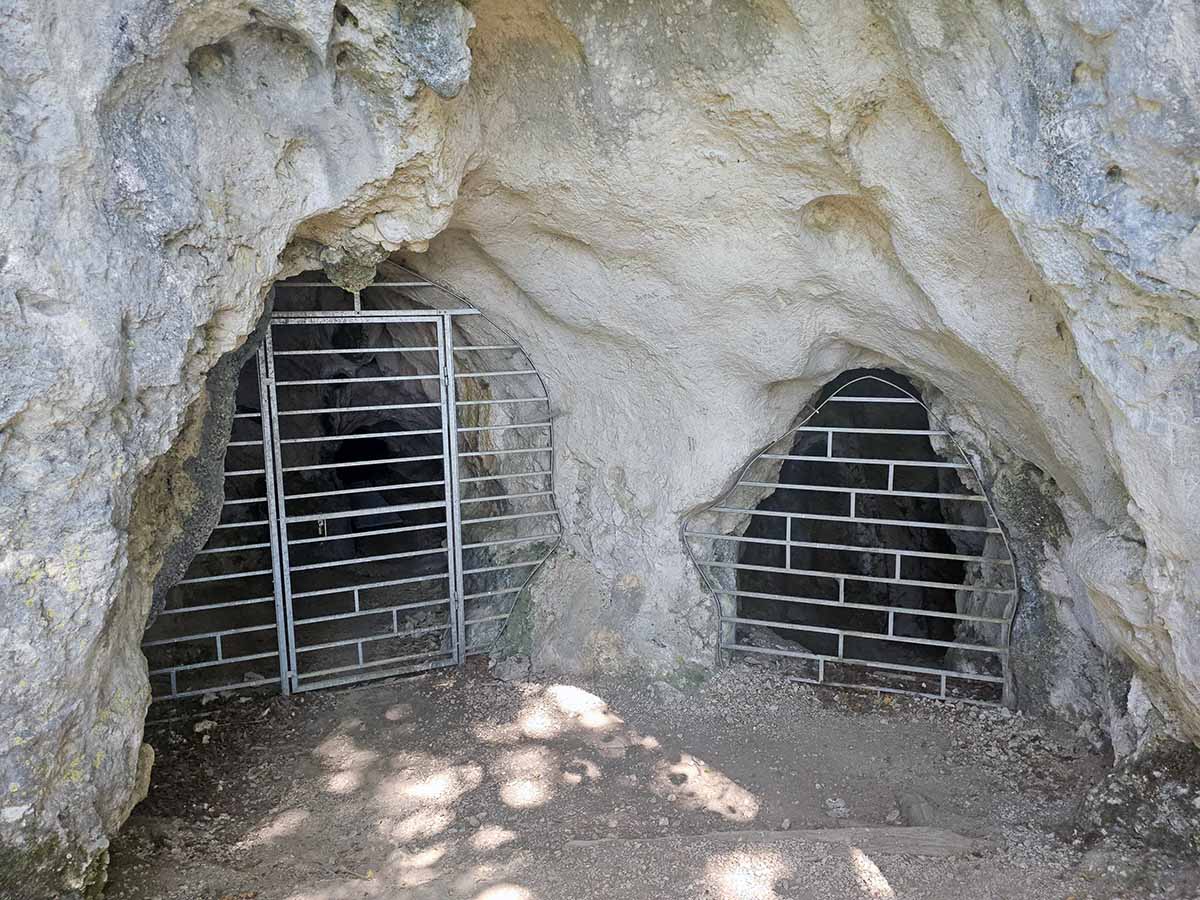
We walk the path downward, saluting the fortress that hangs dramatically above our heads. Nejc unlocks the cave doors and turns the key behind us as we step in. This is a one-way tour. We won’t be heading back.
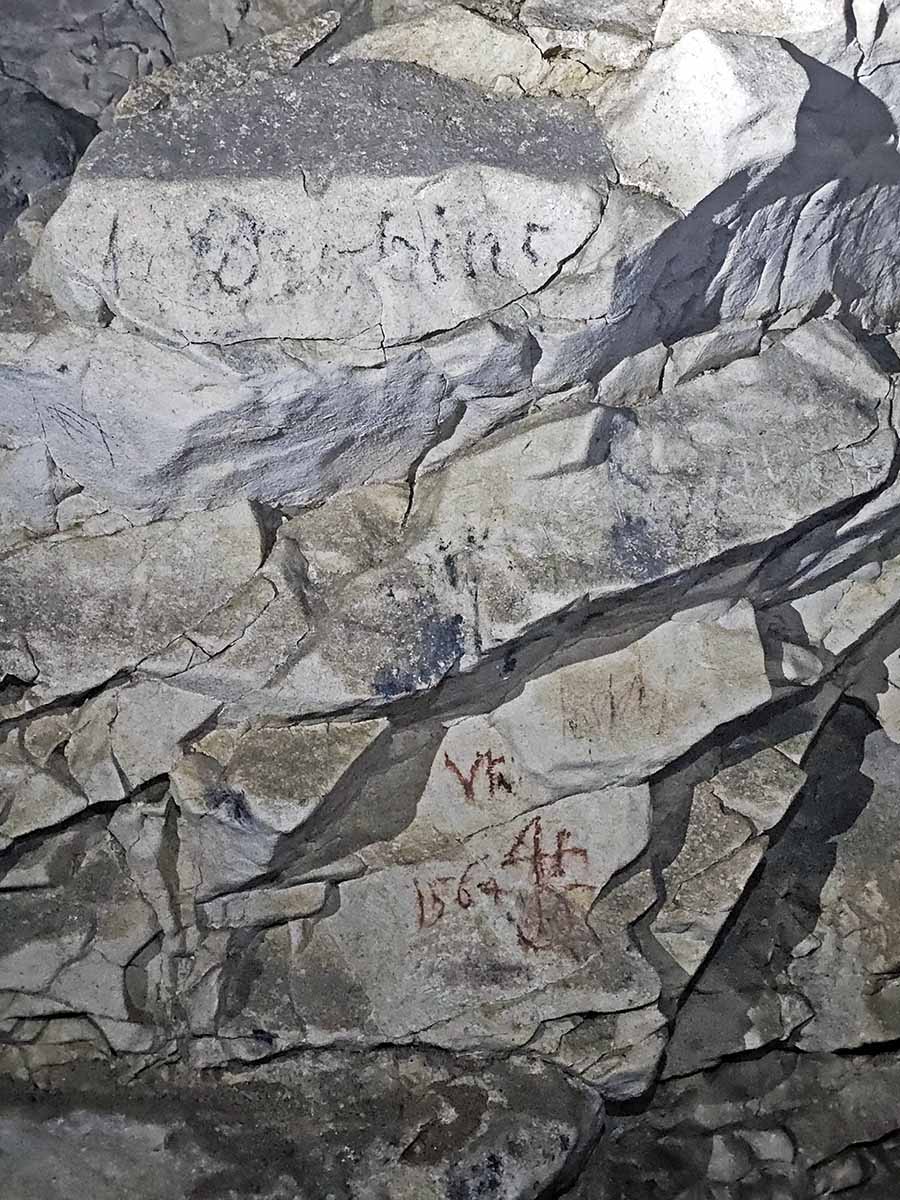
Equipped with headlights, we enter the first chamber of the mountain. We’ll pass the Stables, the Main Passage, the Cave of Names, the Great Hall, and Fiženca – the exit.
As we move through the chambers, each one tells its own story. The Horse Stable was where Erazem kept his horses, resupplying the castle during the prolonged Habsburg siege in the 15th century.
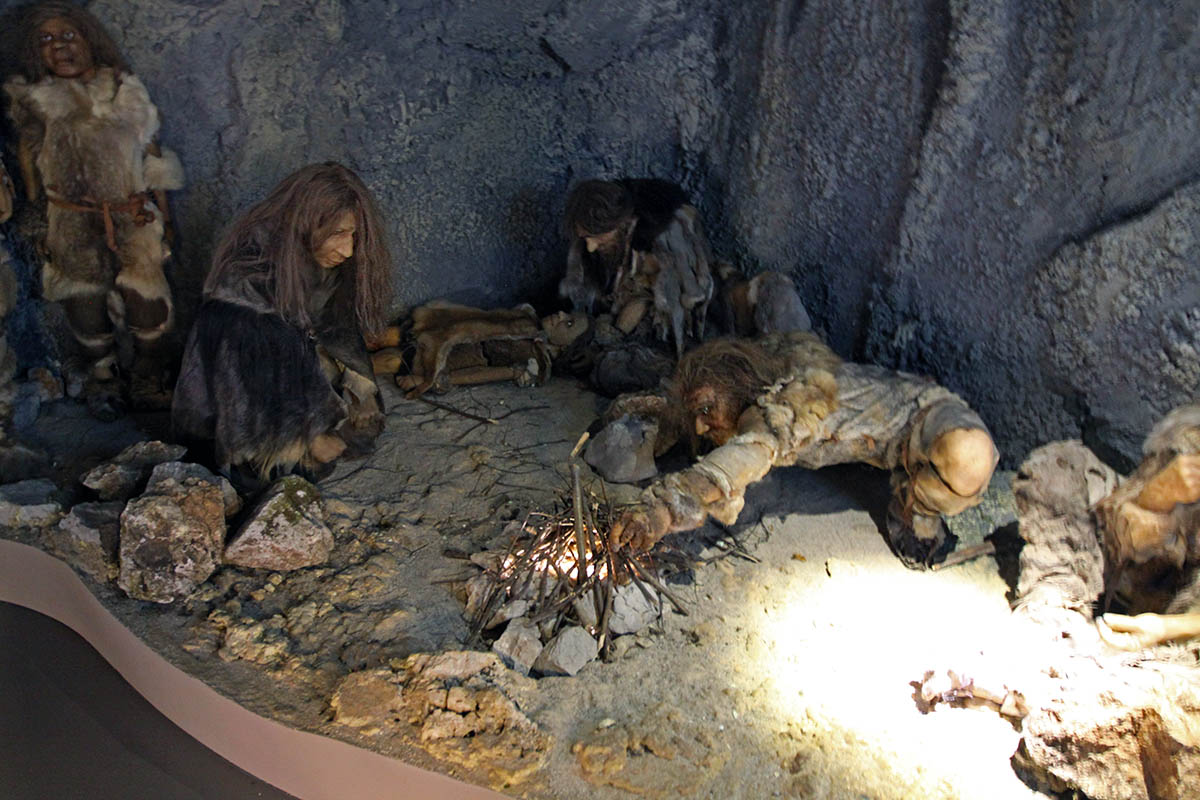
Archeological finds in the cave testify that people lived here in the Stone Age. Roman remains were found in the entrance tunnel. And in the Cave of Names, signatures dating back to the 15th century line the walls (the oldest one mentions 1412!). Millennia of humans insisting “we were here”, long before anyone thought of social media check-ins.
Testing Your Life Choices
The ground is rocky but damp. Today, we enjoy the mineral scent of wet stone and faint earthiness, but it’s easy to imagine early explorers slipping on uneven terrain and sliding into drops that would have been impossible to survive. We cross a chasm via a metal bridge. If it had been wooden, I’d knock on it.
When we hit what appears to be a dead end, the guide tells us a story of servants who enlarged the tunnel for their master back in the age, sparing us, future visitors, the indignity of crawling on our stomachs.
On the other side of the tight passage, where even the shortest person ducks, the space widens. Stalactites and stalagmites occasionally fuse into pillars, lone images of stability in what would otherwise feel like a crevice encouraging existential reflection. The claustrophobic devil on my shoulder is whispering the most fearful scenarios.
But the real survival mode switches on after we climb the rock-carved staircase. The only way forward is steep, ladder-like stairs climbing into the darkness, so far that the headlight can barely hint at where they end.
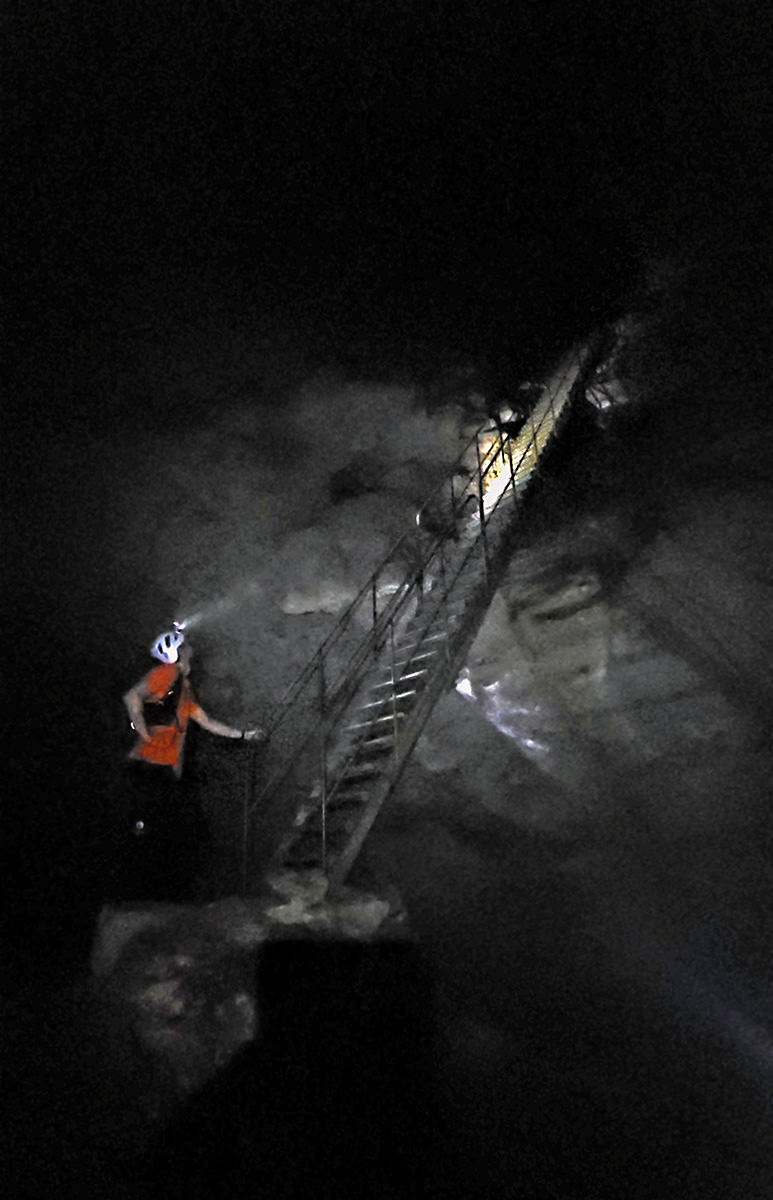
“Any doubts? Any second thoughts maybe?”, Nejc asks, with the cheerful energy of someone who has watched many tourists wrestle with this exact moment. “The stairs are completely fine. Don’t worry about them collapsing.”
I notice rust on the handrail, where dripping cave water has done its quiet work over the years.
“Yeah, but they still hold”, our guide tries to keep the mood light. “Just take your time. No need to rush. Go slowly. One step at a time. The most important thing is that you don’t slip. And keep your hands on the rails at all times.”
Climbing those 40-50 stairs that bridge the cave abyss, with the singular instruction to “not slip”, is a genuine adrenaline rush. One by one, all three of us make it to the top.
The Hidden Residents – Bats of Predjama Cave
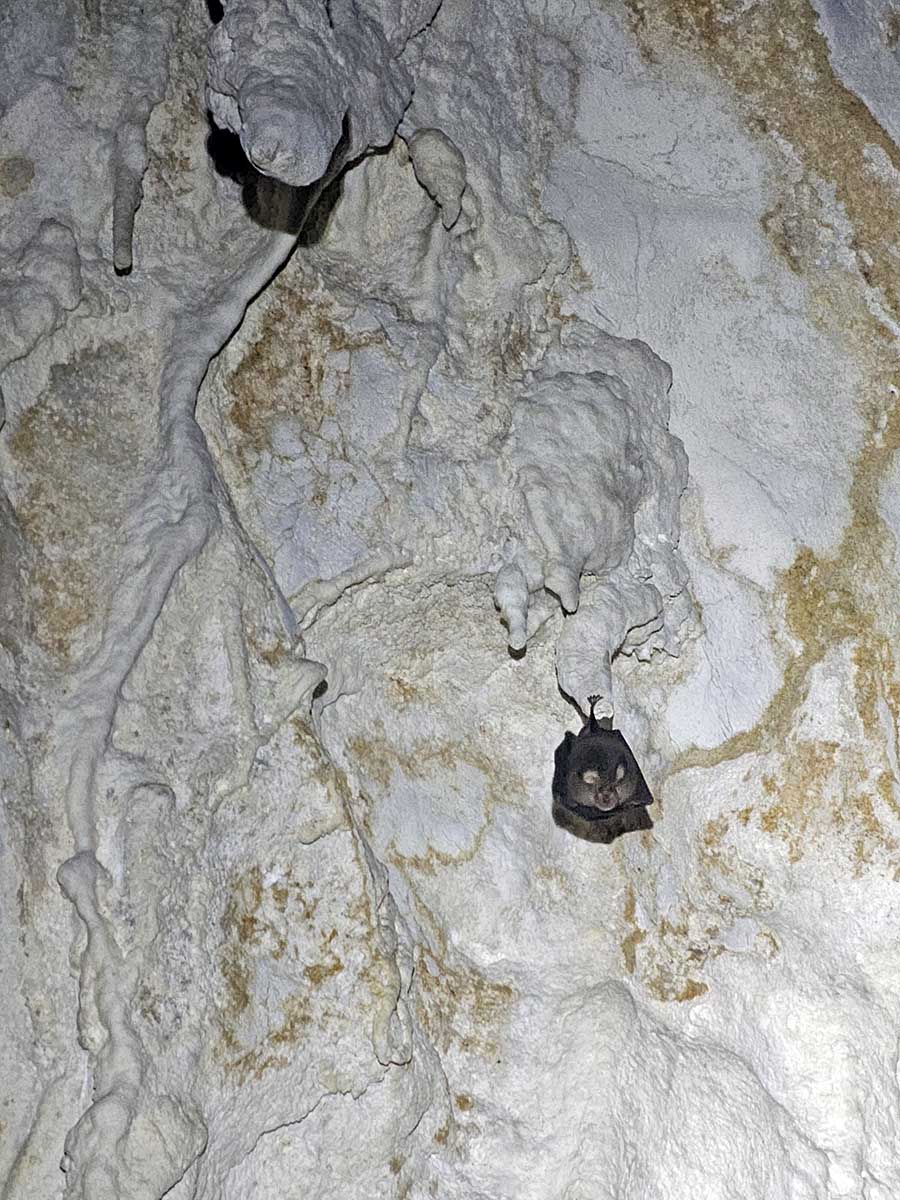
After several more flights of stairs (less daunting now that there’s no void below), we reach the upper chambers and learn the reason why the cave is closed for tourists from October to April. Roosting on the ceiling, black dots shift and fidget as our headlights sweep across them. We’re sharing the dark with bats.
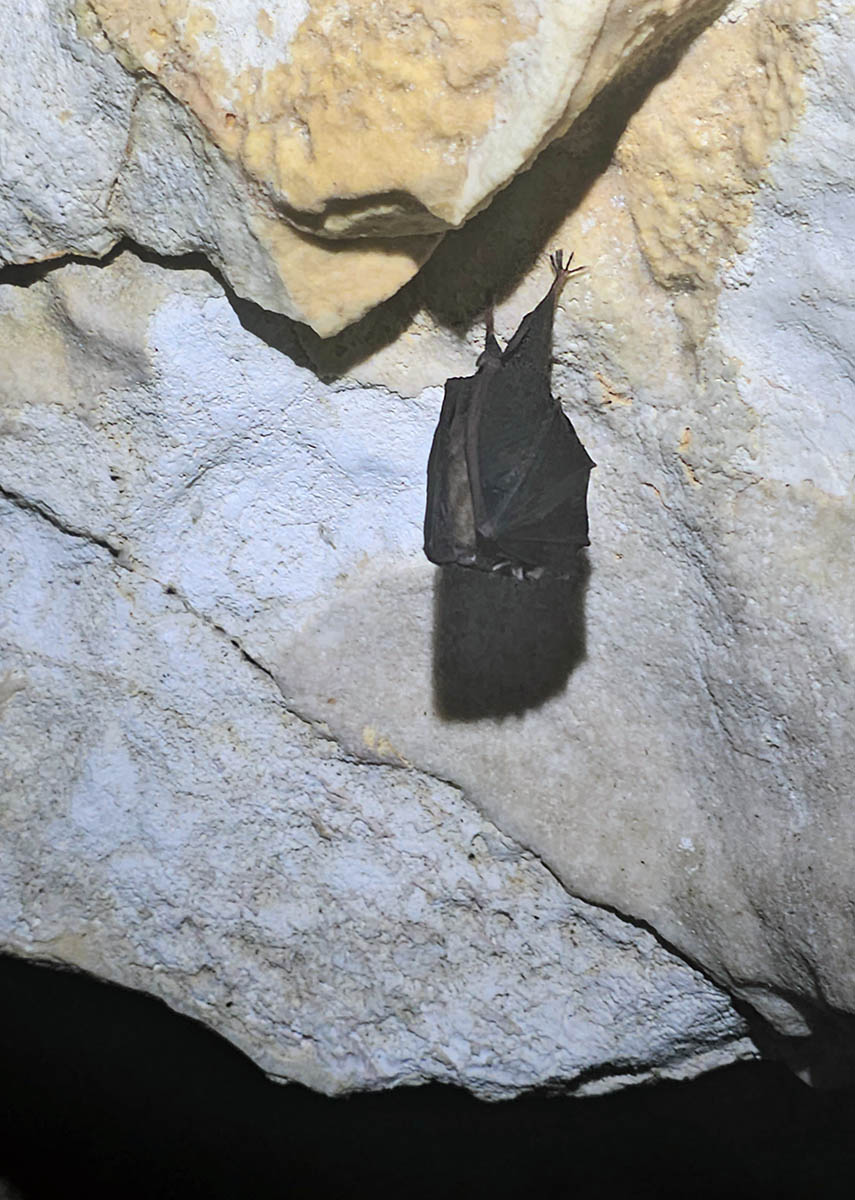
Nejc explains why the access to the Cave under Predjama Castle is strictly seasonal: “If you disturb them during hibernation, they may spend too much energy waking up and falling back to sleep. They might not make it through the winter.”
Predjama’s cave system is home to several species typical of the region, including horseshoe bats and long-eared bats. Clinging to the ceilings and walls of their sanctuary, these creatures are perfectly adapted to the cave. Using echolocation, they turn darkness into an acoustic map, perceiving details where we see nothing: distance, texture, movement.
Our guide dismantles the myth that bats could get tangled in our hair: “Bats’ sonar is so precise they can detect each individual hair separately. And yes, they will avoid it.”
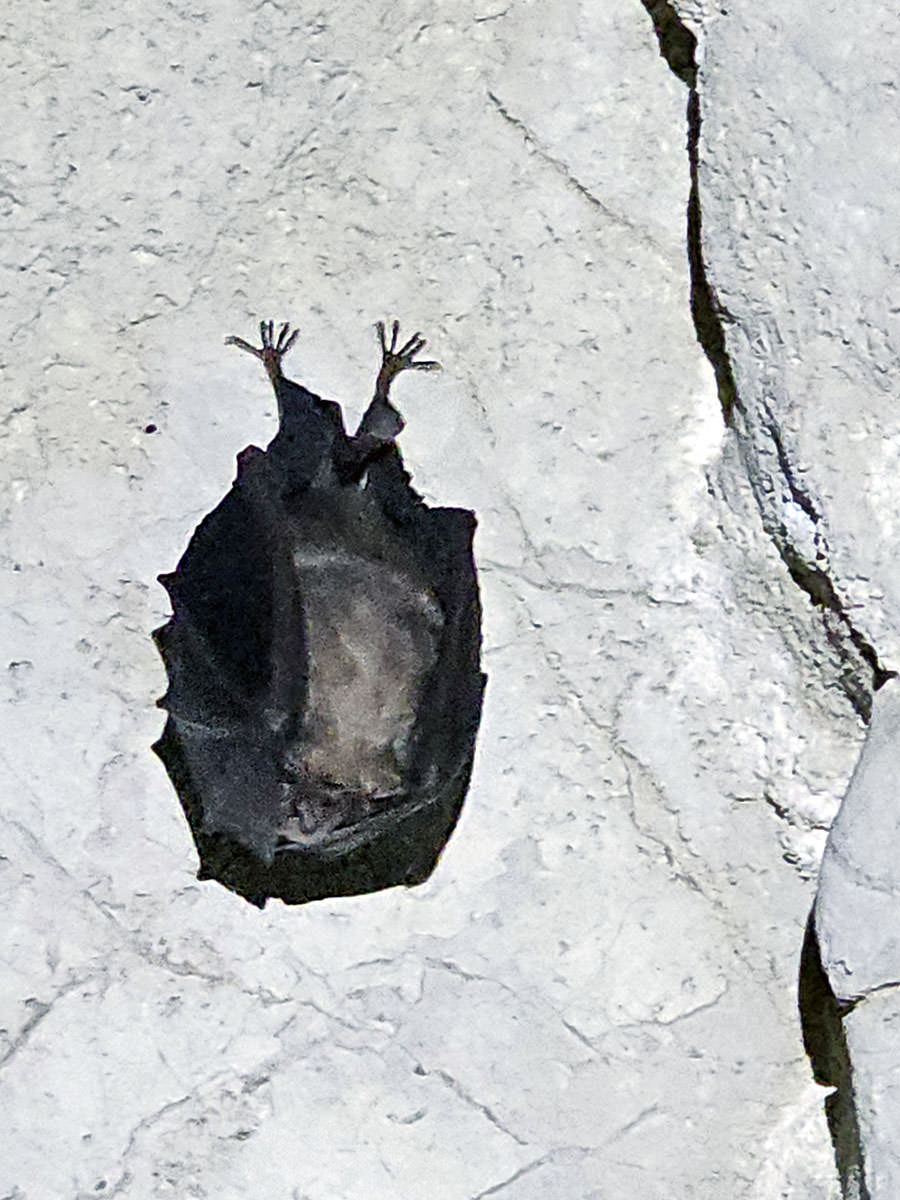
As the ceiling drops low, we literally come within arm’s length of them. One adjusts its position, peers between folded wings, and then resumes its resting business. It is both aware and entirely unbothered by our presence. It’s a grounding moment.
We’re witnessing something ancient, a colony of animals that have been gliding silently through this darkness long before tourists started threading their way through guided routes. This place belongs to them. It’s a home to 80 different animal species. An entire ecosystem. Not a theme park.
As the air gradually warms and daylight begins to appear behind the last rock, our tour draws to a close. For roughly 45 minutes, we were permitted to step inside nature’s own timeline, not as the main characters, for once.
Practical Information for Visiting Predjama Cave
When to visit the Cave under Predjama Castle
Unlike the castle above it, which welcomes visitors year-round, the cave beneath Predjama operates on nature’s schedule. It is open from May to September, when the bats are less vulnerable, and conditions are safer for human visitors.
You can’t wander in alone. Visits are conducted via guided tours only, scheduled daily at 11 am. On weekends, public holidays, and during the peak months of July and August, afternoon slots at 1 pm and 4 pm are also available. Each tour lasts approximately 45 minutes.
The Cave under Predjama Castle entrance fee
The Cave under Predjama Castle is managed as part of Postojna Cave Park. The price of the ticket is 19 euros (22 dollars). Tour bookings are available at postojnska-jama.eu.
What to wear in Predjama Castle Cave
The two general rules are:
- Ditch the sandals. You’ll want shoes with a proper grip. The terrain can be uneven and occasionally slippery, and flip-flops are not the footwear of heroes.
- Bring a layer. Karst caves maintain a steady temperature of around 8-10˚C (46-50°F) year-round, regardless of summer heat outside. That chill creeps in faster than you’d expect.
For adventure tours, your guide will walk you through any additional gear requirements beforehand.
Rules of conduct
- No flash photography.
- No loud noises.
- Do not touch formations or wildlife.
Age and accessibility
The standard Cave under Predjama Castle Tour is suitable for children aged six and above.
Getting there
Predjama Castle is located in the village of Predjama, approximately 11 kilometers from the town of Postojna. A shuttle service from Postojna Cave to the castle runs in high season, with a journey time of up to 20 minutes.
The cave complex is roughly an hour’s drive from Ljubljana.
Combining visits
The cave pairs naturally with Predjama Castle above it and Postojna Cave nearby. Together, they form the core of Postojna Cave Park. A combined ticket is available and makes for a thoroughly rewarding day.
Adding the cave beneath Predjama Castle to an already full day is ambitious. If you can, split the exploration across two days and stay overnight at Hotel Jama, which is worth visiting in its own right.
Visiting the Cave under Predjama Castle – Conclusion
Travel often gravitates toward the biggest, the highest, the most photographed. The Cave under Predjama Castle doesn’t compete on those terms.
It isn’t Slovenia’s largest cave, nor its most famous. It doesn’t overwhelm you with scale.
Where Postojna Cave dazzles with a polished spectacle of floodlit stalactites viewed from an underground train, the Cave under Predjama Castle demands something quieter and more personal: your attention, your footwork, and a willingness to step into genuine darkness.
If you’re drawn to places that feel a little less mediated, places where nature hasn’t been fully translated into something convenient, and places that don’t eagerly try to impress, this cave is worth your time.
Dark, quiet, and inhabited, Predjama Castle Cave proposes an intimate and raw journey into the unknown
Predjama Castle is a Renaissance fortress that resembles a fantasy someone forgot to tone down. Most visitors stop there – snap the photo, circle the courtyard, absorb a story or two.
But hidden beneath the castle, not manicured for mass tourism, this dark, quiet, and inhabited cave proposes an intimate and raw journey into the unknown.
Its moving winged stalactites, its dripping water reshaping stone, its 80-species ecosystem – these are not the only reasons that make Predjama Castle Cave feel alive.
As you move through the darkness, you’re also traveling through history, your flashlight illuminating centuries-old signatures of those who walked before you, through the same passages a medieval outlaw used to outfox an empire.
That’s not a tourist experience. That’s an adventure.
Did you like this story on Predjama Castle Cave and its bats?
Pin it for later!
Disclosure: This post may contain affiliate links, meaning if you click on them and make a purchase, Pipeaway may make a small commission, at no additional cost to you. Thank you for supporting our work!
