
There’s a moment when you step into the Grand Egyptian Museum in Giza and realise the hype didn’t exaggerate but undersold.
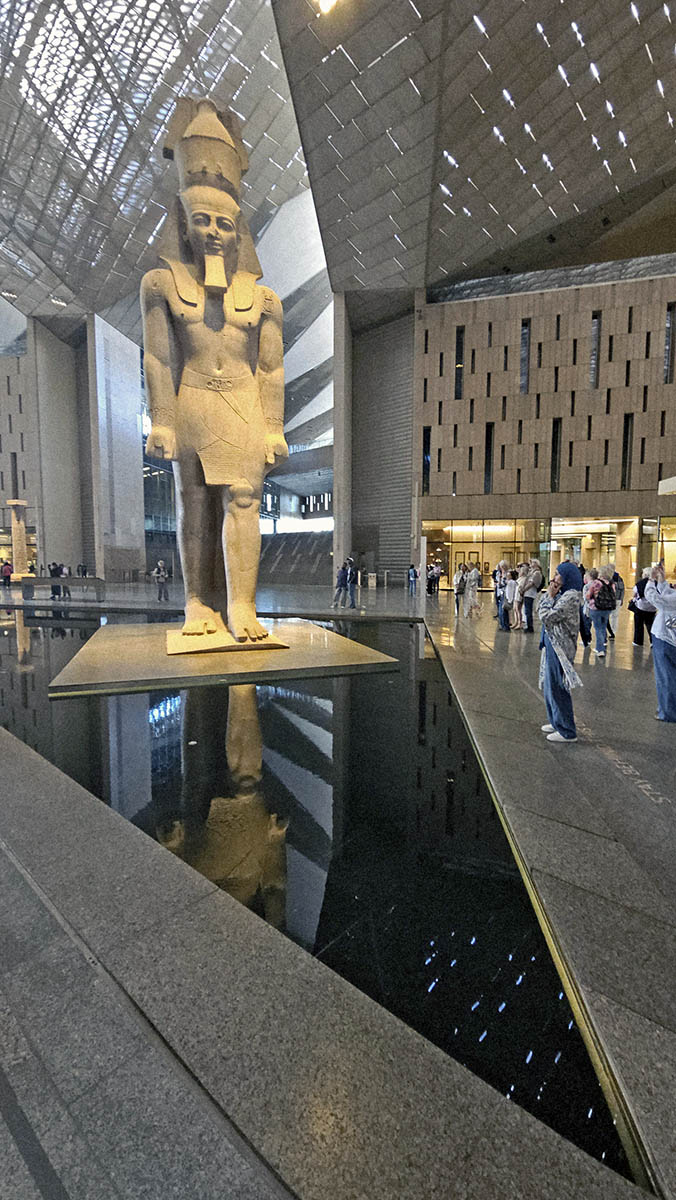
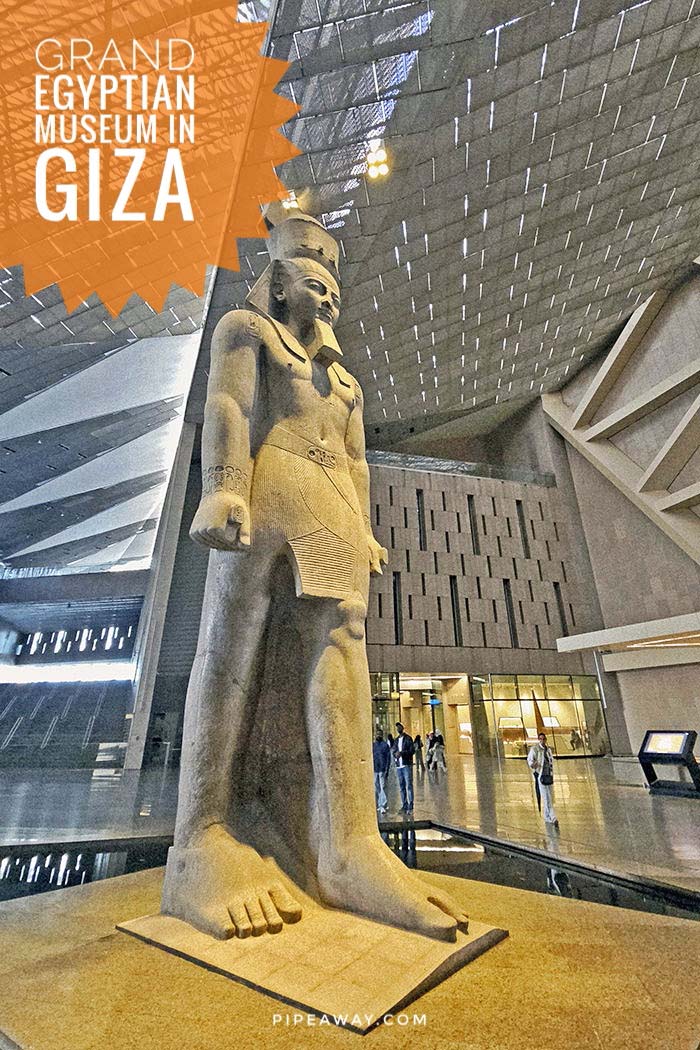
Maybe it’s when you see sunlight spilling into the atrium through geometric skylights, and an 11-meter Ramesses II rises in front of you like he’s been patiently waiting for centuries.
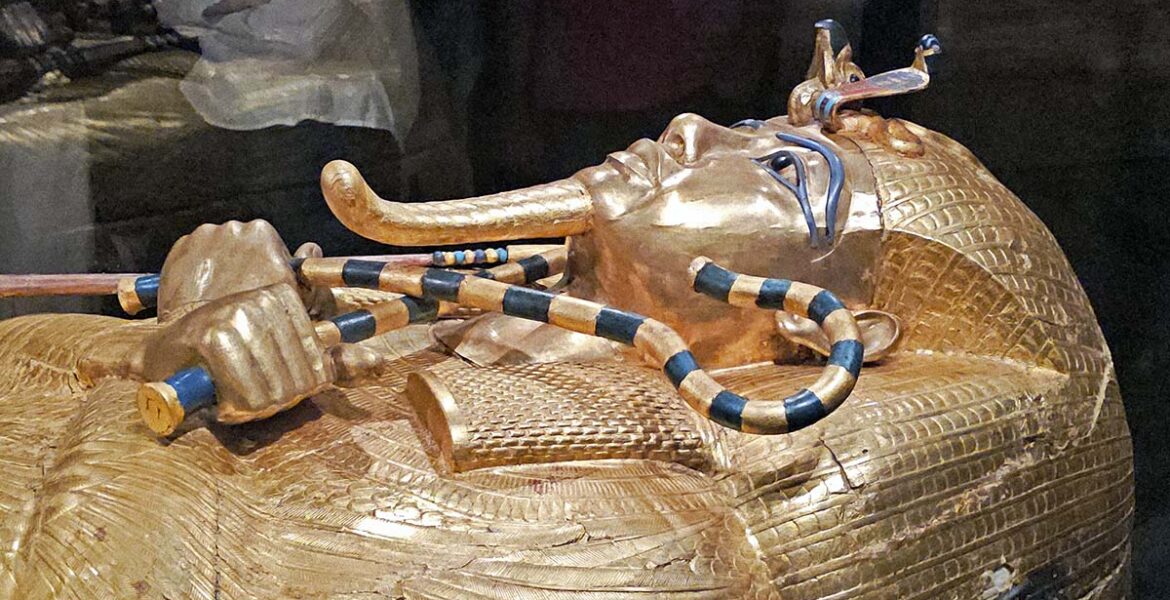
Or maybe it’s when you turn a corner in the Tutankhamun galleries and suddenly get face-to-face with objects so delicate, so personal – sandals, oil lamps, tiny amulets – that you forget these fragile things survived three millennia sealed inside a silent tomb.
The GEM breaks records as the largest archeological museum in the world. Spanning 500,000 square meters, the Grand Egyptian Museum complex is home to over 100,000 ancient Egyptian artifacts, double what the Louvre‘s Egyptian department holds.
Western museums, many built on collections of stolen artifacts, still hold over half a million objects taken from Egypt
To put that scale into perspective, the Giza Museum’s massive territory could swallow 70 soccer fields, the entire Vatican City, or five and a half British Museums.
Of course, the famous London museum could also squeeze parts of itself into Athens‘ Acropolis Museum (requesting the return of the Parthenon Marbles), institutions in Nigeria (demanding Benin Bronzes), or those in Ghana (Manhyia Palace Museum recently agreed to “borrow” stolen Ashanti royal treasures). The Grand Egyptian Museum, meanwhile, would very much like the Rosetta Stone back – a stela looted from Egypt in 1801, now serving as the British Museum’s crown jewel.
Estimates suggest that Western museums, many built on collections of stolen artifacts, still hold over half a million objects taken from Egypt.
So when the Grand Egyptian Museum finally opened in November, promising the largest collection of Egyptian antiquities ever assembled under one roof, it immediately started drawing an impressive number of visitors. Tourists and locals wanted to see the country’s legacy in a new light, pushing GEM’s maximum capacity of 20,000 to as many as 28,000 people on peak days.
Because this isn’t just a new museum. It’s a “finally”. For decades, Egypt’s greatest treasures were scattered, cramped, or hidden behind conservation barriers. Now, for the first time, they breathe, in a building designed to hold them, honor them, and tell their story on Egypt’s own terms.
Welcome to GEM, the biggest museum of the Arab world!
Take a peek inside the Grand Egyptian Museum in our YouTube short video!
Grand Egyptian Museum History – From Idea to Inauguration
In 1992, the aging Egyptian Museum at Tahrir Square was becoming increasingly inadequate for its growing collection. Under the government of Hosni Mubarak, a bold vision emerged for the Grand Egyptian Museum, a place that would present the entire arc of Ancient Egyptian civilization (from prehistory to the Greco-Roman period) with 21st-century scale and technology.
The foundation stone was laid in 2002, but actual construction didn’t begin until 2005. Over the next two decades, around 5,000 workers contributed to building the Grand Egyptian Museum, a mere fifth of the workforce that erected the Great Pyramid of Khufu.
The overall cost to build the Grand Egyptian Museum exceeded $1 billion USD, largely financed through Japanese loans.
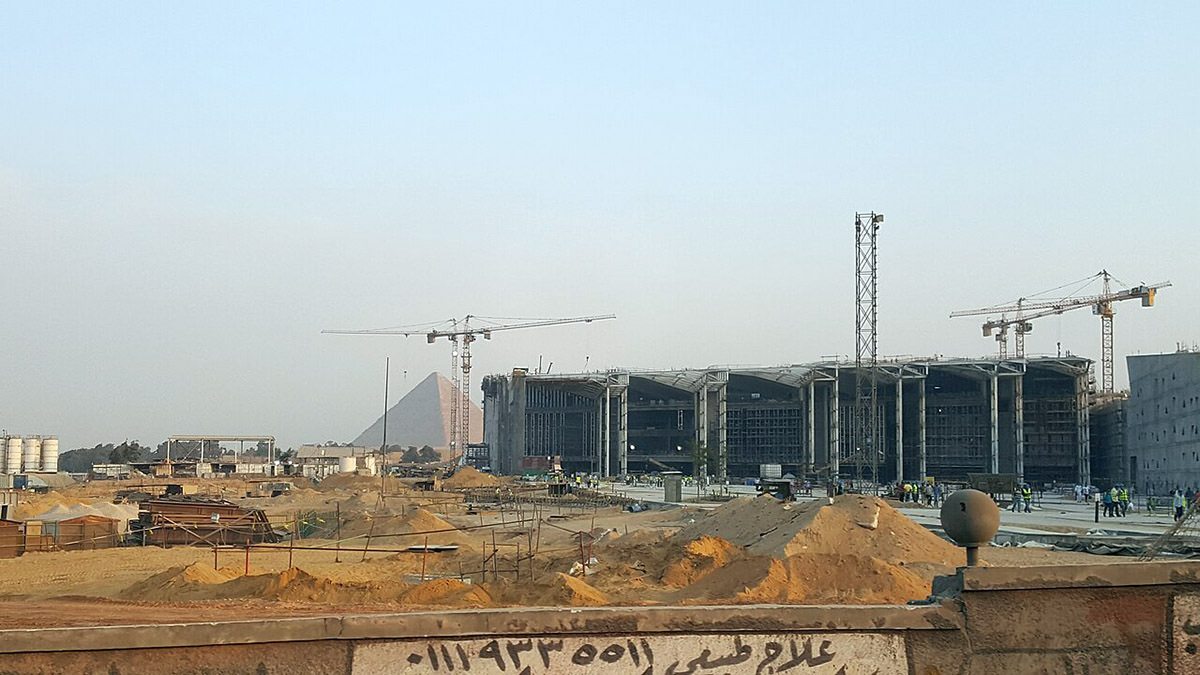
On its long stop-start journey, GEM faced a variety of challenges, from funding hurdles to political upheavals (most notably the 2011 Arab Spring), all delaying progress.
The opening date became a running joke. Initially scheduled for 2020, the opening was first postponed to late 2021 due to the global pandemic. The logistical challenges delayed the debut to late 2022, then early 2023. The new announcements teased the end of 2023 as the final date, then May 2024, and July 2025, when all eyes were fixed on Gaza, not Giza.
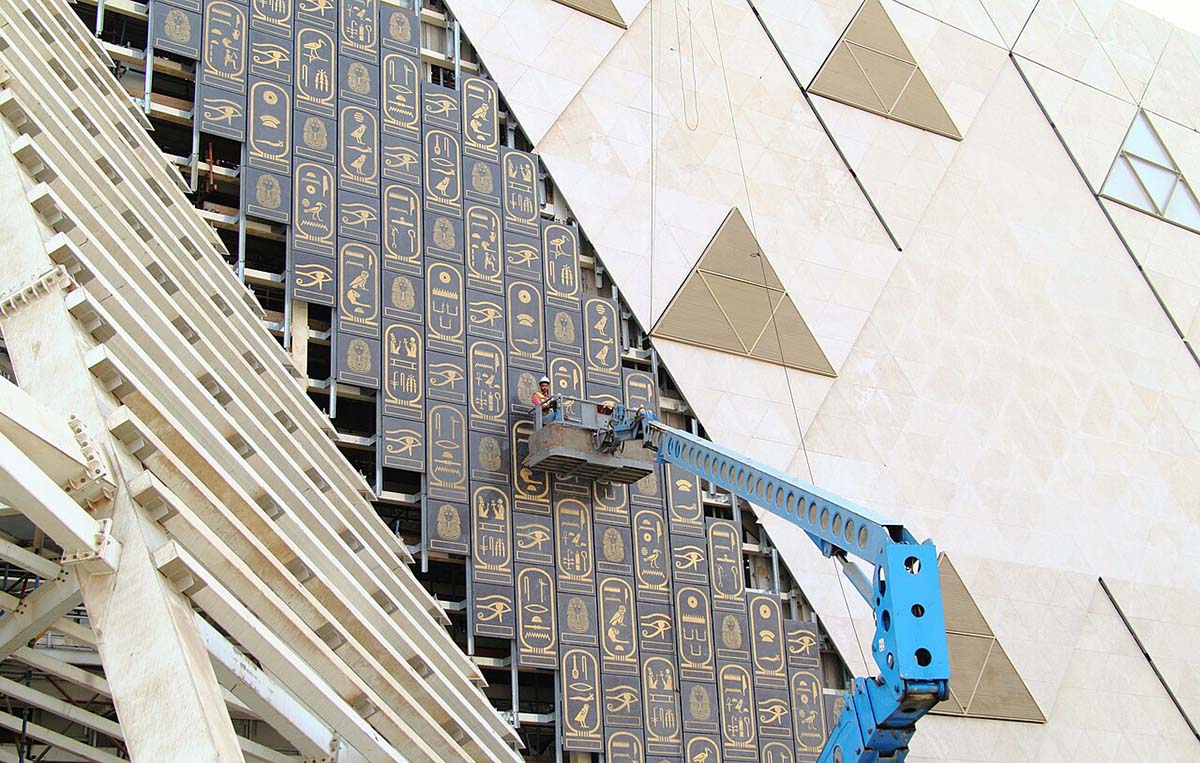
After numerous delays and a few soft openings with partial access between 2023 and 2024, just when the internet began asking, “Will the GEM ever open?”, the Grand Egyptian Museum had its official opening on November 1, 2025.
The grand inauguration, attended by kings, queens, presidents, and other world dignitaries, was marked as a global cultural milestone. A dramatic spectacle featured drones, fireworks, and a light show.
After one last (brief) temporary closure, the Grand Egyptian Museum’s reopening on November 4, the 103rd anniversary of the discovery of Tutankhamun’s tomb, finally let visitors pour in through the gates.
Grand Egyptian Museum’s Architecture & Design
Location
The Grand Egyptian Museum is located about 20 kilometers west of central Cairo, along the Cairo-Alexandria Desert Road.
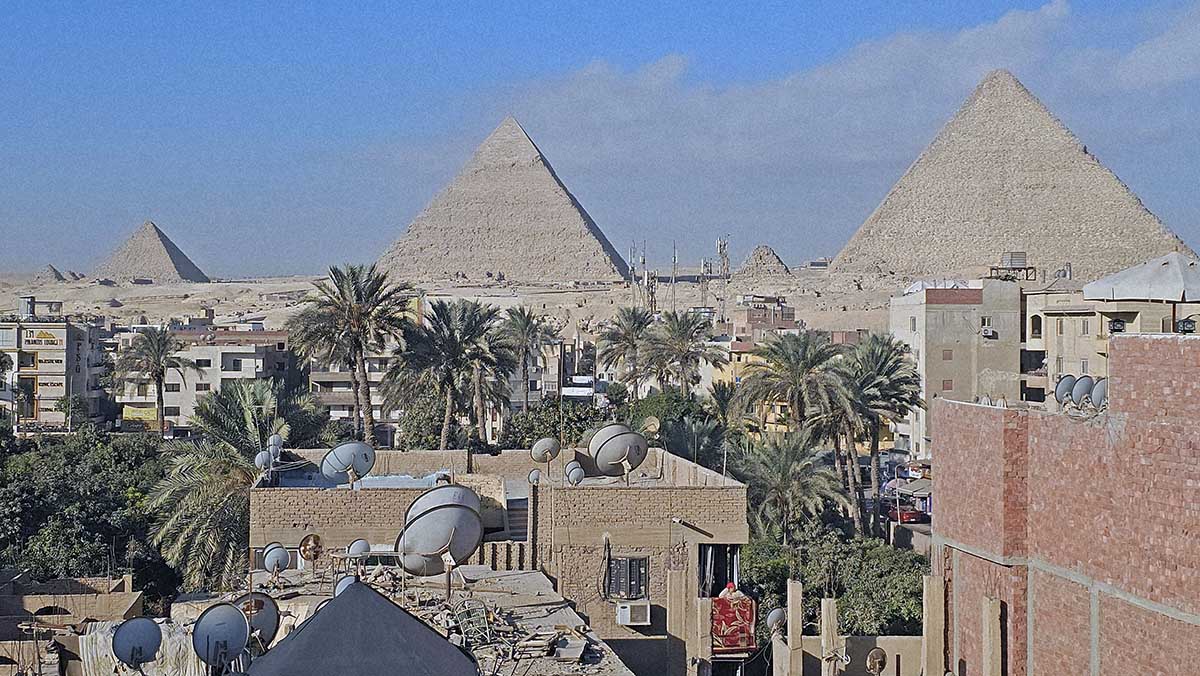
It sits on the edge of the Giza Plateau, just two kilometers from the Pyramids of Giza, one of the 7 wonders of the world.
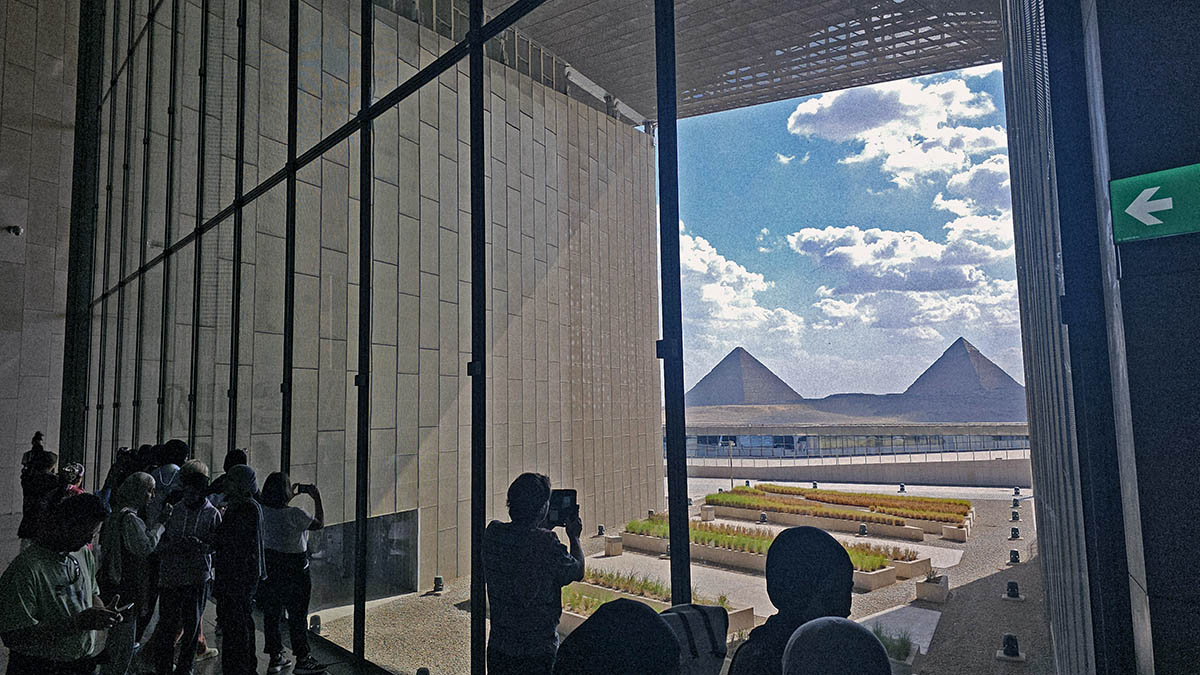
In theory, the GEM is already connected to the Giza Necropolis via a direct walkway to the pyramids. In practice, the promenade/electric shuttle route had officially “opened” in September, yet the public could still not access it when I visited in November.
Design Concept
Anchored at this symbolic position overlooking the pyramids, the Grand Egyptian Museum is not just aligned with them. The museum’s design draws heavily from the geometry of the Giza Plateau, with triangular motifs echoed throughout the structure.
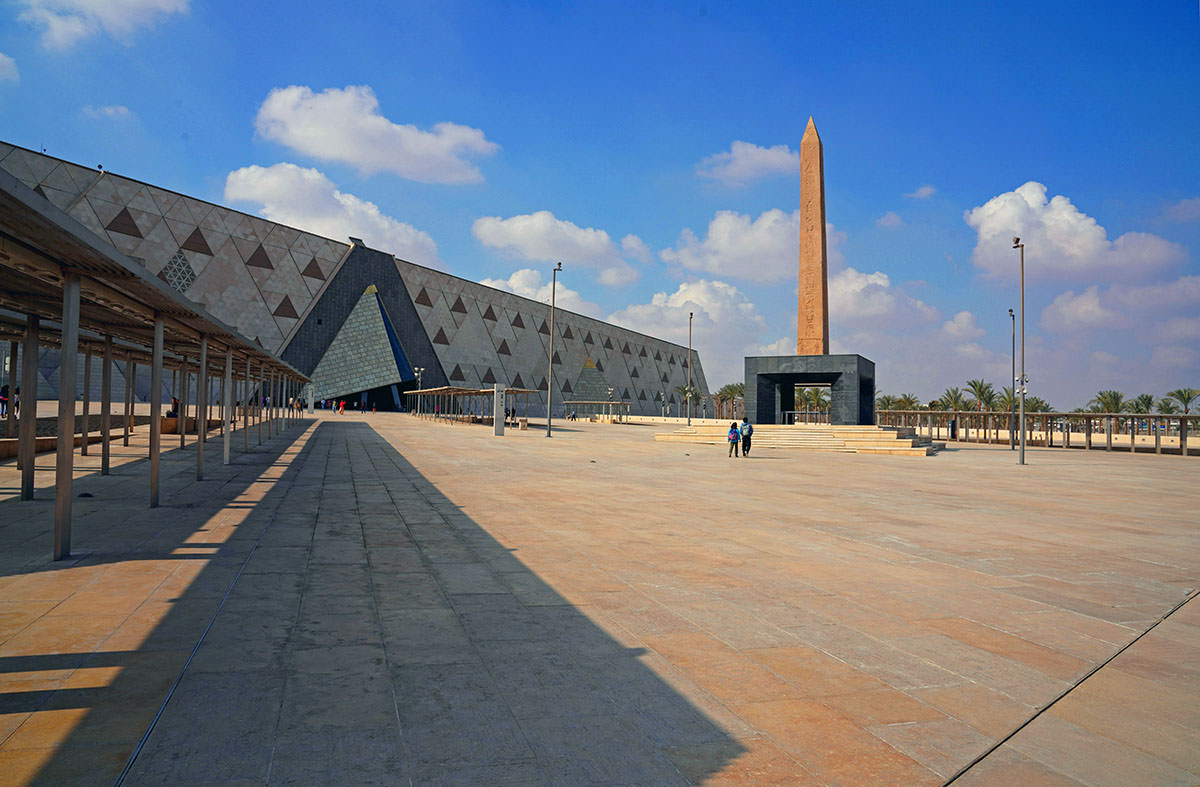
Dublin-based Heneghan Peng Architects, led by Róisín Heneghan and Shi-Fu Peng, winners of the Grand Egyptian Museum architecture competition in 2003, designed a fan-shaped building with a vast esplanade landscaped with gardens and a one-of-a-kind Hanging Obelisk, dramatic faceted alabaster walls, and a grand entrance atrium soaring more than 50 meters high.
The monumental architecture rising from the desert landscape translates even in the Grand Egyptian Museum logo. An angular orange polygon sliced with the museum’s name in Arabic – المتحف المصري الكبير (al-Matḥaf al-Maṣriyy al-Kabīr) replicates the building’s roofline, considered the museum’s “fifth facade”.
This very same roof gently slopes to visually “meet” the highest points of the three pyramids, just as the vertical walls radiate toward them. GEM doesn’t compete with the world wonder; it frames it.
Extensive use of reinforced concrete and a smart displacement-ventilation system in the building reduce reliance on traditional air conditioning for both visitors and most artifacts at the GEM (highly sensitive items, of course, still reside in carefully controlled microclimate cases). Together with the use of solar power, LED lighting, and rainwater harvesting, this is just a part of the Grand Egyptian Museum’s sustainability efforts as the first green museum in Africa and the Middle East with an EDGE Advanced certificate.
A flaw in the design or just careless visitors’ fail? Grand Egyptian Museum staff wear shirts marked ‘SEAL’, maybe because they need to rescue people from – falling into water?
Exhibition spaces
The indoor exhibition space of the Grand Egyptian Museum, spanning 92,000 square meters, is organized into several distinct zones.
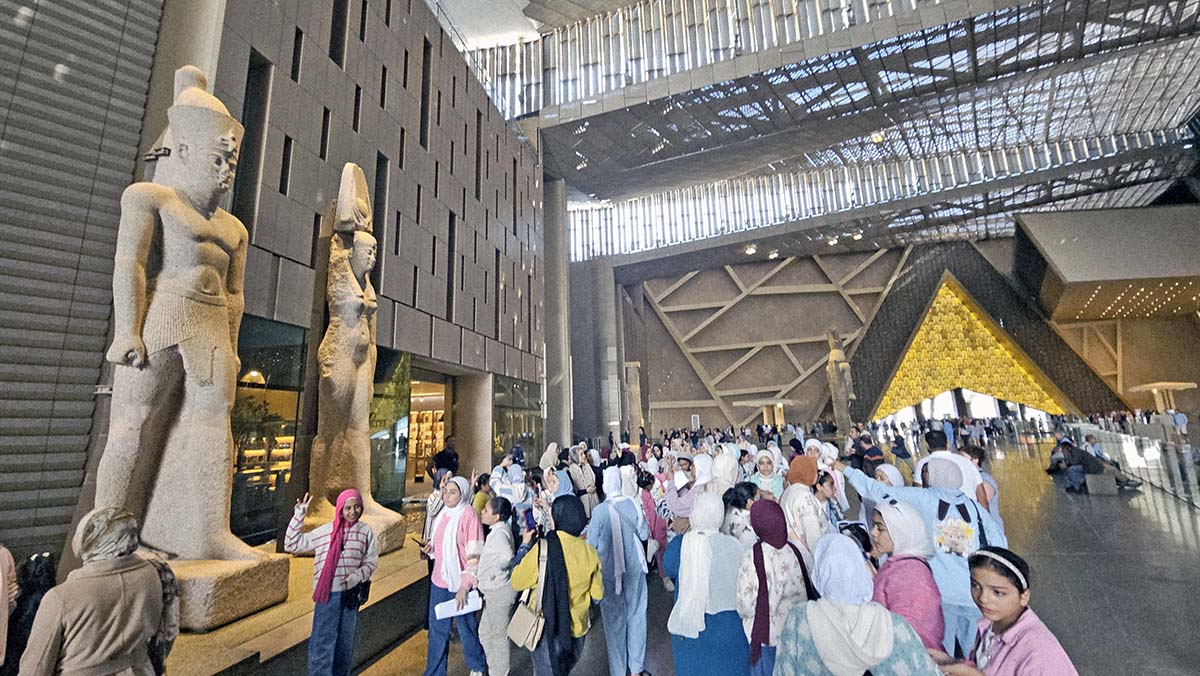
The first feature in the floor plan is the Grand Hall, dominated by the colossal statues of Ramesses II, as well as the Ptolemaic king and queen recovered from one of the sunken cities beneath the Mediterranean Sea.
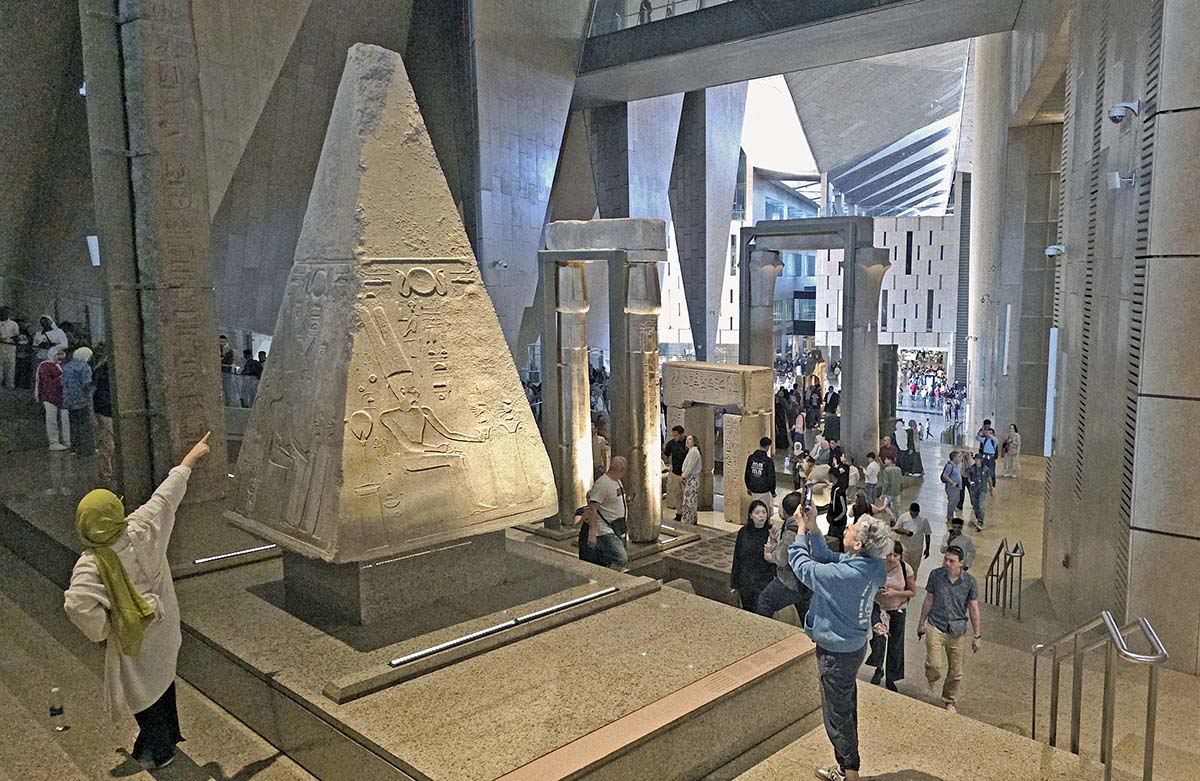
The next in the layout is a six-storey staircase featuring dozens of statues that represent kings and queens, gods and half-gods, as well as sarcophagi and architectural fragments from Egyptian temples. If you don’t want to use the Grand Stairs (there are a lot!), travelators and funicular carriages offer a merciful alternative.
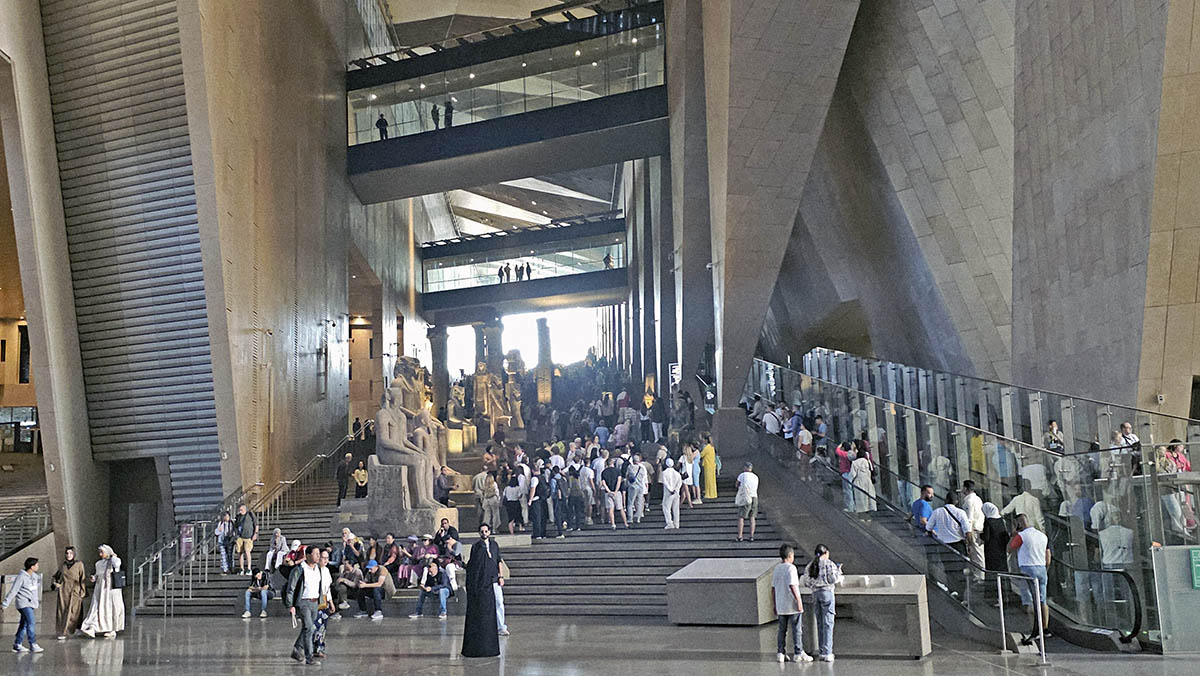
At the top, facing the pyramids, the museum branches in two directions.
To the left, twelve permanent galleries unfold chronologically, guiding visitors from prehistoric Egypt through the age of pyramid builders, the grandeur of the New Kingdom, and into the Greco-Roman era.
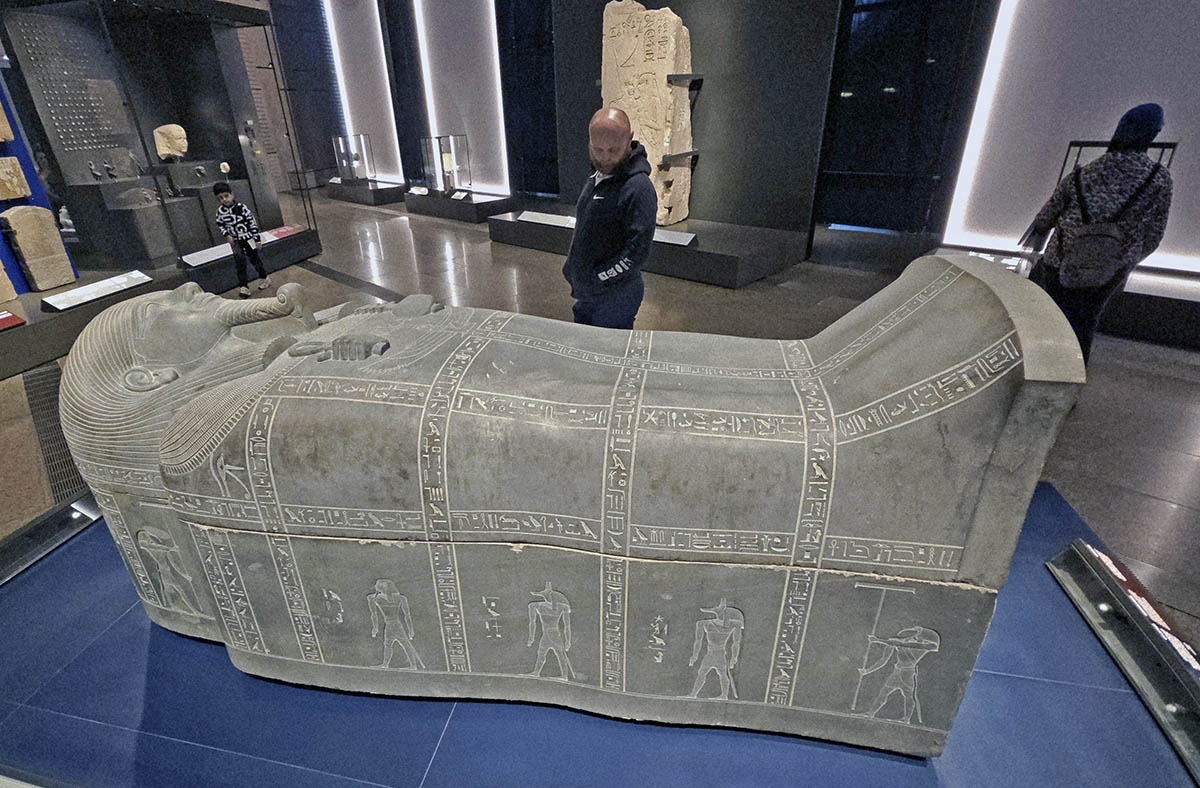
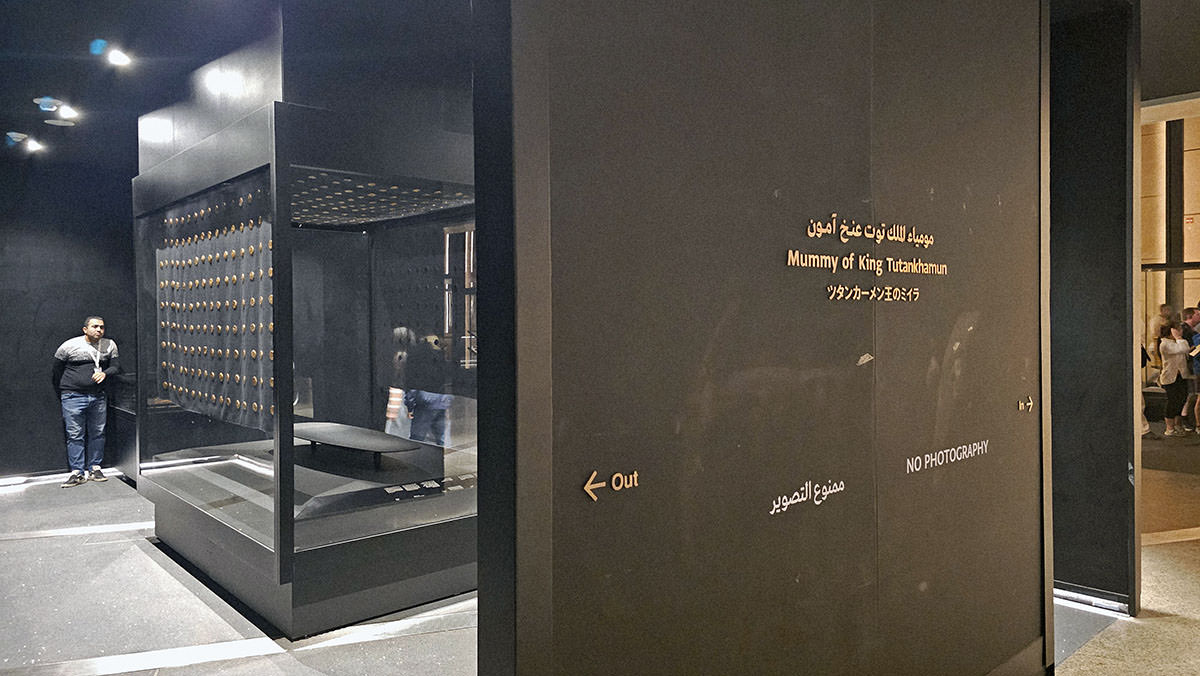
To the right, the journey leads to the Tutankhamun Gallery, 7,500 square meters housing everything found in the boy king’s tomb, except for his mummy, which still lies in the Valley of the Kings near Luxor.
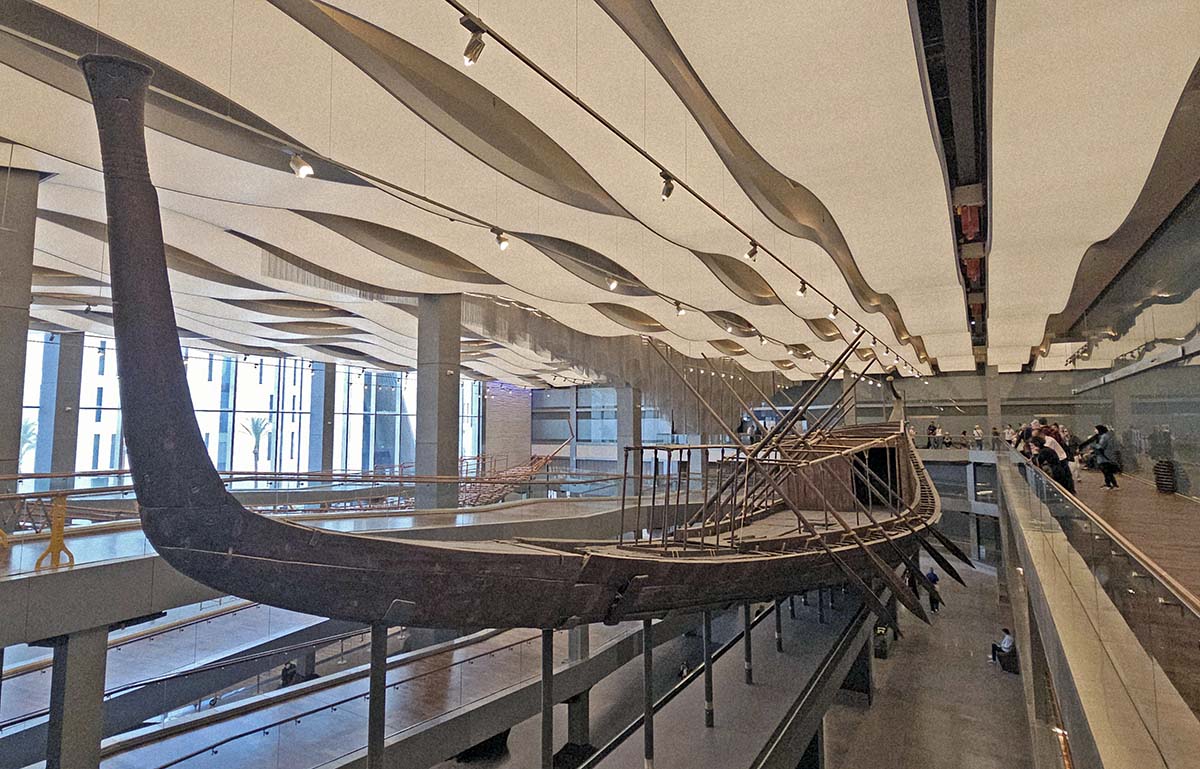
Slightly apart from the main GEM complex stands the Khufu’s Boats Museum, home to some of the world’s oldest surviving wooden ships. The centrepiece is the 42-meter Solar Boat of Khufu, meant to carry the pharaoh to the afterlife with the sun god Ra.
GEM Collection Highlights
If you have time and stamina, the chronological route through the Grand Egyptian Museum is deeply rewarding – a slow walk through statues, reliefs, royal portraits, pottery, tools, and everyday objects.
But if your schedule is tighter or your attention span shorter, there are a few must-see showstoppers you absolutely cannot skip.
Colossal Statue of Ramesses II
Practically unmissable among the impressive colossi, as it meets you at the main entrance of the museum’s vast atrium, the 11-meter-tall granite statue of Ramesses II is one of GEM’s most iconic residents. This gatekeeper radiates the quiet confidence of someone who ruled for 66 years and knew it.
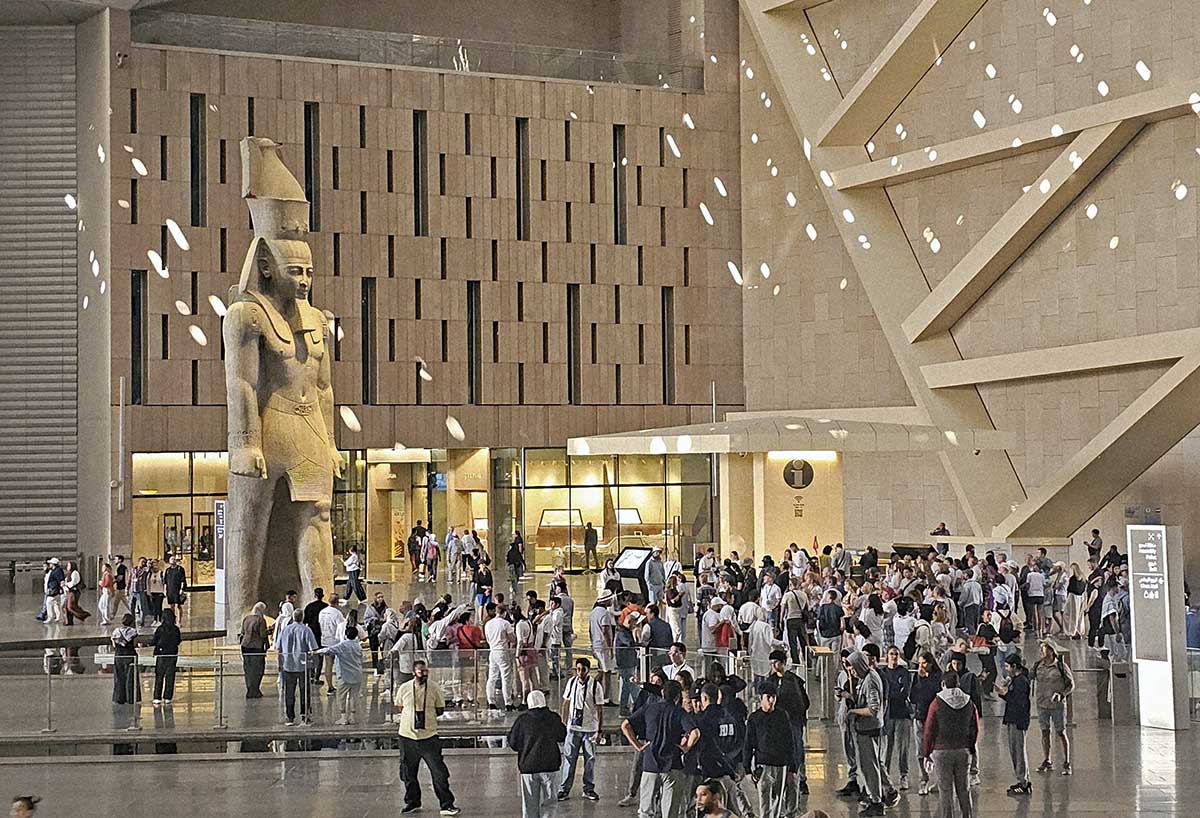
Weighing over 80 tons, a dramatic, 3,200-year-old representation of Egypt’s most powerful pharaoh originally stood before the Great Temple of Ptah near ancient Memphis, where it was discovered in 1820, in several broken pieces.
Reassembled, it spent decades presiding over Cairo‘s Ramses Square – surrounded by traffic vibrations, exhaust fumes, and the general chaos of modern urban life, none of which were kind to a monument built in the Bronze Age.
In 2018, Ramesses II was carefully relocated to the GEM’s central hall, his new forever home.
Tutankhamun Treasures
No part of the Grand Egyptian Museum has generated more anticipation than the Tutankhamun collection.
For the first time since Howard Carter opened the teenager pharaoh’s tomb in 1922, all 5,000+ objects discovered inside, from golden shrines to sandals, chariots, and textile fragments, are displayed together in purpose-built galleries designed for narrative immersion. You can follow Tutankhamun’s short life, elaborate burial, and carefully engineered journey into the afterlife in a flowing sequence.
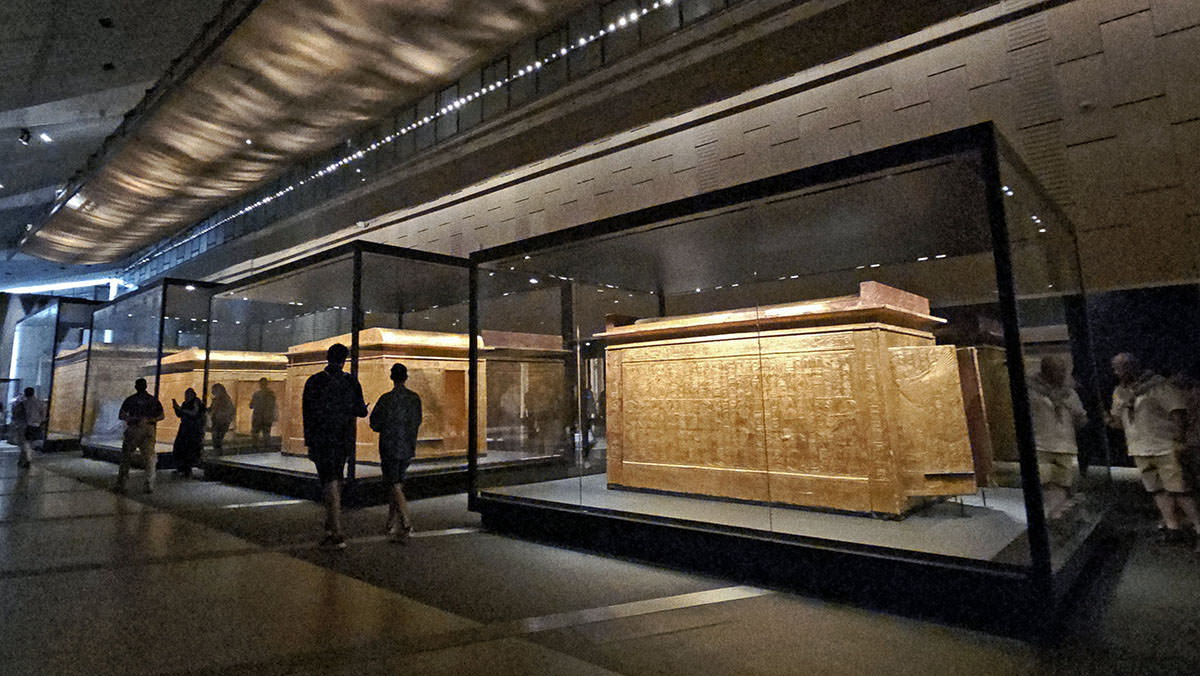
Highlights include:
- King Tut mask – visitors orbit this golden funerary mask (presented with improved conservation lighting), as if it’s a Mecca, smartphones raised for shots from every angle.
- Golden and wooden shrines enclosing the nested sarcophagi – a matryoshka puzzle of coffins inside coffins inside coffins.
- Ritual objects, jewelry, and amulets rarely seen outside conservation labs.
- Everyday items – toys, clothing, walking sticks, wine jars
- Chariots and weapons, impeccably preserved.
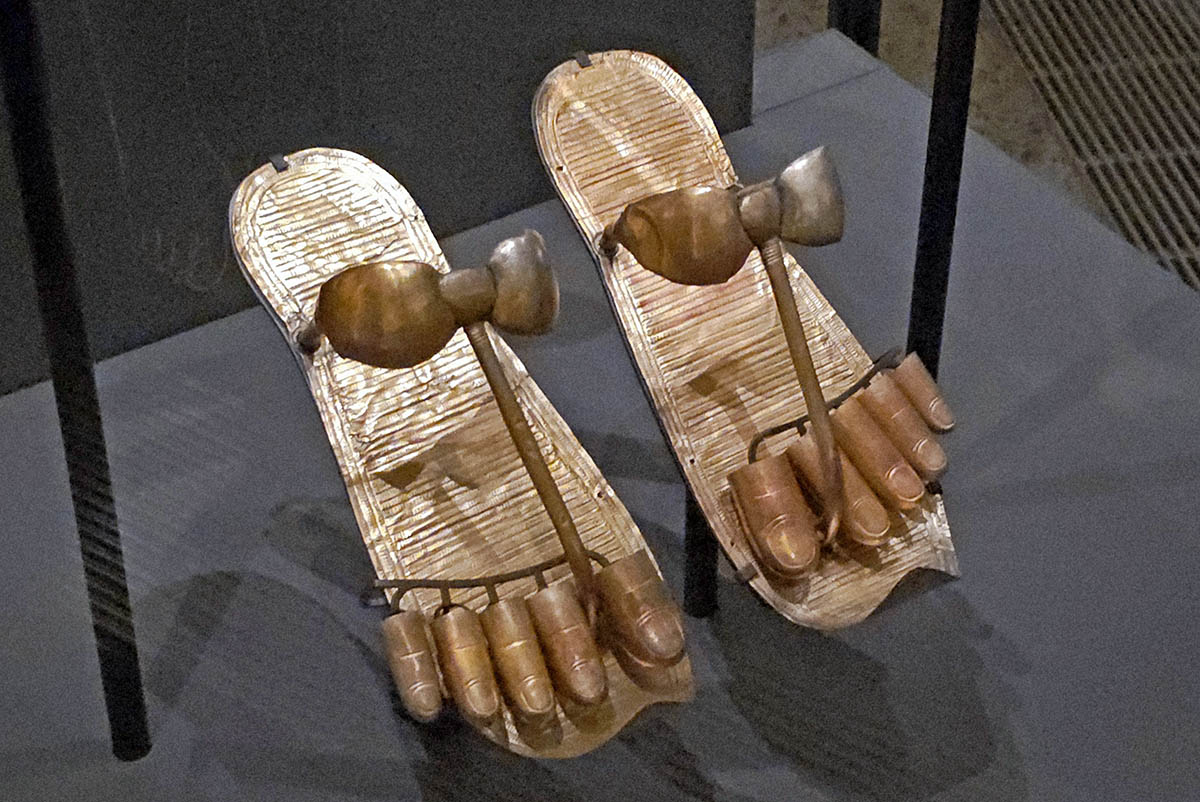
The Tutankhamun halls alone justify a trip to Giza. Like previously mentioned, the only thing you won’t find here is King Tutankhamun’s body – his mummy still rests in the original tomb in Luxor’s Valley of the Kings.
GEM Mummies
If you remember that 2021 parade of mummies, a televised Pharaoh’s Golden Parade that transported royal mummies from the Egyptian Museum in Tahrir Square, they ended up in the Royal Mummies Hall at The National Museum of Egyptian Civilization in Fustat.
While not competing in the royal mummy league, the Grand Egyptian Museum still has some. Instead of focusing on the macabre exhibitionism, the GEM highlights exhibits that tell stories about burial practices and the journey to the afterlife.
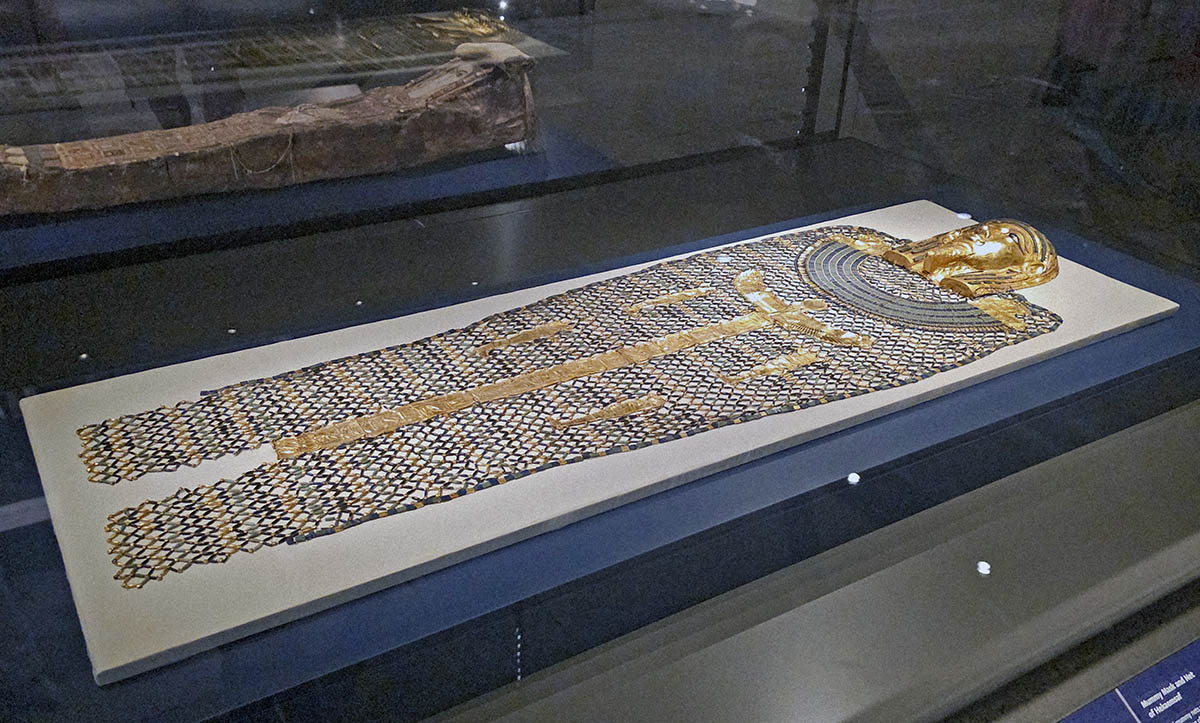
That includes mummies of non-royal Egyptians, such as mummified remains of a wealthy woman from Saqqara Necropolis, or animal mummies, such as a 4,000-year-old crocodile once worshipped as Sobek, the crocodile god of Kom Ombo.
Not Just a Museum – A Cultural Mega-Campus
One of the Grand Egyptian Museum’s defining qualities is its ambition. It is not merely a gallery space you “pop into” between pyramids and lunch. GEM is a fully realized archaeological and cultural campus, designed to keep you engaged for an entire day – willingly, not out of obligation.
Here are a few more facilities and amenities it offers:
- GEM Children’s Museum, blending education and play in interactive exhibitions.
- Immersive experiences in the Mixed Reality Hall, such as the VR trip through pyramid construction or ancient Egyptian beliefs about death, burial, and rebirth.
- GEM Discovery Challenge – a smartphone-powered treasure hunt game that turns the museum into a puzzle-solving playground.
- Conservation laboratories, among the most advanced in the region.
- Restoration workshops for newly unearthed archaeological finds.
- Educational and conference facilities, halls, and theaters.
- Food court with restaurants & cafés, from 30 North and Starbucks to Bitter Sweet and Zooba (where we enjoyed an excellent Egyptian street-food style lunch).
- Official gift shop, a place to find GEM souvenirs and merchandise.
- Artisan spaces, offering everything from body care products and jewelry to handmade rugs.
- Free photo booth.
The aim is clear: create a full-day visitor experience and position Giza as a premier world cultural destination and tourist hub.

Grand Egyptian Museum’s Wider Impact – Culture, Tourism & Heritage
The opening of the Grand Egyptian Museum isn’t just a ribbon-cutting moment. It is a turning point for the country, a strategic investment in heritage-driven tourism and a soft-power megaphone on the global stage.
For decades, Egypt has been balancing the need to preserve its ancient treasures without crushing them under the weight of modern tourism.
Older institutions, especially the Egyptian Museum in Tahrir Square, have been bursting at the seams, struggling with overcrowding and aging infrastructure.
GEM alleviates this pressure by moving thousands of artifacts into climate-controlled spaces with world-class standards. It lets scholars, conservators, and visitors engage with Egypt’s heritage in ways previously impossible.
On a national and international scale, the museum is set to turbocharge tourism sustainably. With its location near the Giza Plateau and improved infrastructure, the Grand Egyptian Museum, as a living time machine, reshapes the area into a cohesive cultural district rather than a quick pyramid pit-stop.
Planning Your GEM Visit
Despite the grandiosity of the project and its overall investment, not everything goes smoothly. The ticketing system often collapses, and even when you manage to reserve your ticket, you can still expect large crowds.
During my visit, turnstiles were out of order (or completely abandoned as a way to control the number of entries). A single scan outside the building was enough to set me loose on the museum’s vast grounds.
GEM Opening Hours
Opening times of the Grand Egyptian Museum galleries are 9 am to 6 pm. On Wednesdays and Saturdays, the closing time is at 9 pm.
While you can enter the GEM Complex half an hour before the opening, you need to exit one hour after the galleries close.
The last entry to the museum is at 5 pm (8 pm on extended days).
Grand Egyptian Museum Tickets
GEM tickets for Egyptian adults cost EGP 200.
For foreigners, adult tickets cost EGP 1,450 (approximately 26 euros or 30 dollars).
Children below the age of 6 can enter for free, while pupils and students pay half price.
It is recommended to book tickets online through the official website. If you can, pick an earlier time slot out of the four offered (8:30 am, 11 am, 1 pm, 3 pm).
In case the system falls, which can happen, you can also try and book Grand Egyptian Museum tickets through these partner links: Get Your Guide or Klook.
GEM Tours
A two-hour guided group tour of the Grand Egyptian Museum, booked through the official website (available in Arabic and English), costs EGP 1.950 (35 euros or 40 dollars).
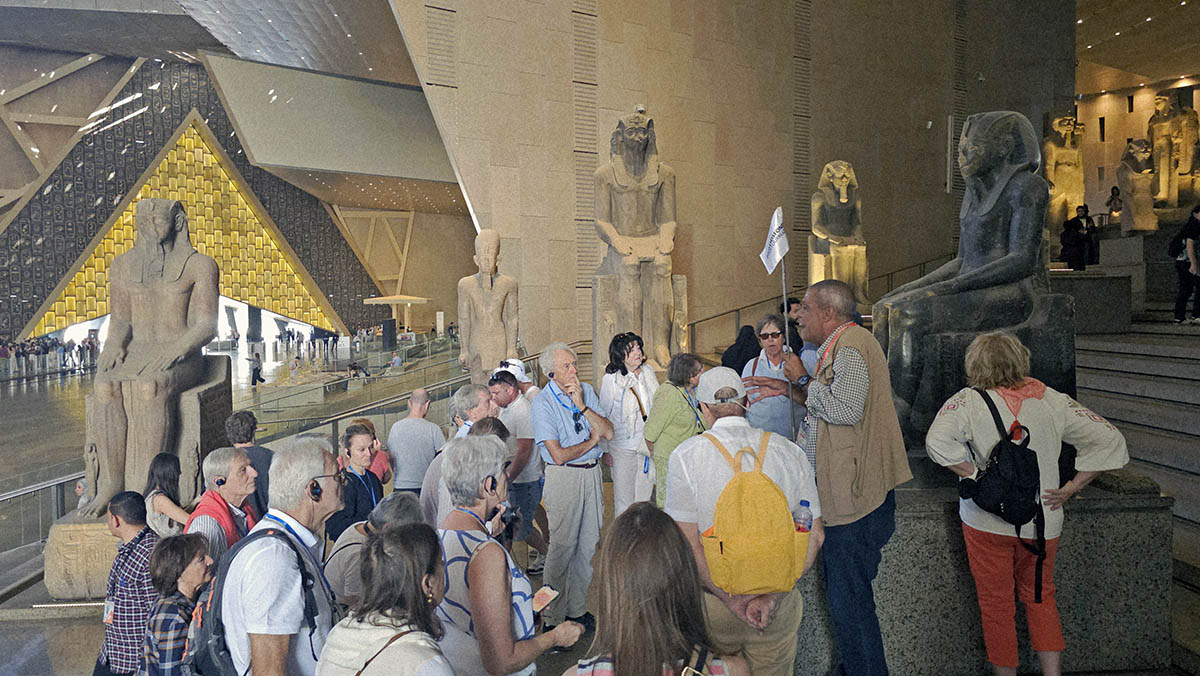
For excursions and private tours, you can check these well-rated skip-the-line options, which you can usually cancel 24 hours before, with a full refund, in case your plans change:
Get Your Guide
Three-hour guided tour with hotel pickup – number #1 selling tour – 42 euros or 50 dollars – more info here.
Top-rated eight-hour program that includes GEM, but also a visit to the Pyramids, the Great Sphinx, Khafre’s Valley Temple, and lunch – 81 euros or 95 dollars – more info here.
Grand Egyptian Museum from Hurghada, a full-day bus tour of the Pyramids-Sphinx area and GEM, with included lunch – 103 euros or 121 dollars – more info here.
#1 selling day trip from Hurghada, GEM, and Giza Plateau by plane – 260 euros or 305 dollars – more info here.
Viator
A small-group day trip from Hurghada, including the Pyramid Area, the Sphinx, and GEM – 98 euros or 117 dollars – more info here.
How long does it take to visit the Grand Egyptian Museum
The Grand Egyptian Museum can easily become a full-day experience. Its scale requires time.
Of course, if you are in a major rush, you can run through its highlights in 1 hour.
But for a more relaxed experience, I suggest you reserve at least 4 hours, including a break for lunch or coffee.
Photography at the museum
Personal photography and video recordings are allowed, without the use of flash, tripods, or monopods.
Luggage Storage
You can enter GEM with a bag smaller than 40×40 cm. If you have anything bigger, like a backpack, you’ll need to store it in the cloakroom. The museum’s bag policy also includes inspection of the bags.
Dress code
There is no strictly enforced dress code for the Grand Egyptian Museum. However, Egypt is conservative, so avoid wearing overly revealing clothing. Comfortable walking shoes are essential.
Accessibility
While the Grand Egyptian Museum has a lot of stairs, it offers excellent accessibility via ramps, elevators, and travelators (people-movers). The museum also provides free wheelchair rental and accessible restrooms.
For visually impaired visitors, there are tactile replicas with Braille and audio-described tours, while hearing-impaired visitors can join tours with sign-language interpretation.
Museum entry for people with disabilities is free.
How to get to the Grand Egyptian Museum
Once the Cairo Metro Line 4, connecting 6th of October City to New Cairo, comes into operation, you’ll be able to get to the Grand Egyptian Museum by metro (the nearest metro station to the GEM will be Pyramids Station). First trains are expected in May 2026.
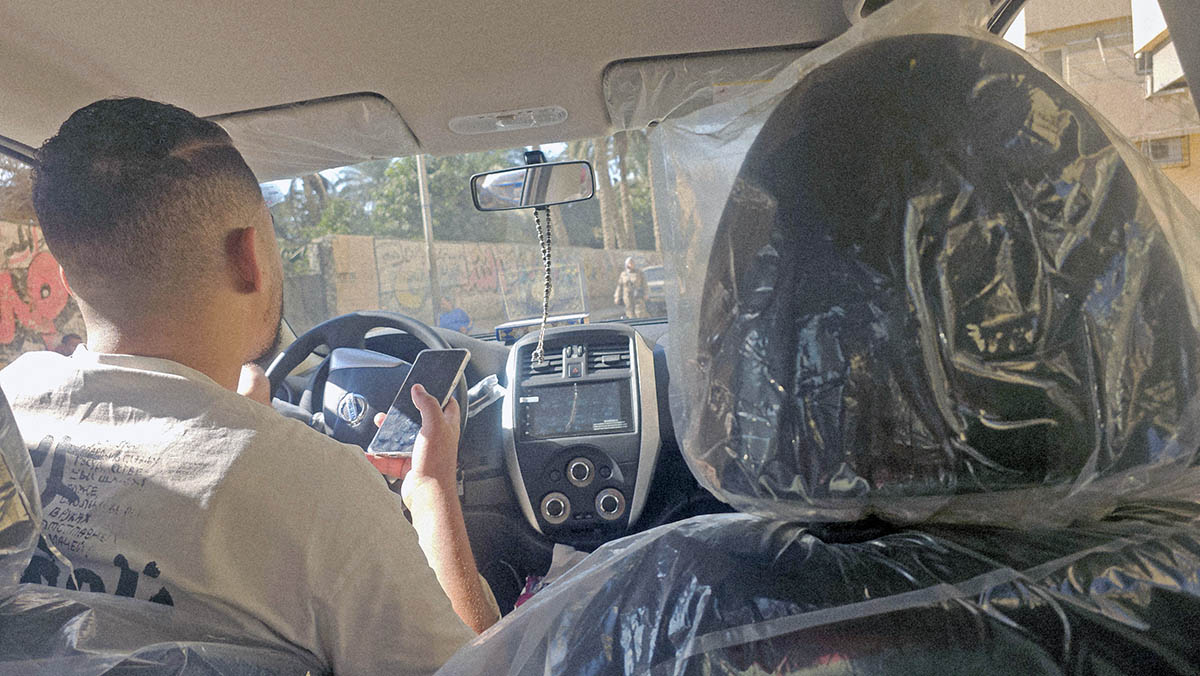
You can also use ride-hailing apps such as Uber, Careem, or InDrive to arrange a transfer, but expect drivers to ask for off-app payment in cash, often higher than the agreed price. Have smaller bills ready for tips or payment. While drivers may accept dollars or euros, they might refuse coins.
Hotels near Grand Egyptian Museum
If you want to stay in the vicinity of the Grand Egyptian Museum and the Pyramids of Giza, there are several options worth considering.
Among the budget options, you can check Superior Pyramids Inn, Topview Pyramids and Museum, or Grand Museum View Hotel. You should be able to book a double room in these accommodations for 22-24 euros already.
If you want to splurge a little, with included amenities such as a swimming pool, consider Noya by Dhara Hotels, or a wonderful oasis of JAZ Pyramids Resort. Nightly rates at these upscale properties start above 100 euros.
Is the Grand Egyptian Museum Worth It? – Verdict
After decades of problems and delays, Egypt finally has its Grand Egyptian Museum.
It would be easy to say GEM is a gem, but it isn’t flawless. With a chaotic ticket system and visitor management, overcrowding can affect their experience of the visit.
Additionally, the museum opens in a country that is faced with severe debt and economic struggles. Locals may feel the prices are steep.
On the other hand, the turnstiles for the museum management seem to be the only ones that work. Shifts of responsible persons are frequent, and even corruption cases have opened inside the museum.
The Grand Egyptian Museum is a celebration of Egypt’s identity, creativity, and pride
But the importance of the Grand Egyptian Museum lies far beyond operational bumps – in its noble idea that connects heritage preservation with a modern museum design, and large-scale tourism ambitions. Hopefully, it can be sustainable in the long term.
The beacon of that hope, the Grand Egyptian Museum, aims to be more than a repository of objects.
It is Egypt’s statement to the world, sometimes even to that “noble” Western museum world that profits from colonial-era acquisitions. Egypt will reclaim its story.
GEM is a celebration of Egypt’s identity, creativity, and pride.
Standing in the shadow of the pyramids yet gleaming with a distinctly modern spirit, this museum bridges past and present with a crucial mandate that heritage doesn’t have to be a slave to a commercial, never-satisfied mentality. We can share the legacy of those before us, if we choose co-existence “with” instead of exploitation “of” or “against”.
Whether you’re a seasoned traveler, an archaeology student, or simply curious, the Grand Egyptian Museum is now one of the most inviting cultural destinations on Earth.
Did you like this guide to the Grand Egyptian Museum?
Pin it for later!
Disclosure: This post may contain affiliate links, meaning if you click on them and make a purchase, Pipeaway may make a small commission, at no additional cost to you. Thank you for supporting our work!

The author of the majority of the images in this article is Ivan Kralj.
Exceptions, in the order of appearance, are these:

GEM under construction 2017 - Ovedc, licensed under CC BY-SA 4.0
GEM under construction 2019 - Djehouty, licensed under CC BY-SA 4.0
Hanging Obelisk - George Wang, Pexels
GEM logo - Atelier Brückner
