
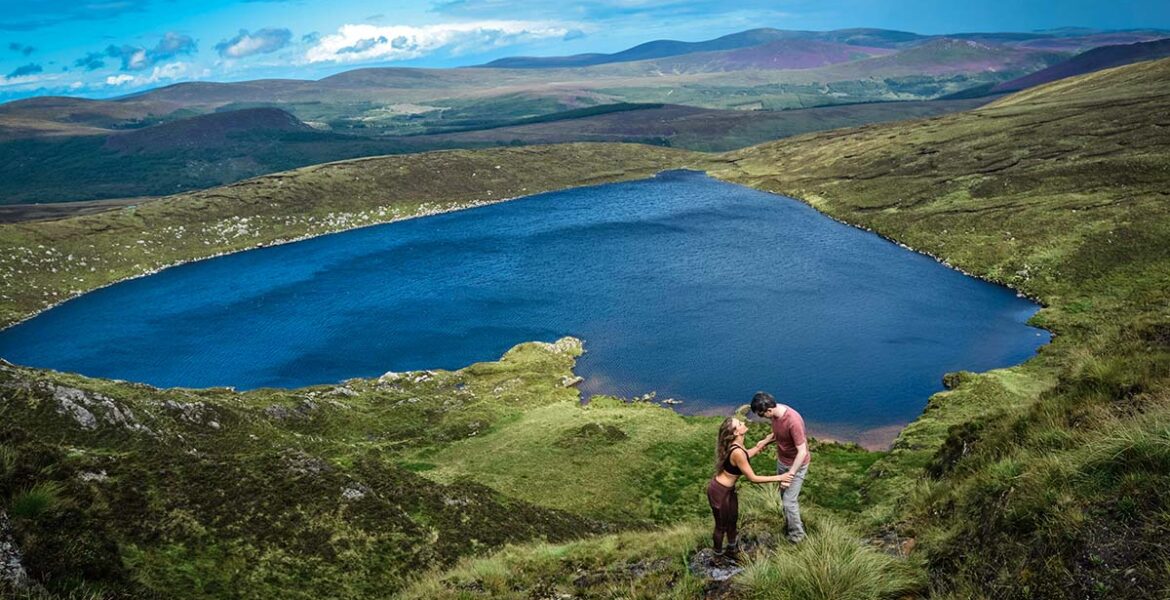
In an era when Facebook is flooded with AI images, and we genuinely pause to ask whether the Cat Olympics might be real, it’s easy to dismiss heart-shaped lakes as just another deception designed to catfish our attention. But nature is far more romantic than we give it credit for. Lakes that look like hearts do exist, and if you’re ready for a Valentine-style journey, these liquid formations will melt your heart.
Heart-shaped lakes offer amazement on your face, altitude under your feet, and a photograph that can go on Instagram with no disclaimer
From snowy alpine basins carved by glaciers to desert oases designed by humans, lakes shaped like hearts are among geography’s most delightful optical surprises. They’re made for aerial shots, bucket lists, spontaneous proposals, and even special appearances in video games like The Legend of Zelda, where Lover’s Pond hides a treasure chest atop Tuft Mountain.
These water wonders face competition from their terrestrial cousins – heart-shaped islands (many of these in the Adriatic Sea). Even Greece’s Kythira Island – birthplace of Aphrodite, goddess of love – boasts a heart-shaped lagoon. It seems that if you looked long enough, you’d start spotting the universal symbol of love everywhere: on a bark of a tree, in a clouded sky, or on a piece of toast.
Beyond AI slop and internet rabbit holes, authentic heart-shaped lakes offer something refreshingly tangible: amazement on your face, altitude under your feet, and a photograph that can be shared on Instagram with no disclaimer.
So today, we’re taking off. We’ll fly above the most beautiful heart-shaped lakes in the world, learn about their origin, their location, and how to experience them responsibly.
Whether natural or manmade, these bodies of water that resemble a heart are like Mother Nature’s own love letters – scattered across the globe, waiting to be opened.
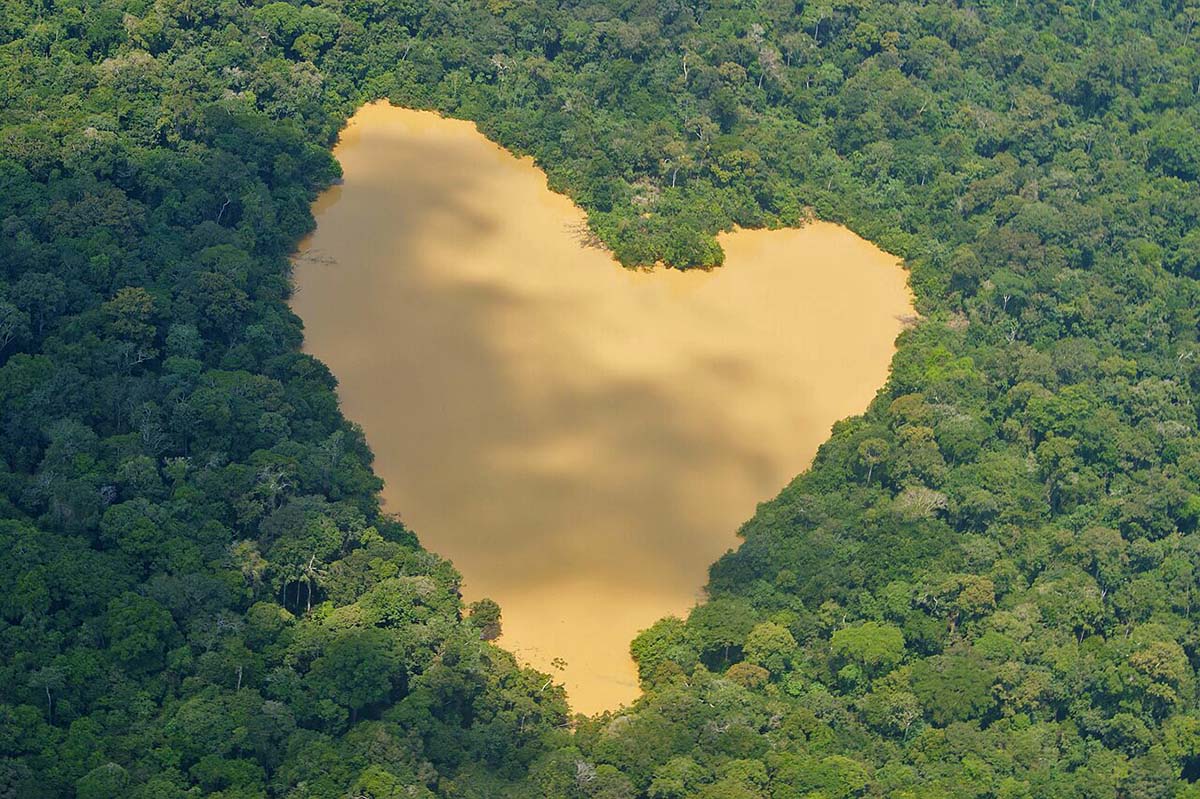
Why Are Some Lakes Heart-Shaped?
Before you lace up your hiking boots or charge your drone batteries, it’s worth asking: How does a lake end up looking like it belongs on a Valentine’s Day card?
A lake’s heart shape is usually a slow byproduct of natural geological processes: glacial carving, landslides and rockfall, tectonic activity, or long-term water flow erosion.
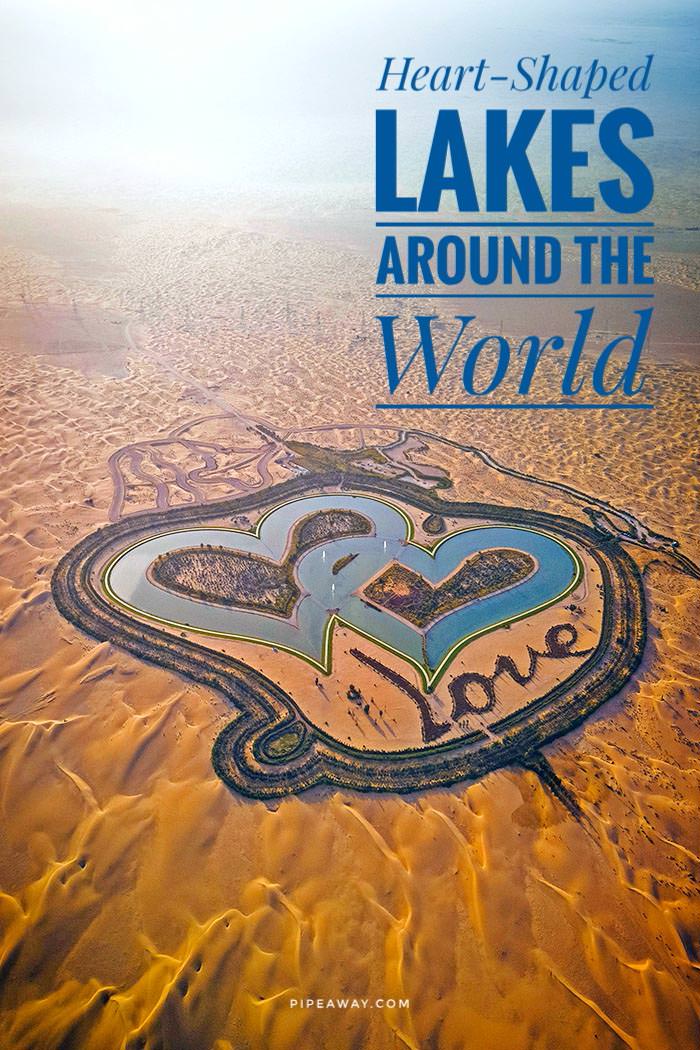
In specific cases, however, humans step in to assist Cupid. Some heart-shaped lakes are deliberately designed. The most famous example of an engineered liquid heart is Love Lake in Dubai, where two interlocking heart shapes were carved into the desert as a romantic attraction.
Top Heart-Shaped Lakes by Region
Heart-Shaped Lakes of Europe
1. Lake Näckern, Sweden
Deep within the forests of Östergötland County in southern Sweden, Lake Näckern rests in near-perfect seclusion.
Located near Bestorp, south of Linköping, this small woodland lake is part of a landscape dotted with glacial tarns, peat bogs, and thick spruce and pine forests.
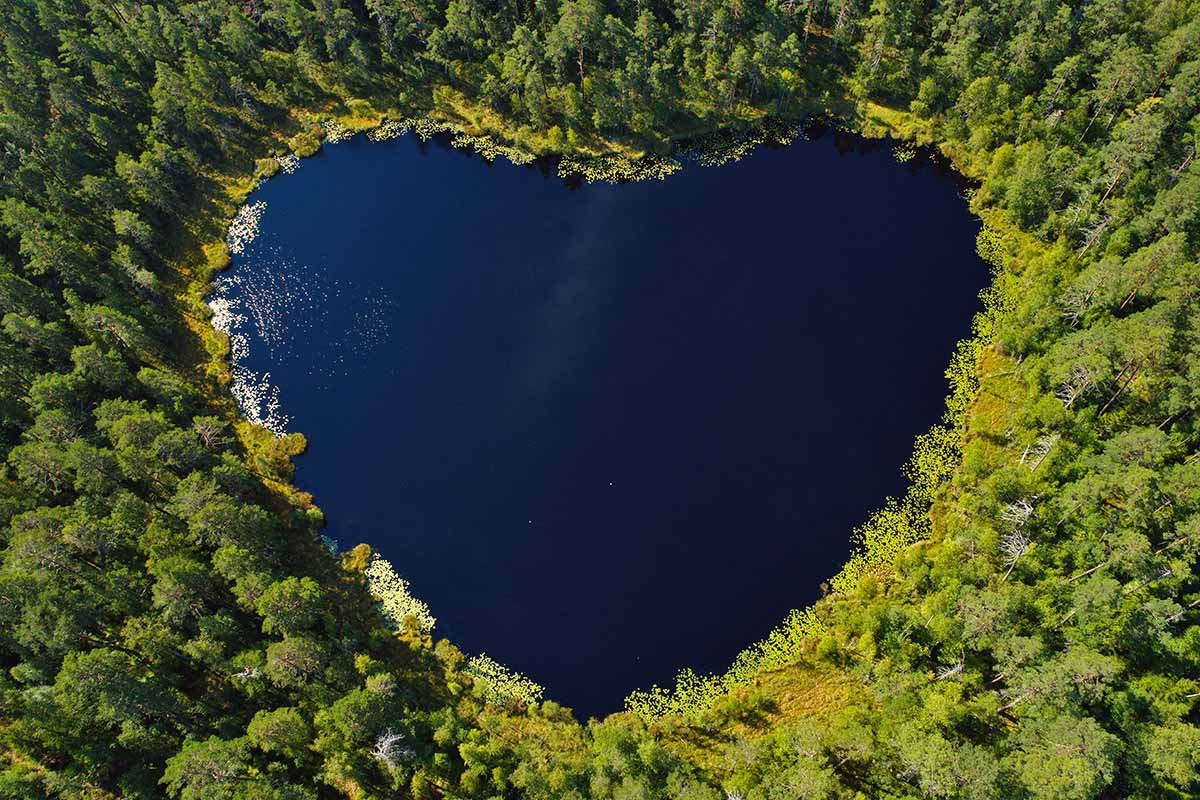
Conifer trees surrounding the heart-shaped lake preserve its untouched character.
While not part of major hiking trails, and perhaps for that reason exactly, roe deer, capercaillie, and cranes love hanging around Näckern, Swedish liquid heart beating softly beneath a canopy of green.
2. Lac du Montagnon, France
Cradled in the Aspe Valley of the French Pyrenees, not far from the Spanish border, Lac du Montagnon looks as if glaciers once decided to leave behind a romantic signature.
At 2,173 meters above sea level, this high-altitude lake rests beneath ridgelines that feel almost protective. Reaching it requires commitment. The elevation gain exceeds 1,000 meters. Love is rarely effortless.
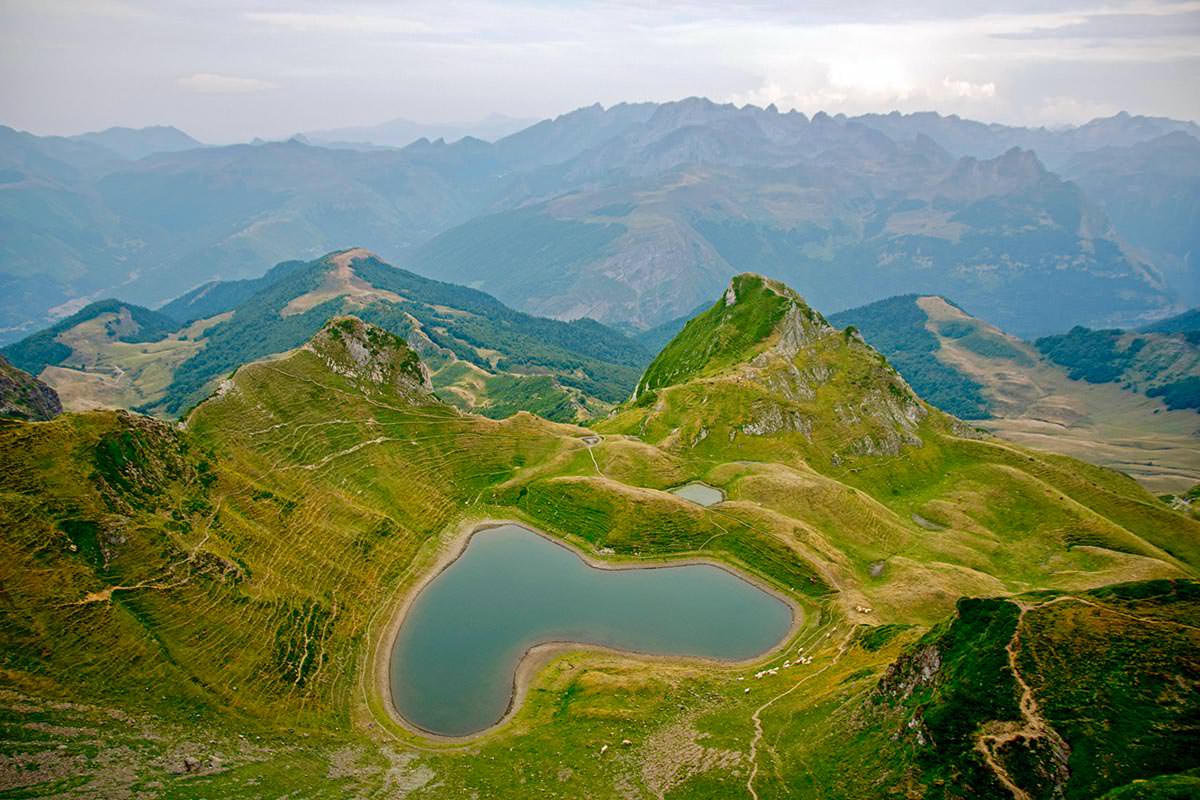
Starting from the small mountain village of Aydius, hikers face a demanding 9-kilometer ascent that takes roughly five hours one way, crossing forests, streams, and pastures before the terrain turns steep and breath-shortening.
Many visitors choose to bivouac near the lake to catch sunrise, when the first light brushes the heart-shaped outline in soft gold. In those early hours, before boots crunch on gravel and trekking poles click against stone, the lake is intensely private.
Remote, wild, and framed by the rugged peaks of the Pyrénées-Atlantiques, Lac du Montagnon proves that some of the most romantic views require a little suffering first.
3. Lac de Bethmale, France
The Ariège Pyrenees offer their own emerald-toned heart in the form of Lac de Bethmale. Unlike its high-altitude sibling, this lake has a rather mystical aura, wrapped in dense beech forests and mountain calm.
Its green color comes with a story. According to local legend, a wicked witch once lived by the lake, terrorizing nearby villagers. When they finally chased her away, she leapt into the water, and her shimmering blue-green dress sank to the bottom. Ever since, the fabric’s glow has tinted the lake, particularly vivid in summer.
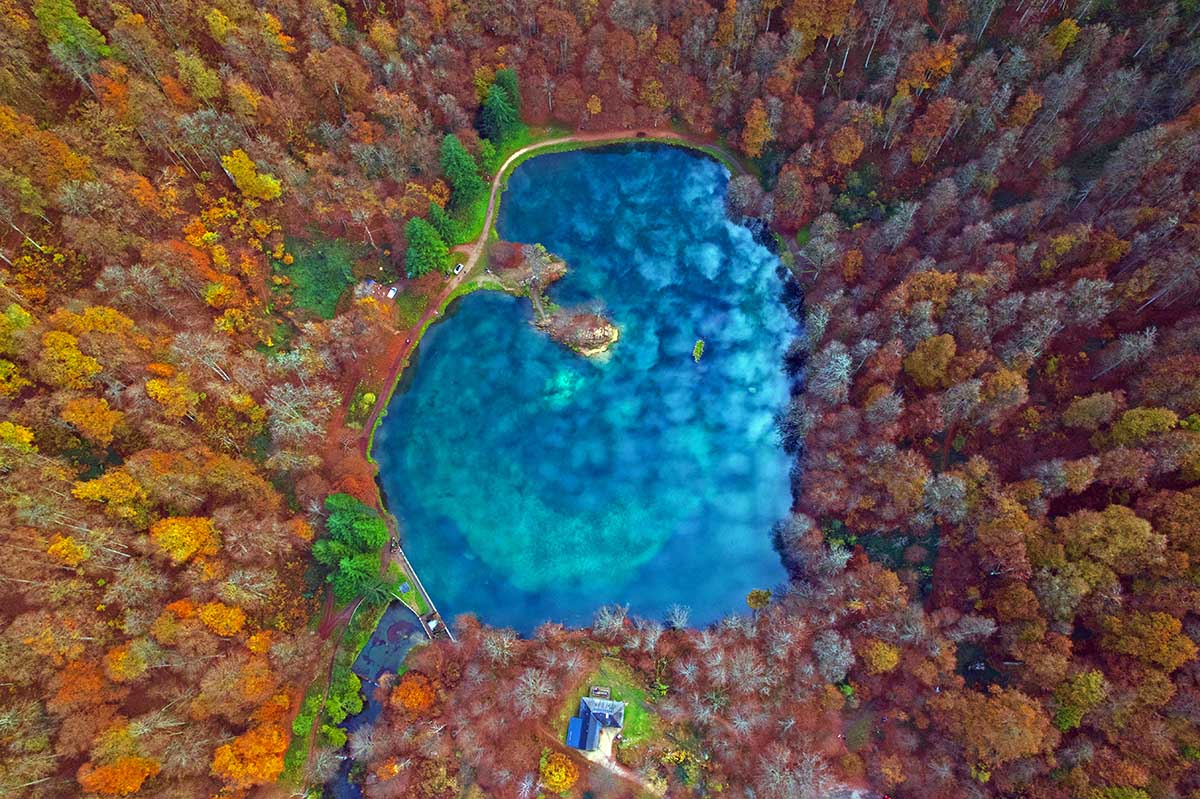
Science may attribute the hue to minerals and light refraction, but the witch’s dress is undeniably a better explanation.
Situated at 1,074 meters, in the heart of the Parc Naturel Régional des Pyrénées Ariégeoises, the lake is easily accessible by car, a rarity among heart-shaped alpine waters. This accessibility makes it popular with families, walkers, photographers, and fishermen hoping to catch a trout, or a brook salmon, or, who knows, even a fragment of the witch’s enchanted fabric.
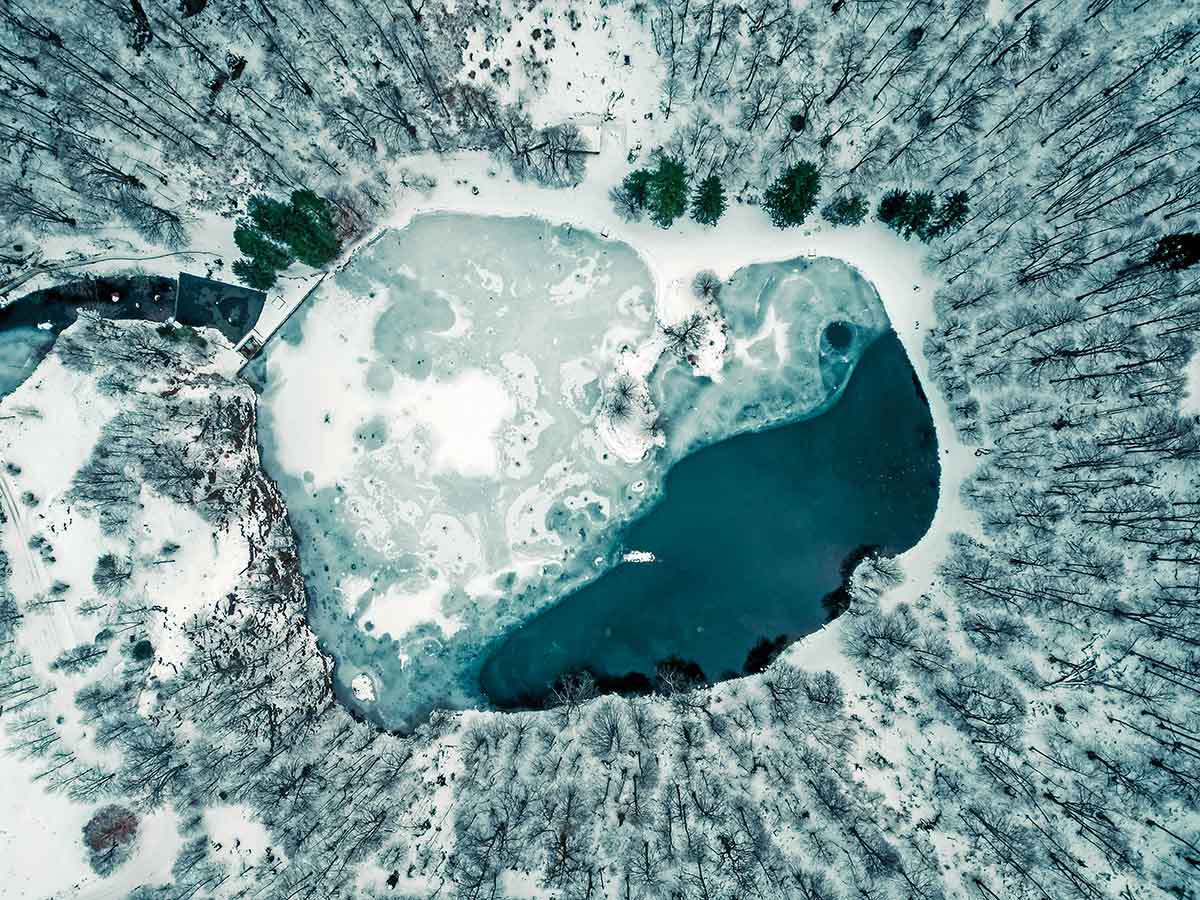
Across the seasons, Lac de Bethmale transforms romantically: lush and vibrant in summer, reflective and moody in autumn, quietly frosted in winter.
4. Le Buisson, France
The last and least French example on this list of heart-shaped lakes is Le Buisson in Trélazé, just southeast of Angers.
This modest body of water emerged from centuries of schist and slate extraction that reshaped the landscape into a patchwork of pits, basins, and reclaimed terrain. What was once a working quarry gradually filled with water, and over time the excavation scars transformed into living ecosystems.
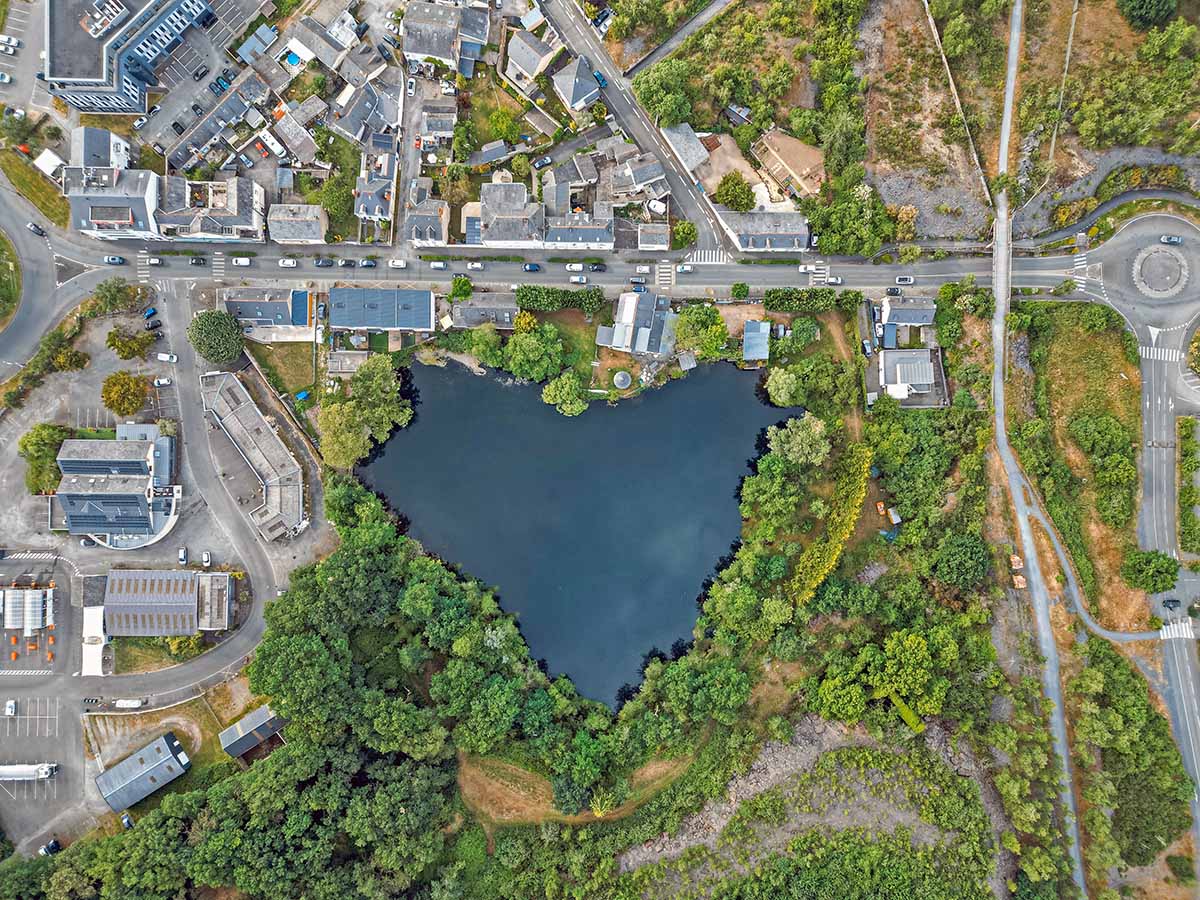
Today, these former mining cavities are home to waterfowl, amphibians, dragonflies, and bushy wetland vegetation. It’s not manicured. Le Buisson is a semi-wild pocket of calm where urban edges soften and biodiversity quietly thrives.
For those curious about how post-industrial landscapes can evolve into green sanctuaries, this small heart-shaped lake functions as a tiny but resilient ecological lung within the greater Angers area.
5. Kirchbruch See, Germany
Kirchbruch See is another heart-shaped quarry lake, one of the most remarkable small lakes in eastern Germany.
Located in Brandis near Leipzig, in the state of Saxony, the lake owes its dramatic presence not only to its outline, but also to its unlikely companion: Bergkirche Beucha, a medieval church perched on a cliff above it.
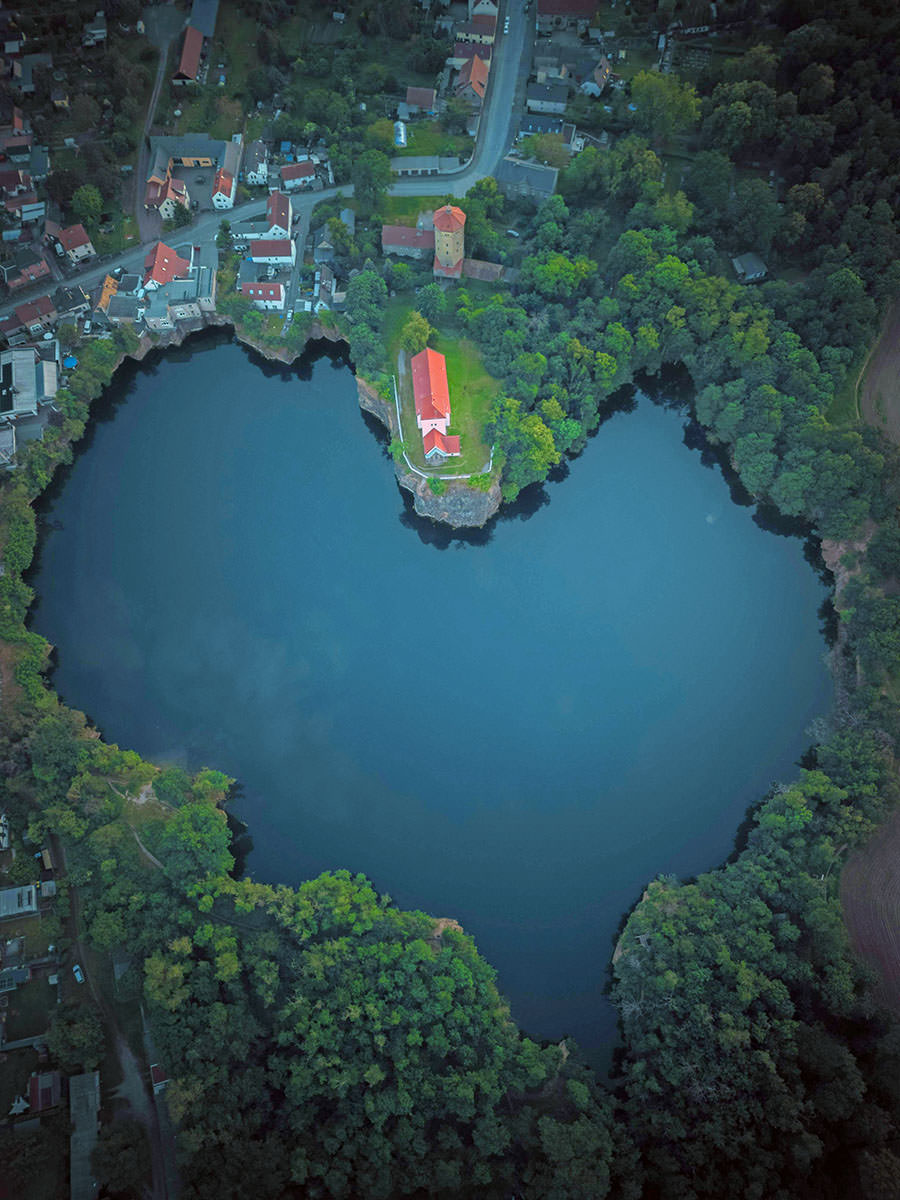
The church was built in the 13th century atop Beuchaer Kirchberg, back then just an ordinary hill. From the 15th century onward, the hill was quarried for valuable porphyry stone, used in major regional buildings. Over time, quarry workers cut deeper and deeper into the hill, removing rock on three sides of the church. So, technically, the church was never placed on a cliff; the cliff was carved out around the church!
Mining continued until 1958, after which the quarry slowly filled with water, forming what we now know as Kirchbruch See.
With clear water and easy access, the lake is a popular place for summer swimming and even diving. The area is part of the Geopark Porphyrland, with circular trails around the quarry and viewpoints overlooking the lake.
In 2019, the quarry and its cliff-hanging church were designated a National Geotope, acknowledging their geological and cultural significance.
6. Gaislacher See, Austria
Some heart-shaped lakes make you work for the view, and Gaislacher See is proudly one of them.
High above Sölden in the Austrian Ötztal Alps, this deep‑blue mountain lake rests at around 2,700 meters, cradled inside a rugged cirque of stone and snow.
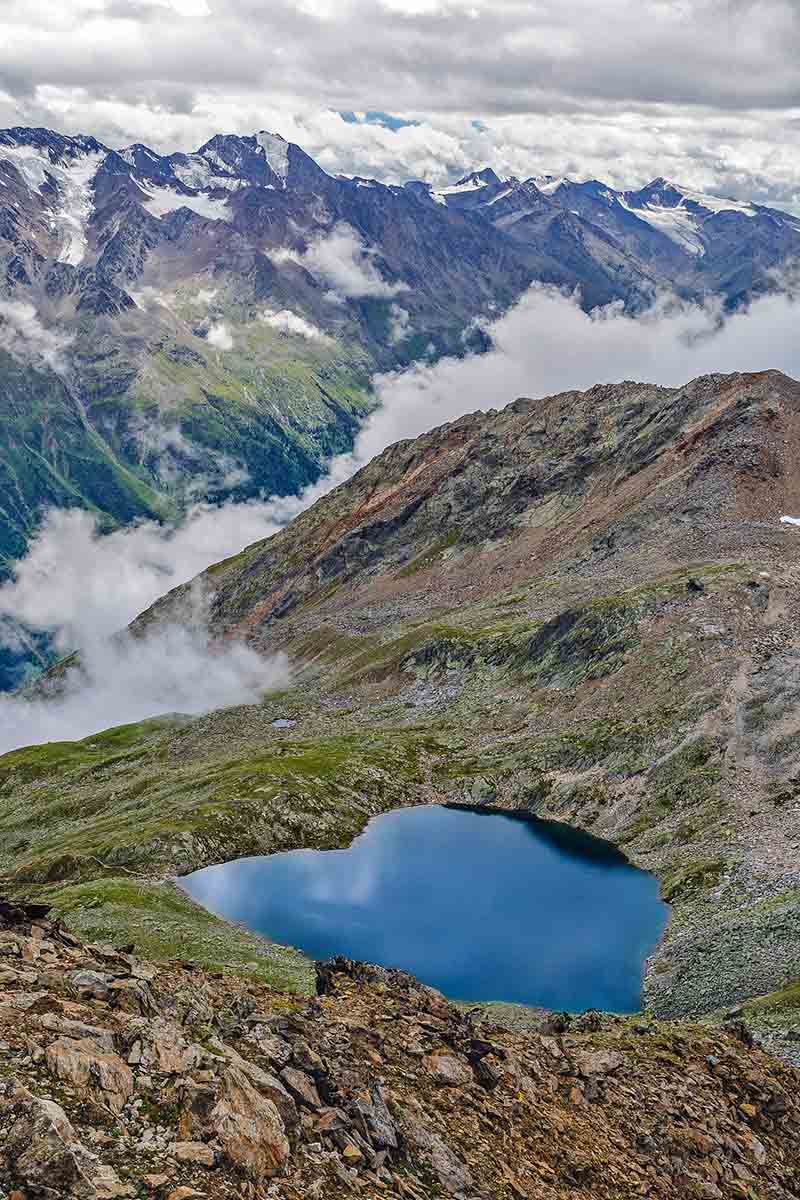
The hike to one of the most striking surprises in Tyrol is demanding, making it a quiet, uncrowded reward.
Most hikers start from the Gaislachkoglbahn middle station, which can be accessed by cable car or on foot. From there, the trail wastes no time; it climbs sharply through switchbacks into the rocky amphitheater known as Gaislacher Kar.
Expect a solid workout: over roughly 4 kilometers, you gain about 560 meters in elevation, with narrow and occasionally steep sections ensuring your lungs stay fully engaged. The steady ascent from the middle station takes around 2.5 hours.
Crest the final ridge and the lake appears suddenly, its surface reflecting the surrounding peaks like polished glass. In that moment, fatigue briefly disappears.
7. Lough Ouler, Ireland
Beneath the broad shoulders of Tonelagee (817 m) in the Wicklow Mountains lies one of Ireland’s most poetic natural surprises: Lough Ouler. Perfectly heart-shaped, this glacial lake is one of Ireland’s most photogenic wonders. But to see it, you’ll have to take on the mountain (or scroll to the cover image of this article). That can include boggy areas, slippery boulders, and a muddy path.
The trail begins gently enough, winding through wild rolling hills and rough tracks far removed from the smooth paths of nearby Glendalough. At the wind-swept ridge near Tonelagee, the third-highest peak in the Wicklow range, the landscape shifts. Suddenly, the ground drops away, revealing a raw, still, surreal lake.
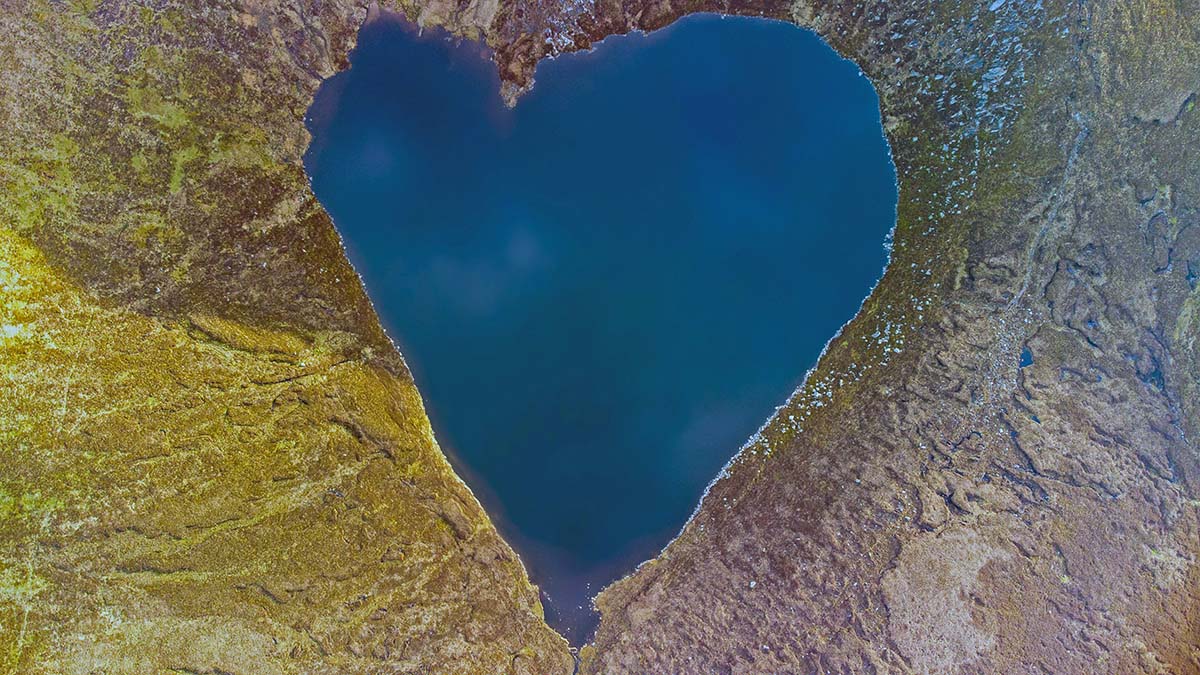
There are two primary routes to reach Lough Ouler, and they are equally hard: a linear ascent from Turlough Hill car park, or a loop beginning at Glenmacnass Waterfall car park. Both involve steep sections, both require solid footing, and both deliver that unforgettable heart‑shaped reveal.
From the summit, Wicklow stretches in all directions, and on clear days, the Irish Sea glimmers in the distance. It’s astonishing how something so close to Dublin can feel an entire world away.
Lough Ouler is less a stroll and more a challenge, the kind of day hike that leaves your boots heavy and your camera full.
8. Vyshhorod’s Heart-Shaped Lake, Ukraine
Not all heart-shaped lakes sit high in mountains or hide in remote valleys. Some rest quietly on the edge of everyday life.
In Vyshhorod, just north of Kyiv, in an area where the city softens into nature, a small, unnamed pond forms a subtle heart within a patch of green.
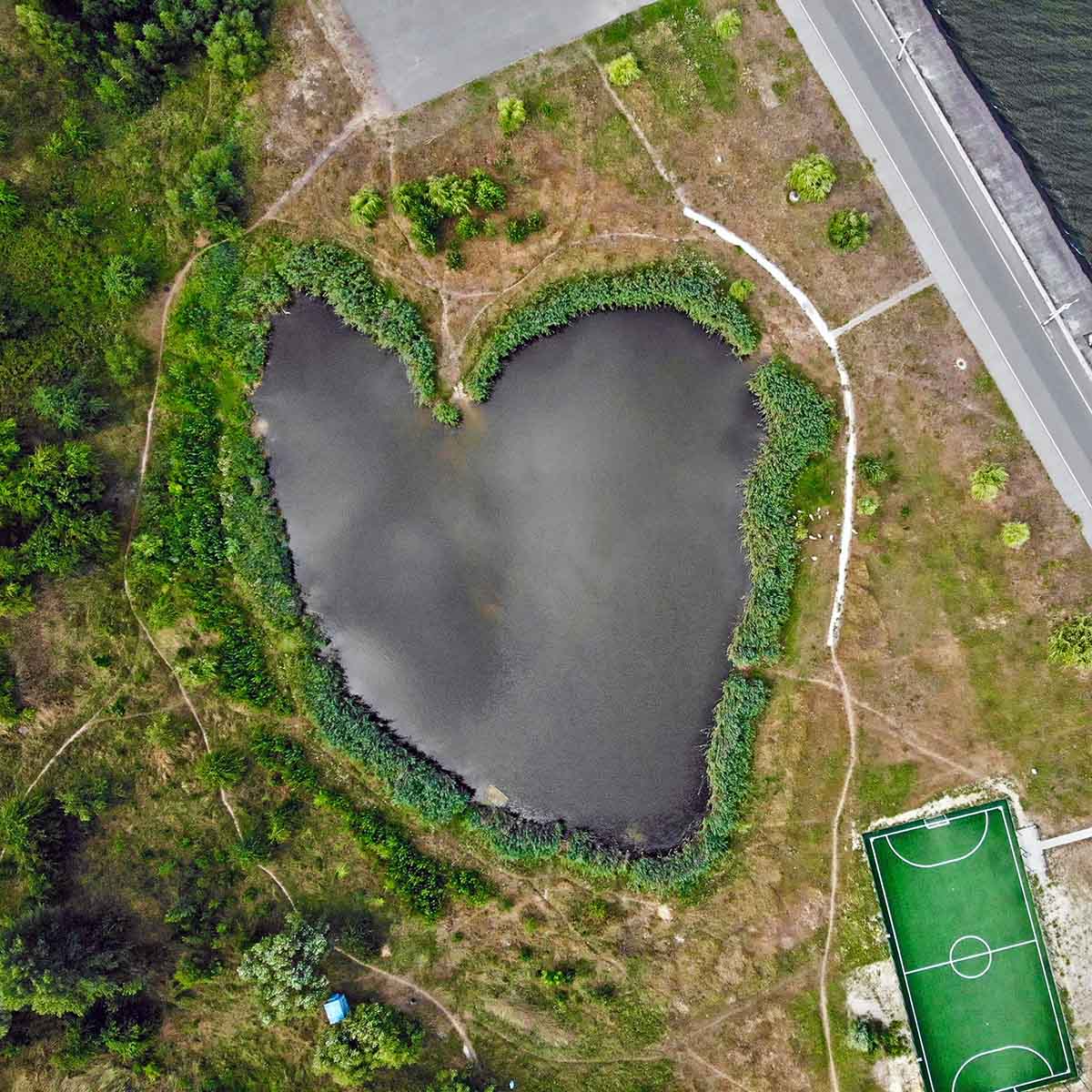
Situated near the embankment at the southern end of the Kyiv Reservoir along the Dnieper River, this modest water body is part of a landscape locals use for walking, cycling, and catching a breath away from traffic and concrete.
It sits near a football field and close to the so-called Lake named after Khodos Alexander, blending into the rhythm of ordinary afternoons.
Like much in Ukraine today, this small lake is suspended between past and future, quietly present, waiting for calmer times to shine as a peaceful corner of town.
9. Trnovačko jezero, Montenegro
Tucked between the mountains of northern Montenegro, near the border with Bosnia & Herzegovina, Trnovačko jezero is arguably one of Europe’s purest naturally formed hearts. Its waters shift between deep sapphire and bright emerald depending on where the sun hits.
Perched at 1,517 meters above sea level, this famously clear lake is encircled by some of the region’s most imposing peaks: Maglić, Volujak, and Bioč.
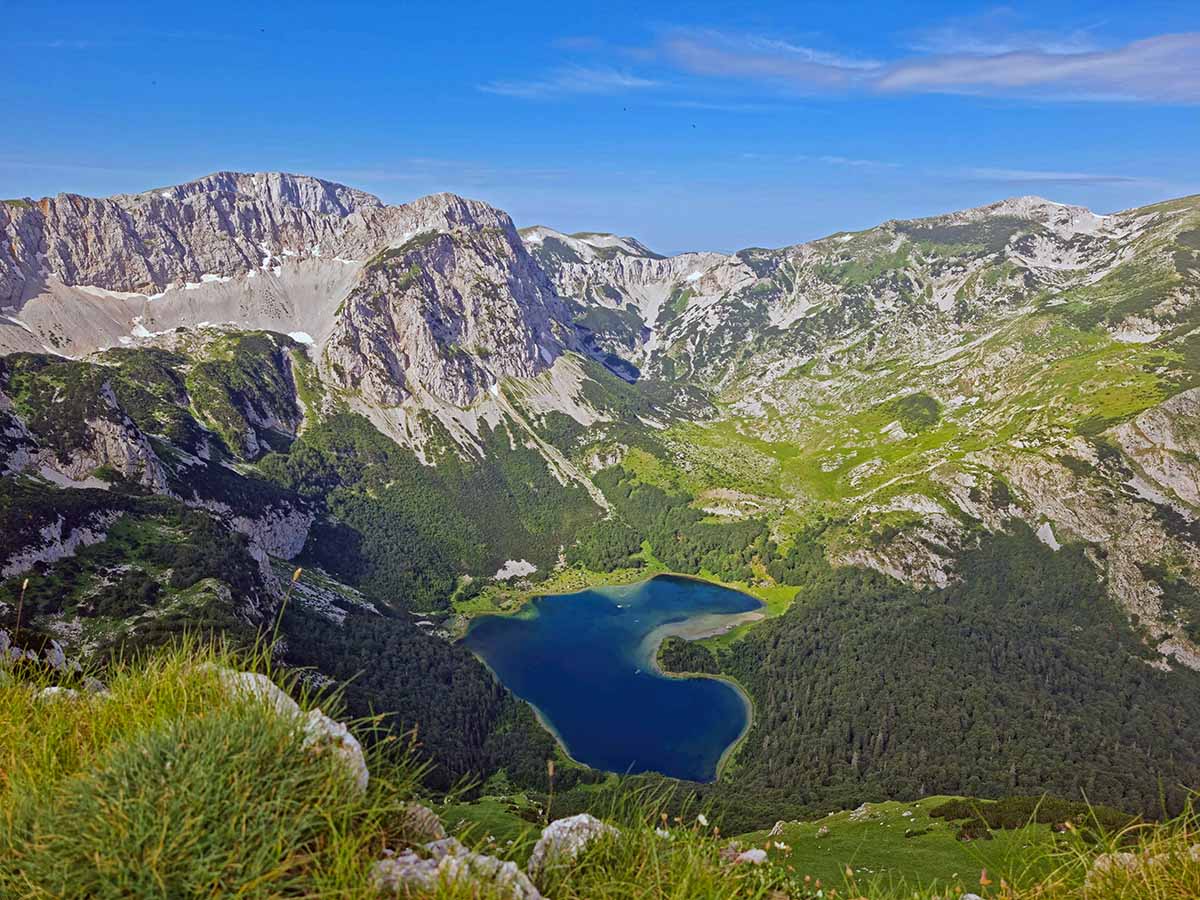
Trnovačko Lake was sculpted at the end of the last Ice Age, when retreating glaciers carved out a basin in this valley, in an iconic shape we all recognize as a symbol of love.
Montenegro’s mountain heart is located within the Piva Nature Park, but it is most commonly approached from the Bosnian side, via a 5-kilometer hike from Prijevor. Most hikers complete the non-demanding trail to the lake in 90 minutes.
At the end of the route, dipping one’s toes into the glacial chill produces a mix of bravery and regret. The bold may commit to a full swim; the wise often settle for a picnic and a view.
For travelers exploring the Durmitor, Sutjeska, or Piva regions, this romantic natural wonder is refreshingly unpolished, a scenery that’s not yet curated into social-media submission.
10. Liqeni i Zemrës, Kosovo
Stuck at 2,539 meters above sea level, this is one of Kosovo’s highest glacial lakes, situated in a stark, wind-sculpted landscape at the borderland with Albania. The setting is raw and elemental: sharp ridgelines, fractured rock, and vast skies that make hikers look like punctuation marks against stone.
High in the jagged embrace of the Albanian Alps, Liqeni i Zemrës (literally “Lake of the Heart” in Albanian) lives up to its name with unapologetic precision.
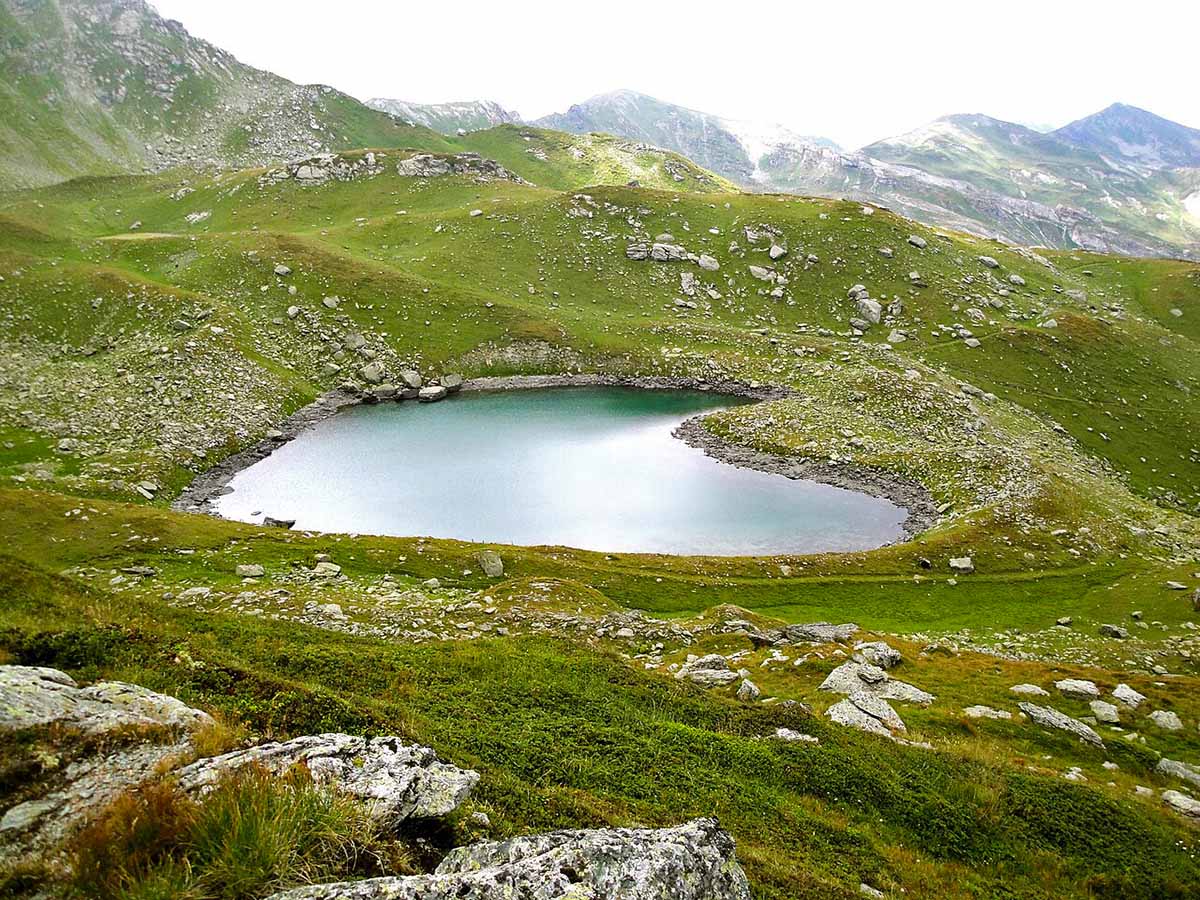
Its clear heart outline, combined with its extraordinary altitude, has made it a highlight of the long-distance Peaks of the Balkans trail. Those trekking through the Bjeshkët e Nemuna – the Accursed Mountains – often describe the lake as an emotional waypoint as much as a geographic one. After hours of climbing through rugged terrain beneath Gusan peak, the sudden appearance of this alpine heart feels like a true revelation.
There are no curated viewpoints. Just wind, silence, and a shape carved by ancient ice that somehow resembles affection in one of the Balkans’ wildest corners.
Heart-shaped Lakes in the Americas
11. Heart Lake, Ontario, Canada
Locally known as Beaver Pond, Heart Lake in eastern Ontario, Canada, is a small but remarkably precise heart etched into the forest.
Hidden near the tiny community of Ompah, in North Frontenac, roughly 100 kilometers southwest of Ottawa, the lake is wrapped in absolute quiet. Every autumn, however, it reenters the digital spotlight. As foliage turns blazing red and gold, the contrast against the lake’s deep blue surface creates a scene so vivid that it practically begs to be shared on social media timelines.
View this post on Instagram
Heart Lake sits on Crown Land, surrounded by a thick forest. This isolation is part of its charm, and part of the problem. As there is no designated public access, no marked trails, and no official viewing platforms, those who managed to come closer either used drones or engaged in trespassing through surrounding properties.
Local authorities have warned influencers to stay away from the lake, particularly during hunting season, when hunters can barely distinguish selfie-takers from deer.
The inaccessibility only deepens the allure of Heart Lake, like a siren call that’s too hard to resist.
12. Étang Baker, Quebec, Canada
If you’re searching for a heart-shaped lake near Montreal, there’s one just a 90-minute ride away. Étang Baker is located in Quebec’s Eastern Townships (Estrie), near Mont Gauvin.
Around 2018, this modest woodland pond quietly erupted across Instagram feeds.
View this post on Instagram
Its symmetrical outline, framed by dense mixed forest, becomes especially vivid in autumn, when the landscape ignites in shades of orange, crimson, and gold. From above, it looks painterly, a seasonal masterpiece.
However, Étang Baker rests on private land. There are no visitor facilities, no designated parking areas, and no infrastructure in place for crowds. Respect for property and preparation are essential, including something as practical as a restroom stop before arrival.
The lake’s name traces back to a prominent local family who once owned the land, including Lieutenant Colonel George Harold Baker, a politician and the only Canadian Member of Parliament killed in action during World War I.
Today, Étang Baker balances delicately between viral fame and rural privacy. It’s a small, love-shaped secret in the Quebec countryside, one that asks you to explore off the beaten path.
13. Spirit Lake, Washington, USA
Just five kilometers north of Mount St. Helens in Skamania County, Washington, lies Spirit Lake, a heart-shaped lake born not from romance but from catastrophe.
Before May 18, 1980, Spirit Lake looked entirely different. It had two elongated arms connected by a narrow channel, described by NASA as resembling “the top half of a heart”.
But when a magnitude 5.1 earthquake triggered the eruption of Mount St. Helens, the largest landslide in recorded history reshaped the landscape. The blast claimed 57 lives, making it the deadliest volcanic eruption in U.S. history. Lava, ash, and debris expanded the lake’s footprint, creating the distinct heart-like outline visible today in Landsat 8 imagery.
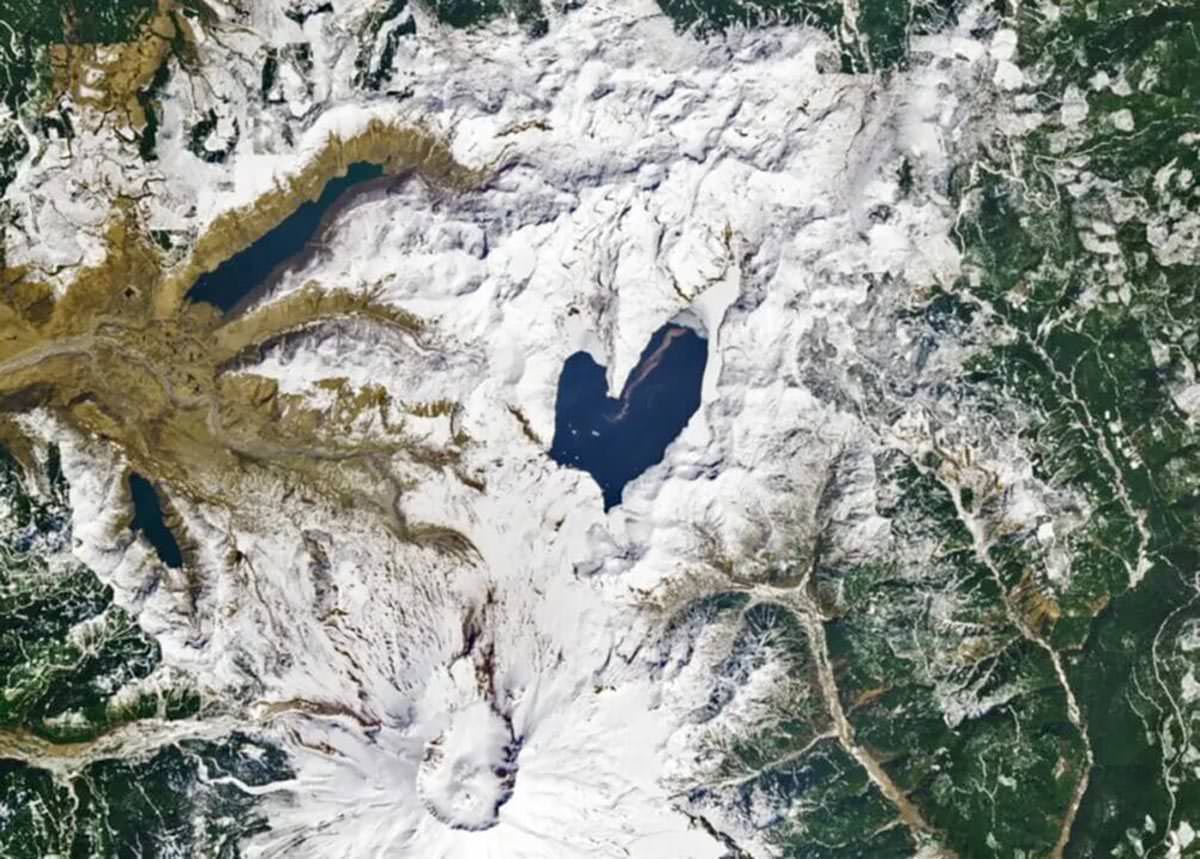
Today, Spirit Lake sits at a higher elevation (1,038 meters) and remains closed to visitors to protect its fragile, recovering ecosystem. Spirit Lake has become – a ghost lake.
Once-thriving 1970s tourism scene of camps and lakeside lodges is gone. Massive tree trunks from the destroyed forest still float across the lake’s surface, creating one of the most haunting landscapes in the Pacific Northwest.
14. Castle Lake, California, USA
Further south, in Northern California’s Klamath Mountains, Castle Lake offers a gentler, though still phenomenal heart.
Located southwest of Mount Shasta City within the Shasta-Trinity National Forest and near the Castle Crags Wilderness, this glacial lake sits in a granite bowl carved by retreating Ice Age glaciers.
From above, its broad outline forms a recognizable heart, framed by craggy ridgelines and evergreen slopes.
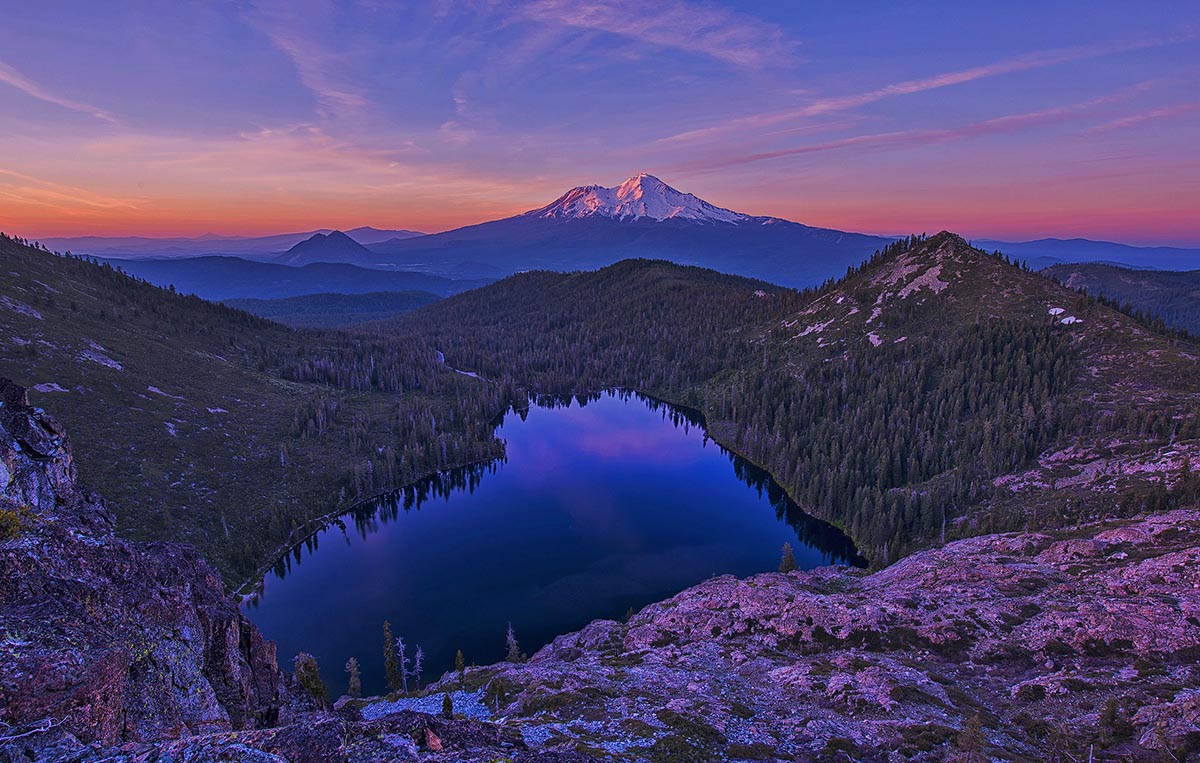
At 1,658 meters above sea level, Castle Lake is refreshingly accessible. A paved road leads directly to the shoreline, with parking at the water’s edge: a rare luxury among alpine lakes.
And then comes the delightful twist: Castle Lake serves as a trailhead for another heart-shaped body of water, aptly named Heart Lake. For those unwilling to settle for a single symbol, a steep but rewarding trail climbs from a larger heart below to a smaller, more crisply defined heart above. It’s geography indulging in repetition.
Beyond hiking, Castle Lake invites swimming (brace yourself: the water is famously cold), kayaking, fishing, photography, and, in winter, snowshoeing across a frozen scene.
15. Lago Corazón de Liquiñe, Chile
In southern Chile’s Los Ríos Region, near the thermal-spring town of Liquiñe, Lago Corazón de Liquiñe rests quietly among volcanoes and ancient forest.
Also known as Laguna Corazón or Laguna Ancacoigue, this small mountain lake is situated approximately 1,000 meters above sea level in the Andean foothills near the Argentine border.
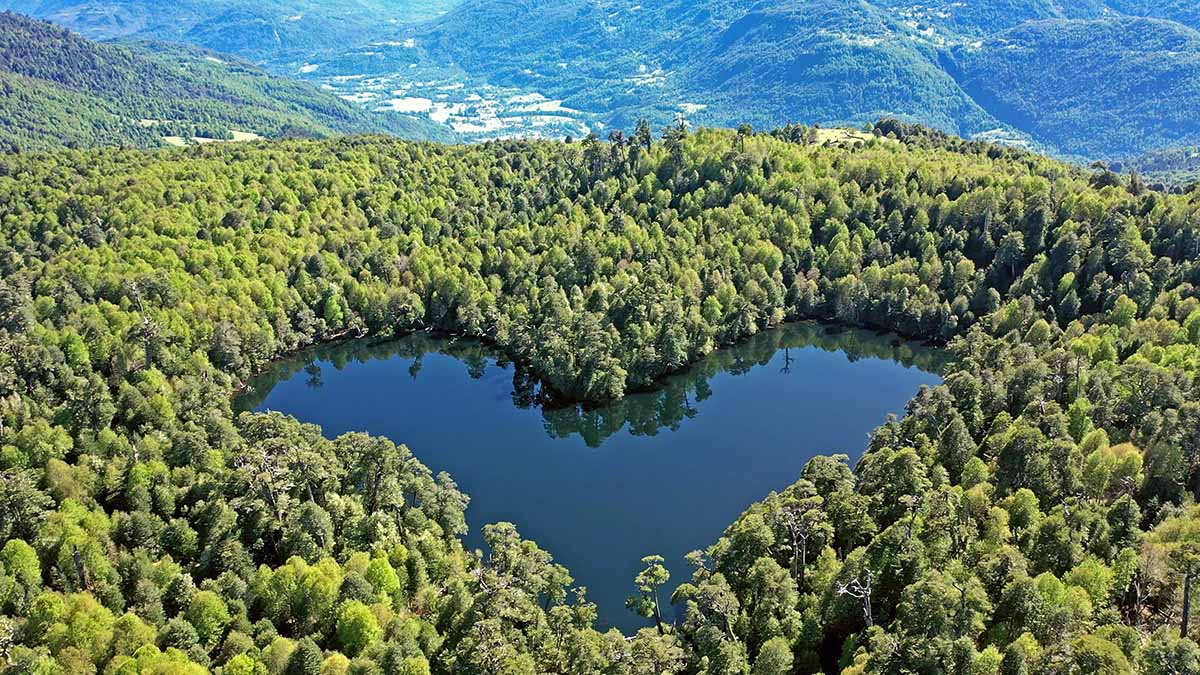
Its naturally heart-shaped outline makes it one of South America’s most charming examples: intimate rather than grand, secluded rather than flashy.
Reaching it requires a 30–45 minute uphill trek from Liquiñe through native, old-growth forest dominated by coigüe and tepa trees. As the canopy opens and the lake appears, framed by distant volcanoes such as Villarrica and Lanín, the setting becomes a storybook.
And, as with many heart-shaped places, folklore has followed geography. Local belief holds that couples who reach the lake together and share a kiss while counting to seven will strengthen and protect their bond.
Whether or not the ritual guarantees lifelong devotion remains unverified. But standing beside a quiet Andean lake shaped like a heart, with volcanoes on the horizon and forest all around, it’s hard not to share a kiss with a loved one.
Heart-Shaped Lakes in Asia & the Middle East
16. Shimshal Lake, Pakistan
High in the Karakoram Mountains, at the Roof of the World, lies one of the most remote heart-shaped lakes.
Located in the Shimshal Valley of Upper Hunza in Gilgit-Baltistan, Shimshal Lake (locally known as Shuvorth) sits at an astonishing 4,755 meters above sea level.
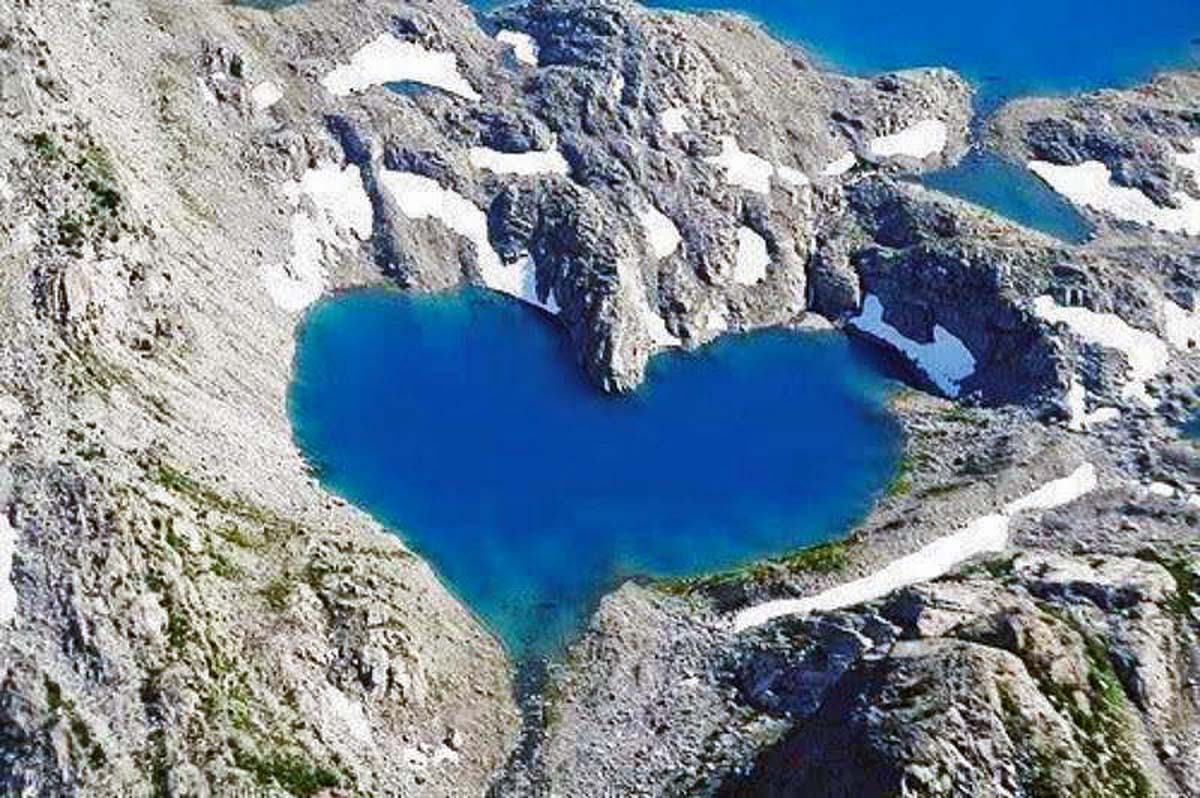
Shimshal Village, one of Pakistan’s most isolated settlements, had no road access until 2003. Even today, reaching it requires navigating one of the country’s most dangerous dirt roads. This lack of connections contributed to the preservation of the raw landscape and the indigenous Wakhi culture.
From the village, accessing the lake involves a demanding 40-kilometer trek across the Shimshal Pamir, a high-altitude plateau dominated by wetlands, yak pastures, and the world’s largest glaciers.
The valley is famously known as the “Valley of Mountaineers”, producing many of Pakistan’s elite climbers. You’ll appreciate their company during a multi-day expedition.
Fed by glacial meltwater, the heart-shaped Shimshal Lake is frequented by migratory birds (love birds?). Its extreme altitude and remoteness make it inaccessible for most human visitors. But for those who reach it, the reward is raw Himalayan wilderness at its finest.
17. Lower Kachura Lake, Pakistan
If you’re looking for a more approachable heart-shaped lake in Pakistan, you’re in luck. There’s one you can reach by road, no trekking required, just a 20-minute ride out of Skardu city.
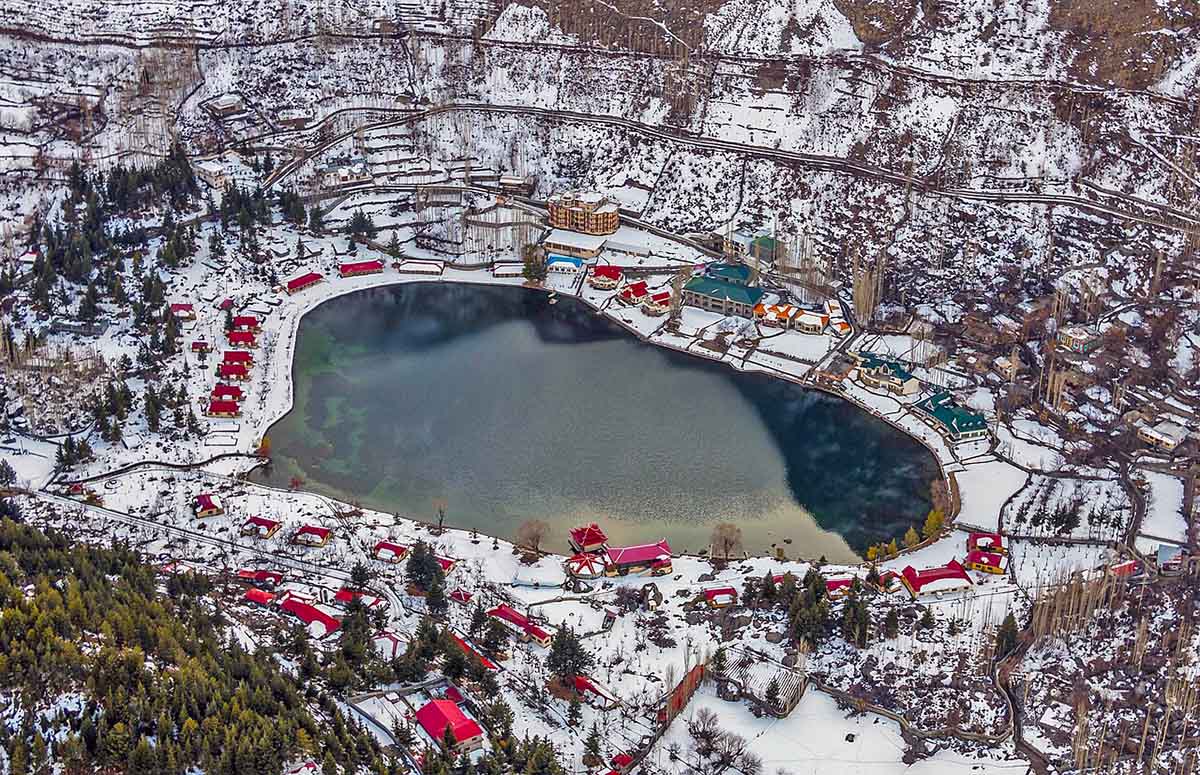
Lower Kachura Lake sits at about 2,500 meters above sea level, in the broad Skardu Valley of Gilgit Baltistan, carved by ancient glaciers, with steep mountains rising on all sides. It is celebrated for its mirror-still water and the famous “Heaven on Earth” hotel which operates on its shores.
Shangrila Resort, which gave the lake another nickname (Shangrila Lake), was built in the 1980s. An idyllic image of red-roofed cottages and an unusual restaurant constructed inside a crashed aircraft made it one of Pakistan’s earliest iconic tourist destinations.
If all of that sounds familiar, you might refresh your memory of James Hilton’s novel “Lost Horizon”, in which a plane crash in the Himalayas leaves passengers stranded in a mythical paradise – Shangri-La.
Reading this book under an apricot tree beside the heart-shaped Lower Kachura Lake might be the most atmospheric literary pairing imaginable.
18. Chembra Lake, India
Locally known as Hridayathadakam (“Heart Lake”), Chembra Lake sits high on Chembra Peak, the tallest peak in Kerala’s Wayanad district.
At 2,100 meters above sea level, this natural heart-shaped lake is one of India’s most iconic natural landmarks. Surrounded by rolling grasslands, misty hills, and lush tea estates, it offers a distinctly South Indian alpine atmosphere.
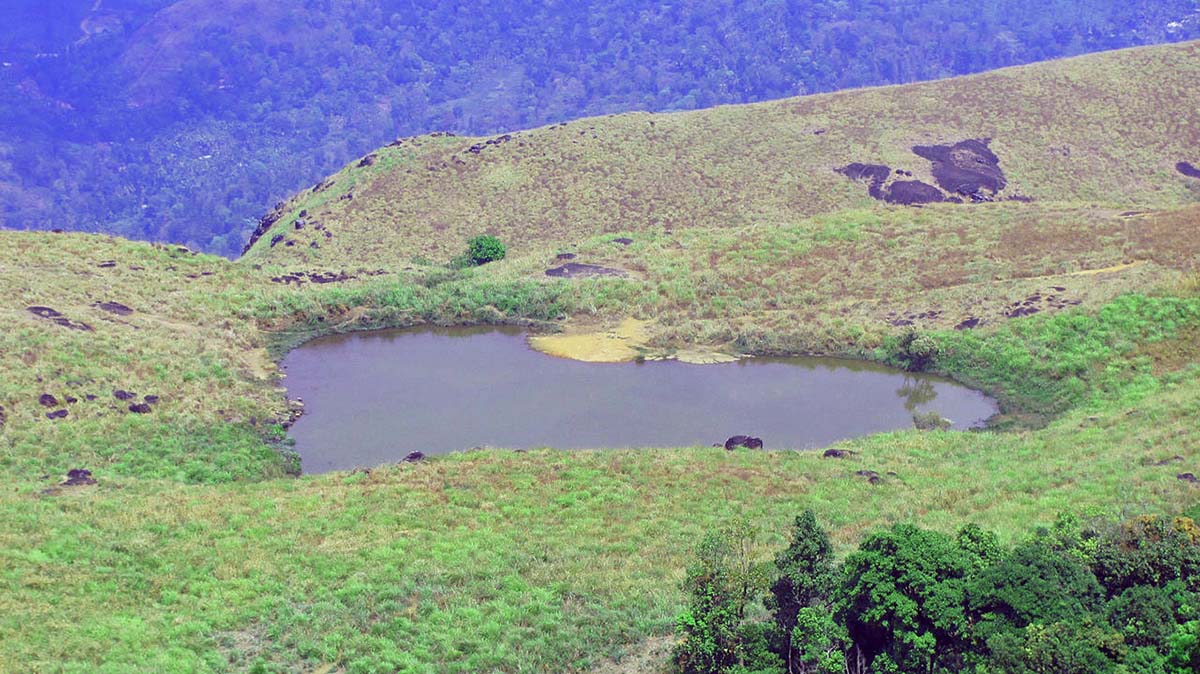
The nearest town is Meppadi, near Kalpetta. The trek to the lake (3.5 kilometers one way) is moderately challenging and requires a guide provided by the Kerala Forest Department. You’ll start near the base of Chembra Hill, but you can’t do it alone. A group needs to include five members, and if you are foreigners, each will pay ₹1600 for the ticket (approximately 15 euros or 18 dollars).
The round-trip hike to the lake which locals consider sacred, takes about 3–4 hours and passes through forests, grasslands, and rocky terrain with sweeping views of the plateau.
The lake never dries up, even during the hottest months of the year. But avoid visiting during the heavy monsoon season (June–August), when trails become slippery.
19. Serdce Yugry, Russia
In the oil town of Kogalym in western Siberia, a small oxbow lake has gained a poetic nickname – Сердце Югры / Serdce Yugry, or The Heart of Yugra.
Located in the Khanty-Mansi Autonomous Okrug (also known as Yugra), this naturally heart-shaped lake formed through classic river dynamics.
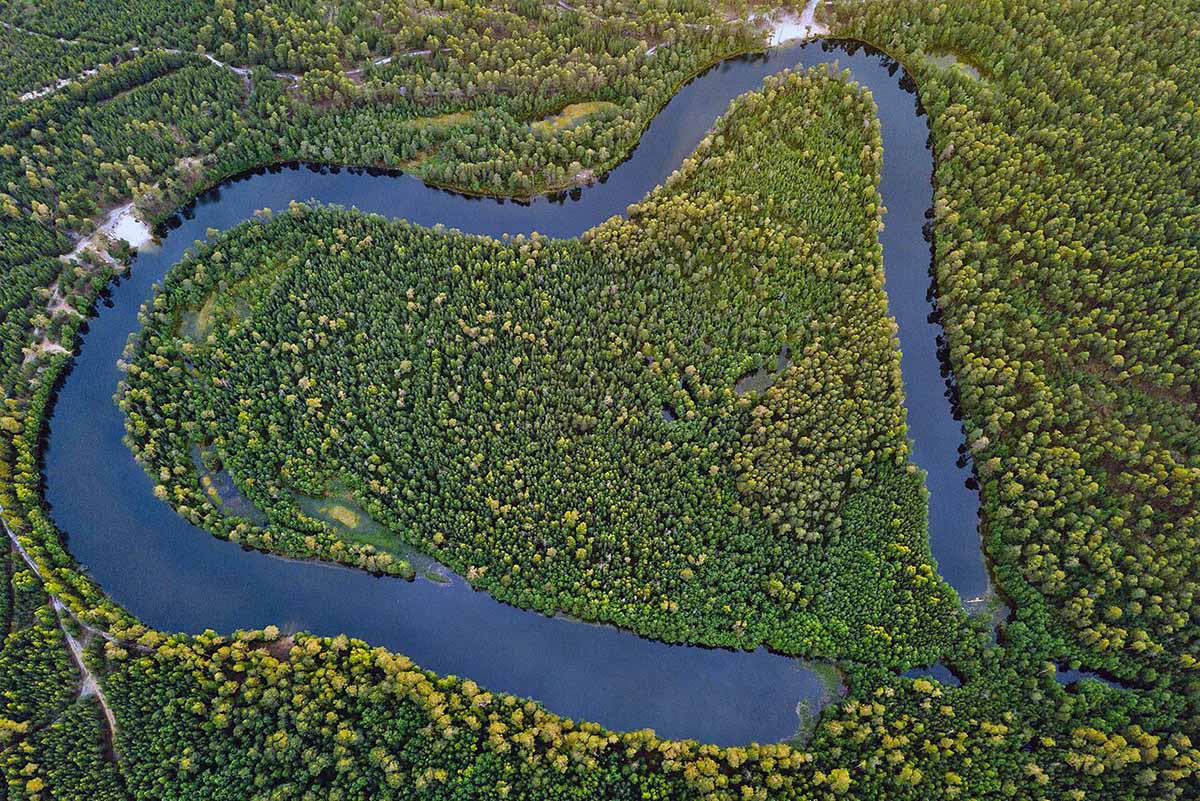
Oxbow lakes develop when a river meander becomes cut off from the main channel as sediment gradually seals the narrow “neck.” Most oxbows form crescent or U-shaped basins. However, occasionally, as in this rare Russian case, the geometry yields a surprising heart-shaped form.
The Yugra region is crisscrossed with slow-moving rivers flowing through taiga forests and wetlands, making it ideal terrain for oxbow-lake formation.
Serdce Yugry is a quiet, accidental masterpiece of fluvial geomorphology. Even in industrial oil regions, nature still shapes its own unstoppable paths.
20. Ozero Lyubvi, Russia
High in the Western Caucasus, in the Russian Karachay-Cherkess Republic, lies Ozero Lyubvi, literally “Lake of Love”.
This heart-shaped lake is located on the Morg-Syrty Plateau near Arkhyz, at an elevation of 2,350 meters. Even during summer, the water remains icy cold, earning it the alternative Turkic name Suuk Djürek Köl, meaning “Cold Heart”.
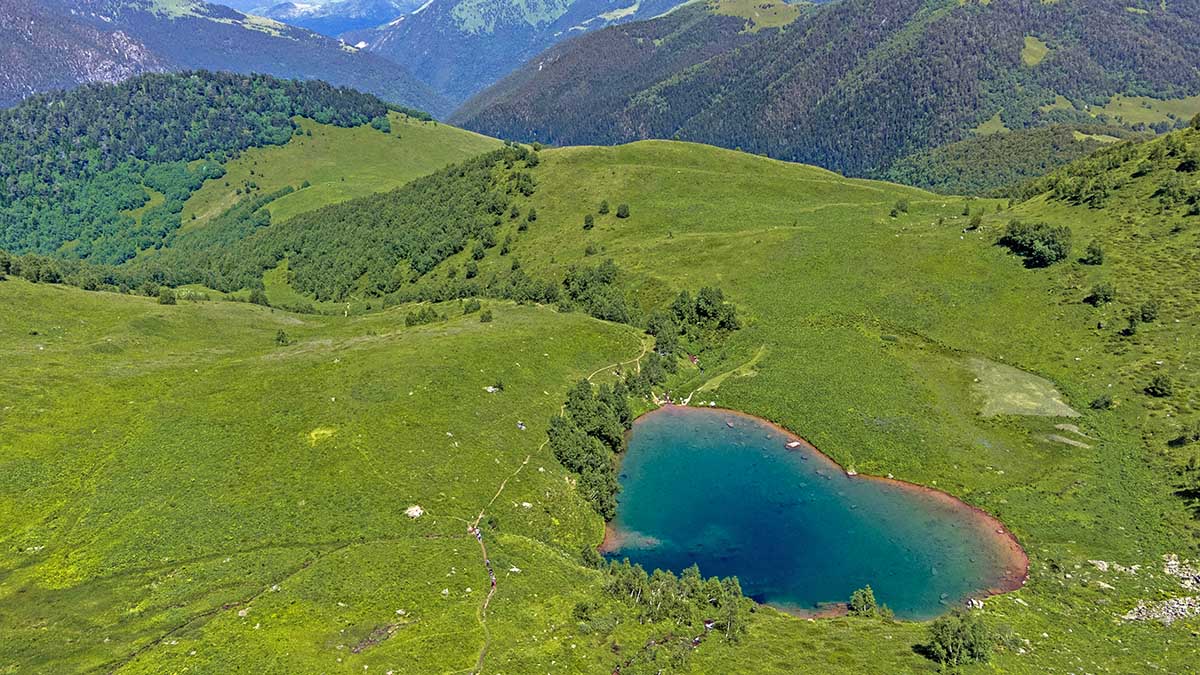
The hike to Ozero Lyubvi is steep but weel worth it. The turquoise water contrasts beautifully with the alpine meadows and the Caucasus mountain panorama. It is one of Russia’s most photogenic high-altitude lakes, and a popular destination for couples.
The lake is part of the protected Teberda Nature Reserve, so visitors are required pay a small ecological fee.
21. Karagöl Şavşat, Turkey
In northeastern Turkey, within the pristine Karagöl–Sahara National Park, one of the most biodiverse protected areas in the Eastern Black Sea region, lies the emerald-green mountain lake of Karagöl Şavşat.
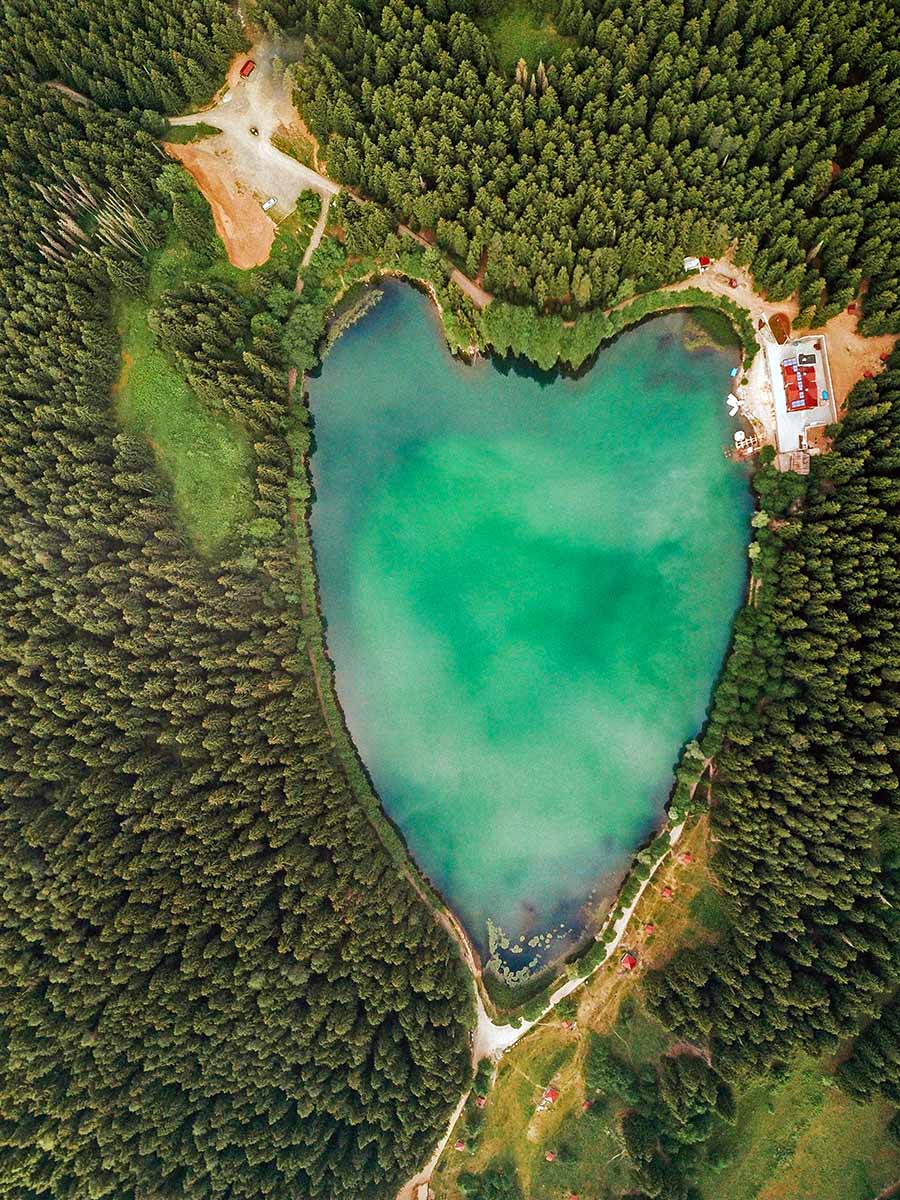
Located in the Şavşat district of Artvin Province, this softly heart-shaped lake was formed by a massive landslide that blocked a valley, creating a natural basin that gradually filled with water.
Surrounded by misty mountain ridges and dense spruce and fir forests, Karagöl’s mirror-calm water creates a truly serene atmosphere that makes modern life feel extremely distant.
Accessible via a scenic 40-minute drive from Şavşat town (part asphalt, part rural road), the lake is popular for hiking, picnicking, photography, and rowing.
22. Love Lake, Dubai, UAE
We conclude our list of the most fascinating heart-shaped lakes in the world with one that is a deliberate human engineering creation. Love Lake Dubai consists of two interlocking hearts, which made it one of the most recognizable aerial views in the United Arab Emirates.
The lake pair is carved into the desert landscape near Al Qudra, within the Al Marmoom Desert Conservation Reserve, the UAE’s largest unfenced nature reserve. To get there from central Dubai, it takes approximately 30 minutes by car.

Opened in 2018, the lake was created as a romantic gesture by Mohammed bin Rashid Al Maktoum, the Ruler of Dubai. His wife was given a peaceful escape from the city. However, Love Lake soon became a popular spot for proposals, anniversaries, and drone photography.
Despite its desert setting, Love Lake is surprisingly lush. Visitors can spot swans, ducks, and koi fish, while carefully landscaped trees and flowers surround the shoreline of the oasis.
Mesquite trees spell out the word “LOVE” on one side of Dubai’s double-heart attraction, and walking paths form silhouettes of two embracing figures on the other.
How to Photograph Heart-Shaped Lakes
Reaching a heart-shaped lake doesn’t automatically mean you’ll see the heart.
From the shoreline, the outline often disappears into curves and coves. To capture the full form, you’ll usually need elevation, either a strenuous uphill hike (for mountain lakes) or aerial access via drone.
Here are essential photography tips to help you capture the most amazing heart-shaped lake shots!
1. Check Local Drone Regulations
Drone laws vary widely by country. Many heart-shaped lakes are located within national parks, protected reserves, or sensitive ecosystems. Research local regulations in advance and secure any required permits. Some areas require paperwork to be submitted weeks in advance of arrival.
2. Plan Your Angle in Advance
Study satellite previews using tools like Google Earth or map applications. Analyze how the lake appears from different orientations. Look for ridgelines, peaks, or natural overlooks that offer a top-down perspective without the need of a drone.
3. Use the Power of Perspective
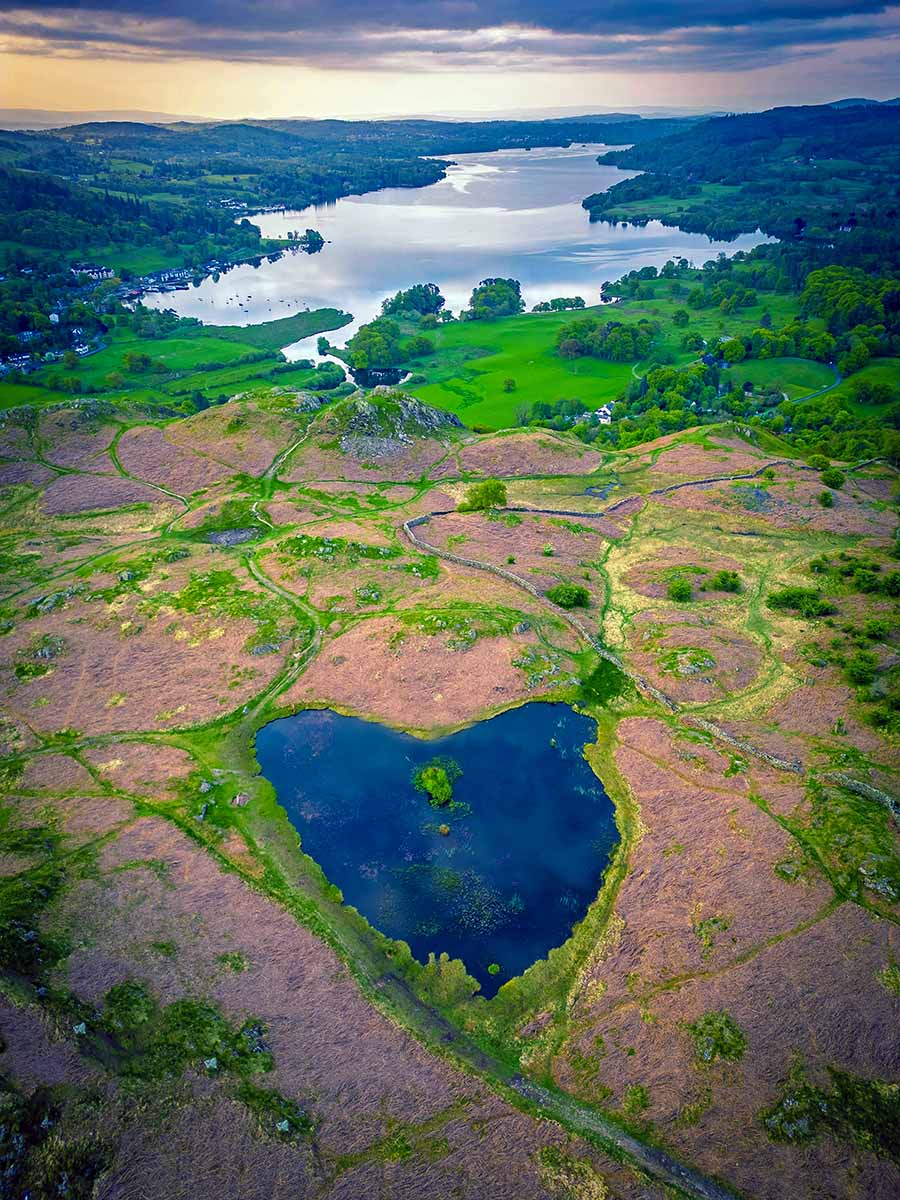
Some lakes marketed as heart-shaped may only resemble one from a specific angle. A subtle shift in elevation or position can radically change the outline. For example, lakes such as the Swiss Lagh de Calvaresc and the Italian Lago di Scanno look convincingly heart-shaped only from precise viewpoints (that’s why we haven’t even included them in our selection). Experiment, adjust, and find your own artistic interpretation.
4. Respect the Ecosystem
Many heart-shaped lakes are located in fragile alpine, volcanic, wetland, or desert environments. Stay on marked trails. Avoid trampling vegetation. Never disturb wildlife for a better frame. The image is not worth the damage to the ecosystem.
5. Shoot During Golden Hours
Early morning and late afternoon light enhances natural contours and reduces harsh shadows. Soft side lighting accentuates the curves that define the “heart”. Always check the trajectory of the sun (is your lake in the shadow of a mountain in certain hours?). Also, when planning your time, keep in mind that you still need to hike back to your base (in case you end up shooting sunset photos).
6. Use a Polarizing Filter
A polarizer reduces glare on water surfaces and enhances color saturation. Deep blues and emerald greens contrast beautifully against the surrounding terrain.
7. Revisit in Different Seasons
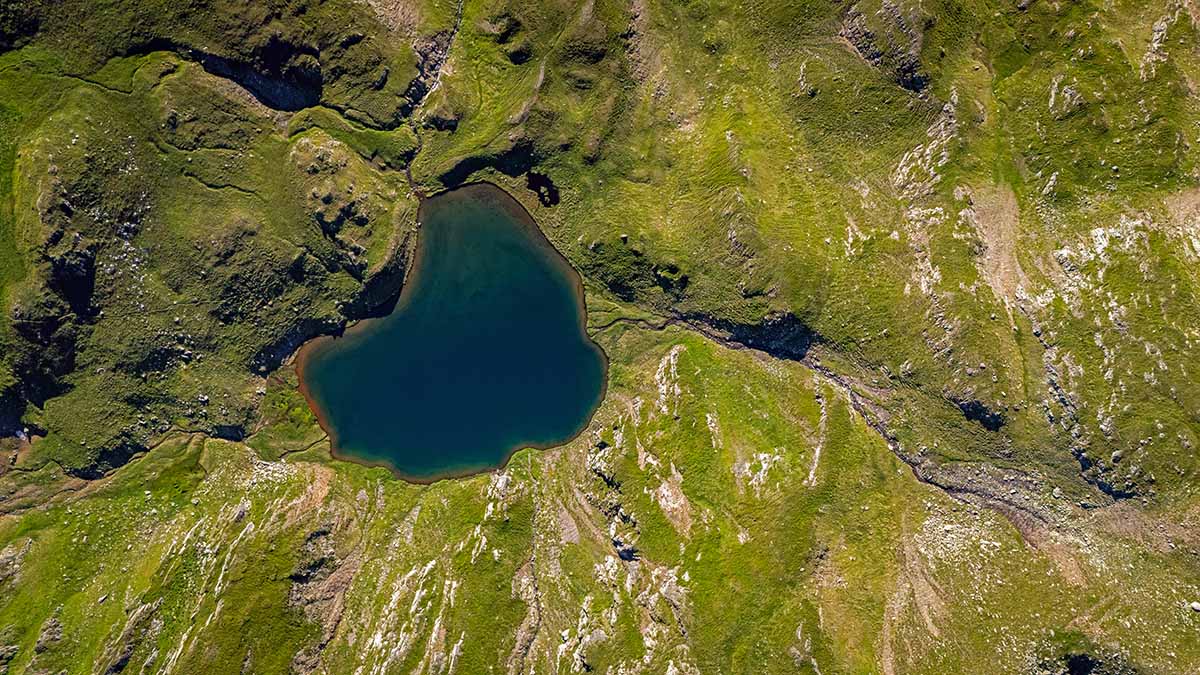
A heart-shaped lake can undergo dramatic transformations throughout the year. Snow cover, autumn foliage, drought conditions, or high-water seasons may alter the shape entirely – sometimes making it more pronounced, sometimes making it invisible. Research and revisit.
8. Think Before You Geotag
Overexposure can harm fragile locations. If you discover a lesser-known heart-shaped lake, consider skipping exact coordinates when posting on social media. Responsible exploration preserves these landscapes for future generations to enjoy. Bucket-list chasers affected by FOMO will always be able to do their own research if they want to explore seriously.
22 Heart-Shaped Lakes in the World – Conclusion
Why are we so fascinated by heart-shaped lakes?
They combine natural beauty, symbolism, and the thrill of discovery.
Some were carved slowly by glaciers over millennia. Others were reshaped in moments of volcanic fury. A few, like Love Lake, were intentionally designed as modern declarations of romance. But all of them remind us that beauty often hides in plain sight.
Heart lakes have been surviving as hidden gems for thousands of years. Let’s make sure we don’t leave them broken-hearted
The rise of drone photography changed how we see these lakes. What once required chartered flights or mountaineering expeditions is now accessible to skilled hikers and aerial photographers. We are witnessing landscapes from perspectives humans were never meant to have.
From the shore, these lakes were always beautiful.
But with a bird’s-eye view, everything became a tad more magical.
Photographs conjure moments. But we shouldn’t forget to enjoy them as we document our adventures.
Reaching the most romantic bodies of water is special. However, a journey through nature is a wonder in itself. Don’t forget to keep your eyes open. That’s better than keeping your finger glued to the shutter button.
And once we decide to share that beauty with the world, we should do it responsibly. Heart lakes have been surviving fine as hidden gems for thousands of years. Let’s make sure we don’t leave them broken-hearted.
Did we forget some important heart-shaped lake?
Let us know in the comments!
Pin this article for later!
Disclosure: This post may contain affiliate links, meaning if you click on them and make a purchase, Pipeaway may make a small commission, at no additional cost to you. Thank you for supporting our work!

Images in this article have been sourced through Unsplash, Depositphotos, Pexels, and other online sources.
In the order of appearance, the authors of the photographs are as follows:

Lough Ouler with a couple (cover image) - Dannii Coughlan, Unsplash
Coração da Floresta - Ivancana, licensed under CC BY-SA 4.0
Lake Näckern - fotonen, Depositphotos
Lac du Montagnon - Jacint Bofill, Pexels
Lac de Bethmale in autumn - velion x, Unsplash
Lac de Bethmale in winter - Quentin Menini, Unsplash
Le Buisson - Adrien, Unsplash
Kirchbruch See - Martin Wischeropp, Pexels
Gaislacher See - Fozzman, licensed under CC BY-NC-ND 2.0
Lough Ouler - gokhan polat, Unsplash
Vyshhorod heart lake - Artem Horovenko, Unsplash
Trnovačko jezero - Goran Rakita, Pexels
Liqeni i Zemrës - Elbunitkrasniqi, licensed under CC BY-SA 3.0
Spirit Lake - US Geological Survey, Lyn Topinka
Castle Lake - Jaykhuang, licensed under CC BY 2.0
Lago Corazón de Liquiñe - Blinovita, Depositphotos
Shimshal Lake - unknwon author
Lower Kachura Lake - Abbas Shah1, licensed under CC BY-SA 4.0
Chembra Lake - Aneesh Jose, licensed under CC BY-SA 3.0
Serdce Yugry - Ted.ns, licensed under CC BY 4.0
Ozero Lyubvi - Alexey Elfimov, Unsplash
Karagöl Şavşat - Mehmet Özcan, Pexels
Love Lake Dubai - Diego Ruso Pérez, Pexels
Loughrigg Fell Ambleside - Jonny Gios, Unsplash
Heart-shaped lake in Romania - Vlad Chețan, Pexels
Love Lake Dubai (pin image) - Lloyd Alozie, Pexels
