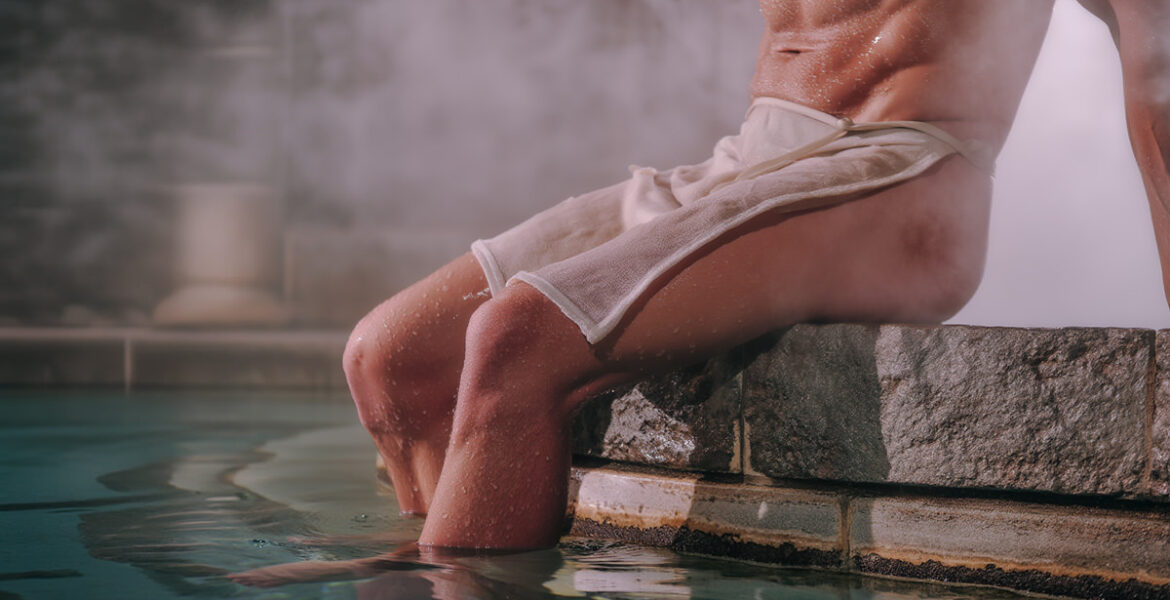
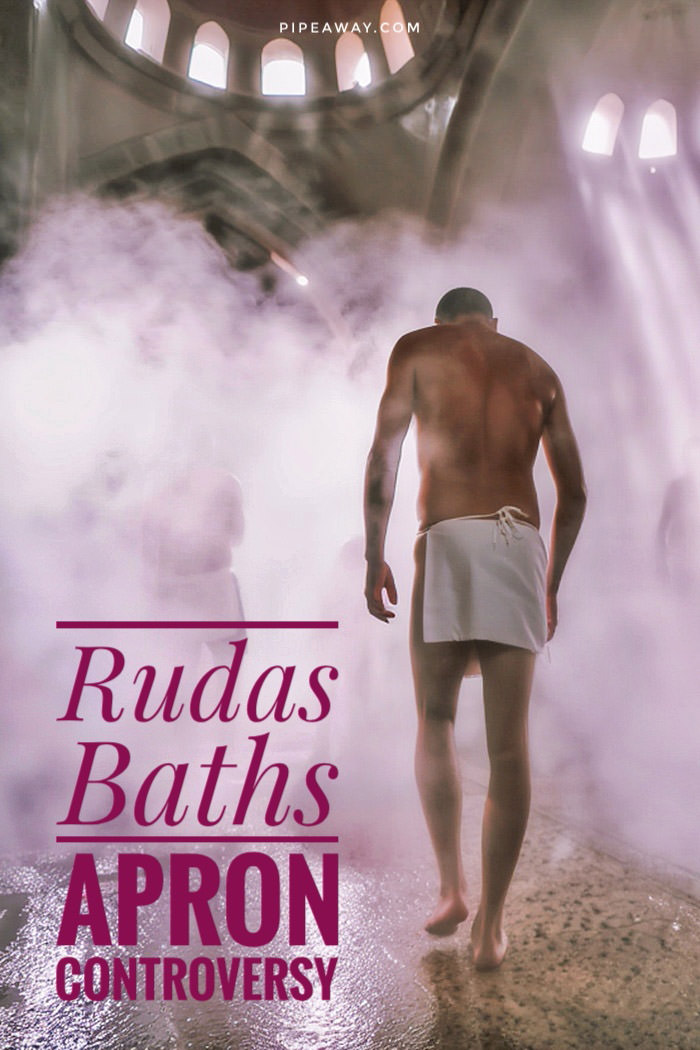
For generations, one of Budapest’s most memorable souvenirs wasn’t sold in any gift shop. It was an experience. You’d step into the centuries-old Turkish section of Rudas Baths on a men-only day, and instead of a towel, you’d be handed a tiny white apron: barely more than a square piece of cotton. Tied at the waist, it covered only the front, leaving the back exposed. Mildly embarrassing for some and completely unbothering for others, it became one of the most talked-about bathing customs in Europe. Then, practically overnight, the tradition changed, deepening what’s become the Rudas Baths apron controversy.
Guests at Rudas’s historic Turkish baths are now required to wear two aprons – one front, one back
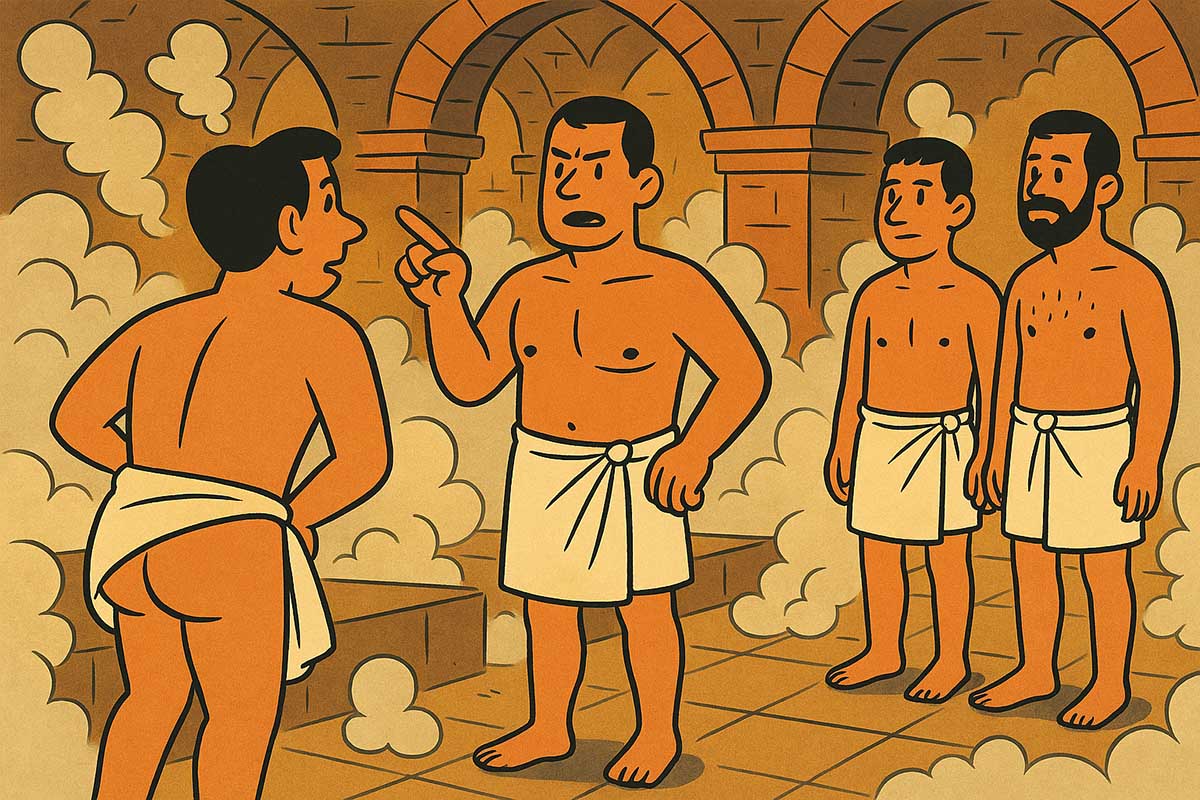
Try walking into these baths today wearing an apron, and the hawk-eyed staff will quickly jump from their perch by the main pool and gesture that you need to cover up. They’ll discreetly hand over another apron, to cover your rear. Apparently, apron skirts are now Rudas Baths’ fashion standard.
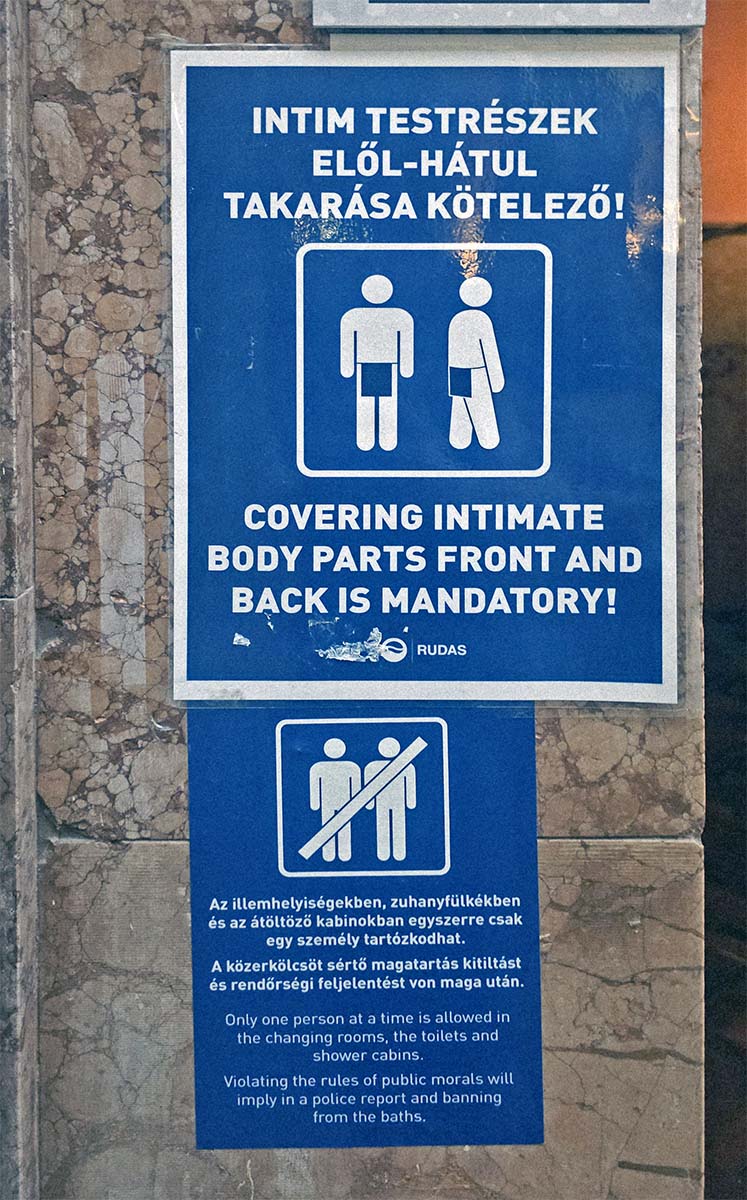
Since the start of 2025, actually, with occasional visitors still catching up, since it was never publicized on official spa channels, guests at Rudas’s historic Turkish baths have been formally required to wear two aprons – one front, one back.
The change may sound like a minor wardrobe update, but it has sparked surprisingly passionate debate among regular bathers, history enthusiasts, naturists, and curious tourists. Some welcome the additional privacy. Others say a centuries-old tradition just quietly died.
Why did one of Europe’s oldest Turkish baths decide to rewrite its own dress code?
Rudas Aprons – What Actually Changed?
In December 2024, Rudas introduced a rule requiring guests on single-sex Turkish bath days to wear two aprons instead of one. Covering both sides of the body became mandatory rather than leaving it optional, as it had been for as long as anyone could remember.
Pipeaway reached out to the baths for an explanation. The response, signed by Sales and Marketing Director Szilvia Czinege, read:
“We previously received several guest complaints about the inappropriate behavior of some guests, and after a discussion with regular guests, we decided on this measure, which we believe is better suited to hygiene conditions as well.”
I followed up asking about the consultation process, the volume and nature of the complaints, statistics on guest suspensions, and the broader history of the bath’s dress code. Despite repeated emails, Rudas chose to leave the questions hanging.
We can only speculate about the reasoning behind the management’s silenzio stampa, but it does suggest they would prefer the topic not to be discussed at all.
Reading this newest statement against Rudas’s history of PR on sensitive decisions, “inappropriate behavior” looks like the polite institutional Hungarian for people were having sex in the baths again. Even if an open-air gay intercourse at Rudas, inflated to mythical proportions (with some interpreting this notion as a way to deter the public attention from true decision motifs), was a real occurrence, it is not clear how an additional piece of hanging fabric could prevent this behavior from happening. Does Rudas know how sex works?
On the other hand, noting “hygiene conditions” in the context of the discussed garment change sounds like bolting a fig leaf onto another fig leaf. Despite the effort to present the rule as partly clinical, the previous, equally controversial spa communication on public health concerns regarding full-coverage swimsuits reveals that the reasoning behind the inconsistent approach to dress codes might indeed be the hygiene – but a moral one.
Need to sweeten up this story a bit? Look for the best Hungarian desserts in Budapest!
A Tradition Older Than Modern Hungary
To understand why two scraps of fabric caused this much noise, we first need to rewind five centuries, to when Ottoman architects turned the hot springs under Buda into one of Europe’s most remarkable bathing complexes.
Modeled on the hammams of Constantinople, the occupiers harnessed the power of the city’s thermal water as – therapy.
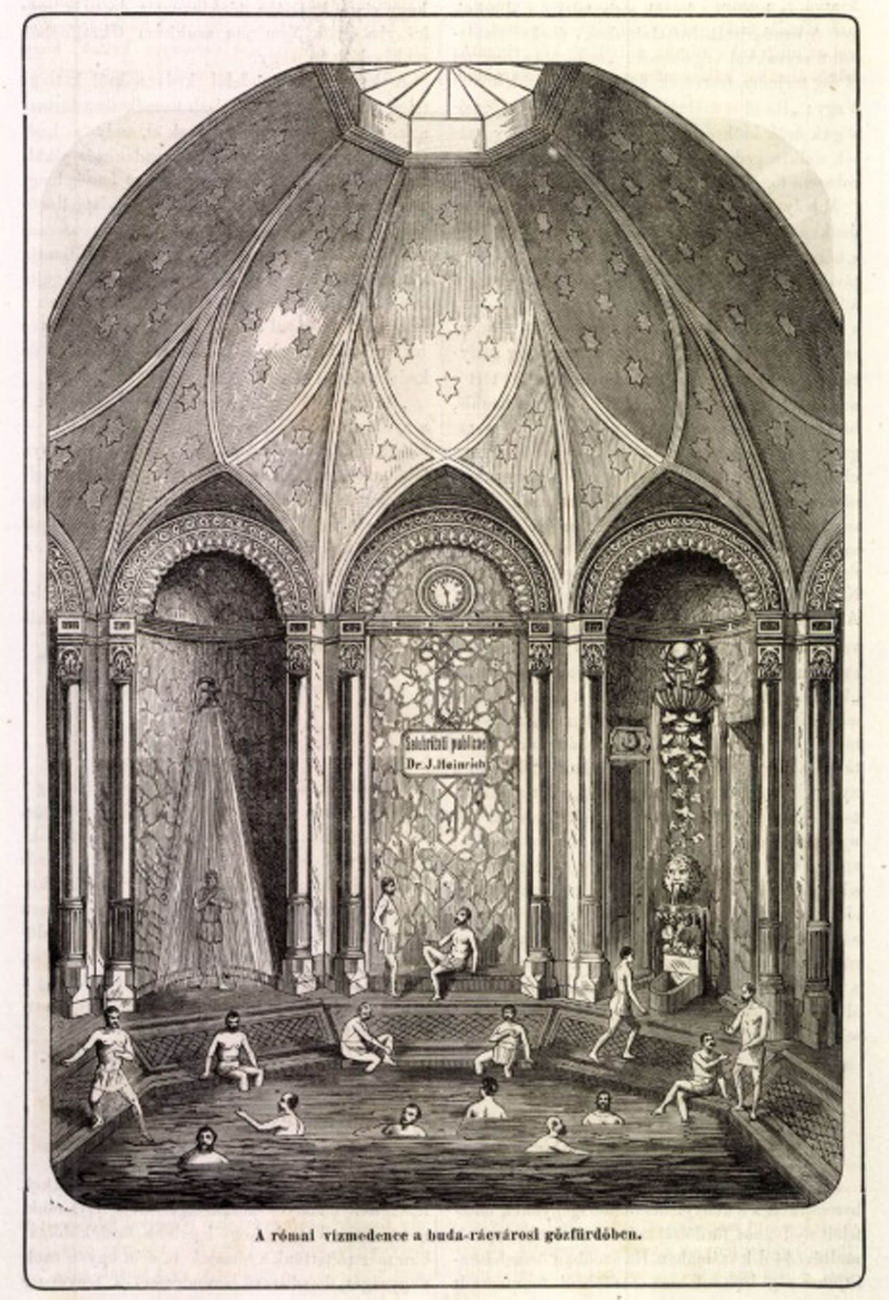
With its octagonal pool beneath a domed ceiling pierced by colored glass, Rudas remains one of the finest surviving examples of Ottoman bathing architecture in Europe.
While the rest of the building has been renovated several times over the centuries, the historic Turkish bath has retained much of its original character – part spa, part living museum.
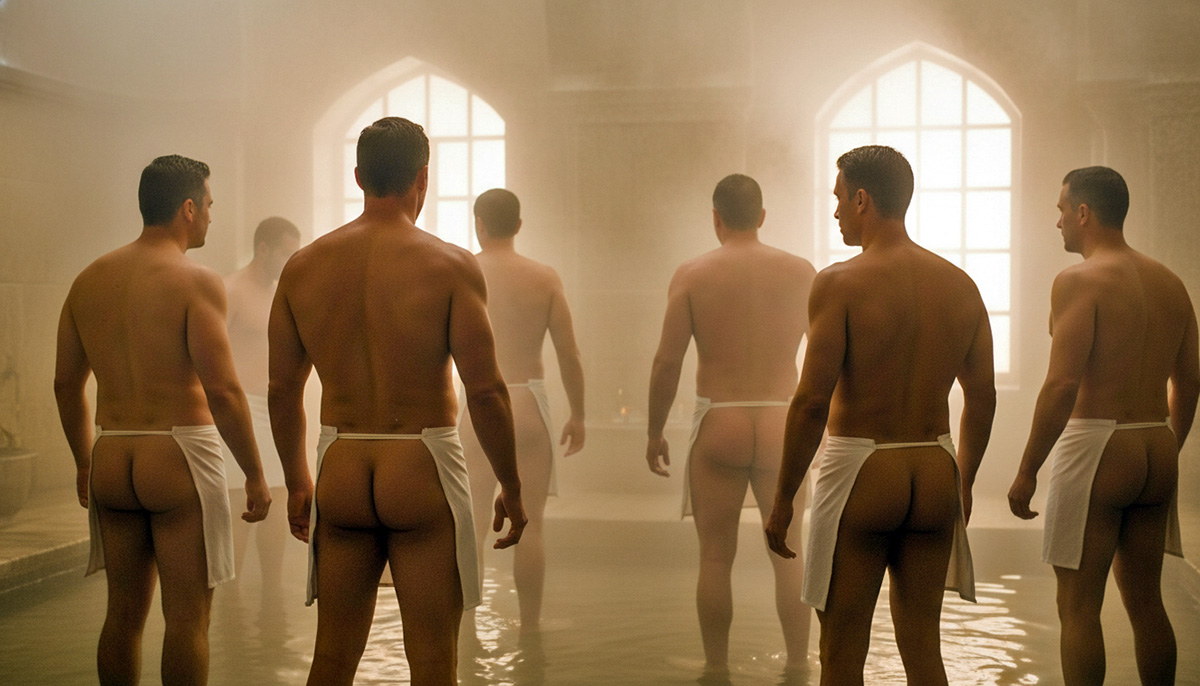
Unlike modern swimsuits, the traditional bathing apron, known in Hungarian as kötény, was never intended to provide full coverage. Fastened around the waist, it covered the front of the body while leaving the back bare. It represented a compromise between modesty and practicality – dignity preserved, thermal water fully enjoyed, exactly as bathers had done for centuries.
The apron’s peculiar design, covering the private parts while standing and, with a simple twist around the waist, covering the sauna chair when seated, became one of Rudas Baths’ defining quirks.
While locals wore it without a second thought, tourists often spent awkward minutes figuring out how to tie the Rudas apron correctly, and then shared amused & confused stories online.
Some dreaded it enough to bathe in swimsuits instead, or asked staff for a second apron, to fashion their very own mini-skirt of privacy (sic!).
When, in my 2017 article, I wrote that doing so would make you “look like an idiot” (I guess, in the same way how we short-sightedly made fun of our clueless elders shooting vertical videos on their first phones, long before stories were imposed as THE format), I couldn’t have imagined that someone would look at the most ridiculously-looking attire in the room and eternalize a two-part skirt as an official outfit policy.
Rudas Apron is More than a Dress Code
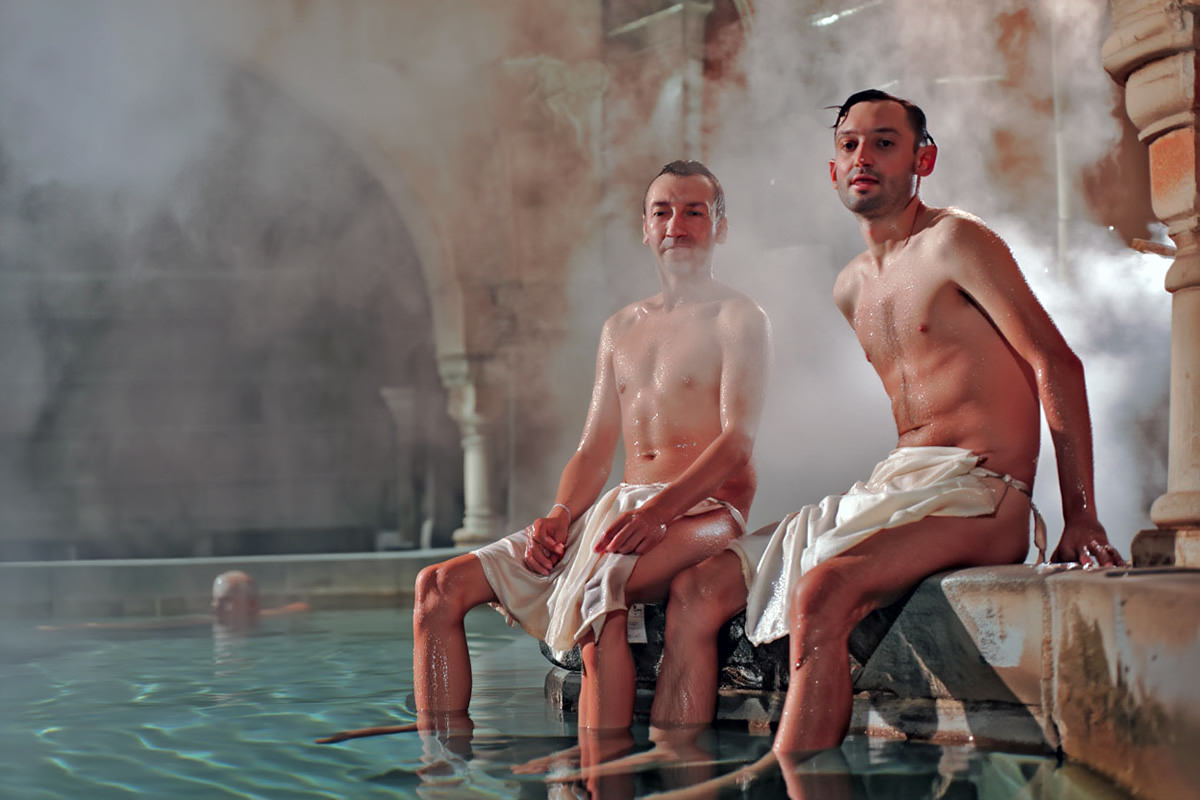
Unlike modern spas, where visitors compete in branded swimwear, Rudas offered an experience that felt rooted in another era. On men-only days, everyone from Budapest retirees to nervous backpackers, from businessmen and politicians to those receiving social help, wore the same simple garment. The Rudas apron became an unlikely social equalizer.
Even if newcomers felt an initial embarrassment, it evaporated within minutes. Inside the centuries-old bathing hall, surrounded by men of every age and build, most visitors quickly realized nobody seemed particularly interested in anyone else’s appearance.
This surprisingly unremarkable rectangle of fabric had become part of Rudas’s identity, contributing to its cultural heritage.
Clothing traditions often preserve history, as reliably as buildings and monuments do. The Scottish kilt, the Japanese yukata, the Finnish sauna towel, and the yangmeori hat from the Korean bathhouse culture, all tell stories about the societies that made them.
At Rudas Baths, the bathing apron performed a similar role. It served as a quiet reminder that you weren’t visiting just another spa, but stepping into a living tradition that predates the country’s modern borders.
The historic Turkish bath has outlasted wars, fires, occupations, and revolutions. Empires rose and fell behind its stone walls while bathers continued soaking in the same way as always, the apron surviving the changes as well.
Until December 2024. The world’s most famous bathing rag quietly became a pair of modesty panels.
This Isn’t Budapest Baths’ First “Sex Scandal”
Beyond the brief official statement provided to Pipeaway, addressing behavior and hygiene concerns as reasons for the double-apron measure at Rudas, the baths management hasn’t elaborated further, leaving room for everyone to draw their own conclusions.
The measure, introduced so silently, does seem odd and controversial, especially as Budapest Gyógyfürdői és Hévizei Rt. (BGYH), municipal company running the city’s thermal baths, has a history of dealing with sex scandals.
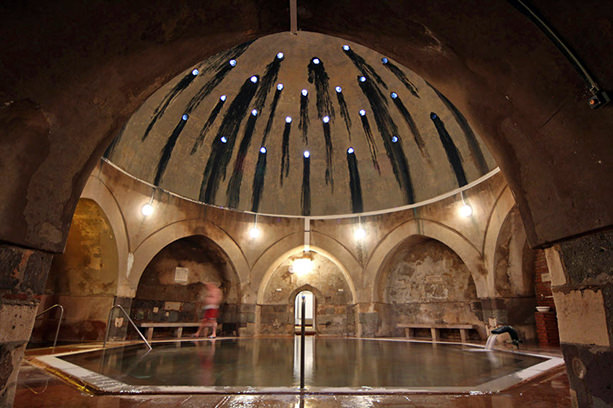
In 2004, a Hungarian TV2 reporter walked into Király Bath’s men-only session with a hidden camera and came out with footage of men soliciting, embracing, and having sex. The investigative exposé landed like a grenade in the national Tourism Ministry, which was actively using the historic bathhouses in its promotional campaigns, engaging even Tony Curtis to say: “Some like it hot”. The scandal triggered moral patrols and an immediate temporary ban on men-only days. After a short restitution, apron bathing at Király was formally phased out in 2011. Despite lowered prices, the struggle to attract non-gay clientele was real: the bath, weighed down by debt, never fully recovered its old status after introducing mandatory coeducational days. Its eventual 2020 closure is officially attributed to a lapsed hygiene license and an unaffordable renovation bill.
Then there’s Gellért Thermal Bath. German media revealed that, in 2007, insurer Hamburg-Mannheimer (later ERGO) organized a corporate trip to Budapest for its best salesmen. They had rented out the historic bath for a night and turned it into a “Freiluftbordell” (open-air brothel). Dozens of prostitutes entertained the company’s 100 top-performing agents at this “team-building” event.

We needed no investigative reporting to learn about naughty encounters in Budapest baths; some were self-documented. Both Gellért and Széchenyi Thermal Baths served as film sets for the adult industry. From Layne Derrick’s “Pools of Desire”, a 1999 homoerotic feature with dozens of fully naked men at Gellért, splashing, wrestling, and stroking each other during massage and rather touchy shower sessions, to more recent and explicit pick-up sex videos starring the likes of Chris Kubrick and Antonio Mallorca with female bathers, some of these racked up millions of views on specialized porn sites. Tony Curtis’s tourism spot never got close to the view counts of “some like it hotter” videos.
From Sausage Parties to Fake Masseurs
Besides amateur and professional porn makers, Széchenyi’s everyday visitors also overflow the spa with eroticism. Index.hu, for instance, described catching “group petting of young couples in love”.
Tripadvisor reviews back that up: body care in Budapest baths goes beyond just enjoying minerals. Due to a high proportion of men attending Sparty, Széchenyi’s late-night music event, users often described it as a sausage party and not the safest place for women. The upset visitors repeatedly highlighted floating condoms, groping serious enough to require therapy, and a significant number of other sexual assaults.
Gellért received its portion of reports for sexual activities in the pool, but also a series of reviews titled “Worst massage I have ever had”. Among them, several were serious safety incidents, where customers felt inappropriately touched by masseurs (this, or this), and even reception staff impersonating masseurs (sic!).
Unlike the undisclosed, unquantified complaints Rudas cites as justification for a dress-code overhaul, these well-documented incidents at other baths haven’t triggered, for instance, a ban on private events, late-night parties, or cameras in the bathhouse.
Most of the serious accusations made against the spa and security staff for not acting against the offenders, or being offenders themselves, remain officially unanswered (familiar?). When they do get to respond to online reviews describing guests crossing the line, Sparty’s team refers to them as “idiots” or “morons” ruining their great programs. Real accountability for not making the premises safe enough is dismissed. Because they “run online campaigns against inappropriate behavior” and “print warning posters”.
Modesty Panic as a Smoke Screen?
Is it a coincidence that private hires, boozy night programs, and not really regulated cameras (indistinguishable whether used for social media or porn production), all happen to be reliable revenue streams, and somehow never trigger the kind of moral intervention Rudas just applied to a piece of cotton?
Could it be that the dress code change and gradual adding of more and more mixed hours at Rudas uses a moral excuse in order to hide economic interest in attracting tourists, especially while the golden goose of Gellért endures extensive renovation, affecting the overall baths’ revenue?
Budapest is already thoroughly gentrified and swimming in visitors. They are accompanied by lobbies whose interests don’t always align with the wishes of traditional bath enthusiasts. Easier bath access to persons of any gender on any day of the week enables a more lucrative bath commodification. And that’s an argument that consistently follows supposed “moral regulation” of Rudas Baths.
Back in 2019, the management drew a furious petition from regulars after quietly cutting the beloved Friday Rudas Baths men’s day down to a few morning hours (back then until 12:45 pm; cut further since – to 10:45 am), converting the rest of the day to co-ed. The management left no room for blushing: “Our decision was influenced by both the increased tourist traffic and the prevention of widespread open-air sex.”
Titles screaming “Public sex gone out of control” seemed like a red cloth waved before the bullish society in which Viktor Orbán’s right-wing government had banned same-sex marriages and families, abolished gender changes, criminalized Pride, and modeled a string of anti-LGBTQ laws on Russia’s, while Fidesz co-founder, MEP József Szájer, was simultaneously fleeing a lockdown-violating gay orgy in Brussels by sliding down a drainpipe.
Framing gay men as suddenly dangerous after lunchtime, as if flipping some kind of hormonal switch at noon, is Szájer-level hypocrisy: kicking gays out when the clock ticks, when they get physically assaulted, or even when they just hold hands, while still cheerfully extracting money from those filthy queer wallets every morning.
Regulars who signed the petition didn’t buy the official “widespread open-air sex” story. “I don’t know what they are talking about”, said one. “Referring to public sex is a sham, it is a non-existent problem”, commented another. A third called it fiction, invented as an excuse “to be mad at gays”. A fourth summed it up bluntly: “What has been publicly communicated about the reasons is only to make people feel angry with gay people, while this was presumably done under pressure from lobbying by some companies involved in tourism.”
The Hygiene Paradox
Besides just correcting the male visitors’ afternoon behavior, this time around, Rudas Bath claims its motivation for adding an extra apron is to improve hygiene conditions, too.
But here’s the problem: a second wet apron, tied on and reused across a two-hour soak, sauna session, and steam room visit, isn’t more sanitary than one. If anything, it’s twice the damp fabric against skin, twice the laundry load…
It gets better: to address the double-apron demand as contradictory in terms of hygiene, we could quote a real expert: Budapest Baths.
You see, despite the official website’s FAQ containing information that both burkinis and bodysuits are welcome, real life has exposed that ladies (most often Muslim visitors) in ¾ swimming leggings have repeatedly been asked to leave for violating the etiquette (see here, or here).
Both in response to Fodor’s media inquiry and a Tripadvisor review, management explained that their policy allows only shoulder- and knee-long swimsuits. The rationale behind it is that more fabric results in an increased safety and hygiene hazard.
“Large swimsuits have a much higher water carrying capacity, leaving much more water coming out of the pools that can cause accidents. In addition, it is also a matter of public health concern, as there are more bacteria on a larger surface, and its evaporation in saunas and steam chambers is unhealthy”, the officials explained.
By that exact logic, two soaked aprons also have a much higher water retention than one (more accidents), as well as more bacteria (increased public health risks). And yet, the introduction of another mandatory apron got sold as the hygienic choice.
Double apron exposes Budapest Baths’ double standards: this was never about bacteria. The rule is clearly not a hygiene fix. It’s a rear-view fix, dressed in hygiene language. It’s a part of a broader tendency to regulate which bodies get to be visible in public and their effect on the comfort of the majority.

Looking for a relaxed clothing-optional experience with no judgment? Try naked hiking in Australia, naked bike rides in the UK, FKK beach-hopping in Makarska, an overnight stay at a Seoul bathhouse, or a nudist resort in Greece.
Rudas’ Second Apron Controversy – Conclusion
Rudas isn’t just a Budapest bath with single-sex days anymore. It’s the only one. Every adjustment Rudas makes to its single-sex sessions, therefore, isn’t just a policy tweak but the last living version of an Ottoman-era tradition being reshaped in pursuit of the tourist revenue every mixed-gender bath in the city now depends on.
Is Rudas walking Király’s road? The shape of the story is uncomfortably familiar: a historic single-sex bathing tradition under commercial and reputational pressure gets incrementally modernized to keep the peace, until what’s left barely resembles what people originally came for.
Each adjustment, stacked over years, nudges Rudas toward a more sanitized version of something that was never really about modesty to begin with. The apron was always a practical compromise between nudity and swimwear – a garment built for function, not virtue signaling. It let you enjoy the baths without fuss, and go home without a wet swimming suit weighing down your bag.
Budapest Baths has tangled itself into a modesty theater, where it needs to simultaneously argue that there could be too much AND not enough of fabric
The original apron wasn’t famous because it covered so little. It was famous because it represented continuity. It connected modern bathers to generations who tied the same knot under the same Ottoman dome. Replacing one apron with two may seem like a tiny alteration, yet symbols often matter precisely because they are small.
Budapest Baths has tangled itself into a modesty theater, where it needs to simultaneously argue that there could be too much AND not enough of fabric. Equally uneasy about Muslim women and gay men, it struggles in providing coherent answers, often choosing not to respond at all. But not addressing challenges doesn’t make them disappear.
If the real goal on men-only days at Rudas is total modesty, why keep the apron at all? Why not, instead of slowly cooking the moral crab, have enough public courage to simply require ordinary swimwear? The compromise at an unusual middle ground preserves the appearance of a historic tradition, but in a form that no longer reflects the original custom.
And if the objective is to put an end to an “inappropriate behavior” (something that Budapest’s mixed baths clearly struggle with as well, without triggering equivalent policing), is the modesty crackdown with a piece of half-transparent apron truly efficient? Or should the new dress code mandate chastity belts for everyone?
Once you open the moral Pandora’s box, where exactly do you draw the line?
What do you think about the new Rudas Baths apron rules?
Leave your comment below and pin the article for later!
Disclosure: This post may contain affiliate links, meaning if you click on them and make a purchase, Pipeaway may make a small commission, at no additional cost to you. Thank you for supporting our work!
